

Star Catcher, a burgeoning aerospace infrastructure startup led by former Redwire and Made in Space executive Andrew Rush, has successfully closed a $65 million Series A funding round. This significant capital infusion is earmarked for the development and deployment of the world’s first orbital power grid, a network designed to provide on-demand energy to satellites through advanced optical power beaming technology. The oversubscribed round was led by B Capital and co-led by Shield Capital and Cerberus Ventures, with additional participation from a consortium of investors including GreatPoint Ventures, Helena, Oceans Ventures, and MVP Ventures.
This latest financial milestone brings Star Catcher’s total capital raised to approximately $88 million, following a $12.25 million seed round finalized in 2024. The rapid succession of funding rounds highlights the growing investor confidence in space-based infrastructure as the next frontier of the commercial space economy. Beyond the capital injection, the company bolstered its strategic leadership by appointing retired General John “Jay” Raymond to its board of directors. General Raymond, who served as the first Chief of Space Operations for the United States Space Force, currently holds a senior managing director position at Cerberus, signaling a bridge between commercial innovation and national security requirements.
Addressing the Orbital Power Constraint
The primary challenge Star Catcher intends to solve is the "power budget" limitation that currently dictates the design and operational lifespan of every satellite in orbit. Traditionally, a satellite’s capability is restricted by the surface area of its solar panels and the capacity of its onboard batteries. To increase power, a satellite must be larger and heavier, which exponentially increases launch costs.
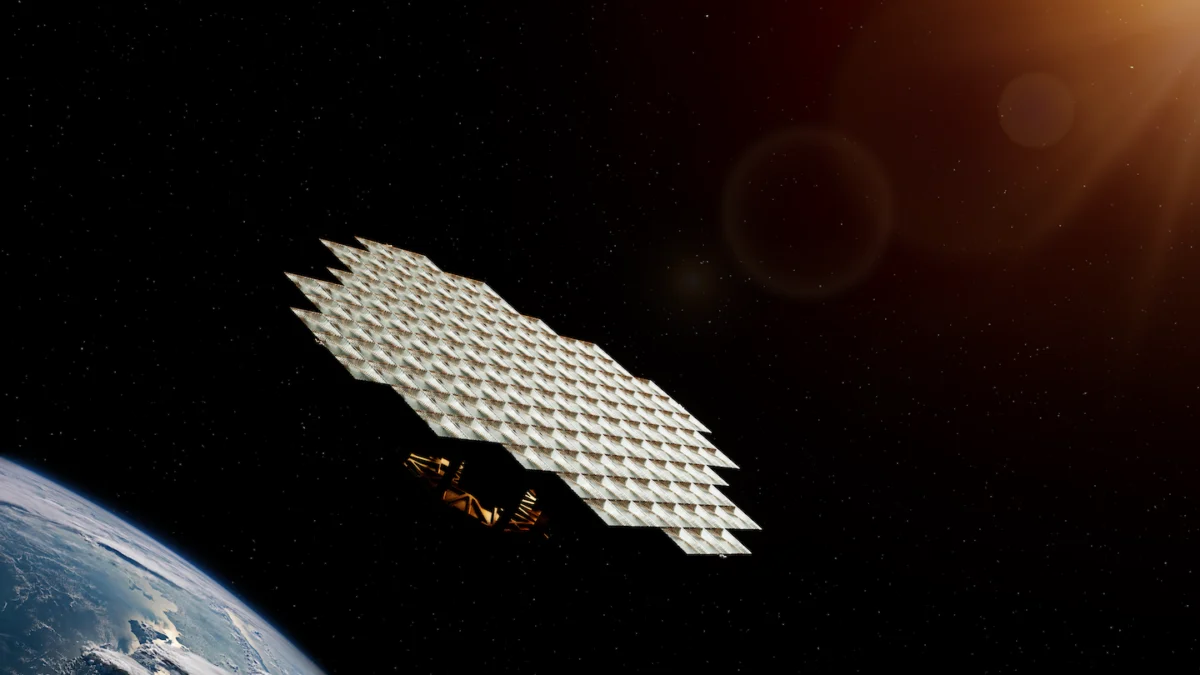
Star Catcher’s vision involves a constellation of "Power Nodes"—specialized satellites equipped with high-efficiency Fresnel lenses and optical emitters. These nodes are designed to capture solar energy and beam it directly to other satellites in Low Earth Orbit (LEO) and beyond. By providing "Power-as-a-Service," Star Catcher aims to decouple a satellite’s performance from its physical size. This would allow operators to "supercharge" their assets during periods of peak demand, extend the operational life of aging satellites, or enable smaller, cheaper satellites to perform tasks that previously required much larger platforms.
According to CEO Andrew Rush, the initiative is about building the fundamental utilities required for a sustainable presence in space. He likens the current state of the space industry to the early days of terrestrial industrialization, where the lack of a centralized power grid forced every factory to generate its own energy. By moving to a grid model, the industry can achieve greater efficiency and scalability.
Strategic Chronology and Technical Milestones
The trajectory of Star Catcher has been marked by rapid technical validation and strategic scaling. The company’s timeline reflects a focused effort to move from theoretical physics to operational deployment:
- Founding and Concept Validation (2023-2024): Founded by Andrew Rush and a team of veterans from the space manufacturing sector, the company focused on the feasibility of high-intensity optical beaming.
- Seed Funding (July 2024): The company secured $12.25 million to initiate the construction of ground-based prototypes.
- Terrestrial Demonstration (Early 2025): Star Catcher successfully demonstrated its optical power beaming technology in a controlled terrestrial environment. This test validated the ability to transmit energy across distances using concentrated light without significant thermal degradation of the receiving equipment.
- Series A Expansion (Present): The $65 million round provides the runway for the transition from ground tests to orbital deployment.
- Orbital Demonstration (Late 2025): The company is currently working toward a space-based demonstration. This mission will involve a prototype Power Node attempting to beam energy to a partner satellite in orbit, proving the technology’s efficacy in the vacuum of space and under the rigors of orbital mechanics.
The Role of Strategic Leadership
The inclusion of General Jay Raymond on the board is a tactical move that aligns Star Catcher with the broader objectives of the U.S. Department of Defense and the Space Force. As space becomes a contested domain, the resilience of orbital assets is paramount. A mobile, adaptable power grid provides a level of redundancy that is currently non-existent. If a military satellite’s solar arrays are damaged or if it needs to perform high-energy maneuvers to avoid threats, an external power source becomes a critical strategic asset.
General Raymond’s expertise in space domain awareness and orbital operations is expected to guide Star Catcher in navigating the complex regulatory and security landscape of the "second golden age of space." His presence also suggests that the company’s utility could extend beyond commercial telecommunications into the realm of national defense and government-funded deep space exploration.
Market Implications and Supporting Data
The space economy is projected to reach $1.8 trillion by 2035, according to recent reports from the World Economic Forum and McKinsey & Company. Much of this growth is driven by the proliferation of LEO constellations for internet connectivity, Earth observation, and remote sensing. However, as these constellations grow more dense, the demand for power increases.
Data from the Union of Concerned Scientists indicates that there are currently over 7,500 active satellites in orbit, a number expected to triple by the end of the decade. The vast majority of these are small satellites (smallsats) that are perennially power-starved. Star Catcher’s internal projections suggest that by providing even a 20% boost in available power to an existing LEO constellation, an operator could increase data throughput by up to 50%, significantly improving the return on investment for space-based hardware.
Furthermore, the "Power-as-a-Service" model introduces a new variable into satellite economics. Currently, power systems account for approximately 20% to 30% of a satellite’s total mass. By offloading some of this requirement to an orbital grid, manufacturers could potentially reduce the weight of their spacecraft, leading to lower launch costs or the inclusion of more scientific and commercial sensors.
Industry Reactions and Broader Impact
The investment community’s response to Star Catcher’s Series A reflects a shift in focus from "getting to space" to "operating in space." Howard Morgan, Chair of B Capital, noted that infrastructure is the missing link in the current space ecosystem. He emphasized that for space-based manufacturing and advanced telecommunications to become viable at scale, energy must be as ubiquitous in orbit as it is on the ground.
Industry analysts suggest that Star Catcher’s success could trigger a wave of innovation in satellite design. If a satellite no longer needs to be oriented perfectly toward the sun at all times to maintain its batteries, it gains more freedom of movement for its primary mission. This is particularly relevant for Earth observation satellites that often have to choose between pointing their cameras at a target and pointing their solar panels at the sun.
However, the path forward is not without technical and regulatory hurdles. Optical power beaming involves high-intensity light sources, which raises concerns regarding "space traffic control" and the potential for interference with other optical sensors or astronomical observations. Star Catcher will need to work closely with the Federal Communications Commission (FCC) and international bodies to establish safety protocols for laser-based energy transmission.
Conclusion and Future Outlook
Star Catcher’s $65 million Series A is more than a financial win; it is a signal that the infrastructure of the future is being built today. By treating power as a utility rather than a localized resource, the company is attempting to rewrite the rules of orbital mechanics and satellite engineering.
As the company prepares for its late-2025 orbital demonstration, the eyes of the aerospace industry will be on the efficacy of its optical beaming system. If successful, Star Catcher will have moved the industry one step closer to a "plug-and-play" orbital environment, where satellites can be launched with smaller footprints, live longer lives, and perform more complex tasks than ever before. This "power abundance," as Andrew Rush calls it, may well be the catalyst that transforms the current wave of space exploration into a permanent, self-sustaining orbital economy.
