
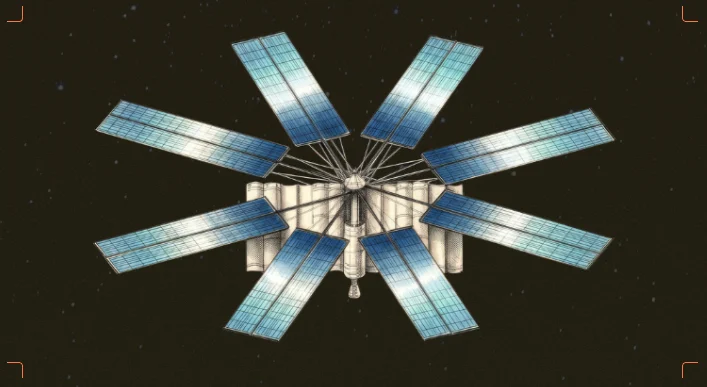

The burgeoning intersection of aerospace engineering and high-performance computing reached a new milestone this week as Cowboy Space, the venture-backed startup formerly known as Aetherflux, officially filed an application with the Federal Communications Commission (FCC) to deploy a massive constellation of 20,000 satellites. This ambitious filing follows closely on the heels of the company’s $275 million Series B funding round, signaling a significant escalation in the global race to move data center infrastructure from the Earth’s surface into low Earth orbit (LEO). The proposed constellation, dubbed "Stampede," is designed to provide high-density GPU-class compute capacity, specifically tailored to meet the voracious appetite of the artificial intelligence (AI) sector while circumventing the increasing volatility and physical limitations of terrestrial energy grids.
The Evolution of Cowboy Space: From Solar Power to Orbital Compute
Founded in 2024 by Baiju Bhatt, the co-founder and former CEO of the financial services giant Robinhood, the company initially entered the public eye under the name Aetherflux. Its original mission was centered on the development of space-based solar power (SBSP), a concept that involves capturing solar energy in orbit and beaming it down to Earth via infrared lasers. However, the rebranding to Cowboy Space reflects a broader and more integrated strategic pivot. While space-solar energy remains a foundational component of the company’s intellectual property, the focus has shifted toward utilizing that energy in situ to power orbital data centers.
The transition from Aetherflux to Cowboy Space represents a vertical integration strategy that encompasses launch, energy generation, and high-performance computing. By designing the payload to function as the upper stage of its launch vehicle, Cowboy Space aims to eliminate the traditional "parasitic mass" associated with satellite deployment. In this model, the rocket’s final stage does not simply drop off a satellite and become orbital debris; instead, it remains in orbit as a fully functional, solar-powered server node. This approach is intended to drastically reduce the cost-per-kilowatt and cost-per-teraflop of orbital operations.
The Stampede Constellation: Technical Architecture and the Optical Advantage
According to the FCC filing submitted earlier this week, the Stampede constellation will consist of 20,000 satellites operating in low Earth orbit. The primary technical differentiator of the Stampede system is its reliance on optical inter-satellite links (OISLs). Unlike traditional satellite constellations that rely heavily on radio frequency (RF) spectrum for communication—a resource that is increasingly congested and strictly regulated—Cowboy Space intends to use lasers to move data between nodes.
This optical-first approach is central to the company’s regulatory strategy. In its filing, Cowboy Space has requested a waiver from the FCC’s standard "milestone" rules. Under current regulations, satellite operators are typically required to launch a specific percentage of their constellation within a set timeframe to prevent "spectrum warehousing," where companies claim orbital slots and frequencies without actually using them. Cowboy Space argues that because its system primarily utilizes optical links rather than scarce RF spectrum, the concerns regarding warehousing are not applicable.
The company maintains that a waiver would allow for a more organic, demand-driven expansion. "A waiver here would give Cowboy Space the ability to flexibly scale its operations over time to respond to market demand and technological developments rather than artificially forcing deployment based on a regulatory mandate," the company stated in the filing. This flexibility is crucial for a business model that intends to start commercial operations with as few as one satellite in orbit, progressively building out compute capacity as market demand for AI processing grows.
Bypassing the Terrestrial Power Grid
The core value proposition of the Stampede constellation lies in its ability to decouple high-performance computing from the Earth’s energy infrastructure. On the ground, data centers are facing an unprecedented crisis. The rapid proliferation of large language models (LLMs) and generative AI has led to a surge in demand for electricity that the aging U.S. power grid is struggling to accommodate. In many jurisdictions, data center developers are facing wait times of several years for new grid connections, as well as rising costs associated with cooling and environmental compliance.
Cowboy Space’s filing highlights these constraints, describing Stampede as "a system of in-orbit data centers designed to meet the rigorous computational demands of AI while completely bypassing the congested terrestrial power grid." By positioning "silicon next to the sunlight," the company intends to capture solar energy at its source, where it is nearly constant and significantly more intense than on the Earth’s surface.
The vacuum of space also offers unique advantages for cooling, although it presents its own set of engineering challenges. While terrestrial data centers spend billions on water and air-cooling systems, orbital nodes must rely on radiative cooling. Cowboy Space’s integrated design aims to optimize these thermal dynamics, allowing GPU-class hardware to operate at peak efficiency without the overhead of terrestrial infrastructure.
A Competitive Landscape: The New Space Race for Data
Cowboy Space is not alone in its vision of an orbital cloud. The filing for 20,000 satellites places the company in direct competition with some of the most powerful entities in the aerospace industry. Earlier this year, SpaceX, led by Elon Musk, submitted filings indicating its intent to pursue a constellation that could eventually reach up to one million satellites, specifically targeting orbital data services through its integration with xAI. Similarly, Starcloud has filed for an 88,000-satellite constellation.
Despite the massive scale of its competitors’ filings, Cowboy Space is positioning itself as a more specialized and efficient alternative. While SpaceX’s Starlink is primarily a connectivity play—designed to move data from point A to point B—Stampede is a compute play, designed to process data where the energy is most abundant.
The financial backing for Cowboy Space suggests that investors see significant merit in this specialized approach. The $275 million Series B round, which was finalized just days before the FCC filing, provides the company with the "war chest" necessary to move from the design phase to physical hardware. While the company has not publicly disclosed the full list of investors, the round is believed to have been led by major venture capital firms with long-term interests in both AI and deep-tech infrastructure.
Chronology and Future Milestones
The roadmap for Cowboy Space is aggressive but structured. Following the rebranding and the successful Series B funding in May 2026, the company is now focused on the regulatory approval process with the FCC and international bodies.
- 2024: Founded as Aetherflux by Baiju Bhatt; initial focus on space-based solar power.
- Early 2026: Rebranded to Cowboy Space; expanded mission to include orbital data centers and integrated launch vehicles.
- May 2026: Secured $275 million in Series B funding.
- May 2026: Filed FCC application for the 20,000-satellite Stampede constellation.
- 2026–2027: Prototyping and testing of integrated upper-stage server nodes and optical link hardware.
- 2028: Target date for the inaugural launch of the first Stampede node.
- 2028 and Beyond: Progressive scaling of the constellation based on commercial demand and the successful demonstration of in-orbit compute capabilities.
Strategic Implications for National Interest and Space Leadership
Beyond the commercial potential, Cowboy Space’s filing emphasizes the strategic importance of the Stampede constellation for the United States. The company argues that moving compute capacity into orbit is essential for maintaining American leadership in space innovation. By bypassing "Earth’s constrained infrastructure," the U.S. can ensure that its AI development is not bottlenecked by domestic energy shortages or regulatory delays.
"Stampede presents an unprecedented opportunity for the United States to maintain its leadership in space innovation through the deployment of advanced, continuous space-solar energy and GPU-class compute capacity," the filing stated. This narrative aligns with broader national security concerns regarding the resilience of data infrastructure and the need to secure a technological advantage in the rapidly evolving field of orbital mechanics.
Challenges and Considerations: Debris and Sustainability
The proposal to add 20,000 satellites to low Earth orbit is certain to draw scrutiny from orbital sustainability advocates and the scientific community. The sheer volume of objects in LEO has raised concerns about the "Kessler Syndrome"—a theoretical scenario where the density of objects in orbit is high enough that a single collision could set off a cascade of self-sustaining crashes.
Cowboy Space will likely face rigorous questioning from the FCC regarding its debris mitigation plans. The company’s "upper stage as payload" design may offer some benefits here, as it reduces the number of separate components being released into orbit during a launch. However, the long-term management of 20,000 active nodes will require sophisticated autonomous maneuvering capabilities and a clear end-of-life disposal strategy to ensure that the Stampede constellation does not contribute to the growing problem of space junk.
Conclusion: The Dawn of the Orbital Economy
The filing by Cowboy Space represents a paradigm shift in how we conceive of "the cloud." For decades, the cloud has been a terrestrial construct—massive warehouses of servers buried in the ground or hidden in remote industrial zones. By proposing a 20,000-satellite "Stampede," Cowboy Space is betting that the future of intelligence lies above the atmosphere.
If successful, the company will have solved two of the greatest challenges facing modern technology: the insatiable energy demand of AI and the physical limitations of the Earth’s power grid. While the road to a 2028 launch is fraught with technical, regulatory, and financial hurdles, the scale of Cowboy Space’s ambition reflects a new era of the space economy—one where the final frontier is not just a place to explore, but a place to compute.
