

Amazon Web Services (AWS) has announced the general availability of its highly anticipated DevOps Agent and Security Agent, marking a significant leap in the application of autonomous AI within cloud operations and cybersecurity. This pivotal development follows their initial introduction at the recent re:Invent conference, positioning AWS at the forefront of AI-driven enterprise solutions. Simultaneously, AWS leadership reaffirmed its commitment to fostering robust global tech communities through a visit to the dynamic AWS Hong Kong User Group, highlighting the strategic importance of regional engagement and localized innovation in the broader cloud ecosystem.
Strategic AI Advancements: AWS DevOps Agent and Security Agent Achieve General Availability
The general availability of the AWS DevOps Agent and AWS Security Agent represents a critical milestone in the evolution of cloud management and defense. These "frontier agents," a concept first unveiled at re:Invent, are designed to operate autonomously across multiple steps, continuously working towards specific outcomes without constant human intervention. This paradigm shift from traditional automation tools promises to fundamentally alter how organizations manage their cloud infrastructure and protect their digital assets.
The imperative for such autonomous operations stems from the ever-increasing complexity of modern IT environments. Enterprises grappling with vast, distributed systems, continuous deployment pipelines, and an escalating threat landscape often face a shortage of skilled personnel and struggle with the sheer volume of tasks required for effective management and security. AWS’s new agents are engineered to offload this heavy lifting, enabling human experts to focus on strategic initiatives rather than reactive firefighting.
AWS DevOps Agent: Streamlining Cloud Operations and Incident Response
The AWS DevOps Agent is engineered to revolutionize cloud operations by intelligently investigating incidents, drastically reducing resolution times, and proactively preventing issues before they impact services. This agent leverages advanced AI and machine learning capabilities to observe, analyze, and act upon operational data, identifying anomalies and recommending or executing remediation steps autonomously. Its core functionality spans across monitoring, diagnosis, and automated recovery, providing an always-on, intelligent teammate for operations teams.
Early adopters and preview customers have already reported substantial improvements in their operational metrics. United Airlines, Western Governors University (WGU), and T-Mobile are among the organizations leveraging the DevOps Agent to accelerate incident response and simplify operations at scale. Notably, WGU experienced a dramatic reduction in resolution time, plummeting from hours to mere minutes. Across the preview program, customers reported an impressive average of up to 75% lower Mean Time To Resolution (MTTR) and a 3 to 5 times faster resolution rate for incidents. These figures underscore the agent’s potential to significantly enhance system reliability, minimize costly downtime, and free up valuable engineering resources that would otherwise be consumed by manual troubleshooting. The ability to prevent issues proactively, based on learned patterns and predictive analytics, further solidifies its value proposition, transforming reactive operations into a more resilient, anticipatory framework.
AWS Security Agent: Proactive, Continuous Penetration Testing
Complementing the operational prowess of its counterpart, the AWS Security Agent introduces continuous, context-aware penetration testing directly into the development lifecycle. Unlike traditional, often periodic, penetration tests that can be time-consuming and resource-intensive, this agent operates much like a human penetration tester but with the added benefits of continuous execution and scalable analysis. It is designed to proactively identify vulnerabilities from design to deployment, integrating seamlessly into existing CI/CD pipelines. By continuously scanning and probing applications for weaknesses, it ensures that security is not an afterthought but an intrinsic part of the development process.
Customers like LG CNS, HENNGE, and Wayspring have already reported strong results from their adoption of the Security Agent. LG CNS, for example, estimated over 50% faster testing cycles and approximately 30% lower costs associated with security assessments. Furthermore, the agent significantly reduced the number of false positives, a common challenge in automated security scanning that often leads to wasted effort for security teams. The Security Agent’s capability to deliver high-fidelity vulnerability detection with reduced manual overhead translates into a stronger security posture, faster time-to-market for secure applications, and optimized resource allocation for security teams. By embedding security testing at every stage, it embodies the principles of DevSecOps, fostering a culture of "security by design."
Cross-Environment Capability: A Strategic Imperative
A crucial strategic advantage of both the AWS DevOps Agent and AWS Security Agent is their designed capability to operate across diverse environments. They are not limited to AWS cloud infrastructure but are built to function effectively in multicloud and on-premises deployments. This flexibility addresses a critical need for large enterprises and organizations that typically operate hybrid or multi-cloud architectures. By providing a unified, intelligent layer for operations and security across these varied landscapes, AWS is enabling customers to maintain consistency, leverage advanced AI capabilities irrespective of their underlying infrastructure choices, and avoid vendor lock-in for critical management tools. This strategic approach underscores AWS’s understanding of complex enterprise realities and its commitment to delivering solutions that adapt to diverse operational footprints.
Fostering Global Innovation: AWS Deepens Ties with Hong Kong’s Vibrant Tech Community
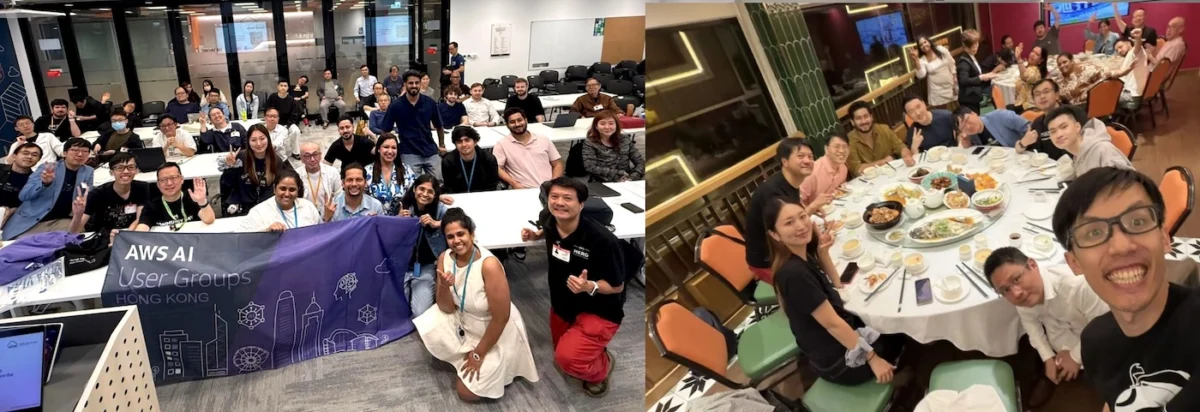
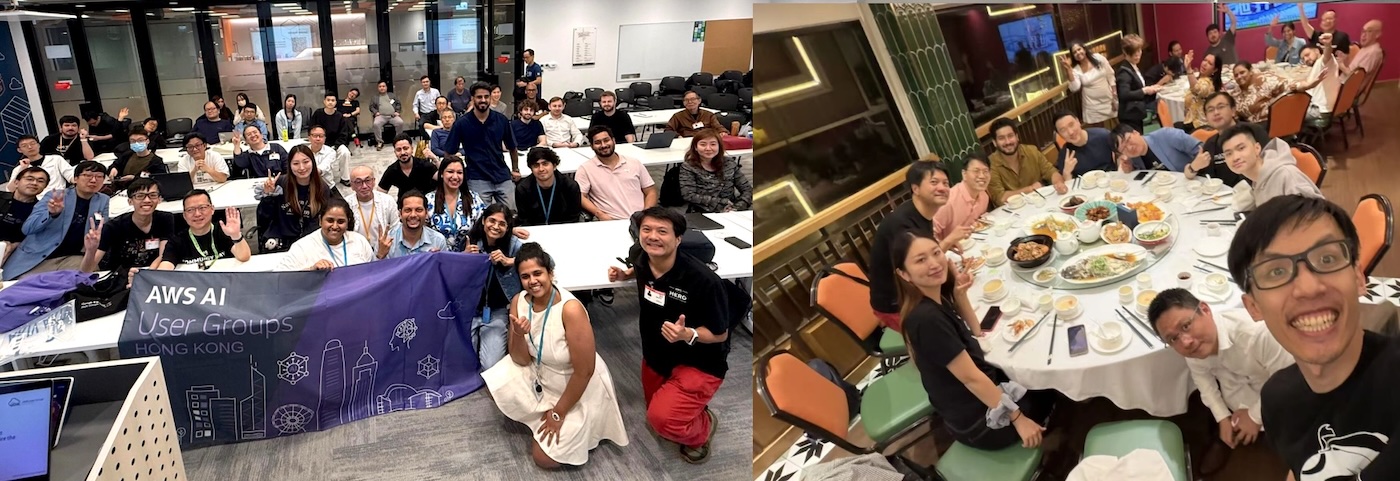
Beyond technological advancements, AWS continues to emphasize the critical role of community in fostering innovation and driving cloud adoption globally. A recent visit by an AWS team to the AWS Hong Kong User Group underscored this commitment. The visit highlighted Hong Kong’s tech scene, characterized by a small but highly energetic and passionate community. Such user groups serve as vital conduits for knowledge sharing, peer-to-peer learning, and direct feedback channels to AWS, enabling the company to better understand regional needs and tailor its offerings.
The recent launch of a new AI user group within the Hong Kong community is particularly significant. In an era where artificial intelligence is rapidly reshaping industries, dedicated forums for AI enthusiasts and practitioners are crucial for accelerating skill development, fostering collaborative projects, and exploring new applications of AWS AI services. This initiative aligns with AWS’s broader strategy to democratize AI and empower developers worldwide. Through engagements like this, AWS not only strengthens its bond with local developers but also cultivates a robust ecosystem that drives both innovation and commercial growth within the Asia-Pacific region. Hong Kong, with its strategic location and well-established financial and technological infrastructure, represents a key market where local community support can significantly influence broader regional cloud adoption trends. The visit, characterized by "great food and conversation," exemplifies AWS’s informal yet effective approach to building lasting relationships within its global developer network.

Navigating Service Lifecycles: Transparency in AWS Product Availability Updates
In parallel with new service launches, AWS maintains a rigorous process for managing the lifecycle of its existing services and features. Transparency in these changes is paramount for customers who rely on AWS for their mission-critical operations. On March 31, 2026, AWS updated its "AWS Product Lifecycle Changes" documentation, providing clear guidance on service availability alterations, available alternatives, and migration support. This proactive communication is essential for minimizing disruptions to customer operations and enabling effective long-term planning.
The management of service lifecycles in cloud computing is a complex but necessary undertaking. As technology evolves rapidly, cloud providers continually innovate, improve, and sometimes consolidate or deprecate older services to ensure optimal performance, security, and cost-efficiency. For customers, these changes necessitate careful planning and migration strategies. AWS’s commitment to providing detailed documentation and direct support via AWS Support channels is designed to facilitate smooth transitions, ensuring that businesses can continue to leverage the most current and efficient cloud services without undue operational burden. This process reflects an industry best practice, where clear communication and supportive resources are crucial elements of customer trust and long-term partnership in the dynamic cloud landscape.
Recent Innovations and Ecosystem Growth: A Snapshot of AWS Advancements
Beyond the headline-grabbing autonomous agents, AWS continues its relentless pace of innovation across its extensive portfolio of services. Recent weeks have seen a flurry of updates and new features designed to enhance performance, expand capabilities, and simplify development for customers across various domains.
For instance, Amazon SageMaker, AWS’s fully managed machine learning service, has likely seen further enhancements to its MLOps capabilities. This could include new tools for automated model monitoring and retraining, improved data labeling workflows, or expanded integration with other AWS services for end-to-end ML pipeline management. Such updates empower data scientists and machine learning engineers to build, train, and deploy models more efficiently, accelerating the adoption of AI across industries. The focus on MLOps is particularly critical as organizations move from experimental ML projects to production-grade AI systems, demanding robust governance, scalability, and lifecycle management.
Similarly, the AWS Lambda serverless compute service has likely received updates aimed at further optimizing performance and expanding its utility. This might include support for new programming runtimes, further reductions in cold start times for critical applications, or enhanced integration patterns with event sources and destinations. These improvements allow developers to build highly scalable, cost-effective, and resilient applications with even less operational overhead, solidifying Lambda’s position as a cornerstone of modern cloud-native architectures. The evolution of serverless computing continues to drive efficiency and agility, enabling businesses to innovate faster and respond to market demands more dynamically.
In the realm of data analytics and databases, AWS has likely rolled out enhancements to services such as Amazon Redshift, Amazon Aurora, or AWS Glue. Updates might include performance improvements for data warehousing and relational databases, new features for data lake management and ETL (Extract, Transform, Load) processes, or expanded governance and security capabilities. These continuous improvements are vital for organizations managing ever-growing volumes of data, enabling them to derive deeper insights, build more sophisticated data-driven applications, and ensure data integrity and compliance across their enterprise. The ability to efficiently store, process, and analyze vast datasets remains a key differentiator for businesses in today’s data-intensive economy.
These ongoing developments, regularly detailed on the "What’s New with AWS" page and various AWS Blogs, collectively underscore AWS’s commitment to continuous innovation across its entire cloud stack. They provide developers and businesses with a constant stream of new tools and capabilities to build, scale, and secure their applications more effectively.
Broader Engagement and Continuous Learning: AWS Resources and Events
AWS actively cultivates a vibrant global community through a wide array of resources and events designed to support continuous learning and collaboration. The official AWS News Blog, "What’s New with AWS" page, and the comprehensive "AWS Blogs" platform serve as primary conduits for disseminating the latest announcements, technical deep dives, and best practices. These resources are invaluable for staying abreast of the rapid pace of cloud innovation.
Beyond digital content, AWS hosts numerous in-person and virtual events throughout the year. These include large-scale gatherings such as AWS Summits and Community Days, which offer opportunities for learning, networking, and direct engagement with AWS experts and partners. Specialized events cater to startups and developers, providing tailored content and support. The recently launched AWS Builder Center further enhances this ecosystem by providing a dedicated platform for builders to connect, share solutions, and access content that supports their development journeys. This multifaceted approach to community engagement ensures that users at every level, from individual developers to large enterprises, have access to the knowledge, tools, and connections necessary to maximize their cloud investments and drive innovation.
Conclusion and Outlook
The general availability of the AWS DevOps Agent and Security Agent marks a pivotal moment, ushering in an era where autonomous AI plays a central role in optimizing cloud operations and fortifying cybersecurity defenses. These frontier agents are poised to redefine efficiency and resilience for enterprises navigating complex digital landscapes. Coupled with AWS’s unwavering commitment to fostering and empowering vibrant global communities, as exemplified by its engagement with the Hong Kong User Group and the continuous stream of service enhancements, AWS demonstrates a holistic strategy for leading the cloud computing industry. By combining cutting-edge technology with robust community support, AWS continues to empower organizations worldwide to innovate faster, operate more securely, and achieve unprecedented levels of operational excellence. The trajectory indicates a future where intelligent automation and collaborative ecosystems are fundamental pillars of cloud success.
