
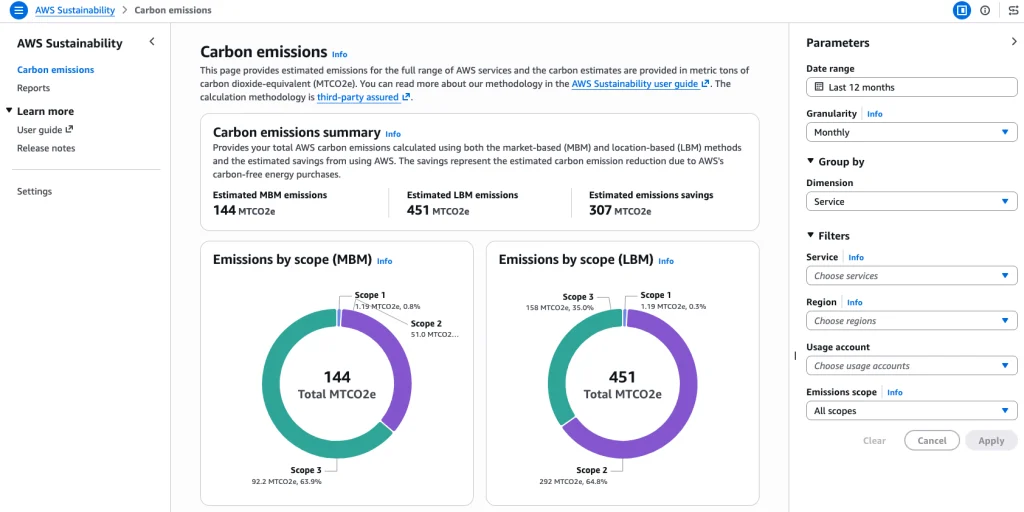

Amazon Web Services (AWS) has announced the launch of its new AWS Sustainability console, a standalone service designed to centralize and streamline access to sustainability reporting and resources for its vast customer base. This strategic move marks a significant step in AWS’s commitment to both its own environmental goals and assisting customers in measuring and reducing the ecological footprint of their cloud workloads. The console addresses critical feedback from organizations grappling with the complexities of environmental, social, and governance (ESG) reporting, offering a more accessible and comprehensive view of their cloud-related carbon emissions.
The Genesis of Enhanced Transparency: Addressing a Growing Need
The introduction of the AWS Sustainability console is a direct evolution from the existing Customer Carbon Footprint Tool (CCFT), which previously resided within the AWS Billing console. While the CCFT provided valuable initial insights into carbon emissions attributable to AWS usage, its integration with billing data presented a practical hurdle for many organizations. Sustainability professionals and reporting teams, who are increasingly tasked with granular emissions tracking, often lacked the necessary billing-level permissions to access this crucial data. This structural limitation often led to convoluted internal processes, requiring complex permission navigation or reliance on other departments to extract information not directly relevant to their core responsibilities.
The new console rectifies this by establishing its own independent permissions model. This separation allows sustainability teams to gain direct access to their emissions data without needing to be granted broader, and often sensitive, billing and cost management permissions. This distinction is paramount in fostering greater organizational efficiency and accountability in sustainability efforts, aligning data access with specific departmental roles. It acknowledges the growing importance of sustainability reporting as a distinct discipline within enterprises, requiring dedicated tools and streamlined workflows.
A Deep Dive into the Console’s Capabilities
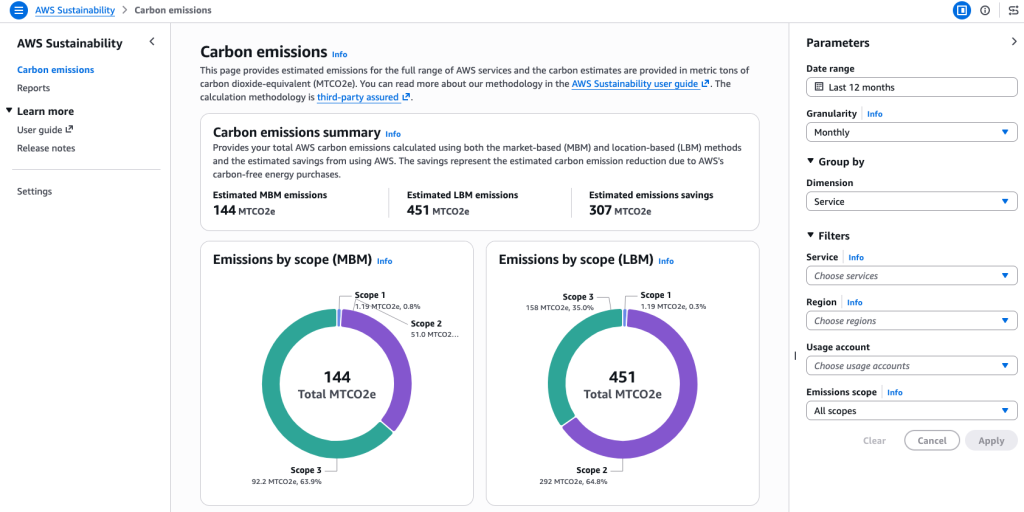
The AWS Sustainability console is engineered to provide a holistic view of an organization’s cloud-related environmental impact. It consolidates all AWS sustainability reporting and resources into a single, intuitive interface, offering a clear breakdown of Scope 1, Scope 2, and Scope 3 emissions attributed to AWS usage. These emissions are categorized by AWS Region and specific services, such as Amazon CloudFront, Amazon Elastic Compute Cloud (Amazon EC2), and Amazon Simple Storage Service (Amazon S3), allowing users to pinpoint "hotspots" of emissions and identify areas for potential optimization.

For those unfamiliar with the terminology, Scope 1 emissions encompass direct emissions from sources owned or controlled by AWS, such as fuel combustion in data centers for backup generators. Scope 2 emissions cover indirect emissions from the generation of purchased electricity, which AWS actively mitigates through investments in renewable energy. Scope 3 emissions represent other indirect emissions that occur across the value chain, including the manufacturing of servers and the construction of data centers. AWS provides data for both market-based method (MBM) and location-based method (LBM) accounting, reflecting different approaches to calculating Scope 2 emissions based on energy attribute certificates or average local grid emissions, respectively. The underlying data and methodology for these calculations remain consistent with those used by the CCFT, which have been independently verified by a third-party consultant, Apex, ensuring accuracy and credibility.
Flexible Reporting and Integration for Diverse Needs
Recognizing the increasingly complex landscape of sustainability reporting requirements, the console introduces enhanced flexibility in data access and export. A dedicated "Reports" page allows users to download preset monthly and annual carbon emissions reports, covering both MBM and LBM data. Beyond standard reports, organizations can now build custom comma-separated values (CSV) reports, enabling them to select specific fields, time granularities, and apply various filters to tailor data exports precisely to their needs. This level of customization is crucial for meeting varied internal reporting demands and external regulatory mandates.
Furthermore, a significant new feature is the ability to configure the console to align with an organization’s fiscal year. This seemingly minor adjustment addresses a common pain point for finance and sustainability teams, who often operate on different reporting calendars than the standard calendar year. By enabling fiscal year alignment, the console ensures that all data views and exports accurately reflect the organization’s specific reporting periods, removing a significant friction point in parallel reporting efforts.
For advanced users and large enterprises, the console also offers robust programmatic access. Through a new API and integration with AWS SDKs and the AWS Command Line Interface (AWS CLI), organizations can seamlessly integrate their emissions data into existing reporting pipelines, custom dashboards, or compliance workflows. This capability is particularly valuable for teams managing a large number of AWS accounts, needing to pull specific monthly data programmatically, or for those requiring custom account groupings that deviate from their existing AWS Organizations structure. This programmatic access empowers developers and data analysts to build sophisticated solutions that leverage emissions data, driving further insights and automation.
Amazon’s Broader Sustainability Vision: The Climate Pledge and Beyond
The launch of the AWS Sustainability console is deeply rooted in Amazon’s broader environmental commitment, encapsulated by The Climate Pledge. Initiated in 2019, The Climate Pledge sets an ambitious goal for Amazon to reach net-zero carbon across its operations by 2040 – a decade ahead of the Paris Agreement’s target. This pledge has profoundly influenced how AWS designs, builds, and operates its global infrastructure, from data centers to supply chains.

AWS’s commitment to sustainability extends beyond merely reporting emissions; it actively invests in initiatives aimed at reducing its own environmental footprint. This includes a vigorous pursuit of 100% renewable energy to power its global operations, a goal it is on track to achieve by 2025. By the end of 2022, AWS had already reached 90% renewable energy for its operations, driven by over 400 renewable energy projects worldwide. These projects, including solar and wind farms, contribute clean energy directly to the grids where AWS data centers operate.
Beyond energy, AWS is also focused on water efficiency, aiming to be water positive by 2030, returning more water to communities than it uses in its direct operations. This involves innovative cooling technologies in data centers, water recycling programs, and investments in water replenishment projects. The company also employs advanced hardware design, utilizing custom-built AWS Graviton processors that offer superior energy efficiency compared to traditional x86 processors, further reducing the carbon footprint of customer workloads running on these instances. By making its own operations more sustainable, AWS provides a greener foundation for its customers’ cloud migrations.
Implications for Corporate Sustainability and the Cloud Industry
The AWS Sustainability console is poised to have significant implications for corporate sustainability reporting and the broader cloud computing industry. As regulatory pressures mount globally, with initiatives like the EU’s Corporate Sustainability Reporting Directive (CSRD) and evolving SEC proposals in the United States, companies are under increasing scrutiny to provide transparent and verifiable ESG data. Cloud usage, often a substantial component of an enterprise’s IT infrastructure, represents a critical area for emissions accounting.
By providing a dedicated, accessible, and flexible tool for tracking cloud emissions, AWS empowers its customers to meet these reporting demands more effectively. It democratizes access to environmental data, moving it from specialized finance or IT departments into the hands of sustainability professionals who are best equipped to interpret and act upon it. This shift is crucial for fostering a culture of sustainability throughout organizations, encouraging more environmentally conscious architectural decisions and operational practices.
Industry analysts suggest that tools like the AWS Sustainability console will become indispensable for enterprises seeking to understand and mitigate their environmental impact. The ability to easily identify high-emissions services or regions can guide optimization strategies, leading to both environmental benefits and potential cost savings through more efficient resource utilization. Furthermore, the API integration enables organizations to build robust internal dashboards that can track progress against sustainability goals, integrate with other enterprise resource planning (ERP) systems, and streamline compliance audits.
This launch also underscores a broader trend within the cloud industry, where major providers are increasingly recognizing their role in global sustainability efforts. As cloud adoption continues to accelerate, the collective environmental footprint of data centers becomes a critical consideration. By offering transparency and tools for customers to manage their impact, AWS is not only supporting its own Climate Pledge but also enabling thousands of businesses worldwide to contribute to a more sustainable future. This competitive landscape will likely see other cloud providers enhance their own sustainability reporting capabilities, driving innovation and raising the bar for environmental accountability across the sector.
Getting Started and Future Outlook
The AWS Sustainability console is available immediately at no additional cost to AWS customers. It can be accessed directly from the AWS Management Console by searching for "sustainability." For those eager to understand their past impact, historical data is available dating back to January 2022, allowing organizations to analyze emissions trends and establish baselines right away.
AWS emphasizes that this console is designed to evolve. The company plans to continuously release new features and expand its capabilities, responding to customer feedback and the dynamic requirements of global sustainability reporting. This iterative approach ensures the console remains a relevant and powerful tool for organizations on their sustainability journey.
The launch of the AWS Sustainability console represents a pivotal moment in making cloud computing not just efficient and scalable, but also transparent and accountable from an environmental perspective. By empowering customers with better data and tools, AWS is fostering a more sustainable digital ecosystem, reinforcing its commitment to a net-zero future for both its operations and those of its global clientele.
