

This week’s discussions delve into a significant announcement regarding the podcast and newsletter, signaling upcoming developments for the platform. Subsequently, the conversation pivots to the persistent challenges surrounding the Matter smart home standard, exploring the complexities and potential culprits behind its current struggles. The article further examines the contentious issue of hacked radiation sensors in Chernobyl, as reported by Kim Zetter, and then shifts to the dynamic landscape of semiconductor innovation with the formation of a new RISC-V company backed by industry giants and the proposed acquisition of an IoT module business. The emergence of a novel drone startup building an expansive on-demand network also garners attention, alongside a personal reflection on a transition to Home Assistant and practical advice for preparing homes for smart energy management programs. The segment concludes with a listener query regarding the Amazon Echo Show and compatible devices.
The Evolving Landscape of Smart Home Interoperability: Navigating Matter’s Stumbling Blocks
The smart home ecosystem has long been promised as a seamless, interconnected environment where devices from different manufacturers communicate effortlessly. The advent of the Matter standard, championed by major technology players like Apple, Google, and Amazon, aimed to finally deliver on this promise. However, recent developments and ongoing analyses reveal significant hurdles that are hindering its widespread adoption and smooth functioning.
One of the primary areas of concern revolves around the implementation of Thread, a low-power wireless networking protocol that is a cornerstone of Matter. Reports from sources like The Verge have highlighted critical issues with Thread credentialing, a process that essentially allows devices to securely join and participate in a Thread network. This credentialing process, crucial for establishing trust and ensuring network integrity, has proven to be a complex and often problematic aspect for users attempting to set up their smart home devices. The experience has been described as disjointed and frustrating, with uneven device support exacerbating the difficulties. This lack of consistent performance across different product lines creates a fragmented user experience, undermining the very interoperability that Matter seeks to achieve.
The implications of these issues are far-reaching. For consumers, it translates to a less intuitive and more time-consuming setup process, potentially deterring adoption of Matter-enabled devices. For manufacturers, it means increased development costs and customer support burdens to address compatibility and performance issues. The long-term impact could be a slower realization of the smart home’s full potential, as the foundational technology struggles to gain widespread trust and reliability.
Unforeseen Threats: The Specter of Hacked Radiation Sensors in Chernobyl
In a stark reminder of the enduring vulnerabilities of critical infrastructure, reports have surfaced regarding the potential for compromised radiation sensors in the Chernobyl Exclusion Zone. As detailed by Kim Zetter, there is a concerning possibility that these vital monitoring systems could have been manipulated.
The Chernobyl disaster, which occurred in April 1986, remains one of the most catastrophic nuclear accidents in history. The event led to widespread radioactive contamination and necessitated the evacuation of hundreds of thousands of people. The ongoing monitoring of radiation levels within the Exclusion Zone is paramount for understanding the long-term environmental impact and ensuring public safety.
The prospect of these sensors being hacked raises profound security and public health concerns. A compromised sensor could provide false readings, either understating or overstating radiation levels. In an environment where accurate data is critical for risk assessment and mitigation strategies, such manipulation could have severe consequences. It underscores the broader challenge of securing Internet of Things (IoT) devices, particularly those deployed in sensitive or remote locations, against malicious actors. The timeline of such a potential breach, if confirmed, would be crucial in understanding the extent of the threat and the duration of any compromise.
A New Era in Semiconductor Architecture: The RISC-V Alliance and Shifting Industry Dynamics
The semiconductor industry is witnessing significant shifts, marked by strategic alliances and potential acquisitions that signal evolving technological priorities. A notable development is the formation of a new company dedicated to accelerating RISC-V, an open-source instruction set architecture (ISA). This venture is backed by a consortium of leading semiconductor players, including Qualcomm, NXP, and Infineon.
RISC-V’s open-source nature offers a compelling alternative to proprietary ISAs like ARM and x86, promising greater flexibility, customization, and potentially lower licensing costs for chip designers. The collaborative effort by these industry giants suggests a concerted push to establish RISC-V as a mainstream architecture, particularly in areas such as artificial intelligence, automotive, and the Internet of Things. This alliance could accelerate innovation and foster a more competitive landscape in chip design. The timeline for the full impact of this new entity will likely unfold over several years as it develops its strategies and product roadmaps.
In parallel, the IoT module business of a prominent player is reportedly being eyed for acquisition by Renesas, a move that could further consolidate the market for specialized IoT components. Such acquisitions often aim to streamline product portfolios, gain access to new technologies or customer bases, and achieve economies of scale. The implications for the broader IoT market could include shifts in product availability, pricing, and the pace of innovation in connected devices.
The Rise of On-Demand Drone Networks: A New Paradigm for Infrastructure Monitoring
A notable development in the drone technology sector is the emergence of a startup, Birdstop, which is focused on building an on-demand drone network. This network aims to provide widespread coverage across America, with a particular emphasis on protecting critical infrastructure. The model described is reminiscent of satellite networks, suggesting a scalable and accessible approach to aerial surveillance and monitoring.

The implications of such a network are significant. Critical infrastructure, including power grids, pipelines, and transportation systems, is increasingly reliant on robust monitoring for security and operational efficiency. An on-demand drone network could offer a more agile and cost-effective solution compared to traditional methods, enabling rapid deployment for inspections, security patrols, and emergency response. The funding secured by Birdstop suggests investor confidence in this innovative approach. The development of such a network will likely involve overcoming regulatory hurdles, ensuring airspace integration, and establishing robust operational protocols.
Personal Journeys in Smart Home Management: Embracing Home Assistant and Smart Energy
The personal experiences and evolving approaches to smart home technology continue to be a focal point for many enthusiasts and users. One such journey involves a transition to Home Assistant, an open-source home automation platform. The reaction from the audience to this transition, including comments and feedback, has provided valuable insights into the challenges and rewards of adopting such a system. Home Assistant is known for its flexibility and extensive customization options, appealing to users who seek greater control over their smart home devices and data. The audience’s engagement highlights the community-driven nature of such platforms and the importance of shared experiences in navigating complex technological landscapes.
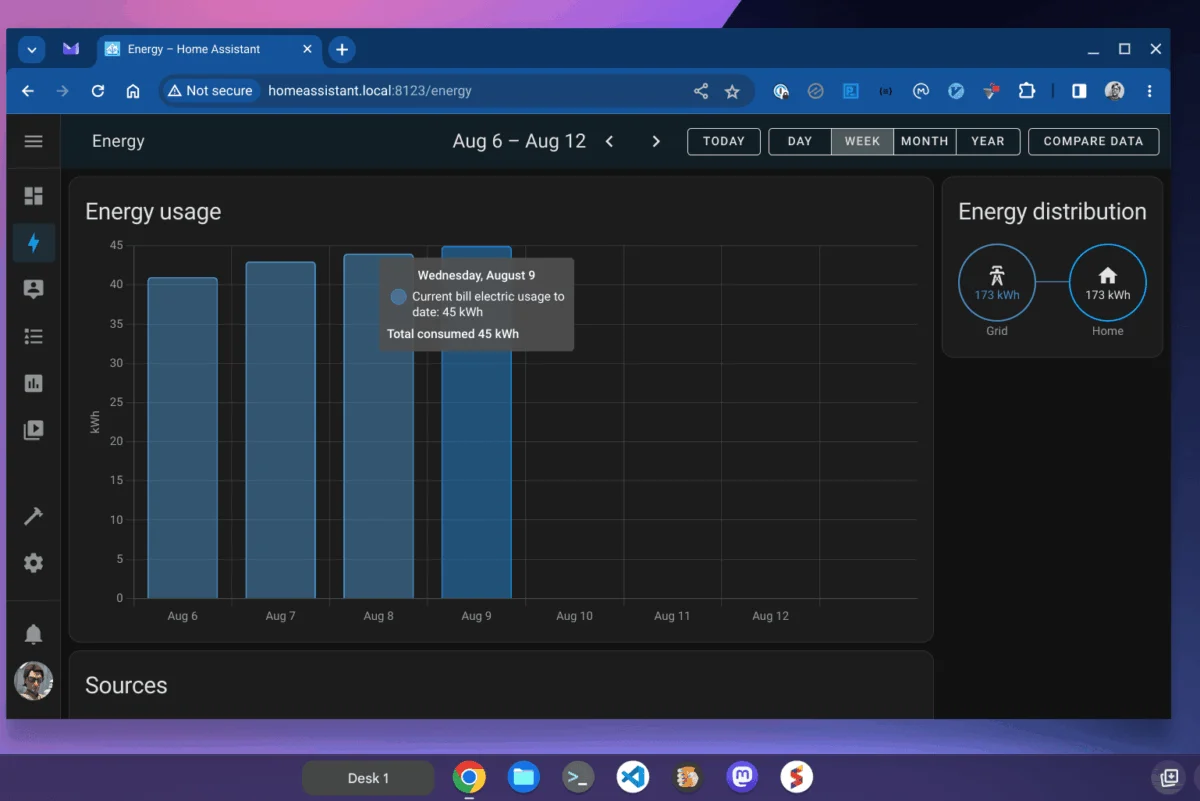
Beyond device control, there is a growing emphasis on smart energy management. Practical advice is being offered to help individuals prepare their homes for upcoming smart energy management programs. These programs often leverage smart meters and connected devices to optimize energy consumption, potentially leading to cost savings and reduced environmental impact. Steps such as understanding home energy usage patterns, ensuring compatibility of existing appliances with smart energy systems, and exploring energy-efficient upgrades are crucial for maximizing the benefits of these initiatives. The image accompanying this discussion, showcasing Home Assistant’s energy monitoring capabilities, visually represents the practical application of such advancements.
Addressing Listener Inquiries: Amazon Echo Show and Device Compatibility
The segment concludes with a listener question that addresses a common point of interest for many smart home users: the Amazon Echo Show and its compatibility with other devices. The Amazon Echo Show is a popular smart display that integrates voice control with a visual interface, offering a wide range of functionalities from controlling smart home devices to accessing information and entertainment. Understanding which devices work seamlessly with the Echo Show is crucial for users looking to build or expand their smart home ecosystems. This often involves exploring compatibility with different smart home protocols, such as Wi-Fi, Bluetooth, and Zigbee, as well as specific device integrations through Amazon’s Alexa platform.
Honeywell’s Strategic Leap into TinyML: On-Device Intelligence for Enhanced Services
In a significant move towards leveraging advanced intelligence at the edge, Honeywell is actively exploring and implementing Tiny Machine Learning (TinyML) solutions. Muthu Sabarethinam, VP of AI/ML Product and Services at Honeywell, recently shared insights into the company’s strategic approach to utilizing data from its extensive equipment portfolio to build enhanced services.
Honeywell, a diversified technology and manufacturing leader, operates across a broad spectrum of industries, including aerospace, building technologies, and performance materials and technologies. The company supports a vast network of over one million sensors deployed in the field, presenting a substantial opportunity for the application of TinyML.
The core of Honeywell’s TinyML strategy lies in its desire to embed intelligence directly onto sensors. Sabarethinam explained the compelling reasons behind this approach, highlighting significant benefits related to security, power efficiency, and latency. By processing data locally on the sensor, rather than transmitting it to a central cloud for analysis, Honeywell aims to create more secure systems. This distributed intelligence model reduces the attack surface, making it more difficult for malicious actors to intercept or manipulate data.
Furthermore, running algorithms directly on sensors dramatically improves power efficiency. For battery-powered or energy-constrained devices, TinyML offers a pathway to extended operational life, reducing the need for frequent battery replacements or external power sources. This is particularly critical for the massive scale of sensors Honeywell deploys.
Latency is another key driver. In applications where real-time decision-making is essential, such as industrial automation or critical infrastructure monitoring, the delay associated with cloud-based processing can be unacceptable. TinyML allows for immediate analysis and response, enabling faster and more responsive systems.
Sabarethinam also discussed the critical aspect of algorithm packaging for scalable TinyML deployment. He emphasized the need for standardized methodologies that make it easier for companies to develop, test, and deploy machine learning models on resource-constrained devices. This involves optimizing algorithms for size, computational requirements, and energy consumption, ensuring they can run effectively on the limited processing power available in many sensors.
The discussion also touched upon evolving business models and customer preferences for data access. As companies like Honeywell move towards more data-driven services, understanding how customers want to consume and utilize this information becomes paramount. This could involve providing aggregated insights, real-time alerts, or direct access to processed data, tailored to specific industry needs and operational workflows.
The integration of TinyML at such a large scale has the potential to transform how Honeywell’s equipment operates and the services it can offer. It signifies a broader industry trend towards edge computing, where intelligence is pushed closer to the data source, unlocking new possibilities for efficiency, security, and advanced functionality across a wide array of applications.
