

Amazon Web Services (AWS) has announced the general availability of cross-account safeguards in Amazon Bedrock Guardrails, a significant enhancement designed to empower organizations with centralized enforcement and management of safety controls across multiple AWS accounts within their cloud infrastructure. This new capability marks a crucial step forward in addressing the complex governance and compliance challenges associated with the widespread adoption of generative AI technologies in enterprise environments.
The proliferation of generative AI applications across various departments and projects within large organizations has highlighted an urgent need for robust, scalable, and centrally managed safety mechanisms. Prior to this release, managing AI safety controls often involved configuring guardrails individually for each AWS account or application, leading to potential inconsistencies, increased administrative overhead, and heightened risk exposure. The new cross-account safeguards directly tackle these issues by allowing enterprises to define a guardrail once and apply it uniformly across their entire AWS Organization, ensuring a consistent and unwavering commitment to responsible AI practices.
The Evolving Landscape of Enterprise AI Governance

Amazon Bedrock, launched in general availability in April 2023, rapidly established itself as a foundational service for building and scaling generative AI applications. It provides access to a choice of high-performing foundation models (FMs) from AWS and leading AI companies via a single API, along with a broad set of capabilities that enterprises need to build generative AI applications with security, privacy, and responsible AI built-in. However, as enterprises moved beyond initial pilots to integrate generative AI into mission-critical workflows, the demand for sophisticated governance tools grew exponentially.
Guardrails for Amazon Bedrock were initially introduced to help customers implement safety controls directly within their generative AI applications. These guardrails enable developers to define specific policies to filter out harmful content, prevent the leakage of sensitive information, and ensure model outputs adhere to brand guidelines or ethical standards. The challenge remained, however, for large organizations operating with dozens or even hundreds of AWS accounts, each potentially hosting different generative AI models and applications. Ensuring uniform application of these critical safeguards across such a distributed landscape became a significant operational and compliance hurdle.
Industry analysts have consistently pointed to governance, risk, and compliance (GRC) as top concerns for enterprises deploying AI. A recent report by Gartner highlighted that by 2026, organizations integrating AI governance will outperform those that do not by 20% in terms of AI adoption, business value, and risk mitigation. This underscores the strategic importance of capabilities like cross-account safeguards, which directly address these GRC challenges at scale. The regulatory environment is also intensifying, with initiatives like the EU AI Act, NIST AI Risk Management Framework, and various national data privacy laws placing increased onus on organizations to demonstrate responsible development and deployment of AI.

Addressing Critical Enterprise Needs: Centralized Control and Scalability
The core innovation of the cross-account safeguards lies in its integration with AWS Organizations. Organizations can now specify a guardrail in a new Amazon Bedrock policy within the management account of their AWS Organization. This policy then automatically enforces the configured safeguards across all member accounts for every model invocation made through Amazon Bedrock. This architecture facilitates an organization-wide implementation, ensuring uniform protection across all accounts and generative AI applications with centralized control and management.
This unified approach offers several compelling advantages:
- Consistent Adherence to Responsible AI Requirements: By enforcing a single, organization-approved set of guardrails, enterprises can ensure that all generative AI interactions, regardless of the originating account or application, comply with corporate responsible AI guidelines, ethical standards, and regulatory mandates.
- Reduced Administrative Burden: Security and governance teams are no longer required to individually oversee, verify, and audit configurations or compliance for each AWS account. The centralized management drastically cuts down on manual effort, freeing up valuable resources to focus on higher-level strategic initiatives.
- Enhanced Security Posture: A unified enforcement mechanism minimizes the risk of misconfigurations or oversights in individual accounts that could lead to security vulnerabilities, data breaches, or the generation of inappropriate content.
- Operational Efficiency: Development teams can build and deploy generative AI applications faster, with the confidence that foundational safety controls are already in place and automatically enforced, accelerating innovation while maintaining a strong security perimeter.
- Flexibility for Specific Use Cases: While providing a strong organizational baseline, the capability also offers the flexibility to apply additional account-level and application-specific controls. This layered approach allows teams to tailor safeguards to unique use case requirements without compromising the overarching corporate governance framework.
"Enterprises are grappling with the dual challenge of accelerating AI innovation while simultaneously ensuring robust governance and safety," an AWS spokesperson commented on the launch. "The general availability of cross-account safeguards in Amazon Bedrock Guardrails directly addresses this critical need. It empowers our customers to confidently scale their generative AI initiatives, knowing that they have a unified, immutable layer of protection enforced across their entire AWS footprint. This feature is a testament to our commitment to making responsible AI deployment both accessible and scalable for organizations of all sizes."
A Deeper Dive into Functionality: Account-Level vs. Organization-Level Enforcement
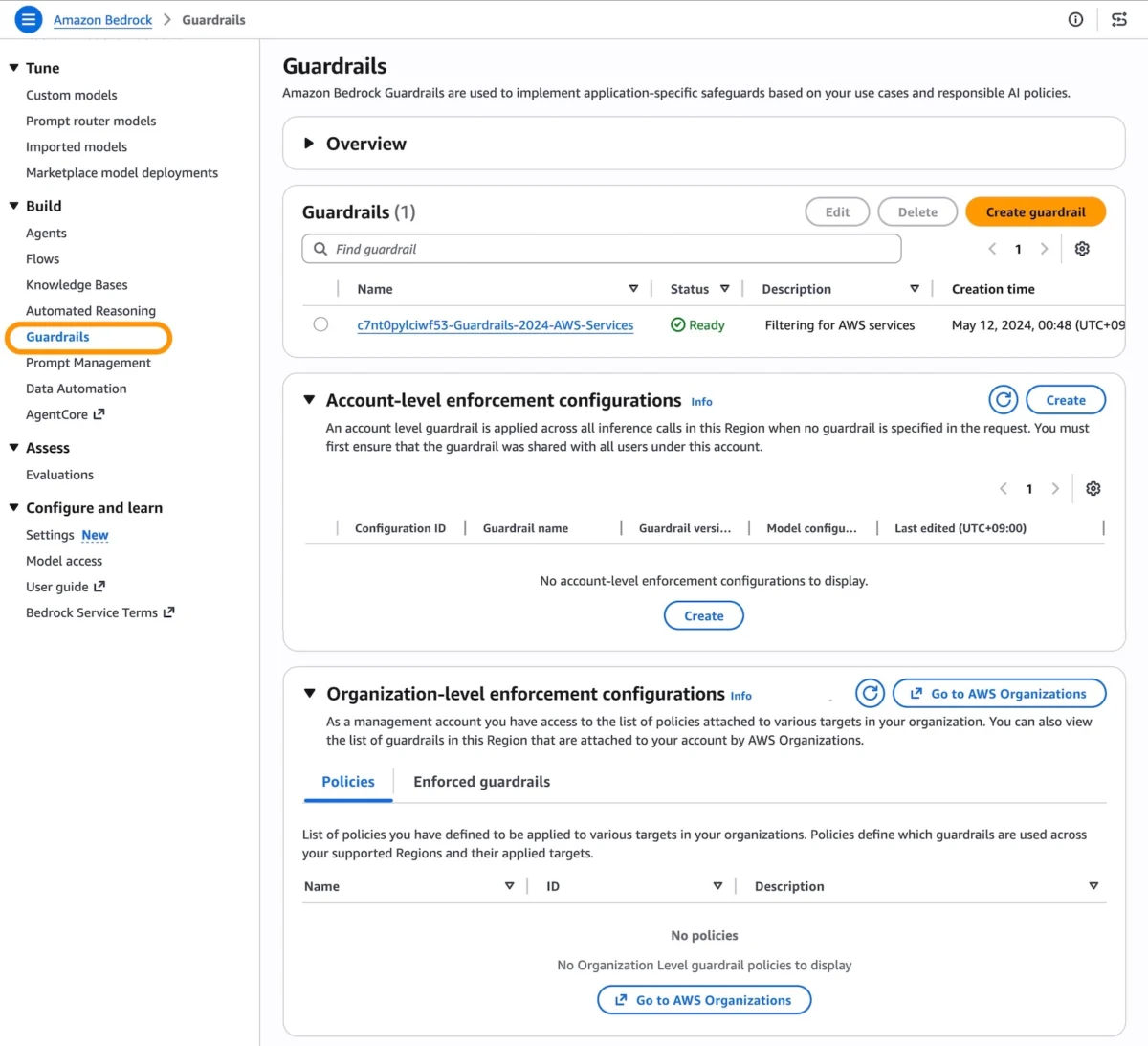
Getting started with centralized enforcement in Amazon Bedrock Guardrails involves straightforward configuration steps accessible via the Amazon Bedrock Guardrails console and AWS Organizations console.
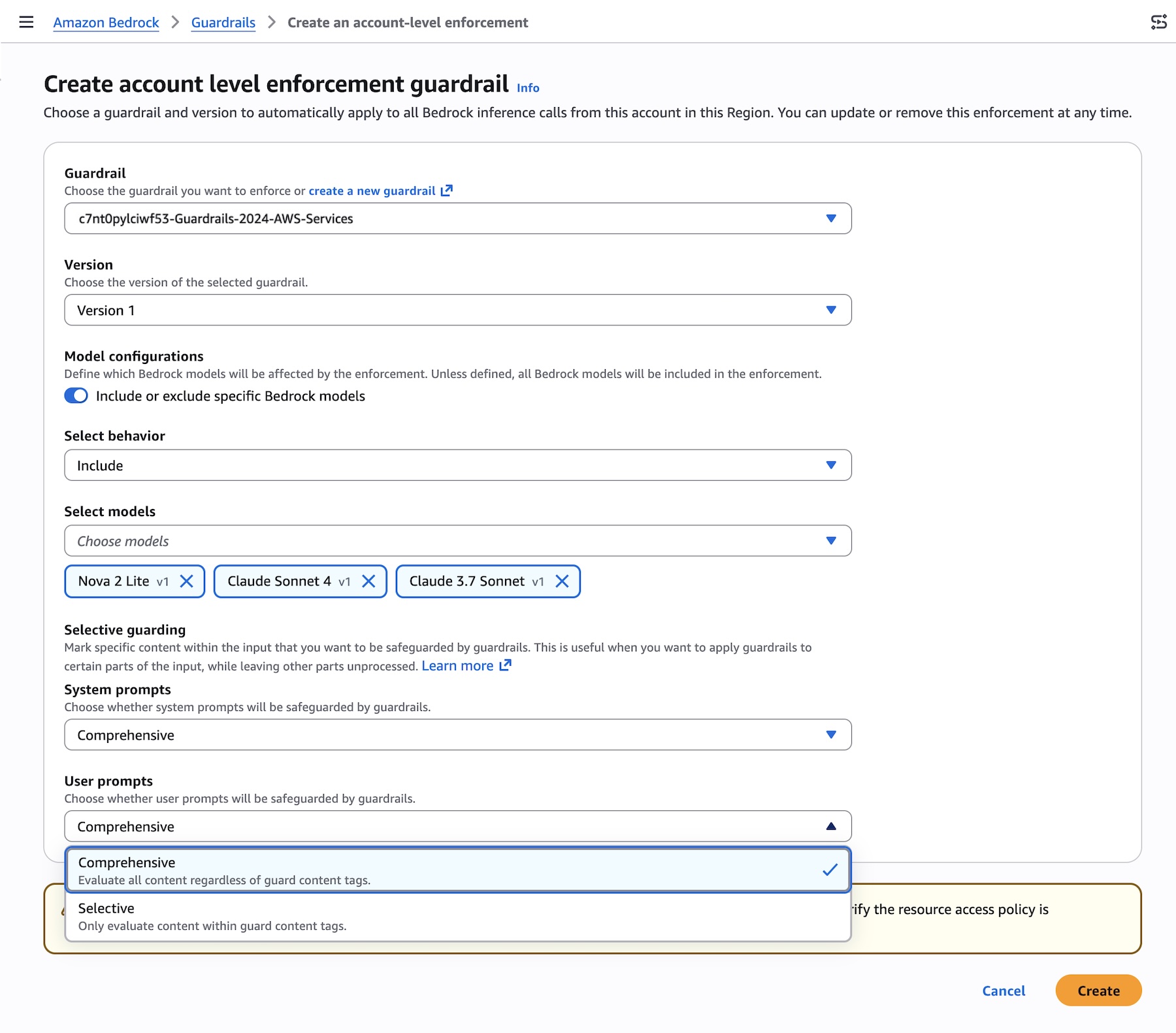
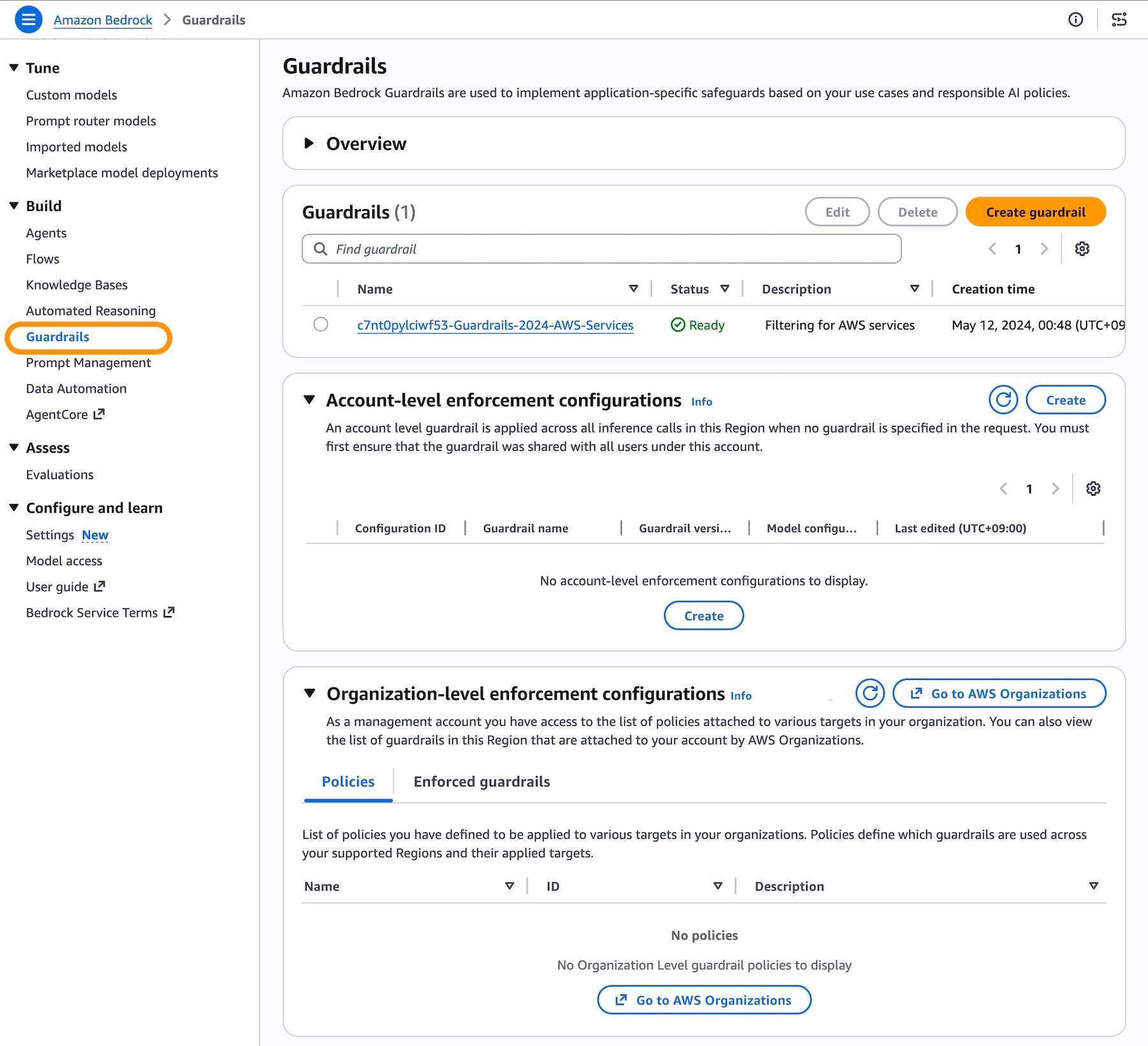
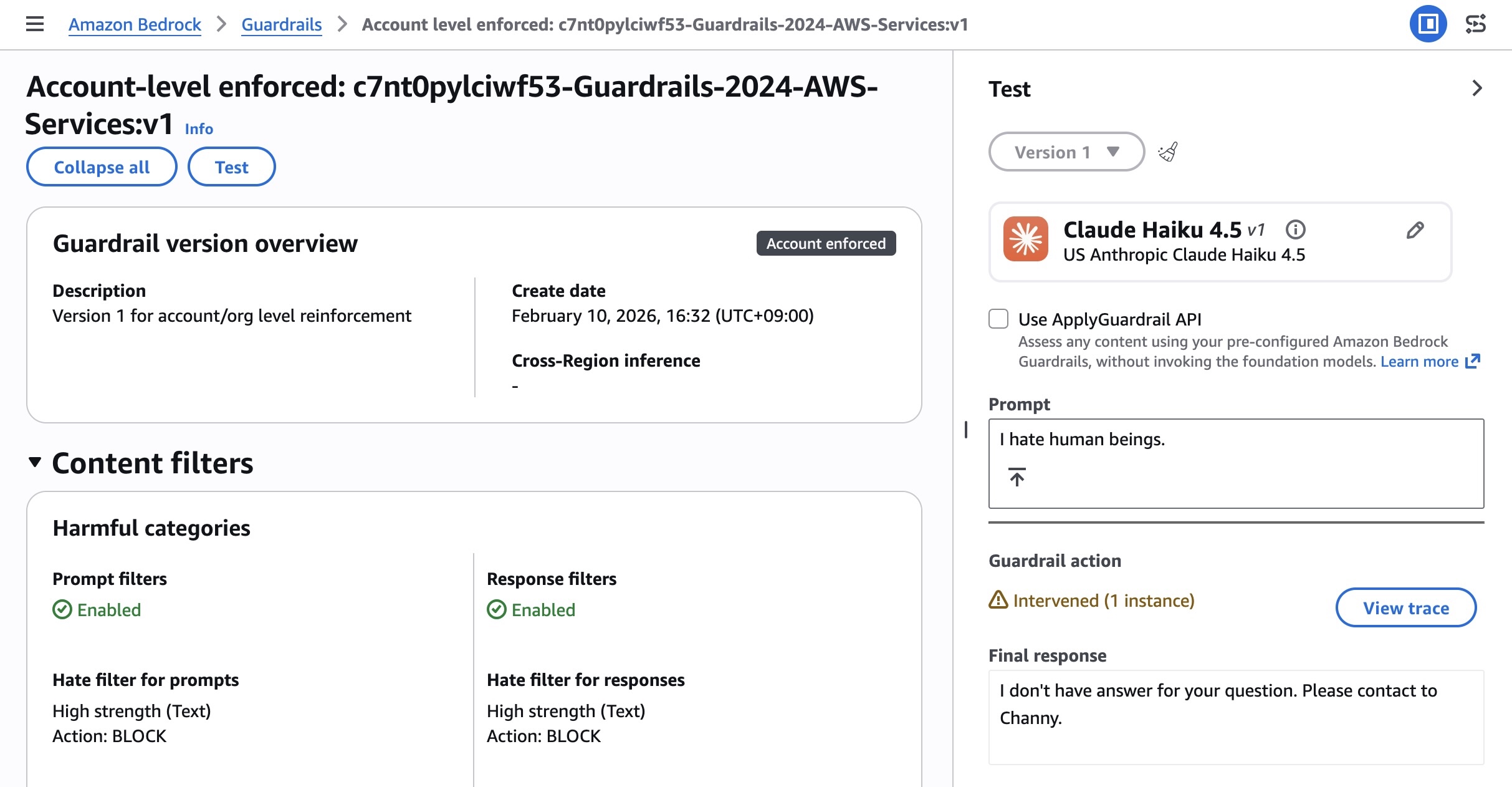
For account-level enforcement, administrators navigate to the Bedrock Guardrails console and choose "Create" in the "Account-level enforcement configurations" section. Here, they can select a specific guardrail and its version to be automatically applied to all Bedrock inference calls originating from that particular account in a given AWS Region. A key feature introduced with general availability is the ability to define which foundation models will be affected by the enforcement, using either an "Include" or "Exclude" behavior. This granular control ensures that guardrails are applied only where necessary, preventing unintended impacts on specific model deployments. Furthermore, administrators can configure selective content guarding controls for both system prompts and user prompts, choosing between "Comprehensive" or "Selective" filtering based on the sensitivity of the application. Once configured, testing and verification can be performed by making Bedrock inference calls using APIs such as InvokeModel, InvokeModelWithResponseStream, Converse, or ConverseStream, with the response including guardrail assessment information to confirm enforcement.
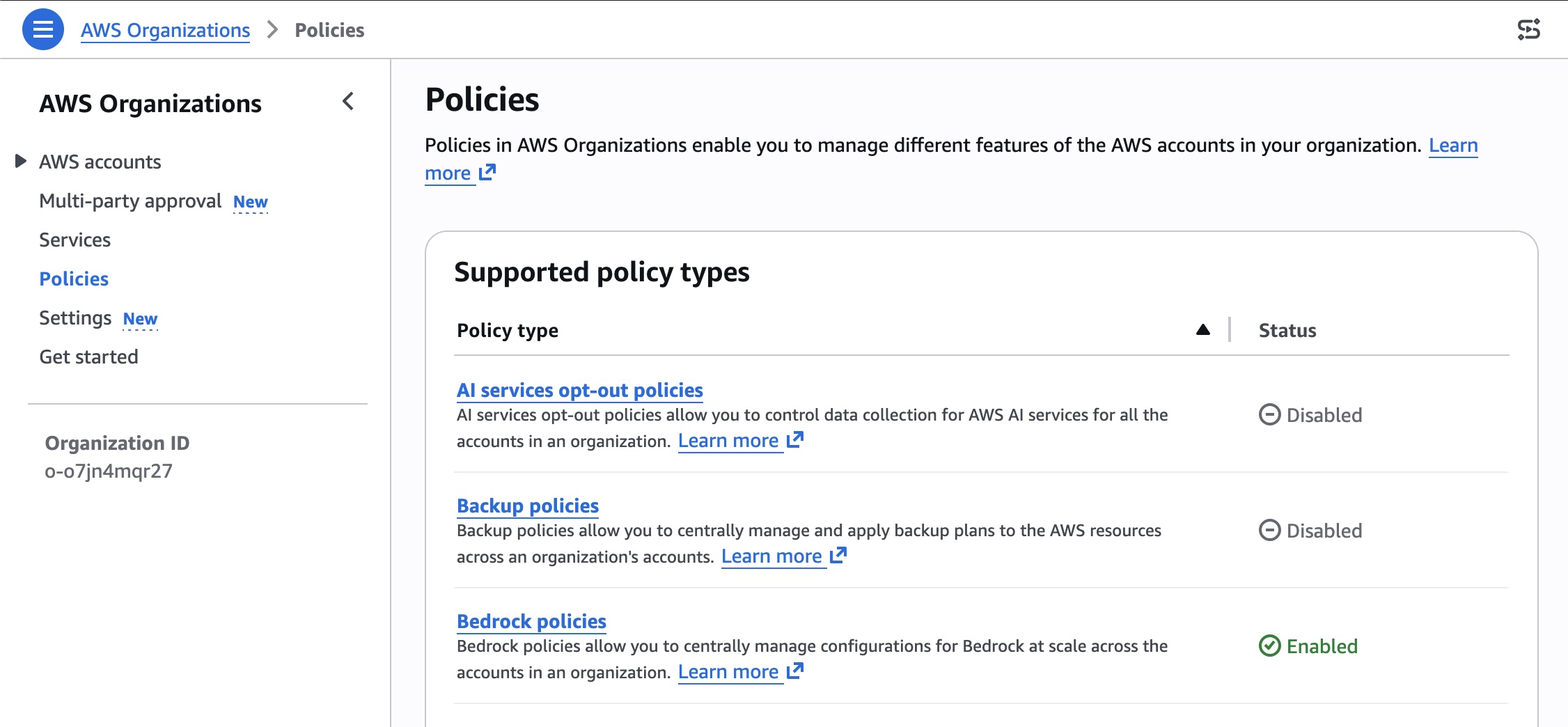
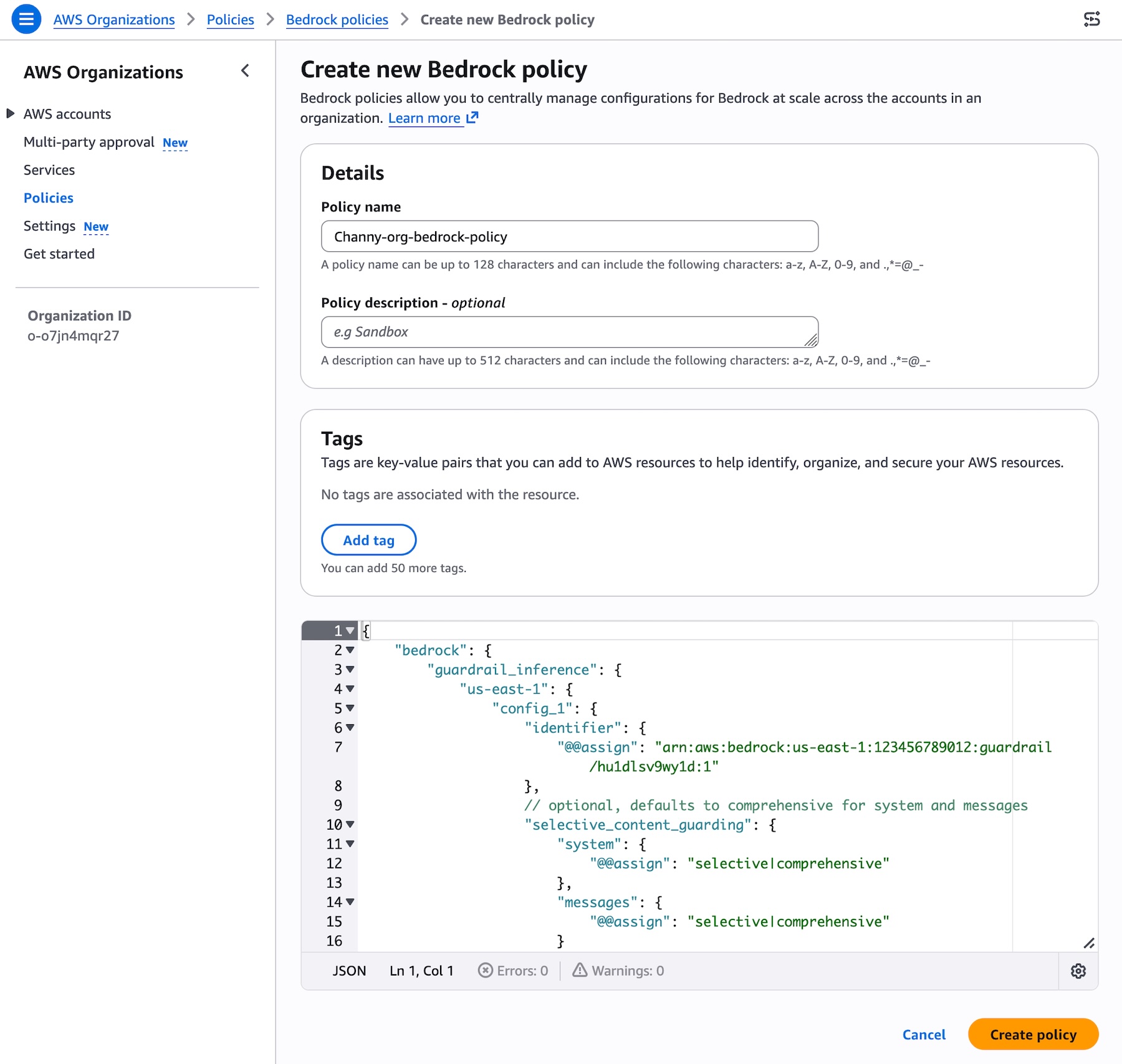
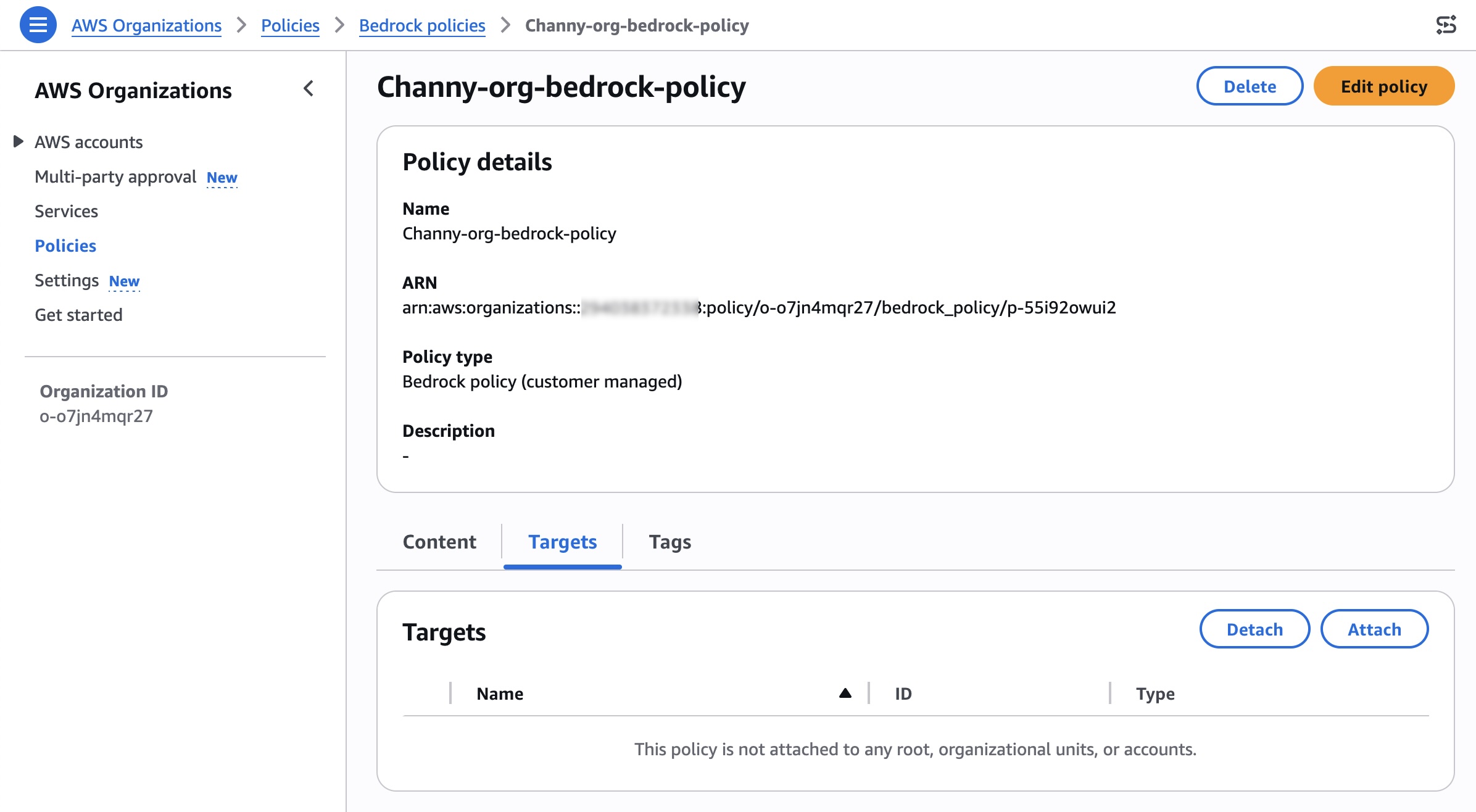
For organization-level enforcement, the process leverages AWS Organizations. Within the AWS Organizations console, administrators can enable "Bedrock policies" under the "Policies" menu. A new Bedrock policy can then be created, specifying the ARN (Amazon Resource Name) and version of the desired guardrail, along with input tags settings. Crucially, once a guardrail version is specified in an organizational policy, it becomes immutable, meaning member accounts cannot modify or override the guardrail’s core configuration, ensuring enterprise-wide consistency. This policy is then attached to target organizational units (OUs), individual AWS accounts, or the root of the organization. This hierarchical attachment ensures that the guardrail is automatically enforced across all designated member entities. A member account attached to such a policy will visibly reflect the organization-enforced guardrail under its "Organization-level enforcement configurations" section, providing clear visibility and auditability. The underlying safeguards within the specified guardrail are then automatically applied to every model inference request across all member entities, providing an unyielding layer of safety.
The Strategic Imperative: Responsible AI and Compliance
The release of cross-account safeguards aligns with a broader industry trend towards embedding responsible AI principles directly into technological infrastructure. As generative AI becomes more sophisticated and integrated into critical business functions, the potential for misuse, bias, or the generation of harmful content escalates. Organizations must not only detect but actively prevent such outcomes.
This capability empowers Chief Information Security Officers (CISOs) and Chief Compliance Officers (CCOs) with the tools necessary to fulfill their oversight responsibilities effectively. They can now establish a baseline of responsible AI behavior across their entire cloud estate, significantly reducing the surface area for potential compliance violations or reputational damage. For instance, a financial institution can enforce a guardrail across all its accounts to prevent any generative AI application from discussing financial advice without explicit disclaimers, or to filter out any content that could be interpreted as discriminatory in loan applications. Similarly, a healthcare provider can ensure that patient data, even if inadvertently fed into a prompt, is not processed or leaked by a generative AI model through strict PII filtering.
"In today’s complex regulatory environment, having granular yet scalable control over AI safety is paramount," noted a CIO of a global manufacturing firm, speaking anonymously about the challenges. "Our security and compliance teams spend countless hours ensuring adherence to internal policies and external regulations across our vast cloud footprint. A solution like Amazon Bedrock Guardrails’ cross-account enforcement offers a significant leap forward, transforming a reactive, account-by-account audit process into a proactive, centralized governance model. This enables us to innovate with generative AI faster and more securely, without compromising our commitment to ethical practices."
Operational Benefits and Reduced Administrative Burden
The operational benefits extend beyond mere compliance. By standardizing guardrail enforcement, organizations can achieve greater consistency in AI application behavior, making it easier to troubleshoot, audit, and improve their generative AI systems. Development teams gain clarity on the boundaries within which they can operate, fostering innovation within a defined and safe framework. This clarity can accelerate development cycles and reduce time-to-market for new AI-powered features and products.
Furthermore, the feature supports the AWS Shared Responsibility Model by providing customers with more powerful tools to manage their "security in the cloud." While AWS secures the underlying infrastructure, customers are responsible for securing their applications and data. Cross-account safeguards in Bedrock Guardrails equip customers with a robust mechanism to meet this responsibility for their generative AI workloads, effectively extending their governance policies across their entire organizational structure.
Availability, Pricing, and Future Outlook
Cross-account safeguards in Amazon Bedrock Guardrails are now generally available in all AWS commercial and GovCloud Regions where Bedrock Guardrails is currently offered. This broad availability ensures that a wide range of customers, including those with stringent regulatory requirements, can immediately leverage this critical functionality.
Regarding pricing, charges apply to each enforced guardrail according to its configured safeguards. Customers are encouraged to visit the Amazon Bedrock Pricing page for detailed information on individual safeguard costs and overall service charges. AWS’s pricing model for Bedrock is typically usage-based, meaning customers pay only for what they consume, which aligns with the scalability benefits of cloud services.
Looking ahead, this release sets a strong precedent for the evolution of enterprise-grade generative AI platforms. Future enhancements could potentially include even more sophisticated policy orchestration, deeper integration with other AWS security and compliance services like AWS Config or AWS Security Hub for automated auditing and remediation, and perhaps AI-powered adaptive guardrails that learn and evolve with an organization’s specific risk profile. The commitment to providing flexible yet robust governance tools will be key to unlocking the full potential of generative AI safely and responsibly across the global enterprise landscape.
Customers are encouraged to explore this new capability in the Amazon Bedrock console and provide feedback through AWS re:Post for Amazon Bedrock Guardrails or their usual AWS Support contacts, contributing to the continuous improvement of the service.
