
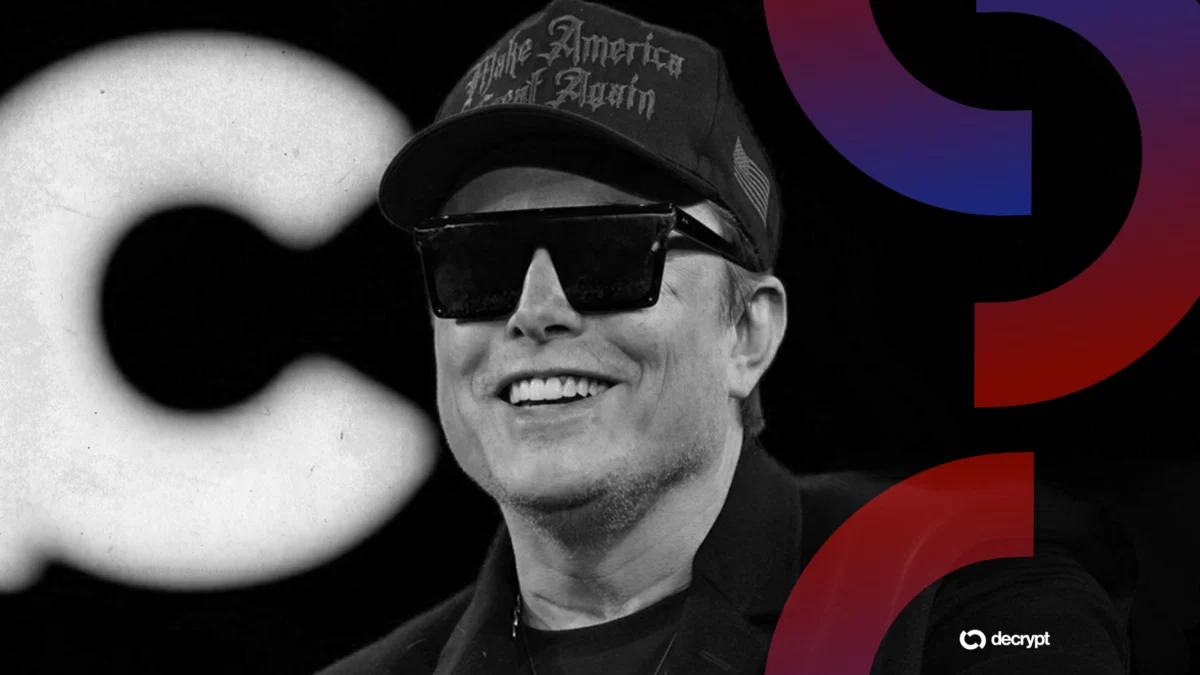

The imminent Initial Public Offering (IPO) of SpaceX, spearheaded by Elon Musk, has sent ripples through both the traditional financial markets and the cryptocurrency sphere. The aerospace giant officially submitted its S-1 filing to the U.S. Securities and Exchange Commission (SEC) on Wednesday, confirming its intention to go public. This filing reveals not only ambitious growth projections but also a substantial, and strategically acquired, Bitcoin treasury, underscoring a growing trend of corporate embrace of digital assets. Concurrently, technology bellwether Nvidia has once again shattered expectations with its latest quarterly earnings, solidifying its dominant position in the artificial intelligence (AI) infrastructure landscape. Meanwhile, the decentralized finance (DeFi) platform Hyperliquid is demonstrating remarkable independence from broader crypto market trends, showcasing a robust business model that is attracting significant attention. Finally, Ethereum’s co-founder Vitalik Buterin has articulated a clear roadmap for enhancing the network’s privacy features, signaling a pivotal step in its evolution.
SpaceX Prepares for Historic IPO, Reveals $1.45 Billion Bitcoin Treasury
SpaceX’s S-1 filing has positioned it for a potential IPO that could be the largest in history, with the company targeting a staggering valuation of $1.75 trillion and aiming to raise $80 billion. This ambitious goal significantly eclipses the previous record set by Saudi Aramco’s $29.4 billion IPO. The company’s roadshow is slated to commence on June 4, with its Nasdaq listing anticipated on June 12 under the ticker symbol SPCX.
Perhaps the most surprising revelation from the filing is SpaceX’s disclosure of holding 18,712 Bitcoin, valued at $1.45 billion. The filing further details that this significant Bitcoin position was acquired for $661 million, indicating a return of over 100% on the investment. This strategic allocation of corporate capital into Bitcoin highlights a growing acceptance of the cryptocurrency as a legitimate store of value and potential asset for corporate treasuries. The acquisition date of this Bitcoin, while not explicitly stated, would provide further context to the investment’s performance given Bitcoin’s historical price fluctuations.
The S-1 filing also provides a glimpse into SpaceX’s multifaceted business strategy. Elon Musk’s vision encompasses the integration of launch systems, satellite internet services (Starlink), social media, and artificial intelligence under a single corporate umbrella. In 2025, SpaceX generated $18.5 billion in revenue, with Starlink contributing approximately 45% and exhibiting a faster growth rate than the launch services division. The filing also revealed a significant new revenue stream: a contract with AI research and development company Anthropic to provide compute services through 2029, valued at $1.25 billion per month. This substantial recurring revenue is expected to further fuel SpaceX’s growth and potentially bolster its digital asset holdings.
The implications of SpaceX’s Bitcoin holdings are far-reaching. It signals a bold move by a high-profile, non-financial entity into the cryptocurrency space, potentially encouraging other corporations to consider similar diversification strategies. The success of this IPO and the performance of its Bitcoin treasury will be closely monitored by investors and industry observers alike.
Nvidia Delivers Record-Breaking Quarter, Fueling AI Infrastructure Boom
Nvidia, a dominant force in the semiconductor industry, announced a spectacular financial quarter on Wednesday, exceeding all analyst expectations and reinforcing the thesis that AI infrastructure is a key driver of market growth. The company’s latest earnings report showcased unprecedented revenue figures, underscoring its critical role in the burgeoning AI revolution.
The company reported revenue of $26.04 billion for the quarter, a remarkable 18% increase from the previous quarter and a staggering 262% jump year-over-year. This performance significantly surpassed Wall Street’s consensus estimates. Net income also saw substantial growth, reaching $15.24 billion, a 628% increase from the same period last year. Earnings per share (EPS) stood at $6.12, a 631% rise year-over-year, also far exceeding projections. The company’s data center segment, the primary beneficiary of AI demand, generated a record $22.6 billion in revenue, an increase of 427% compared to the prior year.
Nvidia’s stellar performance had an immediate positive impact on the broader AI compute ecosystem. Shares of related companies, including Keel Infrastructure, IREN, and Hive Digital, experienced significant gains, rising 9%, 8%, and 9% respectively in pre-market trading. In a notable development, IREN announced a strategic partnership with Nvidia for a 5GW AI infrastructure collaboration, a move that alone propelled its shares up by 21%.
Despite the triumph for Nvidia and its ecosystem, the broader market faced headwinds. Walmart’s release of disappointing guidance earlier in the day cast a shadow over stock futures, which turned negative. This suggests that while the AI sector is experiencing robust growth, broader economic concerns and retail sector performance continue to present challenges for overall market sentiment. The success of Nvidia’s earnings, however, provides a strong counterpoint, demonstrating the immense potential and sustained demand within the AI hardware space.
Hyperliquid’s HYPE Token Achieves Remarkable Decoupling from Crypto Majors
The cryptocurrency market has witnessed a notable divergence in performance, with Hyperliquid’s native token, HYPE, exhibiting a remarkable surge independent of the broader market’s fluctuations. HYPE reached a price of $57.40 on Wednesday, marking a year-to-date increase of over 100%, while Bitcoin has experienced a 12% decline over the same period. This decoupling represents one of the most striking performances in the cryptocurrency sector this year, driven by a fundamentally sound business model rather than speculative meme coin dynamics.
Hyperliquid has generated an impressive $255 million in revenue year-to-date, surpassing the combined revenue of its next two closest competitors. Crucially, 97% of this revenue is directly returned to HYPE holders through automated open-market buybacks, creating a direct value accrual mechanism. The platform currently commands an estimated 43% of all on-chain trading fees, amounting to approximately $11 million weekly, with an annualized revenue run rate approaching $850 million.
A key catalyst for Hyperliquid’s growth has been the implementation of HIP-3. Initially, Hyperliquid focused exclusively on crypto perpetuals. However, HIP-3 expanded its offerings to include commodity perpetuals, such as crude oil and gold, as well as stock indices and individual stocks, all settled on-chain and trading 24/7. This diversification allowed traders to access a wider range of assets and provided a crucial venue for around-the-clock commodity exposure, particularly during periods of market volatility, such as the surge in oil prices toward $120 per barrel due to geopolitical events.
Furthermore, Hyperliquid has ventured into pre-IPO contracts, offering derivatives on upcoming high-profile listings like OpenAI, Anthropic, Stripe, and most recently, SpaceX’s SPCX. The SpaceX SPCX contract went live on Hyperliquid’s Trade.xyz platform on May 17, with an implied valuation of $1.78 trillion, days before the official S-1 filing.
This strategic expansion has led Bitwise CIO Matt Hougan to describe Hyperliquid not merely as a crypto application but as a "super app" targeting the vast global asset market of $600 trillion, rather than exclusively the $3 trillion crypto economy. This shift in perspective reflects Hyperliquid’s ambition to become a comprehensive trading platform for a wide array of financial instruments, drawing increasing attention from both traditional and digital asset investors.
Vitalik Buterin Outlines Ethereum’s Privacy Roadmap
Ethereum co-founder Vitalik Buterin has detailed a comprehensive roadmap aimed at integrating enhanced privacy features directly into the Ethereum network, moving away from reliance on third-party solutions. This initiative, outlined in a recent post, is a response to ongoing discussions about the network’s development and its perceived trading performance.
Buterin identified three near-term Ethereum upgrades designed to bolster privacy: Account Abstraction combined with FOCIL (Future of Contract-Intermediate Languages), Keyed Nonces (EIP-8250), and Kohaku. The majority of these advancements are slated for inclusion in the Hegoté hard fork, anticipated in the latter half of 2026.
Account Abstraction, a long-standing Ethereum improvement, will play a pivotal role in these privacy enhancements by allowing for more flexible transaction signing and execution. FOCIL aims to improve the efficiency and security of smart contract interactions, which are foundational to many privacy-preserving technologies. Keyed Nonces will introduce a more robust mechanism for transaction ordering and replay protection, contributing to overall network security and potentially enabling new privacy patterns. Kohaku, a proposed feature, could further refine transaction privacy by offering more granular control over data visibility.
Significantly, these privacy-focused upgrades have a direct synergy with Ethereum’s ongoing work on quantum resistance. Account Abstraction, in particular, is a critical component for both privacy and post-quantum cryptographic implementations. This convergence means that the Hegoté hard fork could simultaneously address two of the most significant long-term risks facing the Ethereum network.
However, the execution environment for these critical upgrades is not without its complexities. The Ethereum Foundation is currently navigating a period of internal transition, marked by a wave of high-profile departures and a recalibration of its organizational mandate. While the technical roadmap for privacy enhancement appears clear and well-defined, the internal dynamics within the foundation may introduce challenges to its seamless implementation. The success of these upgrades will be crucial for Ethereum’s continued adoption and its ability to compete in an evolving blockchain landscape where privacy is increasingly becoming a key differentiator.
