

In the sophisticated world of computational physics, engineers and research scientists grapple with a persistent and fundamental trade-off: the balance between model realism and computational feasibility. Larger, more complex models offer a higher degree of predictive accuracy and are therefore more valuable for industrial application, yet they demand significantly greater computational resources and time. This dilemma forces a daily compromise in laboratories and design centers worldwide, as experts must select models detailed enough to capture essential physical phenomena without rendering the calculation impractically expensive or time-consuming. The adage famously coined by statistician George E. P. Box—"All models are wrong, but some are useful"—remains the guiding principle for this discipline, though the definition of "useful" is rapidly shifting toward higher complexity and larger scales.
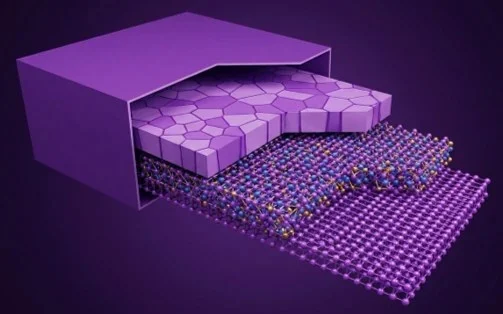
Atomistic simulations, which seek to predict the behavior of matter by modeling the interactions of individual atoms, are at the forefront of this challenge. In a traditional academic setting, a simple crystal structure can often be modeled using only a handful of atoms repeated periodically. This approach is sufficient for predicting basic electronic, optical, and magnetic properties of pristine materials. However, real-world engineering materials are rarely perfect. In practice, the performance of a semiconductor, a battery electrode, or a structural alloy is determined by its imperfections: defects, interfaces, grain boundaries, composition variations, and the chaotic influence of finite temperatures. If these elements are omitted from a simulation to save on costs, the model may fail to capture the very behaviors that dictate failure or success in the field. Conversely, including them using traditional high-precision techniques often pushes the required computing power beyond the limits of current infrastructure.
The Foundation and Evolution of First-Principles Modeling
The cornerstone of modern atomistic modeling is Density Functional Theory (DFT). Developed in the 1960s and refined over several decades, DFT allows scientists to predict the properties of molecules and crystals from first principles, meaning the calculations do not rely on empirical data or experimental fitting. Instead, they are based on the fundamental laws of quantum mechanics. A widely adopted version of DFT utilizes "plane waves," a mathematical basis set that is exceptionally efficient for modeling perfectly periodic crystals where the environment of one atom is identical to the next.
However, the efficiency of plane-wave DFT diminishes significantly when applied to non-periodic systems. When a researcher needs to simulate a defect, a surface interface, or an amorphous material like glass, they must use a "supercell"—a large simulation box that encompasses the irregularity and enough surrounding material to prevent the defect from interacting with its own periodic images. As the size of this simulation cell increases, the computational cost grows cubically (O(N³)), meaning that doubling the number of atoms results in an eightfold increase in processing time. This scaling law historically limited high-accuracy DFT to systems containing only a few hundred atoms, leaving larger, highly disordered systems out of reach for all but the most powerful supercomputers.
To address these limitations, researchers have increasingly turned to DFT based on a Linear Combination of Atomic Orbitals (LCAO). Unlike plane waves, which fill the entire simulation space, the LCAO basis is tied directly to the atoms themselves. This localized approach is naturally better suited for modeling defects, surfaces, and vacuum regions. Because it requires fewer basis functions per atom to achieve a similar level of accuracy, LCAO makes larger-scale calculations more practical for industrial applications. Despite these gains, the underlying cubic scaling of standard DFT remains a hurdle, prompting a new era of innovation centered on hardware acceleration and algorithmic breakthroughs.
A Chronology of Computational Milestones
The journey of atomistic modeling can be viewed through a series of technological shifts that have expanded the boundaries of what is possible.
- The 1960s-1980s (Theoretical Foundations): The development of the Hohenberg-Kohn theorems and the Kohn-Sham equations provided the mathematical framework for DFT, though practical applications were limited by the primitive state of computing.
- The 1990s (Standardization): The introduction of robust software packages and the increase in CPU speeds allowed DFT to move from theoretical physics into mainstream chemistry and materials science.
- The 2010s (The GPU Revolution): The adoption of Graphics Processing Units (GPUs) for general-purpose high-performance computing (GPGPU) marked a turning point. Because DFT involves massive matrix operations, the parallel architecture of GPUs allowed for speedups of 10x to 100x compared to traditional CPUs.
- The 2020s (The AI Integration): The current decade is defined by the integration of machine learning (ML) and physics-informed neural networks, which are beginning to bypass the cubic scaling bottleneck entirely.
Machine Learning and the Linear Scaling Breakthrough
The most significant contemporary advancement in the field is the use of machine learning to predict the DFT solution directly from atomic structures. By employing physics-informed graph neural network (GNN) inference models, researchers can now achieve "linear scaling." In this regime, the computational cost increases only linearly with the number of atoms (O(N)). This shift is transformative; it extends the reach of DFT-quality calculations from hundreds of atoms to potentially millions.
These ML-DFT approaches are particularly potent when studying systems with minor variations, such as atoms displaced by thermal vibrations. Rather than recalculating the entire quantum mechanical state for every snapshot in time, the neural network learns the underlying patterns of the electron density and provides a solution in a fraction of the time. Industrial platforms, most notably Synopsys QuantumATK, have begun integrating these ML-driven solvers into their workflows, enabling engineers to utilize the power of GPUs to drive large-scale inference. This allows for the simulation of complex phenomena like dopant diffusion in semiconductors or the degradation of battery electrolytes with a level of detail that was previously unthinkable.
Dynamics and the Role of Interatomic Potentials
While DFT is excellent for static properties, many engineering problems are inherently dynamic. Atoms diffuse through solids, liquids flow, and structures evolve under the influence of pressure and temperature. Modeling these processes requires molecular dynamics (MD), where the positions of atoms are updated over thousands or millions of time steps. Performing MD at the DFT level is prohibitively expensive for large systems.

To bridge this gap, engineers have long relied on interatomic potentials, or "force fields." These are simplified mathematical functions that describe the forces between atoms without explicitly calculating the behavior of electrons. Historically, force fields were limited by their rigid functional forms, which often failed to capture complex chemical reactions or phase changes. However, Machine-Learned Interatomic Potentials (MLIPs) have revolutionized this area. By training on a high-quality dataset of DFT calculations, MLIPs can mimic the accuracy of first-principles methods at the speed of classical simulations.
The use of "active learning" workflows has further refined this process. In an active learning cycle, the simulation identifies configurations where the MLIP is uncertain, triggers a high-accuracy DFT calculation for those specific points, and retrains the model on the fly. This ensures that the simulation remains accurate even as the material undergoes drastic structural changes. With MLIPs, simulations can now reach the scale of millions of atoms, making it possible to study the mechanical properties of polymers, the folding of proteins, or the formation of grain boundaries in metal alloys.
Hierarchical and Multiscale Modeling: From Silicon to Systems
Even with the advent of ML-driven atomistic modeling, no single method can span the entirety of the length and time scales required for modern engineering. A crack in a turbine blade begins with the breaking of atomic bonds (angstrom scale) but propagates through a microstructure (micrometer scale) and eventually threatens the integrity of the entire component (meter scale).
This reality has birthed the field of multiscale modeling. In a hierarchical workflow, atomistic simulations are used to calculate fundamental parameters—such as elastic constants, diffusion coefficients, or reaction rates—which are then fed into mesoscale or continuum-level models. This connection is becoming increasingly seamless due to corporate consolidation in the electronic design automation (EDA) and simulation software industries.
A prime example is the recent $35 billion acquisition of Ansys by Synopsys. This strategic move aims to create a "Silicon to Systems" workflow. By linking the atomistic capabilities of QuantumATK with the continuum simulation tools of Ansys—such as Mechanical for structural analysis, Fluent for fluid dynamics, and Rocky for particle modeling—engineers can now build a digital thread that stretches from the quantum level to the macro scale. For instance, the thermal properties of a new semiconductor material calculated in QuantumATK can be directly imported into an Ansys simulation to predict how a chip will dissipate heat in a high-performance computing environment. This interoperability reduces data silos and accelerates the time-to-market for new technologies.
Data Visualization and the Human Element
As simulations grow to encompass millions of atoms, the challenge of data management and interpretation becomes acute. Generating a massive dataset is of little use if a researcher cannot extract actionable insights from it. Modern simulation environments have therefore placed an increased emphasis on visualization and post-processing tools.
Advanced platforms like Synopsys NanoLab provide integrated interfaces that allow researchers to visualize atomic motion, spatial variations in electron density, and stress distributions in real-time. These tools are essential for identifying the "needle in the haystack"—the specific atomic arrangement or defect that leads to material failure. Furthermore, the ability to combine results from disparate calculations into physical observables allows for better collaboration across multi-disciplinary teams, bridging the gap between theoretical physicists and manufacturing engineers.
Conclusion and Future Implications
The decision of when to invest in a larger, more expensive model remains a critical judgment call. However, as the complexity of modern technology increases, the "textbook" approach of modeling ideal crystals is becoming less relevant. The performance of next-generation devices—whether they are ultra-scaled transistors, high-capacity solid-state batteries, or carbon-capture membranes—will be defined by the physics of the complex, the disordered, and the dynamic.
The continued evolution of large-scale atomistic modeling, driven by the synergy of GPU hardware, machine learning algorithms, and integrated software workflows, is providing the tools necessary to meet these challenges. By moving beyond the limitations of small-scale, zero-temperature models, materials science is entering an era where simulations can truly reflect the messy, intricate reality of the physical world. As these techniques become more accessible and computationally efficient, they will continue to serve as the invisible engine driving innovation in the global materials and semiconductor industries. For organizations looking to stay at the cutting edge, the transition to these high-fidelity, large-scale approaches is no longer an optional luxury but a competitive necessity.
