
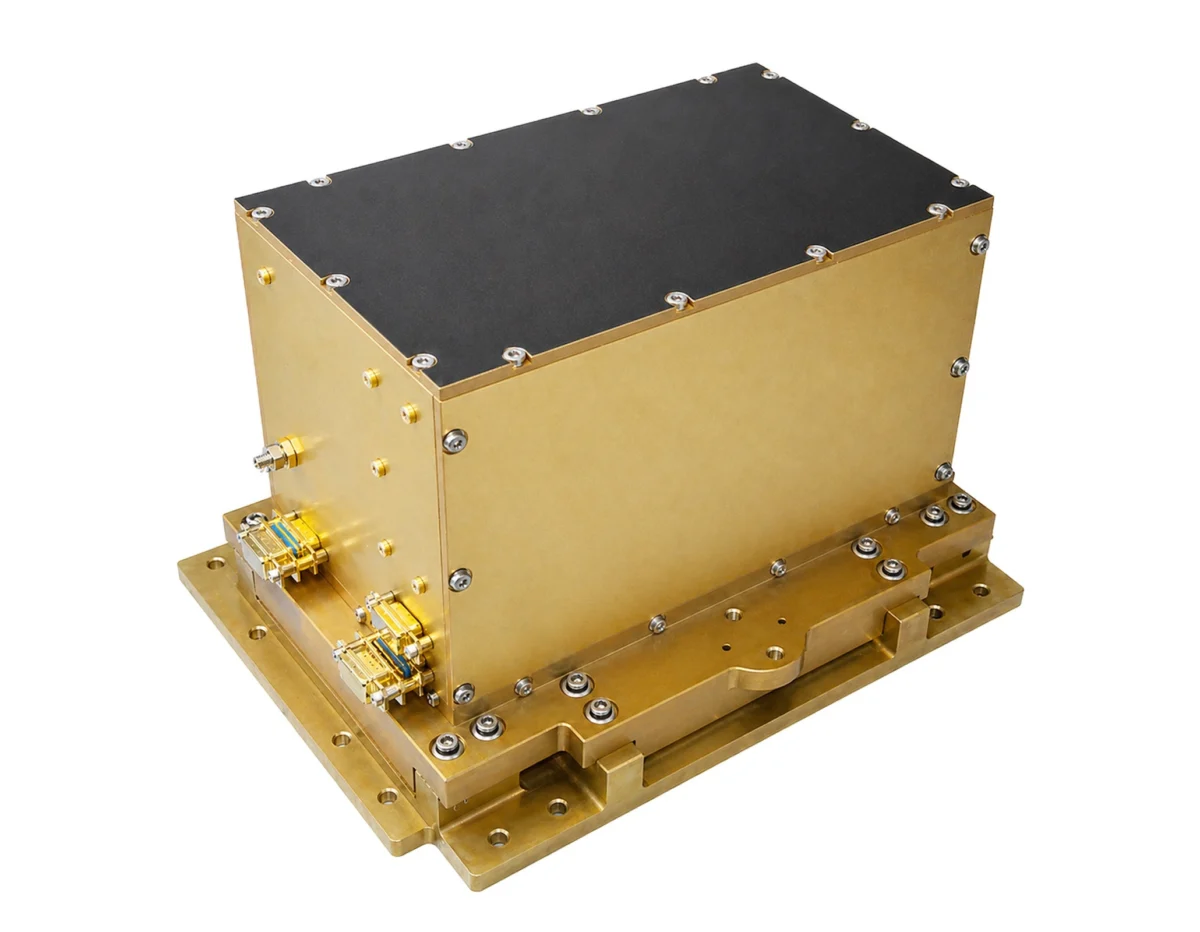

Redwire Corporation has officially awarded a subcontract to Voyager Space, through its Voyager Technologies division, to supply a high-precision Acceleration Measurement System for the Defense Advanced Research Projects Agency’s Otter mission. This strategic partnership integrates Voyager’s flight-proven sensing technology into a pioneering spacecraft designed to operate in Very Low Earth Orbit, a challenging atmospheric environment that requires unprecedented levels of maneuverability and propulsion efficiency. The Otter mission serves as a critical testbed for air-breathing electric propulsion technologies, which aim to revolutionize orbital sustainability by utilizing residual atmospheric gases as propellant.
The subcontract follows a significant milestone in late 2025, when DARPA awarded Redwire a $44 million Phase 2 contract to continue the development of the Otter program. By selecting Voyager’s Acceleration Measurement System, Redwire is prioritizing high-fidelity data acquisition to manage the complex orbital dynamics associated with VLEO. The AMS is engineered to provide precise delta-V and acceleration data, allowing the spacecraft to execute the frequent, micro-adjustments necessary to counteract the intense atmospheric drag found at altitudes below 300 kilometers.
Technical Objectives of the Otter Mission
The Otter mission represents a paradigm shift in how the Department of Defense and the broader aerospace industry approach orbital operations. Traditionally, satellites operate in Low Earth Orbit at altitudes ranging from 500 to 2,000 kilometers, where the atmosphere is thin enough to allow for years of operation with minimal station-keeping. However, VLEO—defined as the region between 100 and 350 kilometers—offers unique advantages for Earth observation, communications, and national security, albeit at the cost of significantly higher drag.
The primary objective of the Otter mission is to demonstrate the viability of Air-Breathing Electric Propulsion. ABEP systems are designed to ingest the low-density air molecules present in the upper atmosphere, ionize them, and then accelerate them using electric fields to generate thrust. This "propellant-less" approach theoretically allows a satellite to remain in VLEO indefinitely without the need for heavy, finite onboard fuel tanks. To validate the performance of these experimental thrusters, the spacecraft must be equipped with sensors capable of distinguishing between the force of atmospheric drag and the minute thrust generated by the ABEP system.
Voyager’s AMS is specifically designed for this level of granularity. By providing real-time, high-resolution acceleration data, the system enables the Otter spacecraft to maintain its trajectory and orientation despite the volatile "weather" of the upper atmosphere. This capability is essential for ensuring that the ABEP system is functioning as intended and for maintaining the precise orbital altitude required for DARPA’s data collection goals.
The Evolution of the Otter Program and Redwire’s Role
The development of the Otter mission has progressed through rigorous phases of design and feasibility testing. DARPA’s decision to move into Phase 2 with Redwire underscores the agency’s confidence in Redwire’s ability to integrate complex subsystems into a cohesive, mission-ready platform. As the prime contractor, Redwire is responsible for the overall spacecraft design, including the integration of the solar arrays, power management systems, and the revolutionary propulsion hardware.
Redwire’s selection of Voyager Space as a key subcontractor highlights the collaborative nature of modern defense aerospace projects. The $44 million Phase 2 contract awarded in November 2025 provided the necessary funding to transition from theoretical modeling to the production of flight hardware. The inclusion of the AMS is a vital component of this transition, as it provides the "nervous system" for the spacecraft’s propulsion control loop.
The Otter program fits into a broader DARPA strategy to enhance the resilience and capability of U.S. space assets. By operating in VLEO, satellites can achieve higher resolution imaging with smaller telescopes and lower latency communications due to their proximity to the Earth’s surface. Furthermore, VLEO orbits are naturally self-cleaning; if a satellite fails, the atmospheric drag will cause it to de-orbit and burn up within weeks, preventing the accumulation of long-term orbital debris.
Voyager Space and the Proven Legacy of the AMS
Voyager Space’s Acceleration Measurement System is not a new entrant to the field of high-precision space instrumentation. The hardware has a distinguished flight heritage, most notably supporting NASA’s Magnetospheric Multiscale mission. The MMS mission involved a constellation of four identical spacecraft flying in a tight tetrahedral formation to study the Earth’s magnetosphere.
During the MMS mission, the AMS played a pivotal role in maintaining the closest separation of a multi-spacecraft formation ever recorded in orbit. The ability to fly four satellites in such proximity required extreme precision in thrust measurement and orbital maneuvering, as even a slight miscalculation could lead to a collision or the loss of the formation’s scientific integrity. The success of the MMS mission proved that Voyager’s AMS could operate flawlessly in high-stakes environments, providing the repeatable and accurate data necessary for autonomous formation flying.
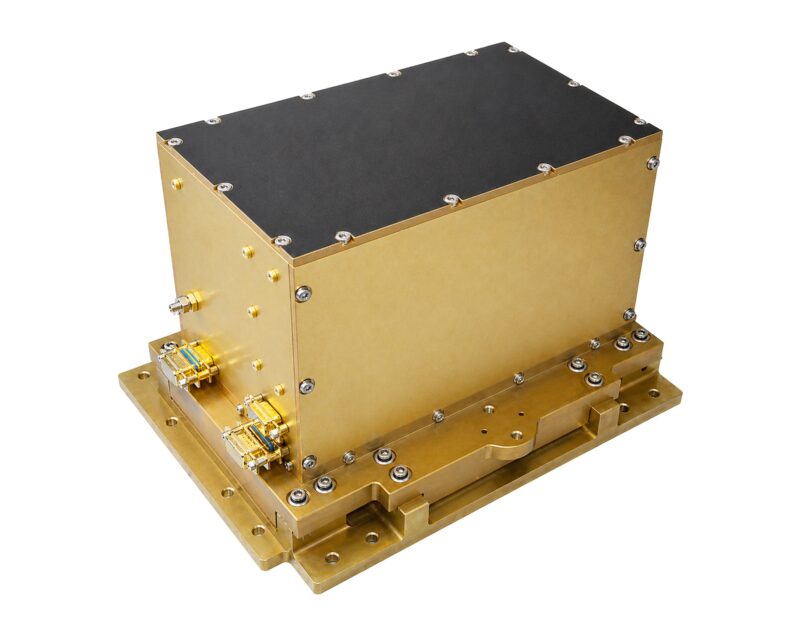
Matt Magaña, President of Space, Defense & National Security at Voyager, emphasized that this legacy is directly applicable to the challenges of VLEO. "Missions like Otter demand precise, repeatable thrust control, and that’s exactly what our system delivers," Magaña stated. He noted that the flight-proven nature of the hardware reduces mission risk for Redwire and DARPA, providing a "gold standard" for acceleration measurement that can unlock new capabilities for maneuverable spacecraft in the most difficult orbital regimes.
The Physics and Challenges of Very Low Earth Orbit
Operating a spacecraft in VLEO is often described as "flying in the "ignorosphere," a region of the atmosphere that is too high for weather balloons and too low for conventional satellites. At these altitudes, the density of the atmosphere—while still a vacuum by terrestrial standards—is high enough to create significant aerodynamic drag. This drag acts as a constant braking force on the satellite, causing its orbit to decay rapidly.
To stay in VLEO, a satellite must generate constant or near-constant thrust to offset this drag. This is where the AMS becomes indispensable. The system must measure accelerations in multiple axes to account for variations in atmospheric density, which can change based on solar activity and the time of day. By feeding this data into the spacecraft’s flight computer, the AMS allows the Otter mission to perform "drag compensation" maneuvers in real-time.
Furthermore, the atomic oxygen present in VLEO is highly reactive and can degrade satellite materials over time. Redwire’s design must account for this corrosive environment, while Voyager’s sensors must remain calibrated and functional despite the harsh conditions. The integration of the AMS into the Otter platform is therefore not just a matter of mounting a sensor, but of ensuring that the sensor can survive and provide accurate data in a regime that few spacecraft have ever successfully inhabited for extended periods.
Strategic Implications and Future Outlook
The success of the Otter mission and the performance of Voyager’s AMS could have far-reaching implications for both national security and the commercial space industry. For the Department of Defense, a fleet of VLEO-capable satellites would provide a "tactical" layer of space assets that are difficult for adversaries to track or intercept due to their low altitude and high maneuverability. These satellites could be deployed rapidly to provide localized surveillance or communication during regional conflicts.
On the commercial side, VLEO offers a path toward more sustainable and cost-effective satellite constellations. As LEO becomes increasingly crowded with thousands of satellites from companies like SpaceX and Amazon, VLEO represents an untapped frontier. The ability to use air-breathing propulsion would eliminate the primary cost and weight driver of current satellites—propellant—potentially lowering the barrier to entry for new space-based services.
The collaboration between Redwire and Voyager Space also reflects a trend of consolidation and specialization within the aerospace supply chain. As missions become more complex, prime contractors are increasingly looking to specialized firms like Voyager to provide high-reliability subsystems that have already been de-risked through prior government or scientific missions.
Timeline and Next Steps
Following the subcontract award, Voyager Space will begin the final calibration and delivery process for the AMS hardware. The Otter mission is expected to undergo a series of ground tests and integration milestones throughout 2026. If the Phase 2 objectives are met, DARPA is likely to proceed with a flight demonstration, where the Otter spacecraft will be launched into a decaying orbit to begin its air-breathing propulsion trials.
The data gathered by the AMS during the flight will be analyzed by Redwire, Voyager, and DARPA scientists to determine the efficiency of the ABEP system and the accuracy of the drag models used during the design phase. This data will be instrumental in designing the next generation of VLEO satellites, potentially leading to a standardized bus architecture for very low altitude operations.
As the space industry moves toward a future defined by maneuverability and sustainability, the partnership between Redwire and Voyager Space on the Otter mission stands as a testament to the importance of precision engineering. By mastering the measurement of motion in the Earth’s upper atmosphere, these companies are laying the groundwork for a new era of orbital flight that is more agile, more resilient, and more enduring than ever before.
