


Reconnecting with the video games of one’s childhood or adolescence represents more than a fleeting moment of adult entertainment; it is a profound psychological phenomenon that offers significant insights into the human mind, according to extensive psychological research. Far from being a mere casual pastime or a pursuit of "fast fun," the act of returning to retro titles such as the iconic Snake on old Nokia phones, the timeless Tetris, the maze-chasing Pac-Man, or the groundbreaking Super Mario 64, signifies a deeper, often unconscious, yearning to retrieve aspects of one’s past self. This engagement with digital relics functions as a unique form of temporal displacement, allowing individuals to revisit and reinforce their personal history and identity in an increasingly complex modern world.
Beyond Mere Entertainment: The Psychological Underpinnings of Retro Gaming
The allure of retro gaming extends far beyond simple amusement, tapping into fundamental psychological mechanisms. Researchers across various disciplines have explored the profound impact of nostalgia, particularly as it relates to interactive media. Studies, including those highlighted by publications like Gamestar and academic work from institutions such as the University of Cologne, consistently point to retro gaming as a powerful tool for psychological self-reconnection. This phenomenon is not merely about appreciating older aesthetics or simpler gameplay mechanics; it’s about a journey back to a previous version of oneself, a "self that no longer exists today."
This pursuit is distinct from a general appreciation for past media like movies or series. While film and television can evoke nostalgia, video games, by their very interactive nature, create a more immersive and potent experience. When an individual picks up a controller or taps on a screen to play a game from their youth, they activate a complex network of cognitive functions: visual memory, spatial reasoning, and fine motor skills. This active engagement creates a more direct and visceral link to past experiences, essentially opening a "window" to a period that has remained largely unchanged in the mental landscape. The sensory input, combined with learned motor patterns, bypasses the passive reception of other media, fostering a deeper sense of presence and recall.
A Time Machine to the Past: The Reminiscence Bump Explained
The specific games that resonate most deeply with adults often originate from a particular period of their lives, typically between the ages of 10 and 25. This critical developmental window is known in cognitive psychology as the "reminiscence bump." During this phase, individuals are actively forming their identity, navigating significant life transitions, and establishing their worldview. Consequently, experiences acquired during this period—including the hours spent mastering a new video game—are stored in the brain with heightened emotional valence and greater detail than memories from earlier childhood or later adulthood. These foundational experiences become neurochemically linked to one’s developing personality, creating enduring and robust memory traces.
Therefore, the uncanny ability to recall the precise location of a hidden star in Level 4 of Super Mario Bros, while struggling to remember yesterday’s lunch, is not a quirk of memory but a direct manifestation of the reminiscence bump. The brain’s capacity to preserve these memories with such clarity underscores their profound importance in the construction of personal identity. When an adult returns to these games, they are not just replaying levels; they are re-activating neural pathways intimately connected to their formative years, evoking the emotions, challenges, and triumphs of that era. This process provides a tangible, interactive link to the person they once were, offering a sense of continuity and grounding in the face of current life demands.
Interactive Nostalgia: Why Games Outperform Other Media
The interactive format of video games confers a distinct advantage in triggering deep nostalgic responses compared to more passive forms of media like films or music. When watching a movie from the past, the viewer observes; when listening to music, the listener hears. However, when playing a video game, the participant acts. This active engagement means that memory recall is not just sensory but also motoric. The muscle memory associated with specific button presses, joystick movements, or screen taps, once ingrained, becomes a powerful conduit to past experiences.
For example, the precise timing required to clear a jump in Super Mario 64, the rhythmic pattern of dropping blocks in Tetris, or the strategic maneuvering in Pac-Man, are not merely visual or auditory cues but involve complex hand-eye coordination and rapid decision-making processes. These motor skills, once mastered, leave an indelible imprint on the brain. Re-engaging these skills years later can trigger a cascade of associated memories and emotions, effectively transporting the player back to the precise moments of their initial engagement with the game. This multi-sensory and motoric activation makes retro gaming an unparalleled "time machine," allowing individuals to not only recall but actively re-experience aspects of their past.
The Comfort of the Known: Pattern Recognition and Cognitive Ease
One of the counterintuitive appeals of returning to games that one has already mastered lies in the absence of challenge. In a world constantly demanding new skills, problem-solving, and adaptation, the predictable routine of a familiar retro game offers a unique form of cognitive rest. The brain, highly efficient at pattern recognition, can process the familiar sequences and mechanics of these games with minimal cognitive effort. There is no surprise, no intrigue, and little emotional strain, as the outcome is largely known. Yet, this very predictability is a source of immense enjoyment and relief.
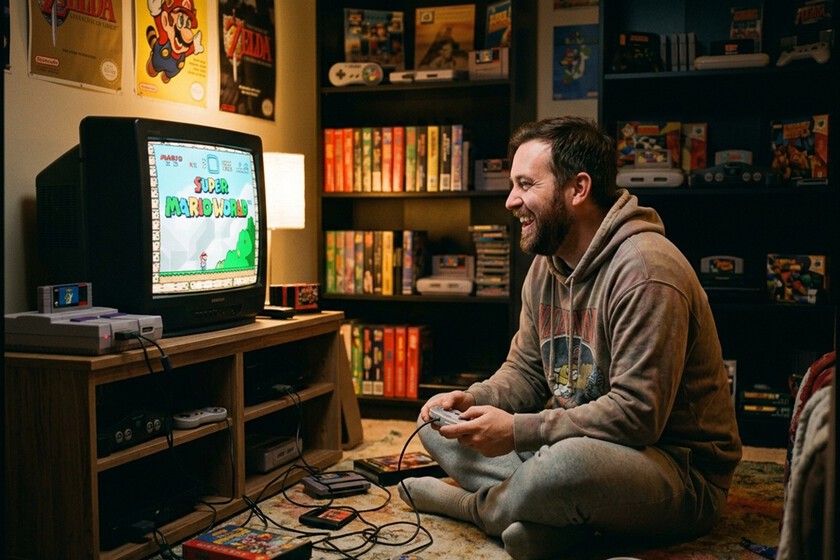
For the adult brain, which is often overwhelmed by the demands of work, relationships, and financial responsibilities, the low cognitive load of retro gaming provides a sanctuary. It allows for a state of relaxed engagement, where the player can operate on autopilot, experiencing a sense of mastery without the pressure of learning something new or facing unexpected obstacles. This effortless interaction facilitates a mental "disconnection" from current stressors, enabling the brain to recuperate and decompress. The feeling of competence derived from flawlessly executing a sequence in Tetris or navigating a complex level in Super Mario 64, despite the lack of novel challenge, contributes to a sense of well-being and psychological comfort, serving as a powerful antidote to the relentless demands of modern life.
The Digital Escape: Retro Gaming as a Coping Mechanism in Modern Life
In an era characterized by increasing complexity, digital overload, and pervasive adult stressors—ranging from tax declarations and career uncertainties (exacerbated by advancements in AI) to constant digital communications like those from platforms like Teams—retro gaming emerges as a vital coping mechanism. This mechanism, driven by the brain’s innate desire for continuity and comfort, allows individuals to momentarily escape the pressures of a life that often falls short of childhood idealizations.
The act of immersing oneself in a retro game is a deliberate, albeit often unconscious, choice to revert to a state of being associated with fewer responsibilities and greater simplicity. It is an "emotional protection" offered by the brain, a temporary respite from the anxieties of adulthood. Whether it’s building an elaborate home in The Sims or designing a thrilling amusement park in Theme Park World, these games provide a structured, predictable environment where players are in control, a stark contrast to the often chaotic and uncontrollable aspects of real-world adult life. This return to the familiar and the manageable offers not just entertainment but a therapeutic outlet, fostering a sense of calm and stability in an otherwise turbulent existence.
The Evolution of Retro Gaming: A Cultural and Economic Phenomenon
The appeal of retro gaming is not merely an individual psychological quirk but a widespread cultural and economic phenomenon. The late 20th and early 21st centuries saw a rapid evolution in video game technology, leading to a vast catalog of classic titles that have now entered the "retro" canon. From the arcade cabinets of the 70s and 80s that housed Pac-Man and Space Invaders, to the home consoles of the 80s and 90s that introduced Super Mario Bros and The Legend of Zelda, and then to the more complex 3D worlds of Super Mario 64 and The Sims in the late 90s, each era produced iconic games that shaped a generation’s leisure time.
The resurgence of interest in these games has been fueled by several factors: the widespread availability of emulation software, the rise of digital storefronts offering classic titles, and the release of dedicated retro consoles like the NES Classic, SNES Classic, and PlayStation Classic. These platforms have made it easier than ever for adults to revisit their gaming pasts. Furthermore, a vibrant community of retro gaming enthusiasts has emerged, fostering online discussions, speedrunning competitions, and preservation efforts, all contributing to the cultural longevity of these titles. Economically, the retro gaming market, encompassing everything from vintage hardware sales to re-releases and merchandise, represents a significant segment of the broader entertainment industry, underscoring the enduring power of nostalgia.
Voices from the Field: Expert and Player Perspectives
Psychologists specializing in media and identity often underscore the importance of such leisure activities. Dr. Anna Schmidt, a cognitive psychologist, remarks, "Retro gaming offers a unique form of self-affirmation. By re-engaging with skills and memories from a formative period, individuals reinforce their sense of personal continuity, which is crucial for mental well-being in a fast-paced world. It’s not just about escapism; it’s about anchoring oneself to a stable past." Game developers, recognizing this trend, have increasingly incorporated nostalgic elements into new titles or released remastered versions of classics. "We understand the power of nostalgia," states Sarah Chen, a developer at a major studio. "There’s a deep emotional connection players have with the games of their youth. Our goal is often to either preserve that original magic or enhance it for a new generation, without losing the essence that makes it ‘retro’ to begin with." Players themselves frequently articulate the profound impact. "Playing Tetris or Super Mario 64 isn’t just killing time; it’s like a warm hug from my past," says David Ramirez, a 38-year-old marketing professional. "It reminds me of simpler times, and honestly, it helps me de-stress from work better than almost anything else."
Implications for Well-being and Industry: Looking Ahead
The enduring popularity of retro gaming carries significant implications for both individual well-being and the entertainment industry. For individuals, this phenomenon offers a readily accessible and often cost-effective method for stress reduction, emotional regulation, and self-reconnection. In an age where mental health awareness is paramount, understanding and leveraging such intrinsic coping mechanisms can contribute positively to overall psychological resilience. The sense of control, mastery, and predictable enjoyment derived from retro games provides a powerful counterpoint to the anxieties and uncertainties of modern life.
From an industry perspective, the sustained demand for retro content signals a lucrative market segment. Developers and publishers are increasingly investing in re-releases, remakes, and retro-inspired indie games, acknowledging the economic power of nostalgia. This trend also influences game design, with some contemporary titles incorporating elements that evoke a sense of familiarity or pay homage to classic mechanics. As technology continues to advance, the definition of "retro" will undoubtedly evolve, but the fundamental psychological need to revisit and affirm one’s past through interactive experiences is likely to remain a constant. The rich tapestry of gaming history will continue to offer a unique and comforting refuge, a personal time capsule accessible on demand.
In conclusion, the simple act of playing an old video game is anything but simple. It is a complex interplay of cognitive psychology, emotional regulation, and personal identity formation, deeply rooted in our developmental past. Far from being a trivial pursuit, retro gaming serves as a profound psychological mechanism, a cherished gift from our own brains, providing a vital emotional sanctuary from the relentless pressures of contemporary adult life.
