
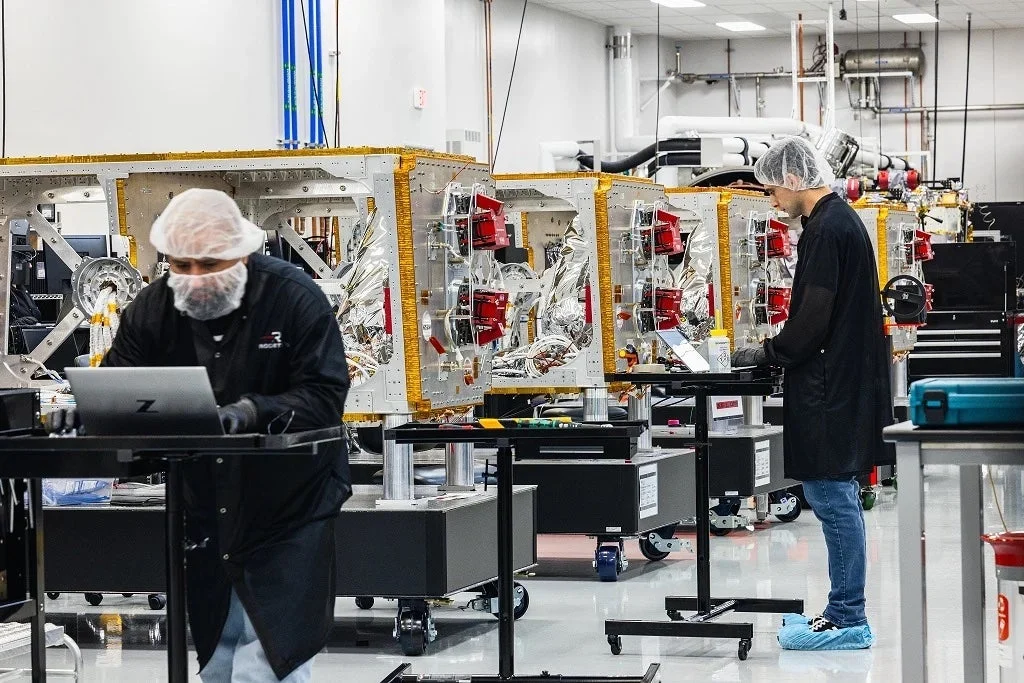

Rocket Lab USA, Inc., a leading provider of launch services and space systems, has officially transitioned into the geostationary orbit (GEO) market following a landmark $90 million contract award from the U.S. Space Force. Announced on May 21, the contract, issued by the Space Systems Command (SSC), tasks Rocket Lab with the design, manufacture, and operation of two specialized satellites dedicated to space domain awareness (SDA). This mission, centered on the Heimdall payload, represents a significant milestone for the company as it extends its vertically integrated business model from low Earth orbit (LEO) to the more complex and strategically vital geostationary regime.
The mission is designed to bolster the Space Force’s ability to monitor and maintain custody of objects within the GEO belt, a region of space approximately 35,786 kilometers above Earth. This belt is densely populated with high-value assets, including military communications satellites, weather monitoring systems, and commercial telecommunications infrastructure. As the space environment becomes increasingly congested and contested, the ability to track, identify, and predict the movements of both active satellites and orbital debris has become a top priority for national security.
The Evolution of the Heimdall Program
The current contract is the culmination of a multi-year development cycle that began with prototype testing. In 2021, the payload provider GEOST was awarded a prototype contract to develop two SDA payloads. GEOST’s expertise in high-precision optical sensors made it a prime candidate for the Space Force’s requirements for sensitive, long-range detection of objects in orbit. Recognizing the strategic value of these capabilities, Rocket Lab acquired GEOST in a move to solidify its position as a comprehensive provider of national security space solutions.
Following the acquisition, GEOST was rebranded as Rocket Lab Optical Systems. This internal division will be responsible for producing the Heimdall payloads that will serve as the "eyes" of the new satellites. By bringing this technology in-house, Rocket Lab has eliminated many of the supply chain risks associated with complex satellite builds, allowing for a more streamlined production process. The transition from a prototype phase to a full space vehicle delivery contract signals the U.S. Space Force’s confidence in the maturity of the Heimdall technology and Rocket Lab’s capability to deliver a flight-ready bus platform.
Technical Specifications: The Lightning Bus Platform
The two satellites will be built upon Rocket Lab’s proprietary Lightning bus platform. While Rocket Lab has seen significant success with its smaller Photon bus, the Lightning bus was developed to address the needs of more demanding missions that require higher power, longer operational lifetimes, and greater payload capacities.
The Lightning bus is a roughly 3-kilowatt platform, putting it in the class of mid-sized, high-performance spacecraft. For the Space Force mission, Rocket Lab is adapting the Lightning architecture to withstand the unique environmental challenges of geostationary orbit. Unlike LEO, where satellites are partially shielded by the Earth’s magnetic field, GEO missions are exposed to higher levels of ionizing radiation and extreme thermal fluctuations.
Key features of the Lightning bus include:
- High-Power Capacity: The 3 kW power budget allows for the operation of sensitive optical sensors and high-bandwidth communication arrays simultaneously.
- Longevity: Designed for multi-year missions, the platform incorporates redundant systems and radiation-hardened electronics to ensure reliability over the satellite’s lifespan.
- Precision Pointing: For SDA missions, the ability to point sensors with extreme accuracy is critical. The Lightning bus utilizes advanced reaction wheels and star trackers to maintain a stable platform for the Heimdall optical instruments.
The Lightning platform is already the foundation for other high-profile contracts, including Rocket Lab’s work for the Space Development Agency’s (SDA) Proliferated Warfighter Space Architecture and Globalstar’s satellite constellation refresh. The adaptation of this bus for GEO demonstrates its modularity and scalability across different orbital regimes.
Strategic Context: Space Domain Awareness and National Security
The $90 million award comes at a time when the Department of Defense is shifting its acquisition strategy toward "proliferated" architectures—using larger numbers of smaller, more affordable satellites rather than a few massive, expensive platforms. This shift is intended to build resilience against potential adversarial interference.
Space Domain Awareness is the foundational pillar of this strategy. Without accurate data on what is happening in orbit, the Space Force cannot effectively protect its assets. The Heimdall payloads are specifically designed to "maintain custody" of objects. In satellite operations, "custody" refers to the continuous tracking of a specific object so that its position and intent are known at all times. In the crowded GEO belt, where satellites often hover over the same geographic point on Earth, maintaining custody is essential for preventing collisions and identifying "co-orbital" threats—satellites designed to maneuver close to others for spying or disruption.
By deploying dedicated SDA satellites, the Space Systems Command is moving away from a reliance on ground-based radar and telescopes, which can be limited by weather and geographic constraints. Space-based sensors provide a 24/7, unobstructed view of the orbital environment, offering a much higher degree of fidelity for tracking small or stealthy objects.
Vertical Integration as a Competitive Edge
Rocket Lab’s statement regarding the contract emphasized the company’s "vertically integrated mission model." This approach—where a single company designs the sensors, builds the satellite bus, manages the software, and potentially provides the launch—is a departure from the traditional aerospace model. Historically, a prime contractor would manage dozens of subcontractors to build a single satellite, often leading to delays and cost overruns.
Rocket Lab has spent the last several years aggressively acquiring component manufacturers to bring critical technologies in-house. These acquisitions include:
- Sinclair Interplanetary: Reaction wheels and star trackers.
- Planetary Systems Corporation (PSC): Separation systems and satellite dispensers.
- SolAero Technologies: High-efficiency solar cells and panels.
- Advanced Solutions, Inc. (ASI): Flight software and mission simulation.
- GEOST (Rocket Lab Optical Systems): Optical payloads and sensors.
By owning the entire stack, Rocket Lab can optimize the interface between the payload and the bus, reducing mass and power consumption. This efficiency was likely a major factor in the SSC’s decision to award the contract to Rocket Lab over more established "legacy" aerospace firms.
Industrial Implications and the Production Line
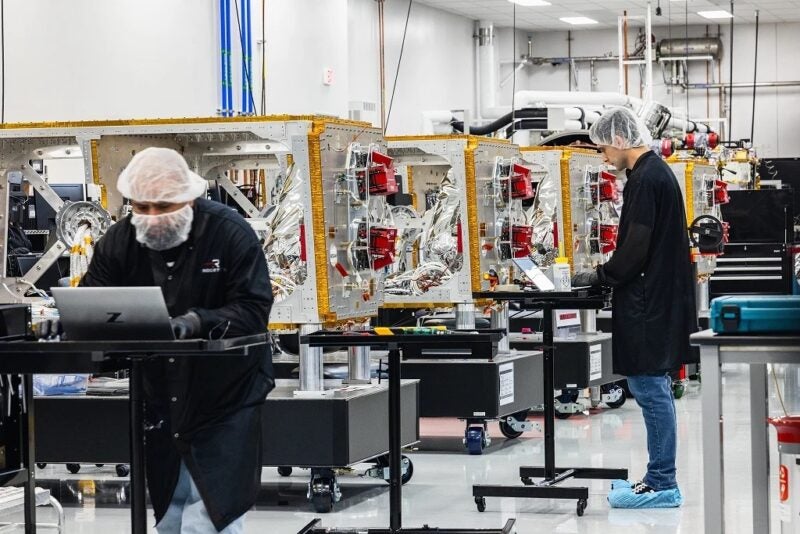
The production of these satellites will take place at Rocket Lab’s advanced spacecraft manufacturing facilities. The company has invested heavily in "Lightning Spacecraft Production Lines" designed for high-throughput manufacturing. Unlike the bespoke, one-off satellite builds of the past, Rocket Lab is moving toward an assembly-line approach that mirrors automotive manufacturing.
This industrial capacity is vital for the Space Force, which is seeking to shorten the "sensor-to-shooter" timeline. The ability to go from contract award to on-orbit operation in a matter of years, rather than a decade, is a key requirement for modern military space programs. Rocket Lab’s ability to scale production of the Lightning bus allows it to fulfill large orders for constellations like Globalstar while simultaneously working on specialized government missions like Heimdall.
Official Reactions and Future Outlook
While specific statements from Space Systems Command officials regarding the Heimdall award emphasize the need for rapid capability insertion, Rocket Lab leadership has viewed this as a validation of their long-term strategy. Peter Beck, the founder and CEO of Rocket Lab, has frequently stated that the company’s goal is to become an end-to-end space company where launch is just one part of the value chain.
"This award represents Rocket Lab’s first satellite production program for geostationary orbit and extends the Company’s vertically integrated mission model into a new orbital regime," the company stated. This expansion into GEO is a logical precursor to even more ambitious missions, including potential lunar or deep-space exploration contracts.
The success of the Heimdall mission will likely dictate the cadence of future Space Force contracts for Rocket Lab. If the Lightning bus performs well in the harsh GEO environment, it could become a standardized platform for a variety of other high-orbit missions, including protected communications and missile warning.
As the two satellites move toward their launch dates, the industry will be watching closely to see how Rocket Lab manages the complexities of GEO operations. For a company that began as a small-satellite launch provider, the leap to $90 million GEO missions represents a coming-of-age in the global aerospace market. The Heimdall program is not just a mission for space domain awareness; it is a demonstration of the "New Space" industry’s ability to take on the most demanding requirements of national security.
In the broader context of the aerospace economy, this contract underscores the growing competition for government business. As Rocket Lab moves up-market with larger buses and more sophisticated payloads, it increasingly finds itself in direct competition with the "Big Five" defense contractors. The results of the Heimdall mission will serve as a critical data point for the Department of Defense as it weighs the benefits of agile, vertically integrated providers against traditional procurement methods. With the production lines now active, the focus shifts to the rigorous testing and integration phases required to ensure these two satellites can fulfill their sentinel roles in the silent, high-stakes environment of geostationary orbit.
