


The pervasive internet "life hack" suggesting that placing a coin atop a WiFi router can miraculously enhance signal strength is unequivocally a baseless deception, lacking any foundation in established physics or electrical engineering principles. Despite its widespread circulation across social media platforms and informal online communities, this purported solution is not only ineffective but, paradoxically, could potentially hinder wireless performance.
The Allure of a Simple Solution to a Complex Problem
The appeal of the "coin on router" myth stems from a common human desire for simple, cost-free solutions to everyday frustrations. In an increasingly connected world, reliable and robust WiFi is no longer a luxury but a fundamental necessity for work, education, and entertainment. Many households grapple with inconsistent coverage, dead zones, and sluggish internet speeds, leading users to seek quick fixes. The idea that a common household item, like a coin, could resolve such a complex technological issue is compelling, particularly when presented with a veneer of pseudo-scientific explanation.
This particular myth likely gained traction during the early to mid-2010s, a period characterized by the explosive growth of viral "life hacks" on platforms like YouTube, Facebook, and various tech blogs. These hacks often promise miraculous results with minimal effort or expense, appealing to a broad audience eager to optimize their digital experiences without delving into technical complexities. The visual simplicity of placing a coin on a device makes it an easily reproducible and shareable concept, contributing to its rapid dissemination.
Debunking the Myth: The Unassailable Laws of Physics
To understand why the coin trick fails, it’s crucial to examine the fundamental principles governing WiFi signals and antenna design. The myth often posits that because metal can act as an antenna, a coin, being metallic, should naturally improve signal reception or transmission. While it is true that metal is integral to antenna function, the application in this context is fundamentally flawed due to several critical factors:
1. Lack of Electrical Connection: The Insulation Barrier
Modern WiFi routers are sophisticated electronic devices housing complex circuitry, including integrated antennas designed to transmit and receive radio frequency (RF) signals. These internal components are carefully calibrated and protected by a plastic casing, which serves multiple purposes: physical protection, dust prevention, and, crucially, electrical insulation.
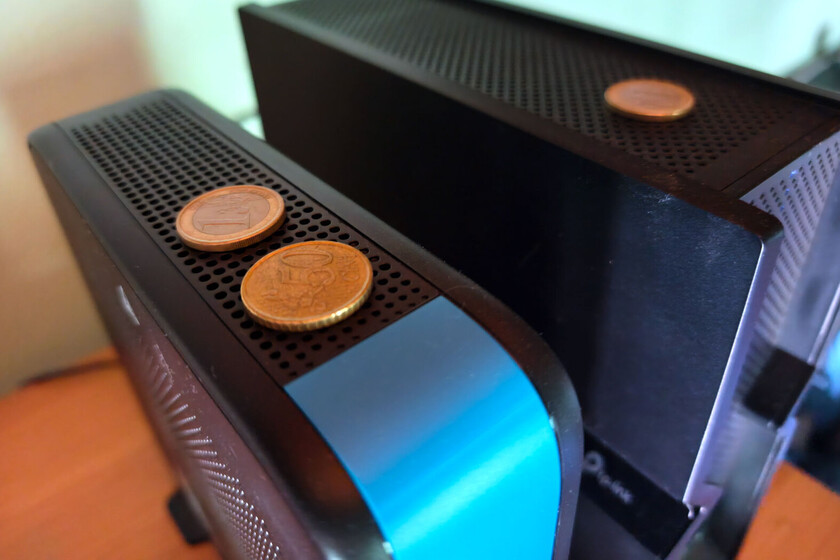
When a coin is placed on the exterior plastic casing of a router, it remains physically and electrically isolated from the router’s internal antenna system. For any metallic object to function as an effective antenna or an extension of an existing one, it must be properly integrated into the electrical circuit. This typically involves a direct, conductive connection that allows for the flow of electromagnetic energy. A coin merely resting on an insulating plastic surface has no such connection. It cannot interact with the router’s electrical signals in a meaningful way to either amplify or redirect them. The physical principle here is akin to placing a piece of metal next to a car engine and expecting it to boost horsepower; without a direct, engineered connection, the interaction is negligible or non-existent.
2. The Interaction of Metal with Radio Waves: Dispersion and Absorption
Contrary to the belief that metal passively enhances signals, conductive materials like those found in coins (typically copper, nickel, or zinc alloys) interact with radio waves primarily through reflection, absorption, or dispersion. They do not intrinsically "amplify" signals in the way a properly designed antenna does.
This principle is best illustrated by the concept of a Faraday cage. A Faraday cage is an enclosure made of a conductive material that blocks electromagnetic fields. When a device that emits radio signals, such as a router, is surrounded by a conductive material, the signals can become trapped or significantly attenuated within the enclosure. While a single coin on top of a router doesn’t create a full Faraday cage, it introduces an uncalibrated metallic obstruction into the immediate vicinity of the antenna.
Instead of improving the signal, this obstruction can interfere with the router’s carefully engineered radiation pattern. The metallic surface of the coin can reflect or absorb portions of the outgoing WiFi signal, creating localized dead spots or altering the signal’s direction unpredictably. This can lead to a reduction in effective range or signal quality, rather than an improvement. The omnidirectional nature of most consumer router antennas means they are designed to broadcast signals evenly in all directions; introducing an unscientific metallic element disrupts this intended pattern.
3. The Complexity of Antenna Design and Signal Propagation
WiFi signal propagation is a nuanced field governed by the laws of electromagnetism. Antennas are precisely engineered components designed to convert electrical signals into electromagnetic waves and vice versa, at specific frequencies and with particular radiation patterns. Key parameters in antenna design include:
- Resonance: Antennas are tuned to resonate at specific frequencies (e.g., 2.4 GHz or 5 GHz for WiFi) to maximize efficiency. A random coin is not tuned to these frequencies.
- Impedance Matching: For maximum power transfer, the impedance of the antenna must match that of the transmission line. A coin has no impedance matching.
- Gain: Antenna gain is a measure of an antenna’s ability to direct or concentrate radio frequency energy in a particular direction. It is an engineering parameter that cannot be altered by simply placing an arbitrary object on top of the device. Increasing gain typically involves specific antenna geometry, array configurations, or the use of directional antennas.
- Polarization: WiFi signals have a specific polarization (orientation of the electric field). Introducing a random metallic object can distort this, leading to signal degradation.
To direct a WiFi signal towards a specific area, specialized directional antennas are required. These are precisely engineered devices, often parabolic or patch antennas, designed with specific shapes and materials to focus electromagnetic waves, much like a reflector dish focuses light. A flat, small metallic object like a coin cannot replicate this complex engineering.
Expert Consensus and Official Stance
Telecommunications engineers, physicists, and networking professionals universally dismiss the "coin on router" myth as pseudoscience. Leading router manufacturers and Internet Service Providers (ISPs) consistently advise against such unverified modifications. Their recommendations for improving WiFi coverage invariably revolve around established methods:
- Optimal Router Placement: Central location, elevated position, away from obstructions and sources of interference (microwaves, cordless phones).
- Router Upgrade: Investing in newer generation routers (e.g., WiFi 6 or WiFi 7) that offer improved range, speed, and efficiency.
- Mesh WiFi Systems: For larger homes, mesh networks provide seamless coverage by deploying multiple access points that work together.
- WiFi Extenders/Repeaters: Devices designed to boost existing signals, though often with some speed reduction.
- Powerline Adapters: Using a home’s electrical wiring to extend network connectivity.
- Wired Connections: For stationary devices like smart TVs or desktop computers, an Ethernet cable provides the most stable and fastest connection, bypassing WiFi limitations entirely.
- Channel Optimization: Adjusting the WiFi channel to avoid interference from neighboring networks.
- Firmware Updates: Keeping router firmware updated ensures optimal performance and security.
These solutions are grounded in scientific principles and have been rigorously tested and validated, offering tangible improvements to wireless networks.
The Broader Implications of Digital Misinformation
The persistence of myths like the "coin on router" highlights a broader challenge in the digital age: the proliferation of misinformation and the difficulty many users face in discerning credible information from unsubstantiated claims. In a world saturated with content, viral "hacks" often spread faster than fact-checks, leading to widespread adoption of ineffective or even counterproductive practices.
The implications extend beyond mere inconvenience:
- User Frustration: Individuals who try these "hacks" and experience no improvement may become more frustrated with their technology and less trusting of legitimate advice.
- Wasted Time and Effort: While a coin is harmless, other tech myths could lead to users attempting more dangerous modifications that could damage equipment or pose safety risks.
- Erosion of Trust: A continuous diet of unverified information can erode public trust in scientific expertise and established technological solutions.
- Opportunity Cost: Time and resources spent on ineffective solutions detract from pursuing genuine improvements that could resolve underlying connectivity issues.
In an era where digital literacy is paramount, it becomes crucial for consumers to approach viral claims with a critical eye, prioritizing information from reputable sources, scientific consensus, and expert advice over anecdotal evidence or visually appealing, yet scientifically unsound, "hacks."
Conclusion: Trusting Engineering Over Anecdote
In conclusion, the notion that a simple coin can augment the sophisticated engineering of a WiFi router is a myth firmly disproven by the laws of physics and decades of telecommunications research. The router’s internal antennas are precisely designed and isolated components, and an external, uncalibrated metallic object cannot integrate with or enhance their function. At best, placing a coin on a router will have no effect; at worst, it could introduce unwanted interference, paradoxically degrading the very signal it purports to improve.
Instead of resorting to such unfounded "hacks," users seeking to improve their WiFi experience should consult their router’s manual, consider upgrading their equipment, optimize router placement, or invest in proven network extension technologies. In the complex world of wireless communication, genuine solutions are rooted in sound engineering and scientific understanding, not in viral anecdotes.
