
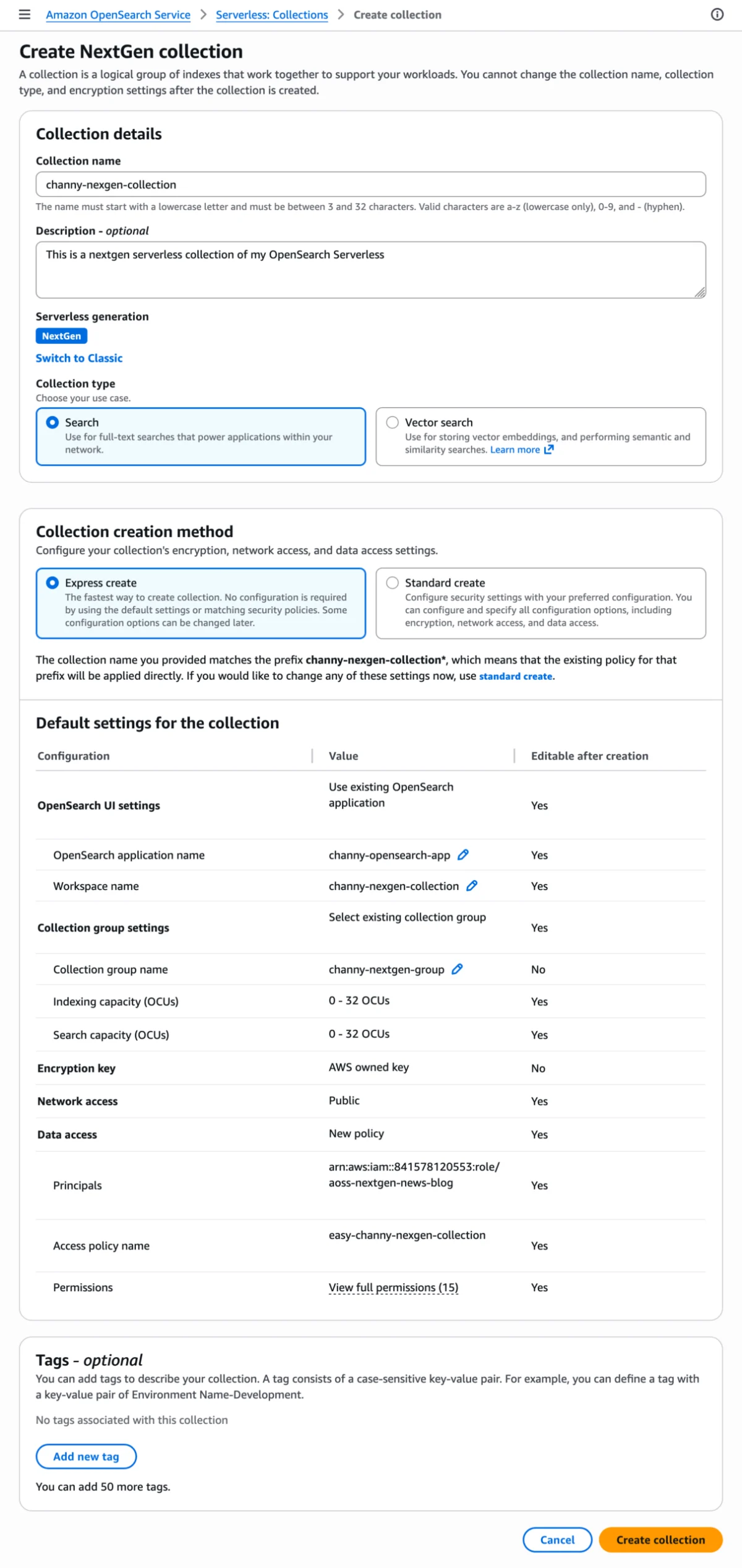

Amazon Web Services (AWS) today announced the general availability of the next generation of Amazon OpenSearch Serverless, a fully managed search and vector engine engineered to meet the demanding requirements of customers building sophisticated AI agents. This significant upgrade introduces a new paradigm in scalability, cost optimization, and developer experience, positioning OpenSearch Serverless as a critical infrastructure component for the rapidly evolving landscape of artificial intelligence. The enhanced service is designed to dynamically scale from zero to thousands of requests per second and back to zero when idle, promising up to 60% cost savings compared to traditional OpenSearch Service clusters provisioned for peak capacity. This launch underscores AWS’s commitment to providing robust, flexible, and cost-effective solutions for the burgeoning AI ecosystem.
Unpacking the Technological Leap for AI Workloads
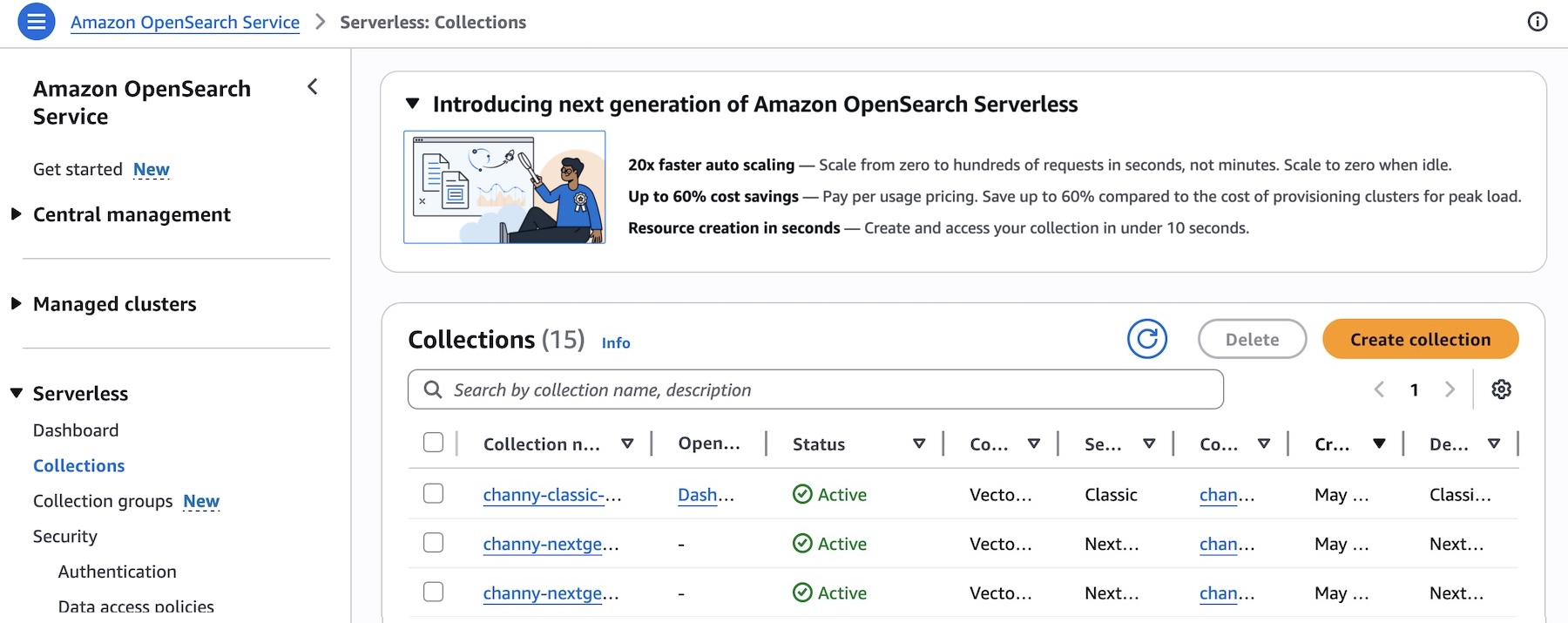
The core of this "next generation" lies in its dramatically improved performance and resource management capabilities. The service now creates necessary resources in mere seconds and scales capacity up to 20 times faster than its predecessor. This instant resource creation and rapid scaling are particularly vital for AI agents, which often experience highly variable and unpredictable workloads. Traditional database solutions, even serverless ones, could struggle to keep pace with sudden spikes in demand from AI applications, leading to performance bottlenecks or the need for costly over-provisioning. The new OpenSearch Serverless addresses this by offering true on-demand elasticity, ensuring that resources are available precisely when needed and de-provisioned when idle, directly translating into the promised cost efficiencies.
Crucially, the next generation of OpenSearch Serverless supports both full-text search and vector search capabilities. While full-text search remains fundamental for many applications, the inclusion of robust vector search is a game-changer for AI agents. Vector search allows for semantic understanding, enabling AI models to find information based on meaning and context rather than just keywords. This is indispensable for advanced AI functionalities like Retrieval Augmented Generation (RAG), where agents retrieve relevant information from vast datasets to inform their responses, enhancing accuracy and reducing hallucinations in large language models (LLMs). The seamless integration of these search types within a serverless, managed environment simplifies the architectural complexities for developers building intelligent agents.
The Rise of AI Agents and the Need for Specialized Infrastructure
The announcement comes at a time when AI agents are moving from theoretical concepts to practical applications across various industries. These autonomous entities are designed to perform tasks, make decisions, and interact with environments based on AI models, often requiring continuous access to vast amounts of structured and unstructured data. From customer service chatbots that leverage extensive knowledge bases to sophisticated enterprise agents automating complex workflows, the demand for scalable, low-latency, and cost-efficient data retrieval mechanisms is skyrocketing.
Traditional database architectures often struggle to keep up with the unique demands of AI agents. The intermittent yet intensive nature of AI workloads, coupled with the need for rapid data ingestion and retrieval for real-time decision-making, necessitates a paradigm shift in infrastructure. Vector databases, or services with robust vector search capabilities like OpenSearch Serverless, have emerged as a critical component in the AI stack. They store data as high-dimensional vectors, allowing for efficient similarity searches that power recommendations, semantic search, anomaly detection, and, most importantly, the contextual understanding required by advanced AI agents. AWS’s investment in enhancing OpenSearch Serverless specifically for AI agents highlights its strategic foresight in catering to this burgeoning market segment.

Streamlined Developer Experience and Strategic Integrations
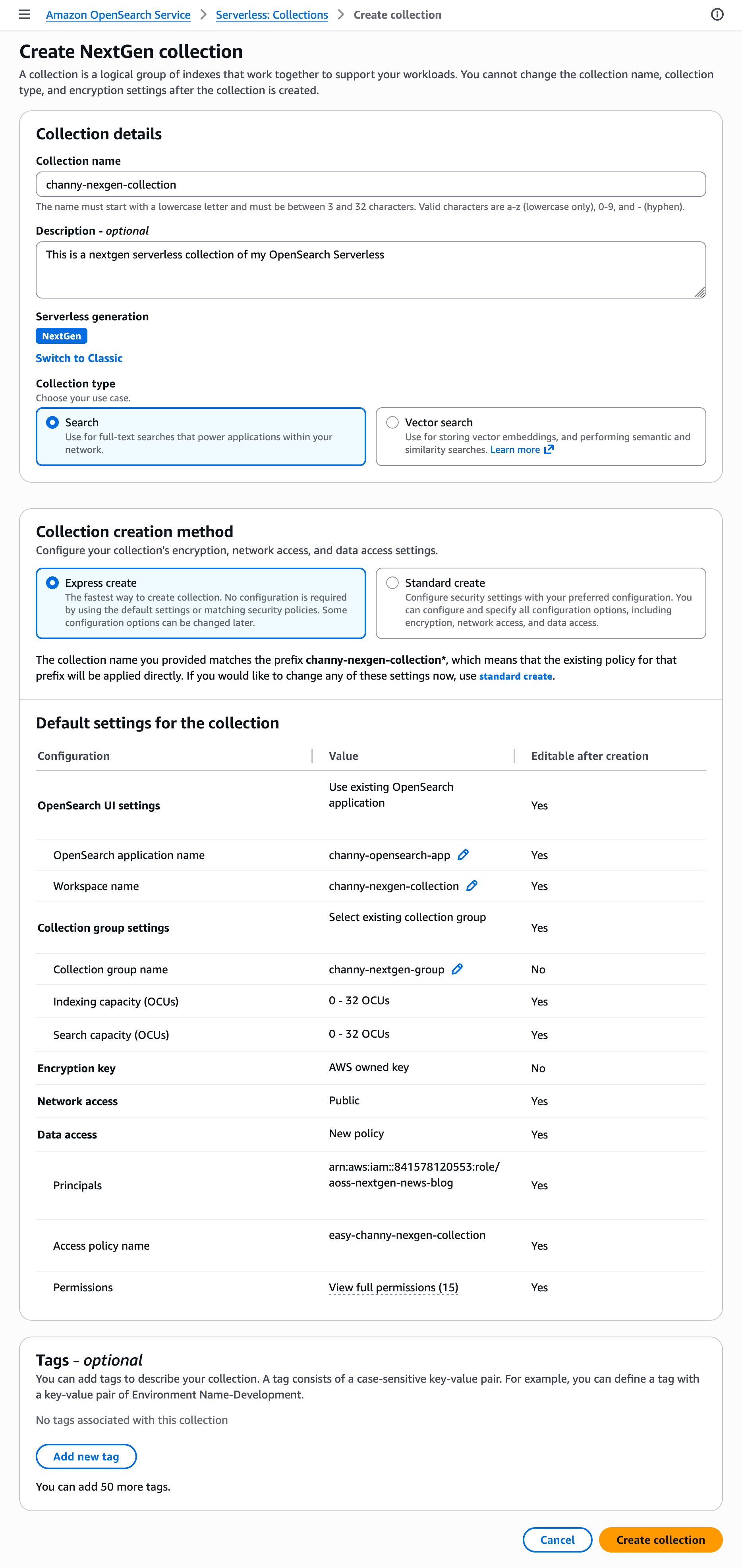
AWS has placed a strong emphasis on simplifying the developer experience, recognizing that the pace of AI innovation depends on ease of use and rapid deployment. The next generation of OpenSearch Serverless features instant resource creation, enabling developers to deploy production-ready search and vector backends for their AI agents in minutes, without the burden of managing underlying infrastructure. This operational simplicity is a significant draw for startups and enterprises alike, allowing them to focus resources on core AI model development rather than infrastructure provisioning and maintenance.
Further amplifying this ease of use are native integrations with leading AI development platforms such as Vercel and Kiro. Through the Vercel console, developers can now create new OpenSearch collections or connect existing ones, facilitating the rapid deployment of search backends for agent applications. This integration streamlines the workflow for front-end developers leveraging Vercel’s platform, enabling them to quickly add powerful search capabilities to their AI-powered applications. An AWS spokesperson remarked, "Our collaboration with platforms like Vercel and Kiro is pivotal. It means developers can go from an idea to a working prototype in minutes, drastically accelerating the pace of AI innovation."
Similarly, the integration with Kiro, specifically through OpenSearch Agent Skills and OpenSearch Launchpad, provides developers with a rich toolkit for accelerating search applications. OpenSearch Agent Skills offer a repository of pre-built skills that embed OpenSearch intelligence directly into agents, encapsulating domain knowledge and multi-step execution logic. This empowers agents to not only retrieve results but also understand the context and process behind them. The OpenSearch Launchpad within Kiro Powers further assists with guided, end-to-end architecture planning, significantly reducing the complexity of building sophisticated AI-driven search applications. A representative from Kiro commented, "Integrating with the next generation of OpenSearch Serverless allows our users to unlock unprecedented capabilities for their AI agents, providing them with the intelligence and speed needed to tackle complex tasks."
Operational Simplicity and Transparent Pricing
The fully managed nature of OpenSearch Serverless means AWS handles all the heavy lifting of infrastructure provisioning, patching, backups, and scaling. This eliminates the operational overhead traditionally associated with running and maintaining search and analytics clusters, freeing up valuable developer and operations resources. The "scale-to-zero" feature, in particular, is a game-changer for cost efficiency. For workloads with intermittent or low usage, customers are not charged for idle capacity, leading to substantial savings, potentially up to 60% compared to continuously provisioned clusters. This pay-per-use model aligns perfectly with the unpredictable consumption patterns often seen in AI development and deployment.
Pricing for the next generation of OpenSearch Serverless is based on OpenSearch Compute Units (OCUs) for compute resources utilized in indexing, search, and GPU acceleration. Customers are charged separately for storage in GB-month. This granular pricing model ensures transparency and cost predictability, allowing developers to optimize their spend based on actual consumption rather than fixed capacity commitments. This approach is consistent with AWS’s broader serverless offerings, which prioritize elasticity and cost-effectiveness.
Broader Market Implications and AWS’s Strategic Positioning
The launch of the next generation of Amazon OpenSearch Serverless is more than just a product update; it’s a strategic move by AWS to solidify its position as a leading provider of AI infrastructure. By offering a specialized, highly scalable, and cost-effective solution for vector search and general search within a serverless framework, AWS directly addresses critical pain points faced by developers building AI agents. This service complements other AWS AI/ML offerings, such as Amazon Bedrock for foundation models and Amazon SageMaker for machine learning development, creating a comprehensive ecosystem for AI innovation.
Industry analysts view this as a crucial development in the competitive cloud AI landscape. "The demand for specialized data infrastructure to power generative AI applications is exploding," noted a leading industry observer. "AWS’s enhanced OpenSearch Serverless with its aggressive scaling and cost model is a compelling offering that will appeal to a wide range of developers, from startups to large enterprises, looking to deploy AI agents at scale without the operational burden." This move signals a broader trend in cloud computing towards highly specialized, serverless components designed for specific AI workloads, moving beyond general-purpose databases.
Availability and Future Outlook
The next generation of Amazon OpenSearch Serverless is generally available today across all AWS commercial Regions where Amazon OpenSearch Serverless is currently offered. This broad availability ensures that developers globally can immediately leverage the new capabilities to build and deploy their AI agents. AWS encourages users to explore the new features and provide feedback through the AWS re:Post for Amazon OpenSearch Service or their usual AWS Support channels, indicating a continuous commitment to service improvement and responsiveness to customer needs.
As AI agents become more sophisticated and pervasive, the underlying infrastructure must evolve to support their complex demands. The next generation of Amazon OpenSearch Serverless represents a significant step forward in this evolution, providing developers with the tools to build intelligent, responsive, and cost-efficient AI applications that will shape the future of technology.
