

In a monumental development poised to reshape the landscape of artificial intelligence, Amazon and OpenAI have officially unveiled a multi-year strategic partnership, culminating in an unprecedented investment by Amazon and a vast expansion of their existing compute agreement. This collaboration, valued at an estimated $150 billion, is designed to significantly accelerate AI innovation for a global audience spanning enterprises, startups, and end consumers. The alliance sees Amazon committing a substantial $50 billion investment into OpenAI, with an initial tranche of $15 billion immediately deployed and the remaining $35 billion earmarked for subsequent disbursement upon the fulfillment of specific conditions. Concurrently, the companies are broadening their existing multi-year agreement for compute services by an additional $100 billion over eight years, escalating OpenAI’s total compute commitment to approximately $138 billion with Amazon Web Services (AWS). This expanded commitment includes a dedication from OpenAI to consume roughly 2 gigawatts of AWS Trainium capacity, encompassing both the current Trainium3 and the forthcoming next-generation Trainium4 chips.
The strategic dimensions of this partnership extend beyond financial commitments and compute power. AWS and OpenAI are jointly developing a cutting-edge Stateful Runtime Environment, leveraging OpenAI’s advanced models and made accessible through Amazon Bedrock. This innovative environment promises to revolutionize developer workflows by enabling AI applications to maintain context, recall prior interactions, seamlessly operate across diverse software tools and data sources, and efficiently access crucial compute resources. Furthermore, AWS is set to become the exclusive third-party cloud distribution provider for OpenAI Frontier, a platform designed to empower organizations in building, deploying, and managing sophisticated teams of AI agents. This exclusivity grants AWS a pivotal role in democratizing access to OpenAI’s agent technology, further solidifying its position as a preferred cloud partner for advanced AI workloads.
Strategic Rationale Amidst the AI Race
This landmark partnership unfolds against a backdrop of intense competition and unprecedented investment in the generative AI sector. The global AI market is projected to reach staggering figures, with various analyst reports indicating a compound annual growth rate (CAGR) exceeding 35% in the coming years, potentially reaching trillions of dollars by the end of the decade. The demand for robust, scalable, and specialized AI infrastructure has never been higher, driving major technology players to invest heavily in both software development and custom hardware. Amazon, through AWS, has been a dominant force in cloud computing, holding a significant market share. Its strategic focus on AI has been evident through initiatives like Amazon Bedrock, a fully managed service that offers access to foundation models (FMs) from Amazon and leading AI startups, and its development of custom AI accelerators such like Trainium and Inferentia.
For OpenAI, a pioneer in advanced AI research and development, securing such a vast and diversified compute capacity is paramount. The training of increasingly complex large language models (LLMs) and the development of sophisticated AI agents demand immense computational resources. While OpenAI has a well-documented relationship with Microsoft, this partnership with AWS signals a strategic diversification and an expansion of its multi-cloud strategy. It allows OpenAI to tap into AWS’s vast global infrastructure, specialized AI hardware, and extensive customer base, ensuring resilience, scalability, and broader market reach for its cutting-edge models and services. The existing $38 billion compute agreement between the two entities, which now forms the foundation for this expanded $138 billion commitment, underscores a proven track record of successful collaboration and mutual benefit, providing a solid basis for this deepened alliance.
Deep Dive into Partnership Components
The $50 billion investment from Amazon into OpenAI represents one of the largest strategic investments in the technology sector, reflecting Amazon’s conviction in OpenAI’s trajectory and the transformative potential of its AI research. This capital injection will undoubtedly bolster OpenAI’s research and development capabilities, facilitate the recruitment of top-tier talent, and enable further advancements in areas like general artificial intelligence (AGI) and AI safety. The phased nature of the investment, with an initial $15 billion and a conditional $35 billion, suggests a structured approach designed to align with OpenAI’s milestones and strategic objectives.
The co-creation of a Stateful Runtime Environment on Amazon Bedrock is a critical technological facet of this partnership. Current AI applications often struggle with maintaining context across multiple interactions or integrating seamlessly with various enterprise tools. A stateful environment addresses these challenges directly, allowing AI models to "remember" previous conversations, access and synthesize information from different data sources, and operate more intelligently within complex workflows. For developers, this translates into the ability to build more sophisticated, coherent, and user-friendly AI applications with reduced complexity, thereby accelerating the adoption of AI-driven solutions across industries. Amazon Bedrock’s role as the delivery mechanism further democratizes access to these advanced capabilities, enabling a wider range of businesses, from startups to large enterprises, to leverage OpenAI’s models in a secure and scalable manner.
The designation of AWS as the exclusive third-party cloud distribution provider for OpenAI Frontier marks a significant competitive advantage for Amazon. OpenAI Frontier is positioned as a platform for developing and managing AI agents—autonomous AI systems capable of performing tasks, making decisions, and interacting with environments independently. By offering exclusive cloud distribution, AWS becomes the primary gateway for organizations seeking to deploy and scale these advanced AI agents. This move is particularly impactful as the industry moves towards more agentic AI, where AI systems can perform complex, multi-step tasks without constant human intervention. For enterprises, this means a streamlined path to integrating powerful AI agents into their operations, from automating customer service to optimizing supply chains, all within the trusted and robust AWS ecosystem.

The staggering $100 billion expansion of the compute agreement, leading to a total $138 billion commitment, underscores the insatiable demand for specialized AI training hardware. OpenAI’s commitment to utilize 2 gigawatts of AWS Trainium capacity, including Trainium3 and the upcoming Trainium4 chips, highlights AWS’s strategic success in developing custom silicon optimized for AI workloads. Trainium chips are designed specifically for high-performance deep learning training, offering superior cost-effectiveness and efficiency compared to general-purpose GPUs for certain tasks. The sheer scale of 2 gigawatts represents an immense amount of processing power, signaling OpenAI’s ambitious roadmap for training the next generation of foundational models and pushing the boundaries of AI capabilities. This commitment further validates AWS’s vertically integrated strategy of designing its own silicon to meet the unique and demanding requirements of AI development.
Implications and Market Reactions
This strategic partnership is expected to send ripples across the technology industry, particularly in the highly competitive cloud and AI sectors. For Amazon, it significantly strengthens its position as a leading provider of AI infrastructure and services, offering unparalleled access to OpenAI’s cutting-edge models and agent technology. This move also provides a powerful counter-narrative to Microsoft’s deep and long-standing partnership with OpenAI, suggesting that OpenAI is pursuing a multi-cloud strategy to ensure broad accessibility and mitigate risks associated with over-reliance on a single provider. Industry analysts were quick to weigh in, with many speculating that this alliance could lead to a more diversified and robust AI ecosystem, fostering greater innovation and competition.
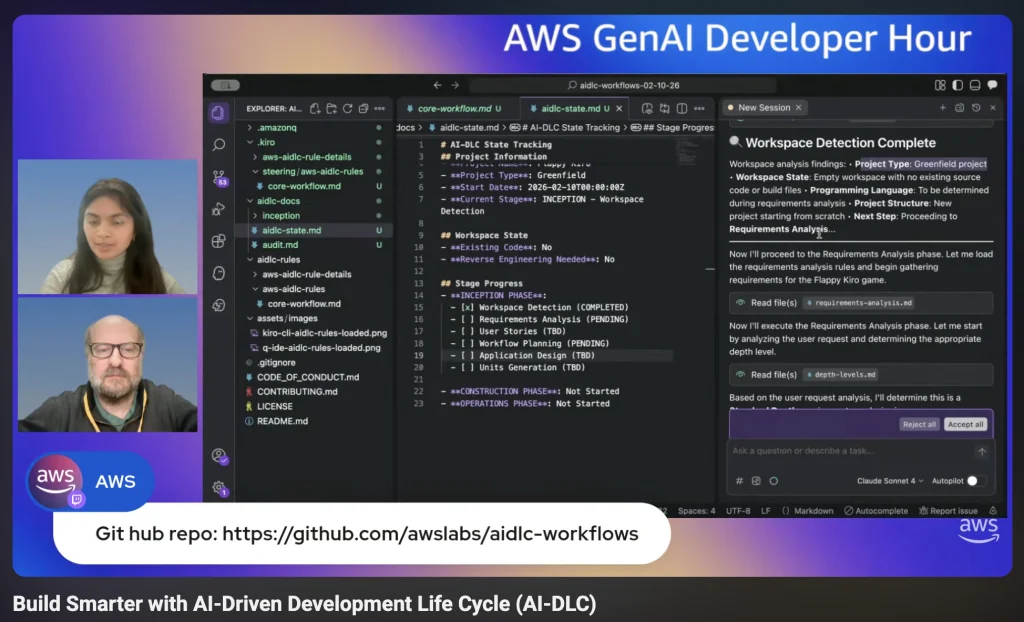
The partnership also holds profound implications for customers. Businesses of all sizes, from nascent startups to established enterprises, will benefit from enhanced access to state-of-the-art AI capabilities. The integration of OpenAI models into Amazon Bedrock, coupled with the Stateful Runtime Environment, will simplify the development and deployment of sophisticated AI applications. This aligns with AWS’s broader efforts to democratize AI, exemplified by initiatives like AI-Driven Lifecycle (AI-DLC) workshops, which guide organizations through a structured framework to identify, prioritize, and implement AI use cases that deliver measurable business value. Such methodologies become even more potent when backed by the combined power of AWS infrastructure and OpenAI’s advanced models.
Economically, the partnership is expected to fuel growth in AI-related industries, potentially creating new jobs and accelerating digital transformation across various sectors. The investment in compute infrastructure alone will drive innovation in hardware and data center technologies. Technologically, the collaboration promises to accelerate fundamental AI research and development, potentially leading to breakthroughs in areas such as reasoning, multimodal AI, and even more capable AI agents. The immense compute resources dedicated to OpenAI will enable the training of models with unprecedented scale and complexity, pushing the boundaries of what AI can achieve.

Future Outlook and Broader Vision
Looking ahead, this partnership sets the stage for a new era of AI development and deployment. The synergy between AWS’s robust cloud infrastructure, custom AI silicon, and market reach, combined with OpenAI’s pioneering research and model development, creates a formidable force in the AI landscape. It suggests a future where advanced AI capabilities are not only accessible but also deeply integrated into the fabric of cloud services, enabling enterprises to build, innovate, and scale AI solutions with greater ease and efficiency. The commitment to developing a Stateful Runtime Environment and offering exclusive cloud distribution for AI agents points towards a future where AI systems are more intelligent, more autonomous, and more seamlessly integrated into complex operational environments.
The continuous innovation in AI hardware, exemplified by the rapid evolution from Trainium3 to Trainium4, underscores the critical role of specialized silicon in enabling the next generation of AI. OpenAI’s massive consumption of this capacity signals its confidence in AWS’s hardware roadmap and its commitment to pushing the limits of AI performance. This partnership is not merely a financial transaction or a compute agreement; it is a strategic alignment of two industry giants with a shared vision to unlock the full potential of artificial intelligence and drive its pervasive adoption across the global economy. As the AI revolution continues to unfold, this landmark collaboration between Amazon and OpenAI will undoubtedly be remembered as a pivotal moment, shaping the trajectory of AI innovation for years to come.
