

AWS has officially announced the immediate availability of OpenAI’s advanced GPT-5.5 and GPT-5.4 models, alongside the specialized coding agent Codex, on its fully managed service, Amazon Bedrock. This strategic integration, initially previewed during the "What’s Next with AWS 2026" event, significantly expands the range of frontier models accessible to enterprises, offering unparalleled capabilities for coding, complex reasoning, and agentic workflows. The move underscores AWS’s commitment to democratizing access to cutting-edge artificial intelligence, empowering developers and organizations to accelerate innovation across various industries.
The integration of these highly anticipated OpenAI models into Amazon Bedrock positions AWS at the forefront of the generative AI landscape. Amazon Bedrock, introduced as a foundational service, provides a simplified way for customers to build and scale generative AI applications using a choice of foundation models (FMs) from leading AI companies, as well as AWS’s own FMs, via a single API. This approach abstracts away the complexities of managing underlying infrastructure, allowing developers to focus on application logic and innovation. By bringing OpenAI’s latest iterations, GPT-5.5 and GPT-5.4, onto this platform, AWS is providing enterprises with direct access to models renowned for their superior performance in demanding computational tasks.
Deep Dive into GPT-5.5 and GPT-5.4 Capabilities on Bedrock
OpenAI’s GPT-5.5 and GPT-5.4 models represent a significant leap forward in large language model technology. According to OpenAI, these models excel in several critical areas, making them ideal for modern enterprise applications. Their strengths include sophisticated coding capabilities, advanced reasoning, robust support for agentic workflows, and the ability to handle highly complex professional tasks.
The GPT-5.5 model is specifically engineered to address the most challenging customer workloads. Its enhanced computational power and refined understanding allow it to tackle intricate problems that demand a high degree of cognitive ability, making it suitable for mission-critical applications where precision and depth of analysis are paramount. This could range from advanced scientific research simulations and complex financial modeling to highly nuanced customer service automation and strategic business intelligence.
Conversely, the GPT-5.4 model is optimized for the best price-performance ratio. While still offering formidable capabilities, it provides a more cost-effective solution for a broader range of applications that require high performance without the extreme demands of GPT-5.5’s specialized use cases. This makes GPT-5.4 particularly attractive for businesses looking to integrate generative AI into everyday operations, such as content generation, enhanced customer support, data analysis, and workflow automation, where efficiency and scalability are key considerations.
Both models are accessible through the Responses API on Amazon Bedrock’s next-generation inference engine. This engine is specifically architected for high performance, reliability, and security, ensuring that enterprises can run their AI applications with confidence, even under heavy loads. The Responses API is designed to manage multi-turn state, host tools, facilitate function tools, and enable richer tool orchestration, supporting complex and long-running AI tasks. This level of sophistication is crucial for developing advanced AI agents that can interact dynamically and maintain context over extended periods, a critical requirement for sophisticated enterprise solutions.
Codex: The AI-Powered Engine for Software Development
Beyond the general-purpose LLMs, the announcement also highlights the integration of OpenAI Codex, a specialized coding agent designed to revolutionize software development. OpenAI reports that over 4 million developers globally utilize Codex weekly, leveraging its capabilities to write, refactor, debug, test, and validate code across vast and intricate codebases. This widespread adoption underscores the transformative impact of AI in accelerating developer productivity and improving code quality.
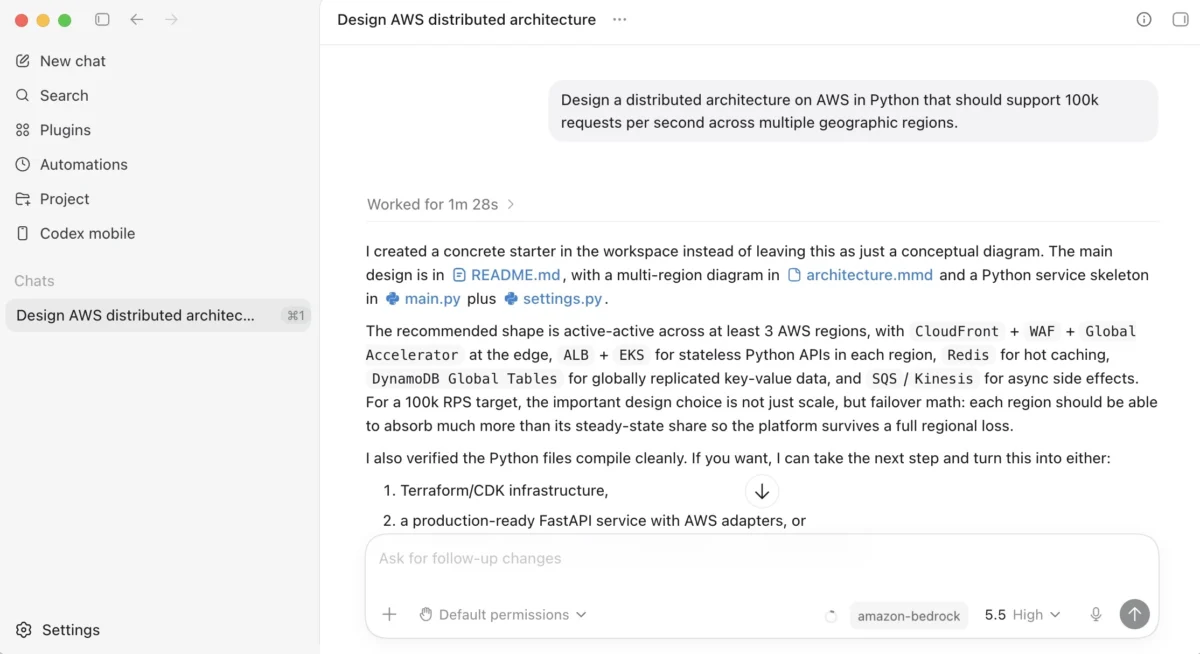
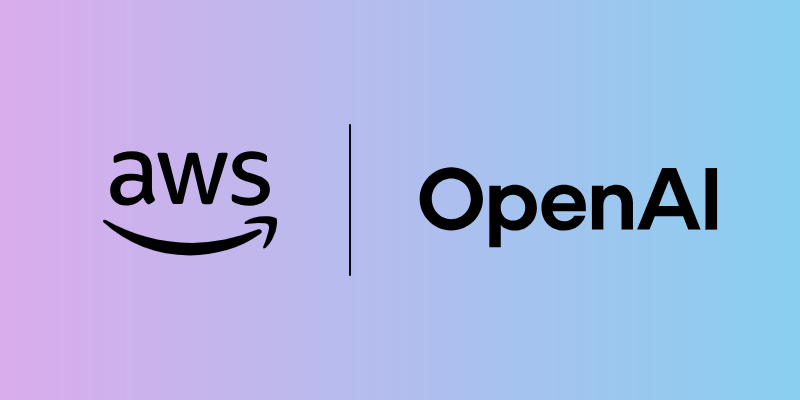
With GPT-5.5 now powering its inference engine, Codex introduces a new echelon of intelligence specifically optimized for complex, long-horizon developer workflows. This means Codex can understand larger contexts, maintain continuity across multiple coding tasks, and generate more sophisticated and contextually relevant code suggestions. Developers can interact with Codex through various interfaces, including the dedicated Codex App, the Codex Command Line Interface (CLI), and popular Integrated Development Environment (IDE) integrations such as Visual Studio Code, JetBrains, and Xcode. Critically, all model inference for these tools is routed securely and efficiently through the Responses API on Amazon Bedrock, ensuring consistent performance and data governance.
The enhanced capabilities of Codex, fueled by GPT-5.5, promise to significantly reduce development cycles, allowing engineering teams to innovate faster and bring products to market more quickly. From automating repetitive coding tasks to assisting in complex architectural design, Codex serves as an intelligent co-pilot, augmenting human developers rather than replacing them. This paradigm shift in software development is expected to have far-reaching implications for engineering efficiency and the overall velocity of digital transformation initiatives.
Amazon Bedrock: A Strategic Platform for Enterprise AI
The decision by AWS to host these OpenAI models on Amazon Bedrock is strategic, reinforcing Bedrock’s position as a premier platform for generative AI. One of Bedrock’s standout features is its commitment to data residency, a critical concern for many enterprises, particularly those in regulated industries or with stringent compliance requirements. For customers with data residency mandates, all processing associated with the OpenAI models remains within the specific Bedrock Region selected by the customer. This ensures that sensitive data does not cross geographical boundaries, providing peace of mind and simplifying compliance efforts.
Furthermore, Bedrock’s pricing model is designed for enterprise scalability and cost-effectiveness. Customers pay per token consumed, eliminating the need for seat licenses or per-developer commitments. This flexible, consumption-based pricing structure allows organizations to scale their AI usage up or down based on demand without incurring prohibitive fixed costs, making advanced AI more accessible to businesses of all sizes. This model is particularly beneficial for startups and rapidly growing companies that require agility in their resource allocation.
The underlying architecture of Bedrock’s inference engine is a key differentiator. Engineered for high performance, reliability, and security, it ensures that even the most demanding AI workloads can be executed efficiently. This robustness is vital for real-time applications, such as dynamic customer interactions or instantaneous code generation, where latency and uptime are critical.

Implementation and Accessibility for Developers
Developers can begin leveraging GPT-5.5, GPT-5.4, and Codex immediately. The models are accessible programmatically using the OpenAI Responses API, which calls the bedrock-mantle endpoints. This can be done via the OpenAI SDK for various programming languages, such as Python, or through command-line tools like curl.
For Python developers, the process involves a straightforward installation of the OpenAI SDK: pip install -U openai. Authentication is managed by setting environment variables for OPENAI_BASE_URL, OPENAI_API_KEY (corresponding to the Bedrock API key), and BEDROCK_OPENAI_MODEL_ID (e.g., openai.gpt-5.5). A sample Python code snippet demonstrates how to interact with GPT-5.5 on Bedrock, illustrating a use case where the model acts as a software engineer to design a distributed AWS architecture capable of handling 100,000 requests per second across multiple geographic regions. This example showcases the models’ ability to handle complex, multi-turn interactions with specified roles and output preferences. Similarly, curl commands provide a direct way to interact with the API, offering flexibility for various development environments.
For Codex integration, developers can download the Codex CLI, the dedicated Codex App, or the Codex VS Code extension. Codex supports two authentication pathways for Bedrock: an Amazon Bedrock API key or the AWS SDK credential chain. By setting the AWS_BEARER_TOKEN_BEDROCK environment variable, Codex prioritizes the Bedrock API key. Configuration is managed via ~/.codex/config.toml, where developers specify the desired model (e.g., openai.gpt-5.5, openai.gpt-5.4, openai.gpt-oss-120b, or openai.gpt-oss-20b) and the AWS region. For desktop applications or VS Code extensions, environment variables are stored in ~/.codex/.env. The seamless integration ensures that developers can access powerful AI coding assistance directly within their preferred development tools, enhancing workflow efficiency without significant overhead.
Chronology of Rollout and Future Updates
The rollout of these OpenAI models on Amazon Bedrock has been carefully phased to ensure optimal performance and availability. Initially, the GPT-5.5 model became available in the US East (Ohio) Region. The GPT-5.4 model followed, launching in both the US East (Ohio) and US West (Oregon) Regions. In a significant update on June 3, 2026, AWS extended the availability of GPT-5.4 to the AWS GovCloud (US-West) Region, catering to public sector customers and highly regulated industries with specific compliance and security requirements.
Initially, access to these models was primarily through the Responses API. However, a crucial update on June 7, 2026, announced that both GPT-5.5 and GPT-5.4 models are now accessible through the new Amazon Bedrock console experience. This enhancement provides a more intuitive and user-friendly interface for interacting with the models, making it easier for developers and non-developers alike to experiment and build generative AI applications without deep programmatic knowledge. AWS continues to update its model-region compatibility list, indicating ongoing expansion plans for these and other models across its global infrastructure.
Broader Impact and Implications
The integration of OpenAI’s GPT-5.5, GPT-5.4, and Codex on Amazon Bedrock represents a pivotal moment in the evolution of enterprise AI and cloud computing. This move solidifies AWS’s strategy of offering a broad selection of high-quality foundation models, allowing customers the flexibility to choose the best tool for their specific needs, rather than being locked into a single vendor’s ecosystem. This "choice" philosophy is a key differentiator in the increasingly competitive generative AI market.
For the developer community, this partnership unlocks unprecedented opportunities. The combination of Bedrock’s robust infrastructure and OpenAI’s advanced models means developers can build more intelligent, more efficient, and more innovative applications. The ability to integrate AI-powered coding assistance directly into IDEs, coupled with sophisticated LLMs for complex reasoning, will likely lead to a surge in productivity and a reduction in the time-to-market for new software solutions. This could democratize access to advanced development techniques, allowing smaller teams and individual developers to compete with larger organizations.
From an enterprise perspective, the benefits are multi-faceted. Enhanced security features, data residency guarantees, and a flexible pricing model make it easier for organizations to adopt generative AI responsibly and cost-effectively. The availability of models capable of handling "hardest customer workloads" signifies that even the most complex and sensitive business problems can now be addressed with AI, fostering innovation across every sector from healthcare to finance.
The collaboration also highlights a broader trend of major cloud providers partnering with leading AI model developers to offer their cutting-edge technologies as managed services. This ecosystem approach benefits both parties: AI model developers gain wider distribution and access to enterprise customers, while cloud providers enrich their service offerings and attract new users. As the generative AI market continues its exponential growth, such strategic partnerships will be crucial in shaping the future of AI development and deployment. Industry analysts project the global generative AI market to reach hundreds of billions of dollars within the next few years, and integrations like this are foundational to achieving that scale.
Conclusion
The availability of OpenAI GPT-5.5, GPT-5.4 models, and Codex on Amazon Bedrock marks a significant milestone in the journey toward mainstream enterprise adoption of generative AI. By providing secure, reliable, and high-performance access to these frontier models, AWS is empowering developers and organizations worldwide to harness the full potential of artificial intelligence. From streamlining software development with intelligent coding agents to tackling the most complex business challenges with advanced reasoning capabilities, the possibilities are vast. As AWS continues to expand its offerings and refine its services, the landscape of AI-powered innovation is set for a dramatic transformation, pushing the boundaries of what is achievable in the digital age. Developers and enterprises are encouraged to explore these new capabilities today and contribute feedback to AWS re:Post for Amazon Bedrock or through their usual AWS Support channels.
