

The landscape of software engineering has shifted dramatically with the widespread adoption of artificial intelligence, particularly the deployment of autonomous AI agents capable of executing complex, multi-step workflows. However, as organizations transition from traditional deterministic codebases to non-deterministic agentic architectures, development and operations teams face unprecedented monitoring hurdles. Standard metrics such as latency, CPU utilization, and basic error rates fail to capture the subtle nuances of generative AI behavior, where a minor prompt adjustment can severely degrade response quality without triggering system faults. To address this critical industry gap, Amazon Web Services has officially announced the launch of Amazon CloudWatch Omni, a purpose-built, unified observability, evaluation, and experimentation solution designed explicitly for application and AI workloads.
Delivered off-console and built upon open standards, CloudWatch Omni aims to bridge the historical divide between local development environments and production cloud operations. By providing a comprehensive ecosystem for tracing, evaluating, and operating AI agents across any model provider, framework, or runtime, the new solution eliminates the need for fragmented toolchains and constant context-switching. As enterprises increasingly rely on generative AI to drive business-critical operations, the introduction of CloudWatch Omni marks a significant milestone in bringing engineering rigor, systematic testing, and collaborative visibility to the frontier of artificial intelligence.
The Growing Crisis of Non-Deterministic AI Observability
For decades, application monitoring relied on predictable patterns. If a function failed or a database timed out, logs and stack traces provided a clear, linear path to the root cause. Agentic AI systems, conversely, operate on probabilistic principles. When an autonomous agent is deployed, a single user prompt can initiate a cascading sequence of internal decisions, including dynamic prompt composition, external tool selection, multi-step reasoning, and sub-agent chaining.
When an agent produces an incorrect answer, takes an illogical path, or hallucinates data, traditional monitoring tools remain blind to the failure. Engineers are frequently forced to spend countless hours manually cross-referencing logs across siloed systems, trying to decipher why a model’s output deviated from expectations. Furthermore, existing generative AI monitoring tools have traditionally suffered from high friction, forcing developers to leave their local Integrated Development Environments (IDEs) to review browser-based dashboards, while operators lacked deep visibility into the granular mechanics of the code running in production.

CloudWatch Omni was conceived to dismantle these operational silos. By capturing every trace, evaluating response quality against objective metrics, and meeting developers and operators directly where they work, the platform establishes a unified source of truth for the entire software lifecycle.
A Dual-Surface Architecture for Development and Operations
A core innovation of CloudWatch Omni is its dual-surface delivery model, which caters to the distinct workflows of software engineers and system operators while maintaining complete data continuity.
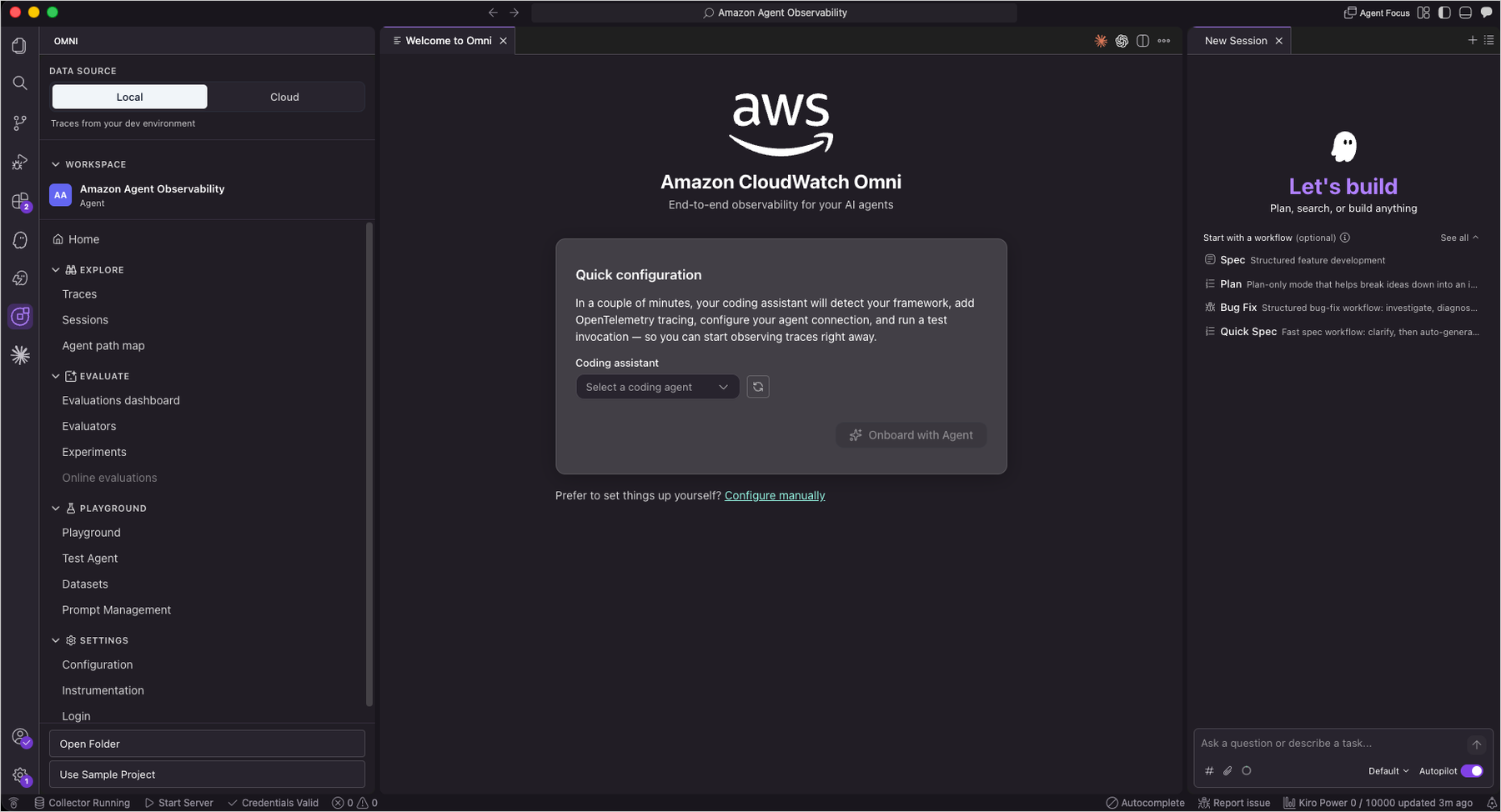
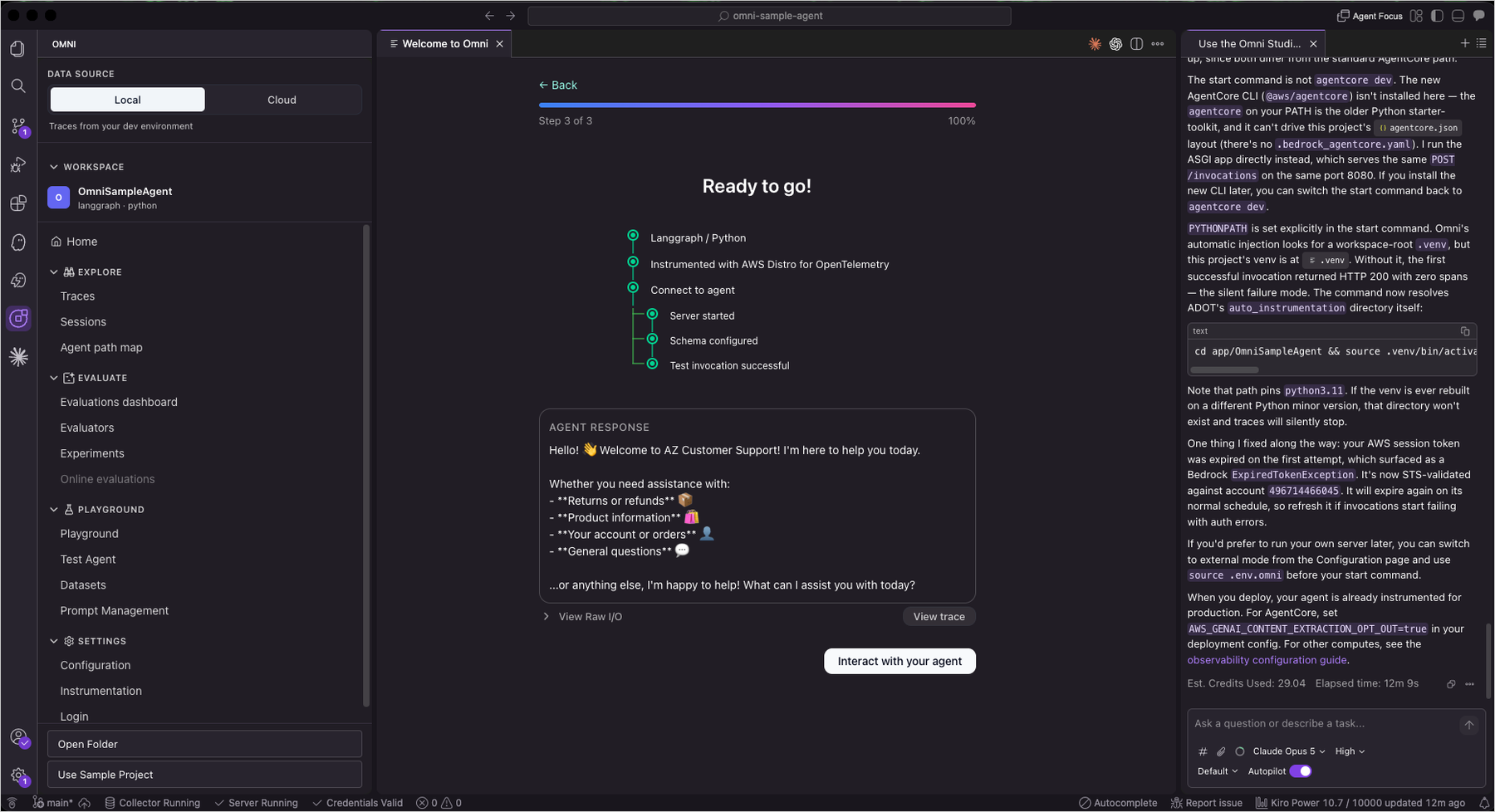
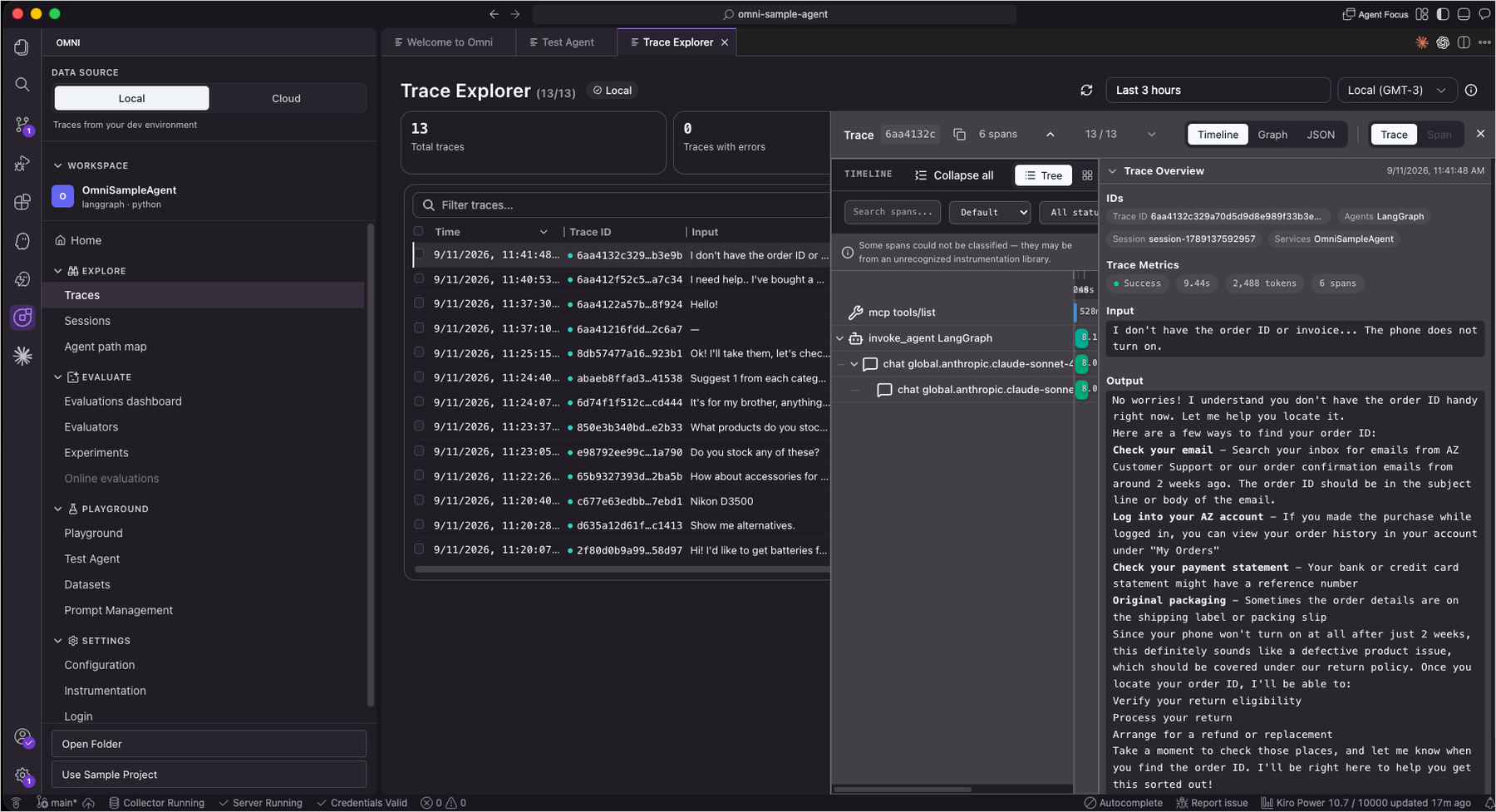
For developers, CloudWatch Omni integrates natively into popular coding environments, currently supporting VS Code and Kiro. Through this native extension, telemetry traces appear in real time as developers execute their agents locally. A built-in playground and evaluation suite remain perpetually a click away, allowing programmers to test modifications instantly without leaving their workspace.
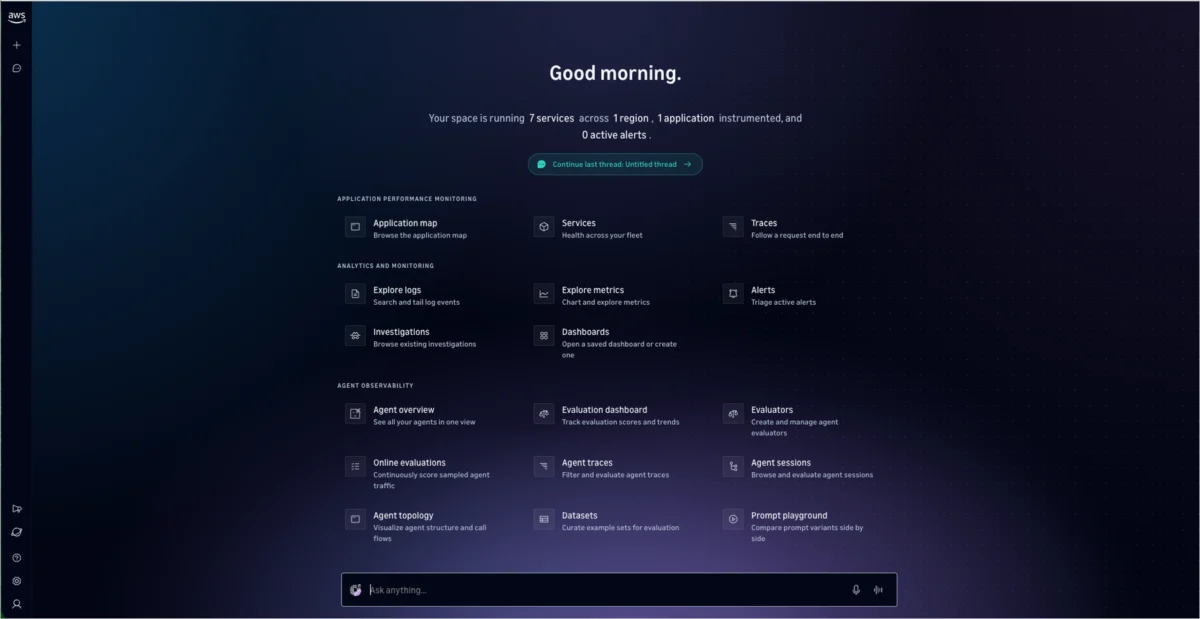
For operations teams, the platform offers a standalone web experience entirely separate from the AWS Management Console. Accessible via Single Sign-On (SSO) without requiring an AWS console login, this interface empowers operators to monitor agent fleets, analyze performance bottlenecks, and investigate anomalies at scale. Crucially, both surfaces share the exact same underlying telemetry data. The specific trace a developer debugs locally in their IDE is the identical trace an operator investigates in the web console, ensuring seamless collaboration and eliminating communication gaps between development and deployment teams.
Moreover, the platform features a flexible Cloud Login capability. Developers can utilize CloudWatch Omni entirely offline and locally during the initial experimentation phase, transitioning seamlessly to cloud-based storage and monitoring by connecting their local environment to their AWS account only when they are prepared for production deployment.
Comprehensive Evaluation and Experimentation Workflows
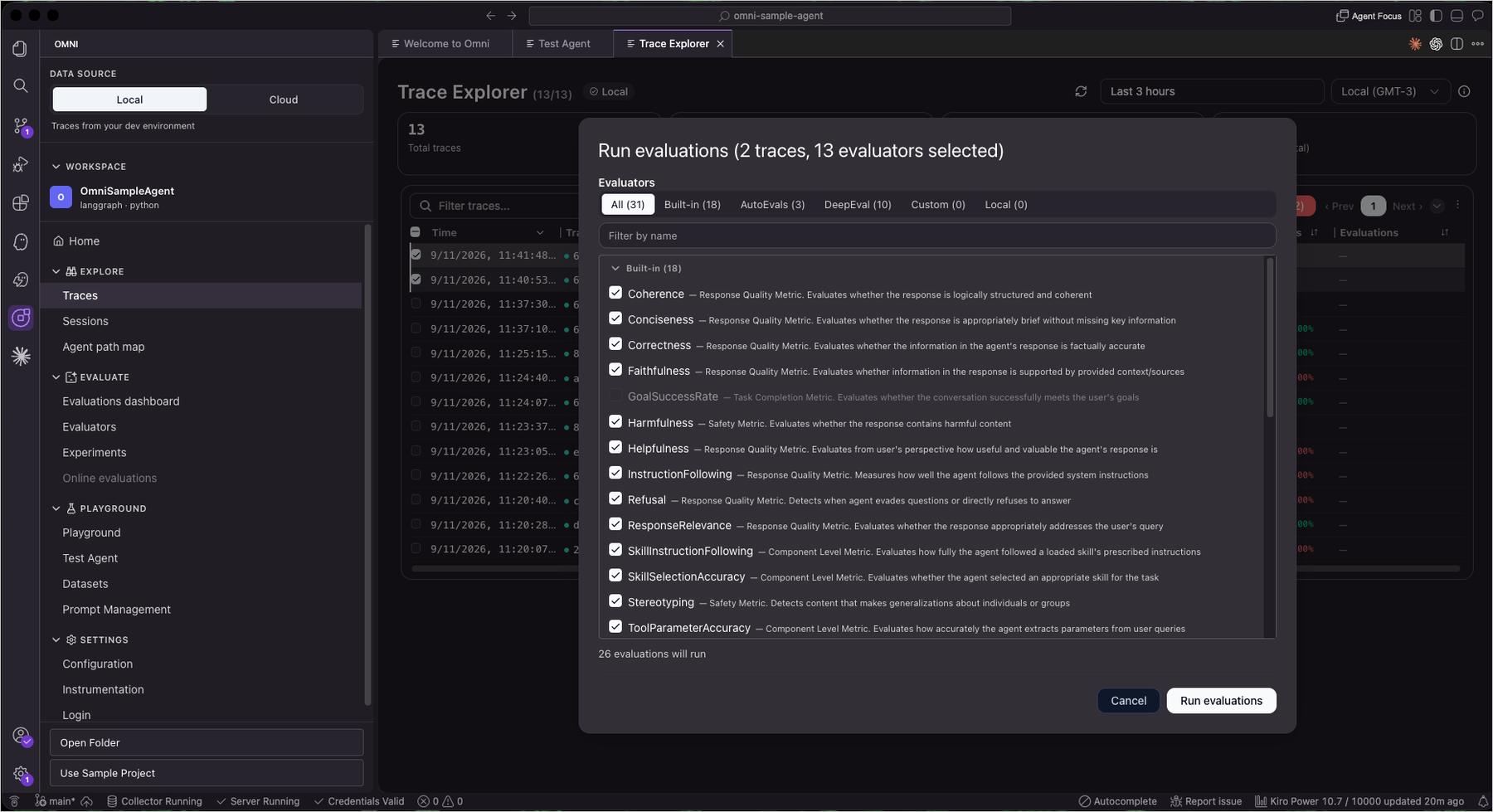
Observability without evaluation offers limited utility in generative AI. Recognizing that metrics like throughput and error codes are insufficient for assessing AI quality, CloudWatch Omni incorporates 17 built-in evaluators designed to score agent responses across vital dimensions such as semantic correctness, coherence, factual faithfulness, and routing accuracy.
These evaluators enable engineering teams to measure what end users actually experience. Developers can select traces directly from the Trace Explorer, apply specific evaluation criteria, and generate granular per-example scores alongside aggregate performance metrics. This eliminates the heavy operational burden of constructing custom, proprietary evaluation frameworks from scratch.
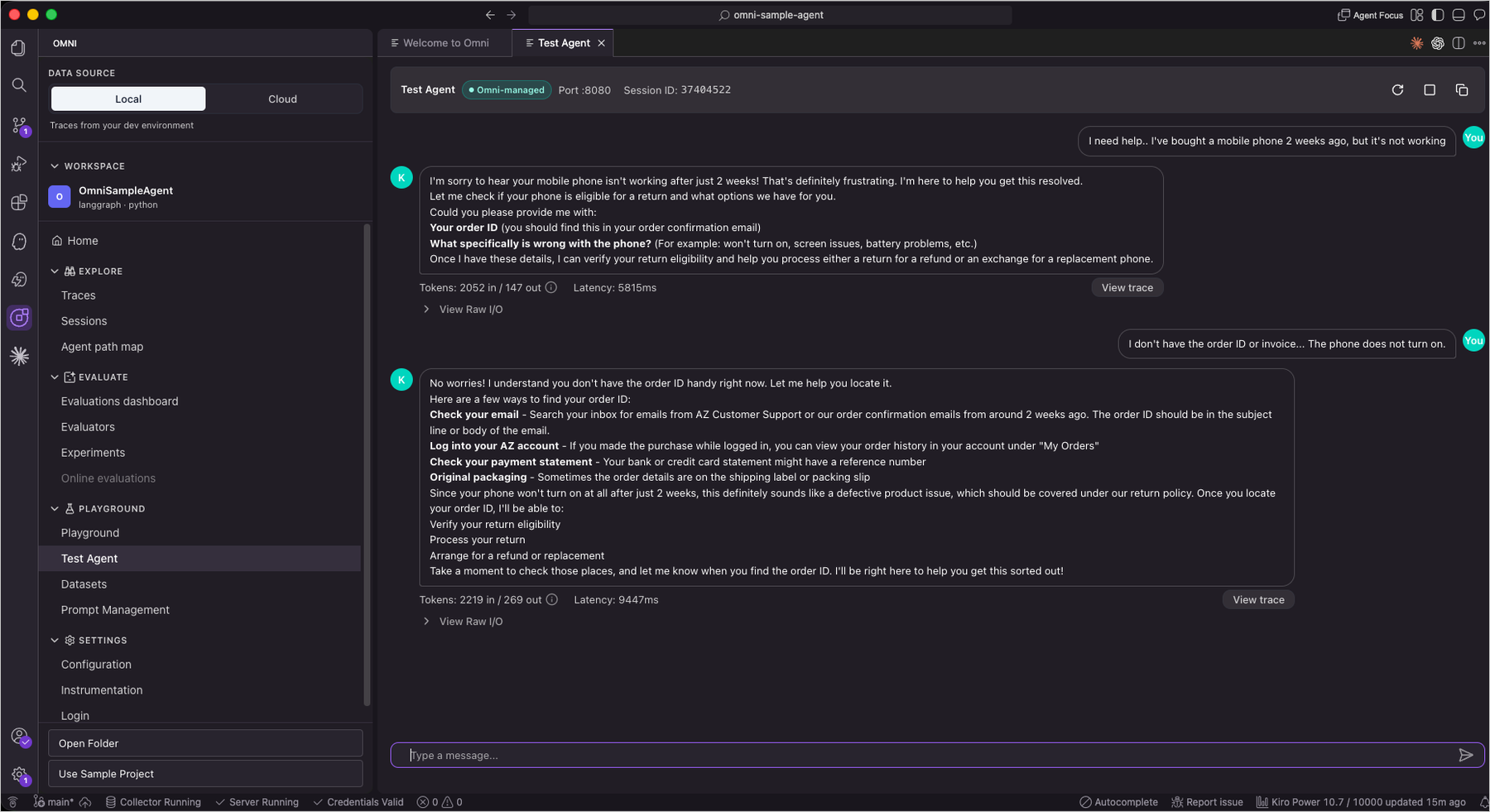
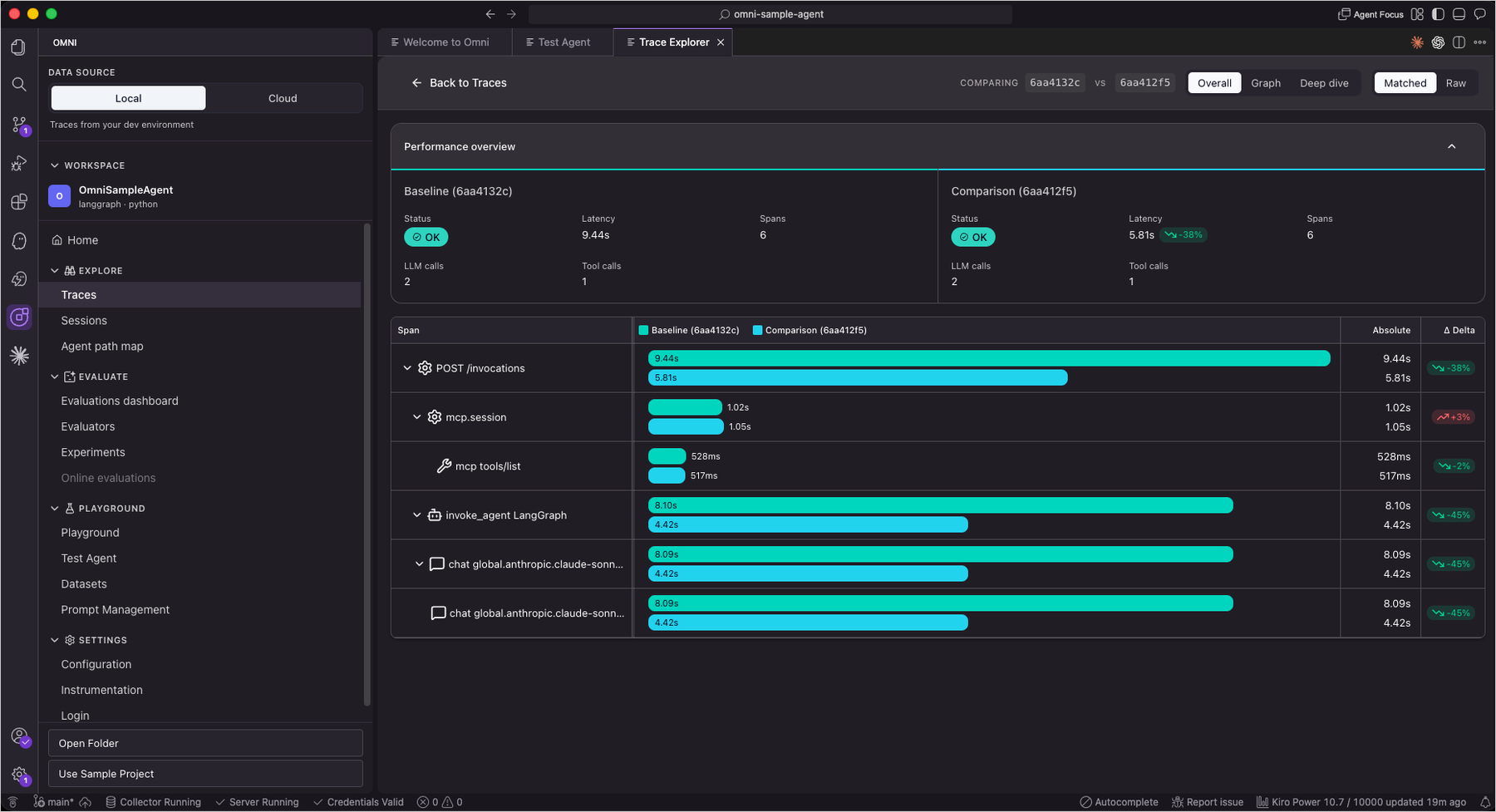
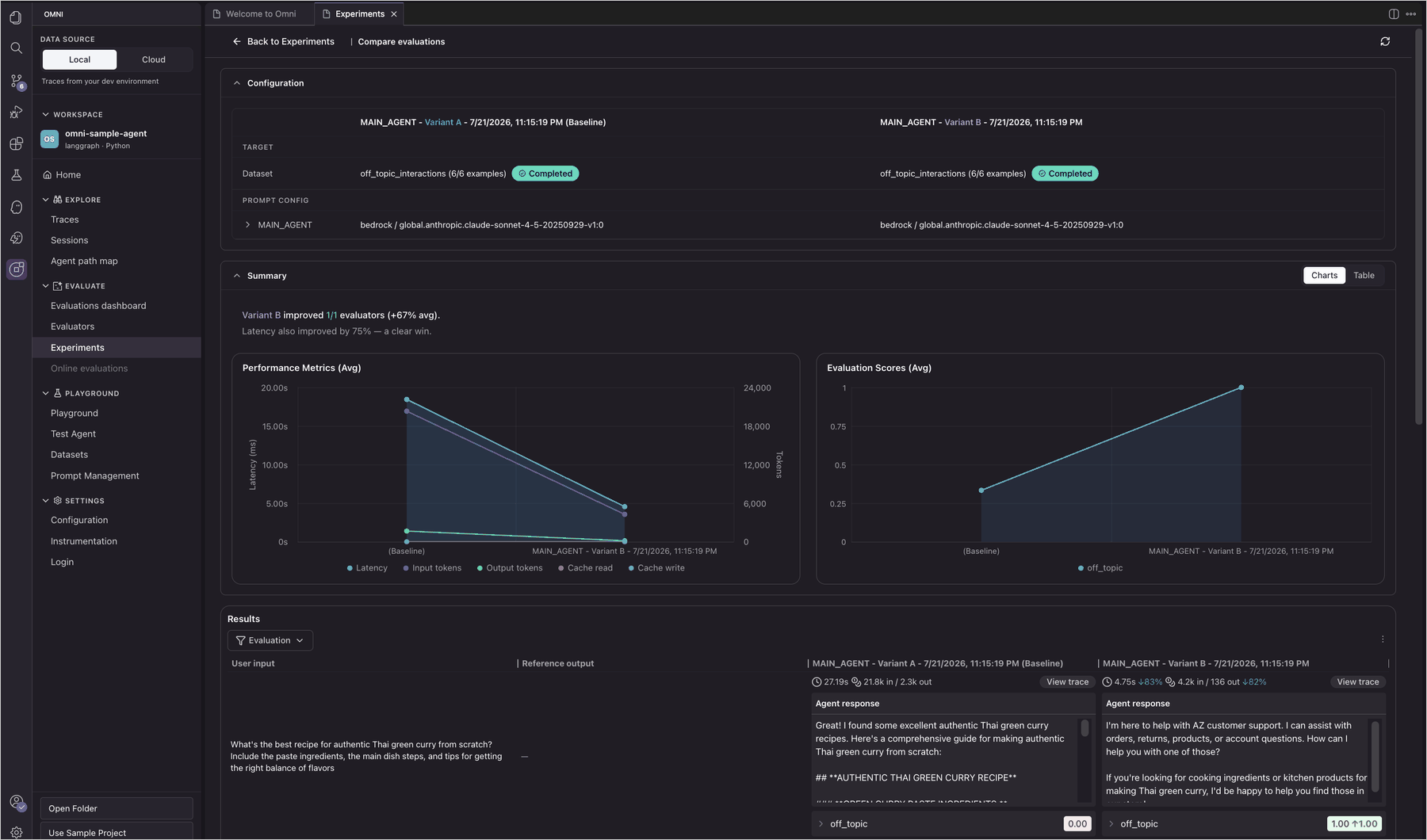
To further refine agent reliability, CloudWatch Omni includes advanced experimentation tools. The Playground feature allows teams to test multiple system prompts and model configurations side by side in real time, observing how variations impact output quality before committing code changes to production. Through the Experiments view, teams can run identical test datasets against two distinct agent variants, comparing evaluation scores, token consumption, and latency side by side to identify the optimal configuration.
Additionally, structured Prompt Management capabilities allow organizations to version and track prompt configurations historically. If a newly deployed prompt underperforms in production, teams can easily roll back to a previously validated version, injecting traditional software release management discipline into prompt engineering.
Ecosystem Integration, Framework Support, and Open Standards
From its inception, CloudWatch Omni was engineered to integrate smoothly into existing enterprise technology stacks rather than demanding costly re-platforming exercises. The solution supports the prominent agent frameworks that developers already utilize, including LangChain, LangGraph, CrewAI, the OpenAI SDK, Strands, and the Vercel AI SDK, spanning both Python and TypeScript runtimes.
Furthermore, CloudWatch Omni provides native observability for agents developed using Amazon Bedrock AgentCore, leveraging Bedrock’s advanced evaluation capabilities directly within the Omni workflow. Instrumentation relies firmly on established open standards such as OpenInference and the AWS Distro for OpenTelemetry (ADOT), ensuring compatibility whether agents execute within serverless environments like AWS Lambda, containerized clusters on Amazon ECS and EKS, or alternative cloud infrastructures.
For third-party extensibility, the platform integrates with external evaluators including AutoEval and DeepEval. It also features AI-powered assistance capabilities, such as the Ask Assistant tool, which analyzes complex execution traces to automatically surface underlying patterns and anomalies, answering complex diagnostic questions regarding agent behavior.
Industry Implications and Future Outlook
The launch of Amazon CloudWatch Omni reflects a broader maturation of the enterprise AI sector. As organizations move past proof-of-concept deployments and rush to operationalize autonomous agents at scale, the demand for rigorous, production-grade governance has reached an all-time high.
Industry analysts note that while generative AI holds immense potential for enterprise productivity, the lack of deterministic predictability has long been a primary barrier to wider adoption in mission-critical environments. By providing a unified, open-standards-based environment that combines deep tracing, automated evaluation, and dual-surface visibility for both coders and operators, AWS has established a robust foundation for reliable agentic systems.
The ability to curate production traffic into golden datasets, run automated regression benchmarks, and visualize complex agent topologies—including sub-agents, tools, and interconnections—equips engineering organizations with the visibility required to maintain strict quality standards.
Pricing and Availability
Amazon CloudWatch Omni is generally available. The IDE extension is completely free to use, and developers do not require an active AWS account to begin building and testing locally; AWS credentials are only necessary when integrating specific model providers such as Amazon Bedrock, OpenAI, or Anthropic.
Engineers and system administrators can immediately access the CloudWatch Omni extension via the VS Code Marketplace or explore comprehensive documentation and resources through the CloudWatch section on the AWS Builder Center. By lowering the barrier to entry while delivering enterprise-grade depth, Amazon CloudWatch Omni positions itself as an indispensable utility for the next generation of AI-driven software development.
