

Amazon, the undisputed titan of rapid e-commerce fulfillment, has long set the global benchmark for swift deliveries, often promising items within 24 hours or even in tightly constrained two-hour windows. This commitment to speed is epitomized in regions like the United Arab Emirates, where the company boasts an astonishing 15-minute delivery service for select items, underscoring its relentless pursuit of logistical excellence. However, a fascinating strategic pivot is now underway, one that appears, at first glance, to contradict the very essence of Amazon’s brand identity: the increasing promotion of "slow delivery" alternatives that incentivize customer patience. This deliberate shift signals a sophisticated evolution in Amazon’s operational philosophy, moving beyond mere speed to embrace efficiency, sustainability, and customer choice.
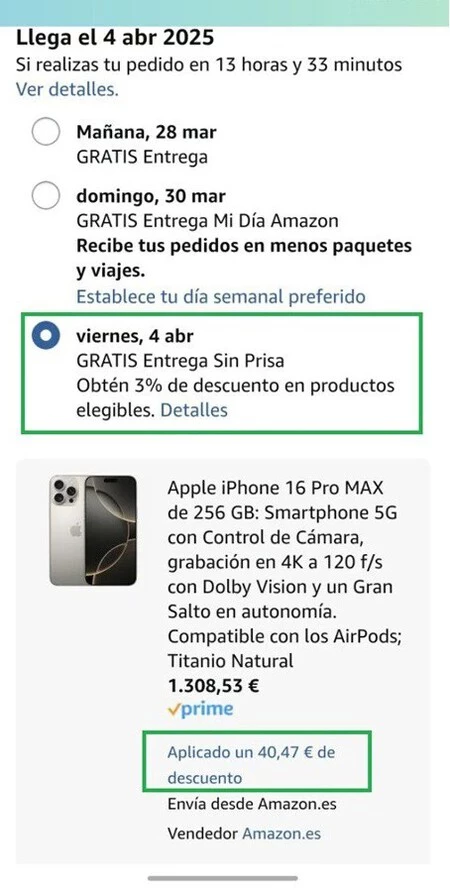
The introduction of options such as "Fewer trips" – designed to consolidate multiple orders with disparate delivery dates into a single shipment – and the intermittently available "No-rush delivery" (known as "Entrega sin prisa" in Spanish markets) represents a notable departure from Amazon’s historical emphasis on immediate gratification. These programs, which the author of the original article confirms having personally experienced, offer a compelling trade-off: delayed receipt of goods in exchange for tangible benefits. This strategic adjustment is not merely a tactical experiment but rather a sophisticated response to complex operational, economic, and environmental pressures inherent in modern e-commerce.
The Economic Imperative: Why Slower Can Be Cheaper
For decades, Amazon’s primary competitive advantage against traditional brick-and-mortar retailers and emerging online competitors has been its unparalleled delivery speed. The question then arises: why would consumers willingly forgo this cherished benefit? The answer, unequivocally, lies in financial savings. In the United States, where the "No-rush shipping" option is widely integrated, Amazon explicitly outlines the program’s incentives. Customers can either receive an immediate discount on their current order or have a reward automatically applied to their account once the delayed shipment is dispatched.
These rewards manifest in various forms, including price reductions on products, credits for future purchases, or even complimentary access to Amazon’s various subscription services, such as a free month of Prime or a credit for digital content. Personal accounts from early adopters indicate that discounts typically range between 1% and 3% of the order value, a modest but meaningful saving, particularly on larger purchases or for frequent shoppers. While a 3% discount might seem negligible on a single small item, the cumulative effect for a regular Amazon customer over a year could translate into substantial savings, fostering a new layer of loyalty beyond just speed. This economic incentive directly addresses a growing segment of consumers who prioritize value and are willing to exercise patience for a financial benefit.
The operational costs associated with expedited shipping are astronomical. Amazon’s vast network of fulfillment centers, sorting centers, air cargo hubs, and a dedicated last-mile delivery fleet (including vans, flex drivers, and partners) represents an immense capital investment. Each rapid delivery incurs costs related to warehousing, picking, packing, fuel, labor, and often, less-than-optimal route planning due to urgent deadlines. Consolidating shipments or delaying non-urgent deliveries allows Amazon to optimize routes, reduce the number of individual trips, and fill delivery vehicles more efficiently. This translates directly into lower fuel consumption, reduced labor hours, and decreased wear and tear on its fleet, leading to significant cost savings that can then be partially passed on to the customer.
A Deeper Look into Amazon’s Logistical Evolution and its Environmental Responsibility
Amazon’s journey from an online bookseller to a global retail behemoth is inextricably linked to its continuous innovation in logistics. From the introduction of Amazon Prime in 2005, which revolutionized consumer expectations with its promise of "free two-day shipping," to the subsequent push for same-day and even sub-hour deliveries, speed has been a core pillar of its growth strategy. This relentless pursuit of velocity, however, comes at a considerable environmental cost. The proliferation of individual packages, often shipped across vast distances, contributes significantly to carbon emissions, traffic congestion, and packaging waste.
Recognizing these challenges, and facing increasing scrutiny from environmental advocates and a growing segment of eco-conscious consumers, Amazon has begun to strategically integrate sustainability into its operational model. The "No-rush shipping" and "Fewer trips" initiatives are not merely about cost-cutting; they are critical components of a broader sustainability agenda. By allowing more time for delivery, Amazon can group multiple items into fewer packages, reduce the frequency of delivery vehicle trips, and employ more energy-efficient transportation methods. This directly aligns with Amazon’s "Shipment Zero" vision, which aims to make all Amazon shipments net zero carbon, with 50% of all shipments net zero by 2030.
The environmental implications are profound. Transportation accounts for a significant portion of global greenhouse gas emissions. By optimizing delivery routes and reducing vehicle mileage through consolidated and slower shipments, Amazon can significantly decrease its carbon footprint. Furthermore, fewer, larger packages mean less packaging material per item, contributing to a reduction in waste. This strategic pivot allows Amazon to present itself not just as a purveyor of speed, but also as a responsible corporate citizen actively working to mitigate its environmental impact. This dual benefit—cost savings and environmental stewardship—provides a powerful rationale for a strategy that might otherwise seem counterintuitive for a company built on speed.
The "Where’s Wally?" Challenge: Intermittent Availability and Strategic Deployment
Despite the clear benefits for both Amazon and its customers, the "No-rush delivery" option is not consistently available. As noted in the original report, finding this option can feel like "searching for Wally" – an exercise in chance rather than a guaranteed choice. The author recounts instances of encountering it purely by accident, and then struggling to locate it when deliberately sought out across different product categories and order combinations.
Amazon’s official response to inquiries regarding this intermittence sheds light on its strategic deployment: "At Amazon, we are always looking for ways to improve our customers’ shopping experience. At certain times of the year, customers may have the option to access discounts on selected products when they do not need to receive their order immediately." This statement, while somewhat generic, confirms that the availability is deliberate and tied to specific operational conditions.
The observation that the option appeared during Prime Day, a period of exceptionally high order volumes, provides a crucial clue. It strongly suggests that "No-rush delivery" is strategically activated during peak demand periods – such as major sales events, holiday seasons, or periods of supply chain strain. During these times, Amazon’s logistical network is stretched to its limits. By incentivizing customers to accept slower deliveries, Amazon can:
- Decongest its Fulfillment Centers: Reduce the immediate pressure to pick, pack, and ship orders at breakneck speed.
- Optimize Carrier Capacity: Better utilize the capacity of its own fleet and third-party carriers by filling trucks more completely and planning more efficient routes.
- Prevent Logistical Bottlenecks: Proactively manage potential delays and ensure that its core rapid delivery promises for truly urgent items can still be met.
This makes "No-rush delivery" a sophisticated demand-management tool. It’s a "win-win" scenario: customers receive a financial benefit, and Amazon gains critical operational flexibility, especially when its network is under stress. This tactical deployment underscores Amazon’s data-driven approach to logistics, leveraging real-time demand patterns to fine-tune its delivery offerings.
Customer Psychology and the Future of E-commerce Expectations
The success of "No-rush delivery" hinges on a nuanced understanding of consumer psychology. While the allure of instant gratification is powerful, not every purchase is time-sensitive. Many everyday items – groceries, household staples, books, or non-urgent electronics – can comfortably wait a few extra days if there’s a tangible reward. Amazon is tapping into a segment of consumers who are increasingly conscious of both their spending and their environmental footprint.
This shift represents a maturation of e-commerce. Early online shopping emphasized speed as a novelty and a competitive differentiator. Now, as online shopping becomes ubiquitous, consumer expectations are evolving. The market is segmenting: some will always prioritize speed above all else, while others are willing to trade speed for value, convenience, or sustainability. By offering a spectrum of delivery options, from hyper-fast to deliberately slow, Amazon caters to this diverse customer base, enhancing overall customer satisfaction and loyalty by providing choice.
The psychological impact of even a small discount or a future credit should not be underestimated. It creates a sense of empowerment and smart shopping, making customers feel they are making a conscious, beneficial decision. Furthermore, if, as the original author experienced, "slow" deliveries often arrive sooner than the promised delayed window (e.g., the next day instead of three or four days later), it can further enhance customer satisfaction by exceeding modified expectations.
Broader Industry Implications and the Hybrid Delivery Model
Amazon’s strategic embrace of "no-rush" options is not occurring in a vacuum. The entire e-commerce industry is grappling with the challenges of last-mile delivery, cost optimization, and sustainability. Other major retailers, such as Walmart and Target, are also experimenting with various delivery models, including in-store pickup, consolidated shipments, and subscription services that offer delayed delivery incentives.
This trend points towards a future where a hybrid delivery model becomes the norm. Consumers will likely have a wider array of choices, allowing them to tailor delivery to the urgency of their purchase, their budget, and their environmental consciousness. This could include:
- Hyper-fast: Premium, often same-day or sub-hour delivery for urgent items.
- Standard: The traditional 1-2 day delivery that remains common.
- Consolidated/Slow: Incentivized longer delivery windows for non-urgent items, focusing on efficiency and sustainability.
- Pickup Points: Lockers or retail locations for customers to collect packages at their convenience, reducing last-mile delivery complexity.
The underlying technology enabling this flexibility is advanced data analytics and artificial intelligence. Amazon leverages vast amounts of data on customer purchasing habits, traffic patterns, weather conditions, and inventory levels to dynamically optimize its logistics network. AI algorithms can predict demand, recommend optimal delivery routes, and determine when and where to offer "no-rush" options to maximize efficiency and minimize costs.
Timeline of Amazon’s Delivery Innovations and Sustainability Efforts:
- 1995: Amazon.com launches, initially using traditional postal services.
- Early 2000s: Begins investing heavily in its own fulfillment centers to gain control over inventory and speed.
- 2005: Amazon Prime launches, offering "free two-day shipping" in the US for an annual fee, revolutionizing customer expectations.
- Late 2000s/Early 2010s: Expansion of fulfillment network globally, introduction of one-day shipping in select areas.
- 2014: Introduction of "Prime Now" in select cities, promising one-hour or two-hour delivery for everyday essentials.
- Mid-2010s: Experimentation with drone delivery (Prime Air) and expansion of last-mile delivery fleet.
- 2015: "No-Rush Shipping" (or "Entrega sin prisa") begins appearing as an option in the US, offering discounts or digital credits for choosing slower delivery.
- 2019: Amazon launches "Shipment Zero" pledge, committing to make all Amazon shipments net zero carbon, with 50% by 2030. This provides a strong environmental context for slow delivery options.
- 2020s: Continued global expansion of rapid delivery services, alongside the more prominent, albeit intermittent, offering of slower, consolidated delivery options to optimize logistics and meet sustainability goals. Introduction of "Fewer trips" to consolidate packages.
Official Responses and Broader Implications:
While Amazon’s direct statements regarding "No-rush shipping" tend to be concise, emphasizing customer experience and choice, the strategic implications are clear. This initiative represents a sophisticated balancing act: maintaining a reputation for speed while simultaneously addressing operational costs, environmental impact, and diverse customer needs.
Logistics experts view such programs as intelligent network management. "Companies like Amazon are incredibly data-driven," notes Dr. Emily Chen, a supply chain logistics consultant. "They understand that not every customer values speed equally for every item. By offering incentives for slower shipping, they’re not just saving money; they’re essentially crowd-sourcing a part of their logistical optimization. Customers become partners in efficiency."
The program’s global rollout, while starting in the US, is likely being evaluated for wider implementation based on market conditions, logistical infrastructure, and consumer behavior in different regions. The rapid delivery capabilities in the UAE, for instance, demonstrate Amazon’s ability to push the boundaries of speed when infrastructure and market demand support it. In contrast, markets with less developed logistics networks or higher environmental consciousness might see a greater emphasis on "no-rush" options.
The Future: A Conscious and Flexible Delivery Ecosystem
Amazon’s decision to offer "No-rush delivery" alongside its hyper-fast options marks a significant evolution in its strategy and, potentially, in the broader e-commerce landscape. It signals a move towards a more conscious, flexible, and sustainable delivery ecosystem. No longer is speed the sole metric of success; efficiency, environmental responsibility, and customer choice are gaining equal prominence.
For consumers, this means greater empowerment and more tailored shopping experiences. For Amazon, it represents a clever solution to the complex challenges of scaling logistics sustainably and profitably in an ever-growing e-commerce world. As online shopping continues its inexorable rise, the ability to dynamically manage demand, optimize resources, and cater to a diverse set of consumer priorities will be paramount. Amazon’s "slow delivery" options are not a step backward from its core identity, but rather a sophisticated leap forward into a more intelligent and adaptable future of retail. This hybrid approach—where speed is still available for those who need it, but patience is rewarded for those who can afford it—is likely to define the next era of e-commerce fulfillment.
