
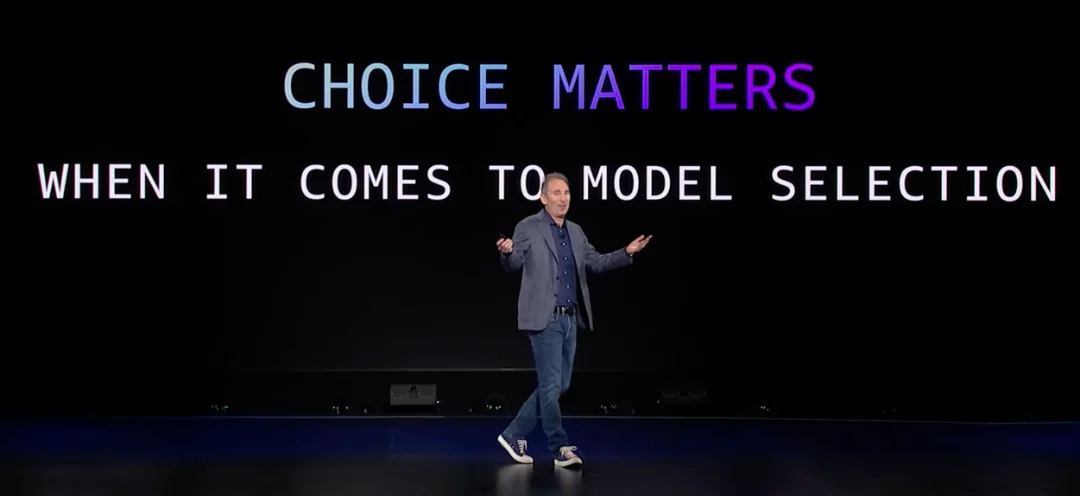

The landscape of enterprise artificial intelligence is undergoing a fundamental architectural shift, moving away from a one-size-fits-all model strategy toward granular optimization based on cost, latency, and specific operational requirements. Amazon Web Services (AWS) has significantly advanced this paradigm by introducing major frontier models to Amazon Bedrock. The latest updates include the integration of GPT-6 Sol and GPT-6 Luna from OpenAI, alongside Anthropic’s Claude Opus 5.5. These additions provide organizations with unprecedented flexibility, allowing engineering teams to precisely match workload requirements with optimal computational resources rather than defaulting to the largest and most resource-intensive models available on the market.
This strategic rollout underscores a broader industry maturation. As generative AI transitions from experimental deployments to core enterprise infrastructure, efficiency, token optimization, and cost-to-performance ratios have emerged as critical metrics. By expanding the Amazon Bedrock ecosystem with these next-generation models, AWS aims to lower operational barriers while enhancing capabilities for complex, multi-step agentic workflows and high-volume, repeatable business processes.
Main Facts and Model Specifications
The integration into Amazon Bedrock brings distinct capabilities tailored to specific segments of enterprise software development and automated operations.
OpenAI’s newly introduced models—GPT-6 Sol and GPT-6 Luna—occupy distinct points on the intelligence-versus-efficiency curve. GPT-6 Sol is engineered specifically to handle the demanding, recurring workloads typical of modern software development and cloud operations. It provides the deep reasoning and contextual understanding required for complex code generation, debugging, and infrastructure management. Conversely, GPT-6 Luna is optimized for focused, highly repeatable tasks executed at high volumes. Organizations can deploy Luna for tasks such as automated data classification, routine customer query routing, and batch content moderation, achieving high throughput with minimal latency. Notably, both models launch at price points significantly lower than their GPT-5.6 predecessors, reflecting ongoing optimization in underlying hardware and inference architectures.
Anthropic’s Claude Opus 5.5 represents the vanguard of the Claude 5.5 model family on the AWS platform. Designed with a heavy emphasis on agentic coding and long-running autonomous tasks, Claude Opus 5.5 achieves superior functional outcomes while consuming fewer tokens than its predecessor, Opus 5. This token efficiency directly addresses one of the primary cost drivers in large-scale generative AI applications: input and output token consumption. By enabling autonomous software agents to maintain context over extended interaction windows without proportional cost inflation, Claude Opus 5.5 facilitates more sophisticated, multi-agent enterprise architectures.
Chronology and Strategic Context of the AWS AI Expansion
The deployment of these frontier models on Amazon Bedrock follows a deliberate timeline of architectural scaling and ecosystem maturation by AWS. Over the past several years, Amazon Bedrock has established itself as a premier managed service for building and scaling generative AI applications with foundational models.
The strategy has consistently focused on choice and democratization. Initially, managed services centered on providing access to a single tier of high-performance models. However, as enterprise adoption scaled into production environments, feedback from chief technology officers and lead architects highlighted a pressing need for tiering. Organizations demanded smaller, faster models for latency-sensitive applications and highly specialized models for domain-specific tasks.
The introduction of OpenAI’s GPT-6 series and Anthropic’s Claude Opus 5.5 marks the culmination of months of rigorous engineering collaboration between AWS, OpenAI, and Anthropic. This partnership ensures that these frontier architectures are deeply optimized to run on Amazon’s proprietary silicon infrastructure—specifically AWS Trainium and Inferential chips—alongside high-performance GPU instances. This hardware-software co-design allows AWS to offer these advanced models with enterprise-grade security, scalability, and predictable latency profiles, meeting the stringent compliance requirements of financial institutions, healthcare providers, and global enterprises.
Supporting Data and Economic Implications
Economic considerations are increasingly dictating the adoption curves of enterprise artificial intelligence. Industry data indicates that while foundational model intelligence has scaled exponentially, the cost per million tokens has faced downward pressure due to algorithmic efficiencies and specialized hardware acceleration.
The pricing structures of GPT-6 Sol and GPT-6 Luna reflect a broader market trend where incremental intelligence no longer commands a linear cost penalty. By pricing these models significantly below previous generations, OpenAI and AWS are incentivizing enterprises to migrate legacy automated workflows to generative AI frameworks. For large enterprises processing tens of millions of transactions daily, even marginal reductions in per-token costs translate to substantial annual operational savings.
Similarly, the token-efficiency gains demonstrated by Claude Opus 5.5 address the economic bottleneck of long-context windows. In traditional architectures, as an AI agent’s memory window expands to encompass entire codebases or multi-page financial audits, the token count per API call escalates dramatically, degrading performance and increasing costs. By doing more with fewer tokens, Claude Opus 5.5 mitigates this degradation, enabling sustained autonomous operations that were previously economically unviable for widespread enterprise deployment.

Official Responses and Industry Perspective
While specific public statements from OpenAI and Anthropic executives regarding this exact AWS deployment emphasize mutual commitments to enterprise security and scale, industry analysts have widely praised the move.
Enterprise technology consultants note that the modern cloud computing era is defined by multi-model strategies. Organizations are increasingly resistant to vendor lock-in and demand the ability to swap underlying models dynamically based on real-time performance metrics and cost fluctuations. By curating a diverse portfolio on Amazon Bedrock—spanning Anthropic, OpenAI, Meta, Mistral, and Amazon’s own Titan models—AWS positions itself as the neutral orchestration layer for enterprise intelligence.
Furthermore, industry observers point out that observability and monitoring tools are finally catching up to the demands of agentic AI. As enterprises deploy multi-step agents powered by models like Claude Opus 5.5 and GPT-6 Sol, the ability to trace, debug, and audit AI decision-making chains has become paramount. The recent sync between AWS observability services and these advanced model releases allows engineering teams to maintain strict governance over autonomous systems, ensuring compliance and reliability in production environments.
Broader Impact and Future Implications
The integration of GPT-6 Sol, GPT-6 Luna, and Claude Opus 5.5 into Amazon Bedrock signals several long-term implications for the software development lifecycle and enterprise operations:
- Granular Model Selection: The era of defaulting to a single flagship model for all enterprise tasks is officially drawing to a close. Architects will increasingly utilize routing layers that direct simple classification tasks to efficient models like Luna, software engineering tasks to Sol, and complex strategic reasoning or long-form agentic workflows to Opus 5.5.
- Acceleration of Autonomous Software Engineering: With models specifically tuned for agentic coding and extended contextual awareness, the role of human developers is shifting from writing boilerplate code to architectural oversight and validation. Autonomous agents capable of managing long-running background tasks will become standard components of enterprise CI/CD pipelines.
- Democratization of Advanced AI Capabilities: Lower price points and improved efficiency curves make frontier-grade intelligence accessible to mid-sized businesses and startups that previously found the operational costs of large models prohibitive. This democratization is expected to accelerate innovation across vertical markets, including financial technology, legal tech, and digital health.
As AWS continues to expand its catalog and refine its managed infrastructure, the focus will undoubtedly shift toward real-time optimization, advanced fine-tuning capabilities, and tighter integration with enterprise data lakes securely housed within Amazon S3 and governed by AWS Lake Formation. For builders and enterprise leaders alike, the immediate path forward involves auditing existing workflows to identify where these new efficiency-versus-intelligence curves can deliver immediate operational and economic value.
