
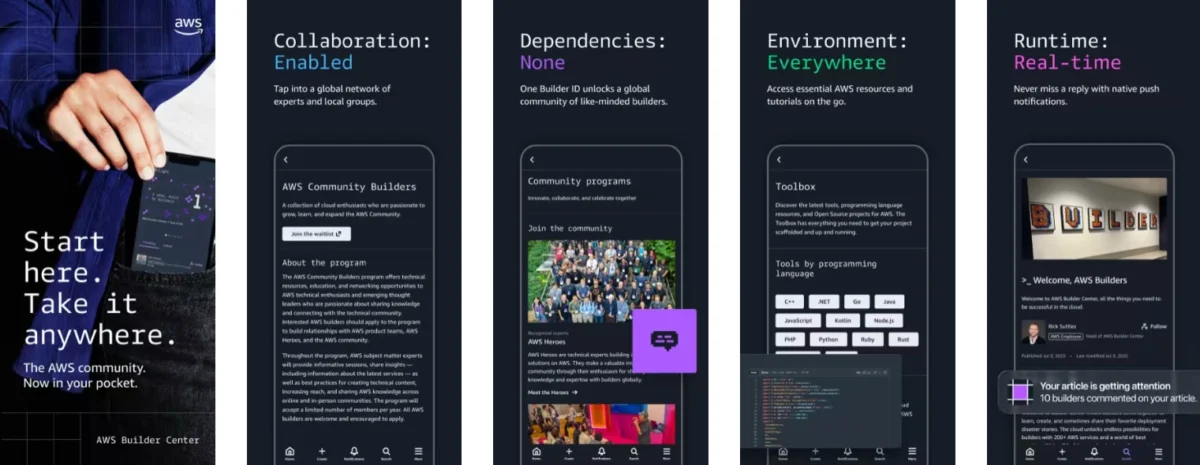

The landscape of cloud software development underwent a significant transformation this week with Amazon Web Services (AWS) announcing the worldwide release of the AWS Builder Center mobile application for iOS and Android devices. Designed to bridge the gap between desktop-bound cloud architecture and mobile productivity, the new platform extends the comprehensive resources of the AWS Builder Center directly to smartphones and tablets. Alongside the mobile application rollout, AWS introduced interactive community polling capabilities and launched the "Zero to Shipped" hackathon, offering a total prize pool of $28,000 in cloud credits and developer merchandise. These initiatives highlight Amazon’s ongoing strategy to foster engagement, streamline continuous learning, and integrate artificial intelligence-driven coding workflows within its expanding global developer community.
Main Facts and Platform Capabilities
The AWS Builder Center mobile application represents a major milestone in how developers, cloud architects, and technology enthusiasts interact with AWS educational materials, community forums, and hands-on environments. Available immediately on the Apple App Store and Google Play Store, the application requires only a standard AWS Builder ID to authenticate and maintain persistent sessions across multiple devices.
Through the mobile interface, users gain immediate access to more than 600 AWS Skill Builder courses, allowing professionals to pursue certifications and technical proficiencies during standard daily commutes or between professional engagements. Furthermore, the platform integrates management tools for hands-on workshops complete with free sandbox environments, enabling developers to test cloud configurations and deploy architectures without immediate financial overhead.
Beyond education, the application serves as a central hub for professional networking and community engagement. Users can follow prominent figures within the ecosystem, including AWS Heroes, Community Builders, and AWS User Group Leaders. The application also provides up-to-date schedules and calendar alerts for physical and virtual Builder Loft events worldwide. To keep developers informed of critical discussions, the software includes a push notification system tailored to subscribed topics, community threads, and specialized interest groups.
Additionally, the application features the integrated Wishlist tool, a direct feedback mechanism that permits developers to submit product feature requests, critique existing infrastructure services, and communicate priorities directly to internal AWS product management teams.
Chronology and Development Timeline
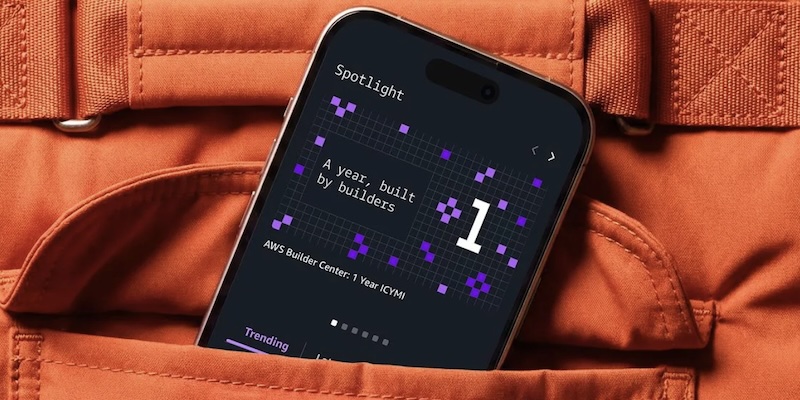
The release of the mobile application is the culmination of a multi-year effort by AWS to unify its fragmented developer resources into a cohesive ecosystem. The foundational AWS Builder Center web portal was originally established to aggregate technical blogs, architectural blueprints, and community-driven tutorials into a single searchable interface. However, usage metrics consistently indicated that a substantial portion of developers preferred accessing educational materials and community discussions away from traditional workstations.
During the summer months, internal beta testing of the mobile application commenced across select regional developer groups, leading up to the public release announced this week. Concurrently, AWS engineering teams finalized the infrastructure required to support new real-time community engagement tools. On the heels of the mobile launch, AWS deployed the Polls feature directly to the Builder Center home feed, permitting users to solicit peer feedback on technical dilemmas, architectural patterns, and industry trends.
Immediately following these software updates, AWS initiated the "Zero to Shipped" hackathon, scheduled to run continuously from September 18 through October 2. This timed competitive event challenges participants to link advanced coding agents to their AWS environments, construct production-ready applications, and deploy them live to the cloud within a two-week operational window.
Supporting Data and Ecosystem Metrics
To contextualize the scale of this launch, industry analysts point to the rapid growth of the global cloud computing workforce and the increasing reliance on decentralized, mobile-first productivity tools. AWS currently commands the largest market share in the global cloud infrastructure services sector, estimated by recent market research firms to hover near 31 percent. Within this vast ecosystem, millions of active developers, systems administrators, and enterprise engineers rely on continuous education to maintain technological proficiency.
The inclusion of over 600 courses via the mobile application addresses a critical bottleneck in professional development: time scarcity. Studies published by technical recruitment platforms indicate that developers spend an average of four to six hours weekly on continuous learning, frequently squeezed between project deadlines and operational maintenance. By moving these educational modules to mobile operating systems, AWS aims to capture idle time—such as transit periods and waiting intervals—thereby accelerating skill acquisition across its user base.
The "Zero to Shipped" hackathon further exemplifies the quantitative incentives utilized by modern cloud providers to drive platform adoption. The $28,000 prize pool is structured to reward five distinct winning projects, with each victor receiving $5,000 in AWS service credits alongside exclusive builder merchandise bundles. These credits function not only as prizes but as direct catalysts for sustained cloud consumption, encouraging developers to maintain their newly deployed applications within the AWS infrastructure well beyond the conclusion of the competition.
Official Responses and Industry Context

While individual statements from specific AWS executives regarding the mobile release were integrated into broader developer communications, corporate disclosures emphasize the democratization of cloud engineering as a primary motivator for the deployment. Representatives from the AWS community relations division noted that the centralization of resources through a single mobile application directly addresses user feedback collected over the past several operational cycles.
Community leaders and AWS Heroes have expressed cautious optimism regarding the platform updates, particularly the integration of anonymous polling and streamlined feedback loops via the Wishlist feature. Industry observers suggest that empowering developers to communicate directly with product teams through native mobile applications creates a tighter feedback loop, allowing AWS to iterate on cloud services with greater responsiveness to real-world deployment challenges.
The integration of coding agents within the "Zero to Shipped" hackathon parameters also reflects broader macroeconomic trends in software engineering. As generative artificial intelligence and automated coding assistants become standard components of the software development lifecycle, cloud providers are actively competing to position their infrastructure as the most compatible and efficient deployment target for AI-generated code. By encouraging participants to connect their coding agents directly to AWS, the company is gathering valuable telemetry on how automated tools interact with cloud provisioning APIs.
Broader Impact and Implications
The release of the AWS Builder Center mobile app and its associated features carries several significant implications for the cloud computing sector and the software development community at large.
First, it signals a structural shift in how cloud providers support their user bases. Historically, enterprise cloud adoption focused heavily on desktop portals, command-line interfaces, and complex management consoles designed for office environments. By pivoting toward mobile-accessible education, community engagement, and workshop management, AWS is acknowledging the increasingly mobile and asynchronous nature of modern engineering work. Developers frequently operate remotely, travel for deployment operations, or manage distributed systems outside traditional working hours. Providing mobile access to sandbox environments and educational libraries removes friction from the continuous learning process.
Second, the introduction of native polling and direct product feedback mechanisms underscores the growing value of community-driven governance in technical ecosystems. As cloud architectures grow exponentially more complex—spanning serverless computing, container orchestration, machine learning pipelines, and edge computing—product engineering teams rely heavily on frontline developer feedback to prioritize feature development. Tools that lower the barrier to participation in community discussions and feature requests ensure a broader, more diverse sample of user opinion reaches corporate decision-makers.
Finally, initiatives like the "Zero to Shipped" hackathon demonstrate the evolving integration between artificial intelligence and cloud deployment. By explicitly encouraging the use of coding agents during a time-constrained development cycle, AWS is actively testing the limits of automated software creation within its ecosystem. If successful, such methodologies could establish new benchmarks for rapid application development, shifting the industry standard from manual code authoring to orchestration-focused cloud architecture. As autumn approaches and technical communities resume full operational schedules, the long-term adoption rates of these mobile and AI-adjacent tools will serve as a bellwether for the future of cloud developer engagement.
