

Amazon Web Services (AWS), a subsidiary of Amazon.com Inc., has officially announced the expansion of its Amazon Elastic Block Store (Amazon EBS) Volume Clones feature to support cross-account copying. This significant enhancement allows cloud architects, systems administrators, and DevOps teams to seamlessly generate and transfer instant point-in-time copies of EBS volumes across distinct AWS accounts. Furthermore, the updated service empowers organizations to apply custom re-encryption protocols using AWS Key Management Service (AWS KMS) keys residing directly within the target account.
The launch addresses a longstanding challenge in enterprise cloud management: how to securely, efficiently, and rapidly provision production-grade data into isolated testing, staging, and development environments without compromising data security or operational governance. By bridging the gap between segregated AWS accounts, this capability modernizes the lifecycle management of large-scale block storage workloads.
Main Facts and Core Functionality of Cross-Account EBS Volume Clones
At its technical core, the new feature builds upon the rapid-cloning architecture that AWS introduced the previous year. Traditionally, Amazon EBS Volume Clones enabled users to generate instant, block-level copies of volumes within the same Availability Zone. While transformative for local snapshotting and immediate local recovery, this functionality was previously constrained by account boundaries, forcing teams to rely on more cumbersome backup, snapshot export, and cross-account snapshot sharing workflows that typically incurred higher latencies and administrative overhead.
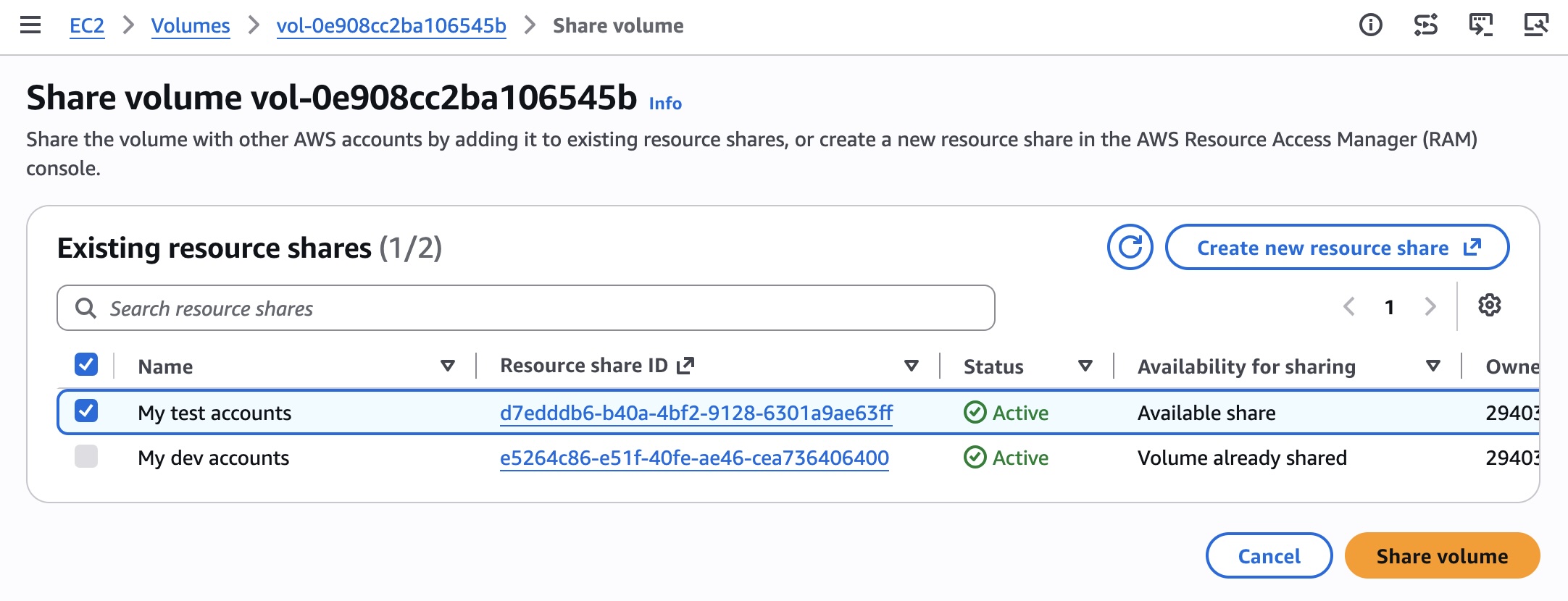
With the new cross-account capability, the workflow has been streamlined through deep integration with AWS Resource Access Manager (RAM). Volume owners can now explicitly grant permission to a designated target AWS account via the RAM console or through Infrastructure as a Code (IaC) templates. Once the target account accepts the resource share, administrators within that secondary account can instantly initiate a copy of the shared volume.
A critical security enhancement accompanying this release is the ability to re-encrypt the data stream during the cross-account copy operation. Target account administrators are not forced to rely on the source account’s encryption parameters. Instead, they can apply their own AWS KMS keys, ensuring strict compliance with internal data governance frameworks, regulatory mandates such as GDPR and HIPAA, and corporate security policies that dictate zero-trust access between production and non-production environments.
Chronology and Background Context of Amazon EBS Innovations
The evolution of Amazon EBS storage management reflects a continuous industry trend toward zero-copy cloning, instant data availability, and heightened multi-account security. To understand the significance of this latest release, it is necessary to examine the chronological progression of AWS storage tooling over recent years.
When Amazon EBS was first introduced, data duplication relied heavily on traditional Amazon EBS snapshots. While snapshots remain an industry standard for long-term backup and point-in-time archival storage, restoring a multi-terabyte snapshot into a usable volume could take considerable time as data was lazily loaded from Amazon Simple Storage Service (Amazon S3). To mitigate this, AWS developed EBS fast snapshot restore (FSR) and subsequently introduced native Volume Clones. Volume Clones altered the paradigm by utilizing a metadata-driven approach that allowed instantaneous creation of fully functional, writable storage volumes within seconds, regardless of the underlying volume size.

However, as enterprise customers increasingly adopted multi-account architectures—often structured around AWS Organizations to segregate business units, environments, and security perimeters—the inability to clone volumes directly across account boundaries became a notable operational friction point. Development teams working in isolated sandbox accounts frequently struggled to obtain up-to-date, anonymized, or synchronized copies of production databases and application disks without engaging in complex, manual scripting or insecure data-export procedures.
By bridging EBS Volume Clones with AWS RAM and AWS KMS, AWS has closed the loop between its rapid-cloning technology and its multi-account governance best practices. This rollout follows a steady cadence of cloud storage updates aimed at reducing input/output operations per second (IOPS) latency, optimizing storage expenditure, and simplifying compliance reporting for global enterprises.
Detailed Operational Workflow and Implementation Mechanics
Executing a cross-account EBS volume clone involves a precise, multi-step administrative sequence designed to maintain strict authorization controls at every phase of the transfer.
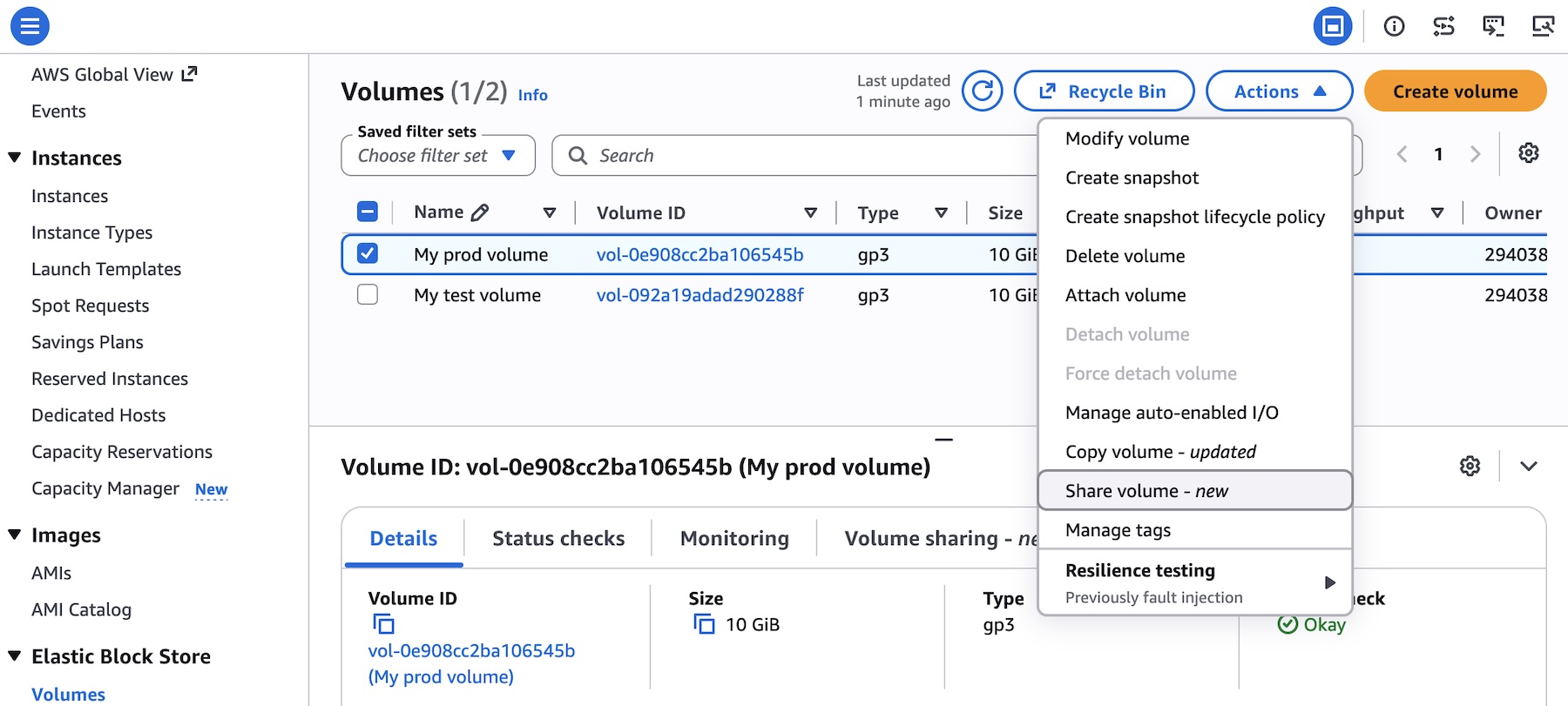
First, the primary volume owner navigates to the Amazon EBS console within their source AWS account. By selecting the target volume, the administrator initiates the sharing protocol by choosing the "Share volume" option. This action seamlessly hooks into AWS Resource Access Manager, allowing the administrator to either append the volume to an existing resource share or construct a brand-new resource share specifying the recipient AWS account ID or organizational unit.
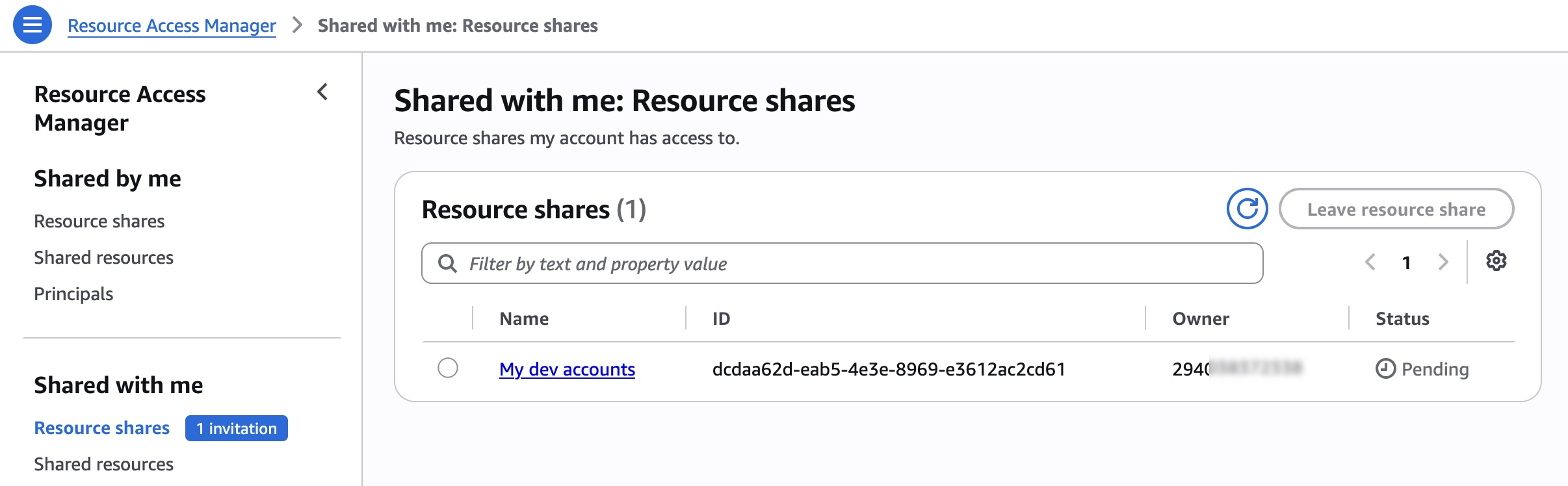
Once the resource share is submitted, the request enters a pending state until the target account acknowledges and accepts the transmission. Administrators operating within the target AWS account log into their respective AWS RAM console, locate the pending resource share invitation, and explicitly accept it. Upon acceptance, the shared volume populates within the EBS volume management dashboard of the target account, clearly marked as a shared resource.
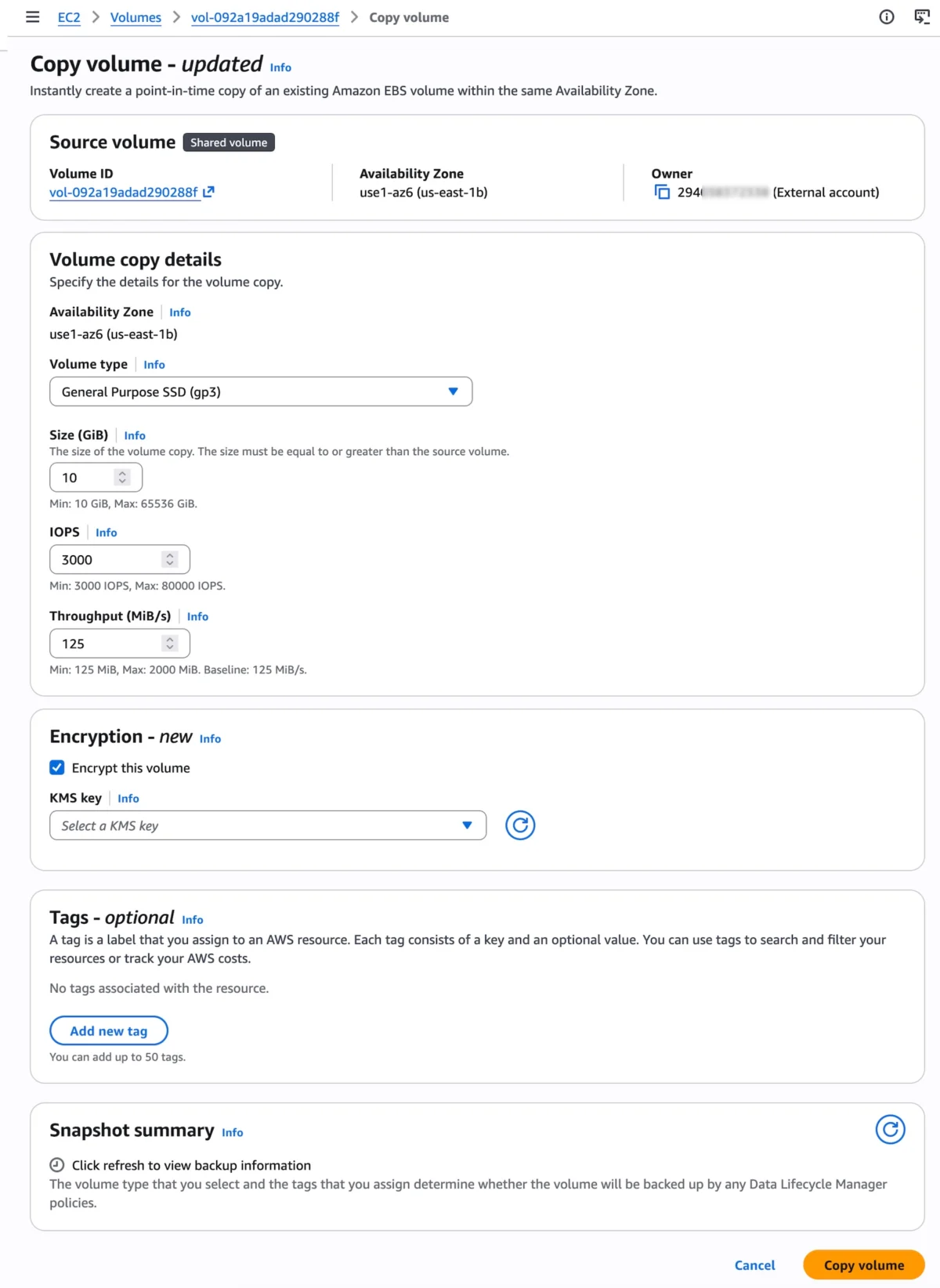
At this juncture, the target account administrator selects the "Copy volume" command. During this configuration step, the user defines the destination Availability Zone, selects the appropriate volume type (such as General Purpose SSD gp3, Provisioned IOPS io2, or Magnetic), and optionally assigns a specific AWS KMS encryption key managed within the target account. Once initiated, the background copy process replicates the data block-by-block while applying the newly designated cryptographic keys, delivering a fully independent, secure, and writable clone ready for immediate attachment to Amazon Elastic Compute Cloud (Amazon EC2) instances.
For modern engineering teams leveraging automation, this entire lifecycle can be orchestrated programmatically. AWS has integrated support for these new capabilities into its broader developer tooling ecosystem, including the AWS MCP Server and associated plugins designed to integrate with modern AI coding assistants, enabling automated script generation for multi-account infrastructure provisioning.
Supporting Data, Market Implications, and Industry Impact
The introduction of cross-account EBS cloning carries substantial implications for enterprise software development lifecycles (SDLC) and cloud financial management (FinOps). Industry analysts note that data duplication and staging represent one of the largest hidden costs in cloud architecture, often driven by redundant backup storage and inefficient staging protocols.
According to enterprise IT utilization surveys, development and testing environments frequently consume between 30% to 50% more storage volume than production workloads due to fragmented cloning practices, stale data retention, and over-provisioned disk capacities. By enabling instant, on-demand cloning directly from production data sources into segregated sandbox accounts, organizations can eliminate the need to maintain persistent, highly provisioned test databases that sit idle for hours or days.
Furthermore, the capability directly addresses the software engineering imperative of "production parity." Developers frequently encounter bugs, performance bottlenecks, and security vulnerabilities that only manifest when applications are tested against authentic, production-scale datasets. Historically, populating test environments with real production data introduced compliance liabilities, as staging accounts rarely maintained the same rigorous encryption and access controls as core production environments. By decoupling the copy process and forcing re-encryption via target-account KMS keys, AWS ensures that developers can test against hyper-realistic data without expanding the security attack surface of the production perimeter.
Official Responses and Expert Analysis
While AWS spokespersons and engineering leads have emphasized the operational flexibility afforded by the integration of AWS RAM and KMS, industry reactions from cloud architects and enterprise infrastructure leaders have been overwhelmingly positive.
Independent cloud consultants and enterprise DevOps leads have pointed out that the feature significantly reduces the administrative toil associated with cross-account compliance audits. In heavily regulated industries such as finance, healthcare, and public sector computing, internal auditors routinely scrutinize how production data migrates across network boundaries. The reliance on AWS RAM provides an immutable, centralized audit trail through AWS CloudTrail, documenting precisely who initiated a volume share, which account accepted it, and when the copy operation concluded. This granular traceability satisfies key controls required under frameworks such as SOC 2, ISO 27001, and PCI-DSS.

Moreover, security analysts have praised the granular control over cryptographic keys. In traditional multi-account architectures, cross-account data transfers often required complex key policies that permitted external principals to decrypt data using source-side keys—a practice that introduced potential privilege-escalation vectors if a source key policy was misconfigured. By mandating that the target account supply its own KMS key for re-encryption, the blast radius of any potential credential compromise is contained entirely within the isolated environment.
Availability, Pricing, and Future Roadmap
Cross-account volume clones for Amazon EBS are generally available immediately across all global AWS Regions that currently support standard Amazon EBS Volume Clones. Organizations wishing to verify specific regional support can consult the official AWS Capabilities by Region documentation portal.
Pricing for the feature is structured transparently around standard Amazon EBS volume storage rates, data transfer metrics associated with cross-account operations within the same region or across regions where applicable, and standard AWS KMS API request fees. There are no additional licensing surcharges levied directly for utilizing the volume-sharing orchestration layer provided by AWS RAM.
To assist organizations in adopting the new functionality, AWS has updated its comprehensive Amazon EBS User Guide, offering step-by-step walkthroughs, JSON policy examples for programmatic IAM and RAM configuration, and troubleshooting methodologies. Technical feedback and feature enhancement requests are being actively monitored through the AWS re:Post community forum dedicated to Amazon EBS, as well as through standard enterprise AWS Support channels.
As cloud infrastructures continue to scale in complexity, capabilities such as cross-account EBS volume cloning represent a crucial step forward in harmonizing developer velocity with uncompromising enterprise security, ensuring that agility and governance can coexist seamlessly within modern cloud-native enterprises.
