

Amazon Web Services (AWS), a subsidiary of Amazon.com, has formally introduced a significant enhancement to its cloud infrastructure portfolio by rolling out cross-account copy functionality for Amazon Elastic Block Store (Amazon EBS) Volume Clones. This new feature expands upon the initial release of EBS Volume Clones introduced last year, which originally allowed users to generate instant, point-in-time copies of their block storage volumes within a single Availability Zone. By extending this capability across different AWS accounts, the cloud computing leader aims to streamline data management workflows, strengthen development and testing environments, and simplify security administration for enterprise-scale cloud deployments.
The introduction of cross-account EBS Volume Clones addresses a long-standing operational challenge for organizations operating complex multi-account environments. In contemporary enterprise cloud architectures, best practices dictate the strict isolation of workloads through separate AWS accounts—typically segregating production environments from development, staging, and quality assurance testing grounds. While this architecture successfully enhances security boundaries and minimizes the blast radius of operational errors, it historically created friction when engineering teams required up-to-date production data sets to troubleshoot bugs, build new features, or conduct experimental analysis. Previously, teams had to rely on cumbersome snapshot-and-restore procedures, export mechanisms, or manual data seeding, which introduced latency, consumed valuable storage resources, and complicated compliance tracking.
Technical Mechanics and Step-by-Step Implementation
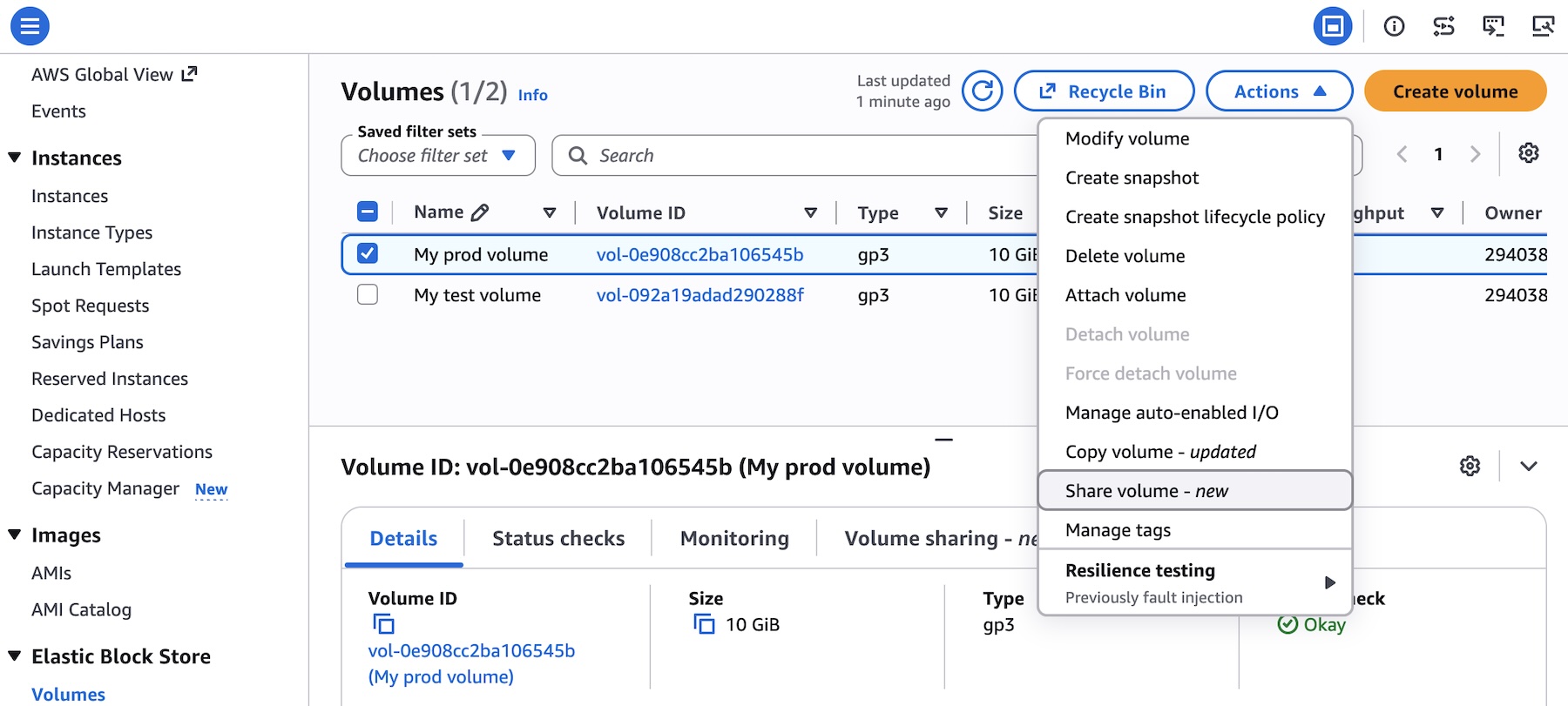
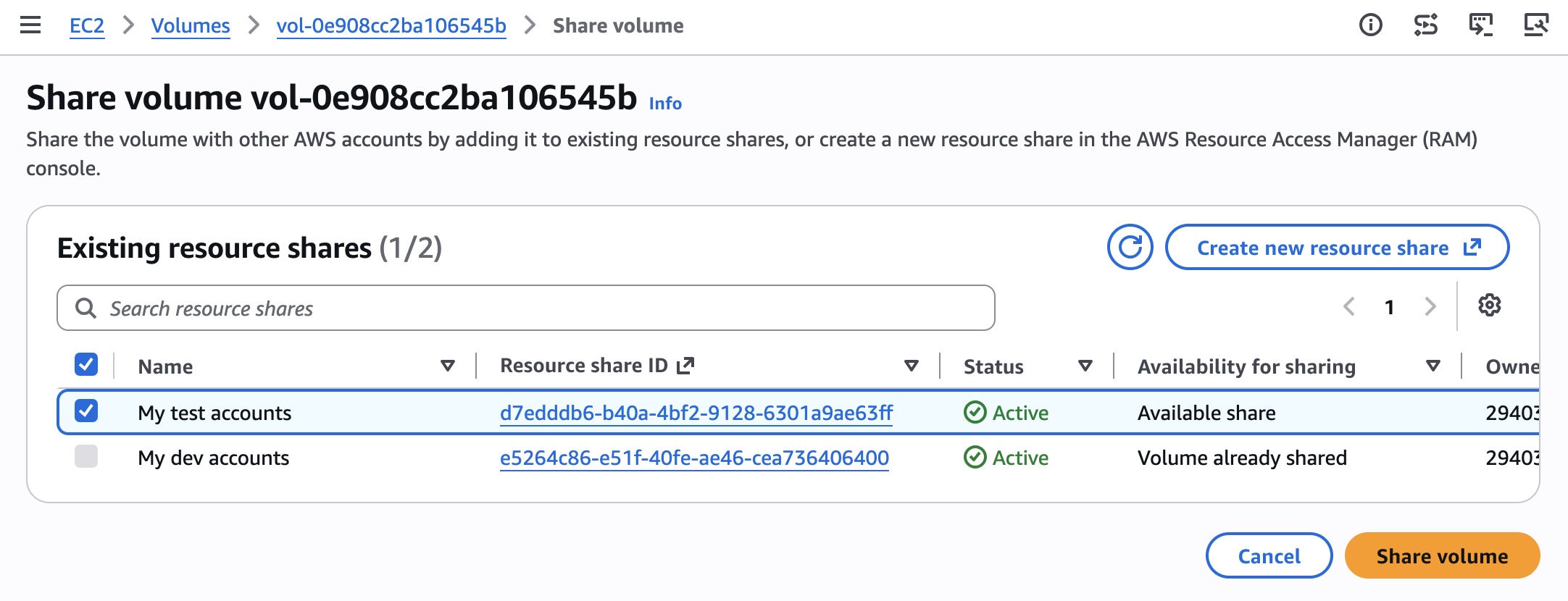
The workflow for executing a cross-account EBS volume clone is designed to integrate seamlessly with existing AWS governance tools, primarily leveraging AWS Resource Access Manager (RAM) and AWS Key Management Service (KMS). To initiate the process, the owner of the source EBS volume navigates to the Amazon EBS console, selects the target volume, and chooses the volume sharing option. The volume can then be designated for sharing either by adding it to an existing resource share or by establishing a new resource share directly within the AWS RAM console. This integration allows administrators to maintain rigorous access control policies, ensuring that only authorized secondary accounts can view or interact with the shared storage asset.

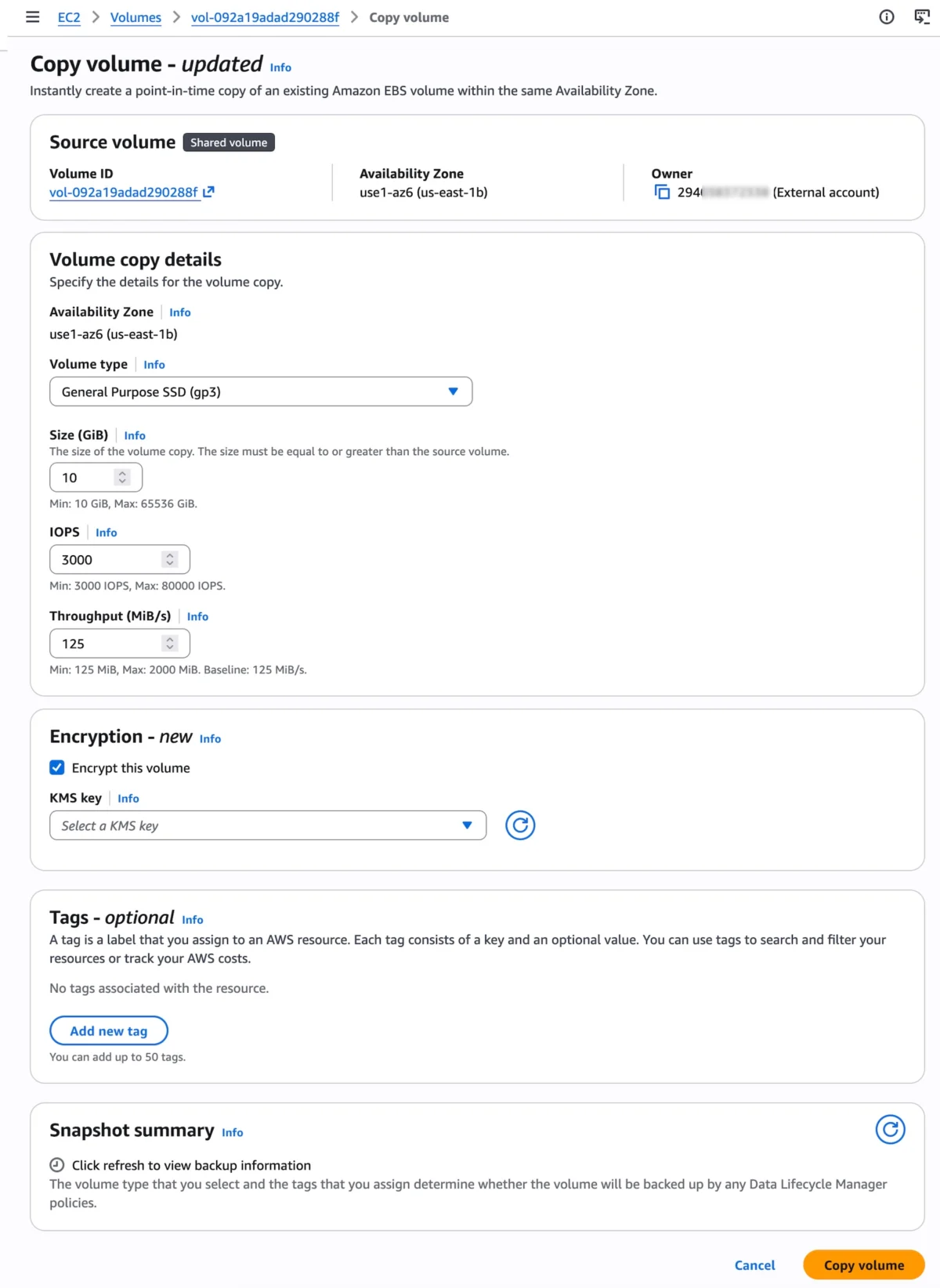
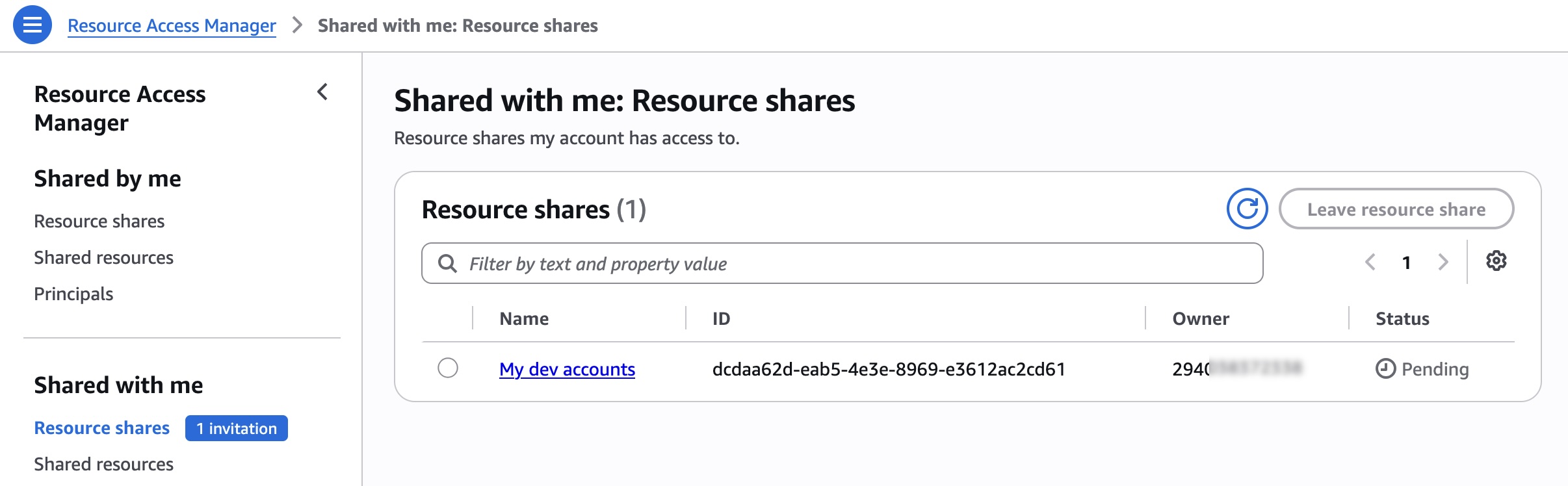
Once the source account owner completes the configuration in AWS RAM, a notification and confirmation status appear in the volume sharing tab of the Amazon EBS detail page. The designated target account must then log into its respective AWS RAM console to formally accept the incoming resource share. Upon acceptance, the shared volume automatically populates within the EBS volume inventory of the target account, rendered clearly as an accessible shared resource. From this interface, engineers in the target environment can execute a direct copy command, transforming the shared reference into an independent, fully functional EBS volume within their local account architecture.
Crucially, this cross-account copy mechanism incorporates robust cryptographic controls. During the duplication process in the target environment, administrators possess the option to re-encrypt the newly minted volume using a specific AWS KMS key managed within the target account. This capability ensures that organizations can maintain strict segregation of cryptographic materials across distinct business units or operational silos, aligning with stringent regulatory frameworks and internal compliance mandates that prohibit the sharing of master encryption keys between production and non-production environments. Furthermore, for organizations seeking to automate these procedures, AWS has ensured programmatic compatibility, allowing developers to execute and manage cross-account cloning workflows via APIs and command-line interfaces, supported by developer toolkits and Model Context Protocol (MCP) servers.
Background Context and Evolution of Amazon EBS
To fully appreciate the significance of this latest release, it is necessary to examine the evolutionary trajectory of Amazon EBS since its inception. Launched in August 2008, Amazon EBS was designed to provide persistent block-level storage volumes for use with Amazon Elastic Compute Cloud (EC2) instances. Over the past decade and a half, EBS has evolved from a foundational storage utility into a sophisticated suite of high-performance, highly durable storage tiers capable of supporting mission-critical relational databases, enterprise resource planning (ERP) systems, and latency-sensitive analytics engines.
Despite these advancements, the creation of independent copies of large block storage volumes remained an asynchronous, resource-intensive operation for many years. Traditional cloning relied heavily on the creation of Amazon EBS snapshots—point-in-time backups stored in Amazon Simple Storage Service (S3)—followed by the restoration of those snapshots into new volumes. While reliable, this process could introduce notable performance overhead and time delays, particularly when dealing with terabyte-scale datasets. Recognizing the need for immediate data availability, AWS introduced native Volume Clones, allowing instantaneous creation of writable volume copies within the same storage infrastructure tier. The expansion of this feature to encompass cross-account boundaries represents the logical next step in mitigating enterprise data friction, bridging the gap between high-speed local provisioning and multi-account governance.
Industry Implications and Enterprise Impact
The rollout of cross-account EBS Volume Clones carries broad implications for software engineering lifecycle management, data analytics, and corporate security postures across industries ranging from financial services to healthcare and digital commerce.
In enterprise software development, maintaining parity between production and staging environments is notoriously difficult. Developers frequently build and test code against stale or artificially generated data sets, only to encounter unexpected performance bottlenecks or structural anomalies when software is deployed to live production environments populated by authentic customer transactions. By enabling the rapid, secure replication of production-tier data volumes into isolated development accounts—complete with localized encryption—AWS enables organizations to conduct rigorous testing against realistic data payloads without compromising data privacy or exposing sensitive information to unauthorized personnel.

Furthermore, the capability streamlines compliance and auditing workflows. In highly regulated sectors such as banking and healthcare, data governance policies strictly limit who can access production data and where copies of that data may reside. By utilizing AWS RAM to govern sharing permissions and applying target-account KMS encryption, compliance officers can verify that any secondary copy of production data is strictly bound to the security perimeter of the designated receiving account. This granular control reduces the administrative burden associated with proving compliance during regular security audits.
Industry analysts note that as enterprises continue to migrate increasingly complex, distributed workloads to the cloud, operational efficiency increasingly depends on the seamless integration of auxiliary services. Features that eliminate manual overhead—such as replacing multi-step snapshot restoration scripts with native, cross-account cloning workflows—directly contribute to reduced operational expenditures and accelerated time-to-market for new application features.
Availability and Future Outlook
Amazon confirmed that cross-account volume clones for Amazon EBS are generally available starting immediately. The feature has been deployed across all AWS global regions that currently support foundational Amazon EBS Volume Clones. Organizations wishing to evaluate regional availability specifics or review the long-term capability roadmap can consult the official AWS Capabilities by Region directory.
Engineering teams can begin testing the feature through the Amazon EC2 and EBS management consoles, utilizing existing IAM roles and AWS RAM configurations. AWS has encouraged users to submit feedback regarding the new feature through the AWS re:Post community channels dedicated to Amazon Elastic Block Store or via standard enterprise support escalation paths, ensuring that ongoing user experiences will inform subsequent iterations of the service.
