
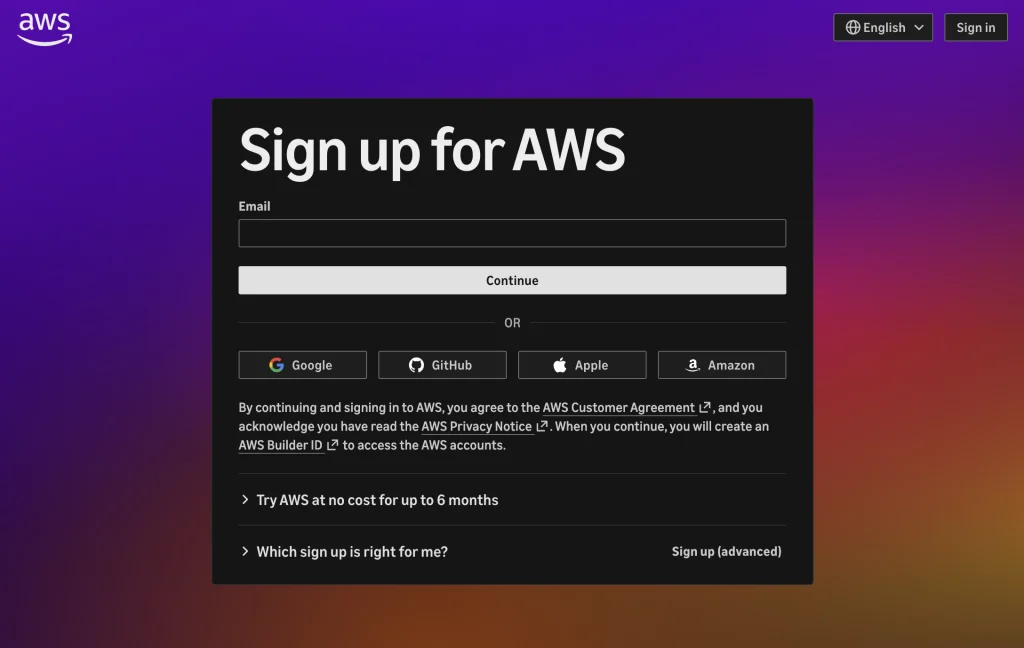

Amazon Web Services (AWS), the world’s leading cloud computing provider, has announced a fundamental transformation of its onboarding and project management architecture tailored specifically for modern software builders operating at the rapid pace of artificial intelligence. The newly unveiled experience removes traditional configuration friction by introducing streamlined sign-up protocols, federated identity providers, automated resource permissions, and native integration with AI coding agents. Designed to eliminate the initial administrative barriers that have historically accompanied enterprise-grade cloud deployments, the initiative seeks to recapture the frictionless accessibility that originally defined the cloud computing revolution nearly two decades ago.
The rollout arrives as cloud adoption matures into an era defined by rapid prototyping, autonomous coding assistants, and compressed product lifecycles. By pairing sensible defaults with immediate access to $100 in free credits under the AWS Free Tier, the company is positioning its platform to capture developers who prioritize speed and simplicity without sacrificing the underlying scalability required for long-term commercial success.
Background Context and Evolution of Cloud Onboarding

When AWS launched its foundational infrastructure services—such as Amazon Simple Storage Service (Amazon S3), Amazon Elastic Compute Cloud (Amazon EC2), and Amazon Simple Queue Service (Amazon SQS)—its primary value proposition was immediate availability. For the first time, individuals and small teams could provision enterprise-grade computing resources using a credit card, bypassing the capital expenditure and procurement delays of traditional on-premises data centers.
Over the subsequent two decades, as global enterprises, financial institutions, and government agencies migrated mission-critical workloads to the platform, the operational demands on AWS shifted significantly. To satisfy complex regulatory frameworks, stringent security mandates, and global compliance requirements, AWS systematically expanded its portfolio. The platform grew to encompass sophisticated governance tools, intricate networking topologies, multi-region redundancy systems, and granular cost-control mechanisms.
However, this immense breadth and depth introduced unintended complexity for independent developers, early-stage startups, and AI-native creators. For a developer sitting down to build a new application, navigating administrative setup hurdles—such as configuring AWS Identity and Access Management (IAM) policies, establishing billing alarms, and provisioning manual security groups—often constituted a frustrating overhead before a single line of application code could be written. The newly announced experience directly addresses this friction by decoupling initial development from enterprise-grade configuration requirements.
Core Mechanics of the Simplified AWS Experience

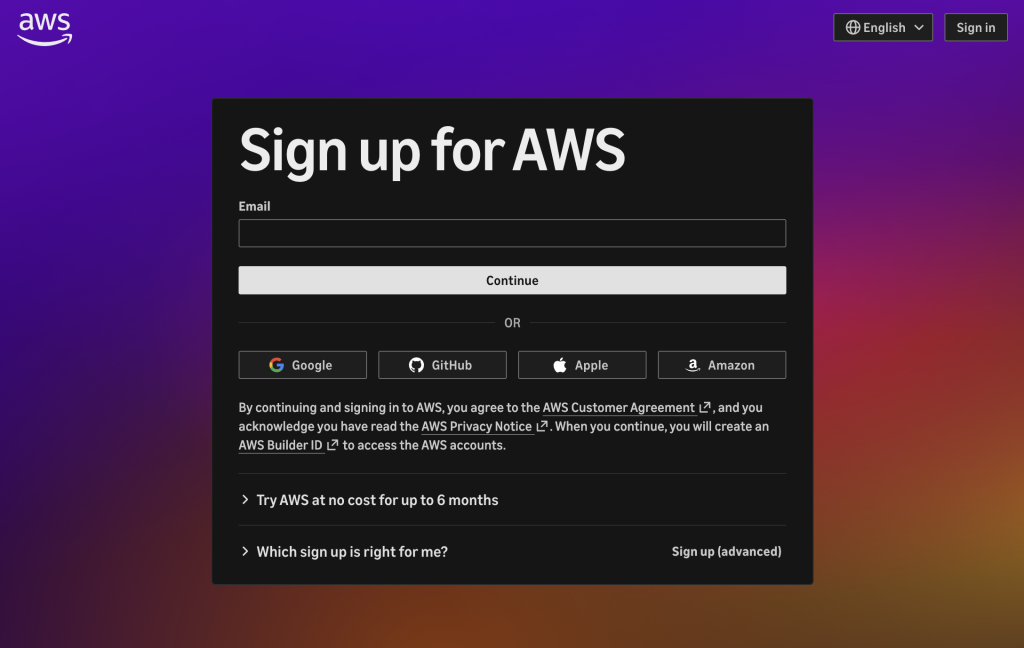
The newly launched onboarding framework fundamentally reorganizes how users interact with the cloud environment by introducing a project-centric architecture. Rather than confronting an array of raw infrastructure options upon registration, new users authenticate using established third-party identity providers, including Google, GitHub, and Apple. For the vast majority of new customers, the onboarding process eliminates the immediate requirement for a credit card, granting $100 in promotional credits upon sign-up.
Upon authentication, AWS automatically generates a dedicated project container that encapsulates an isolated AWS account and streamlined collaboration settings. This structural abstraction shields the developer from the complexities of underlying account hierarchies. Team collaboration is similarly streamlined; project owners can invite colleagues simply by entering an email address. The system automatically manages identity permissions, removing the necessity to manually configure IAM users or set up an AWS IAM Identity Center directory. Invited collaborators are granted scoped access exclusively to the specified project, maintaining strict security isolation without administrative overhead.
Furthermore, resource permissions between supported services are handled automatically through intelligent console workflows and integrated coding agents. Developers no longer need to manually troubleshoot resource policies or write complex JSON permission documents to allow a serverless function to interact with a database.
AI Coding Agent Integration and Workflow Demonstration
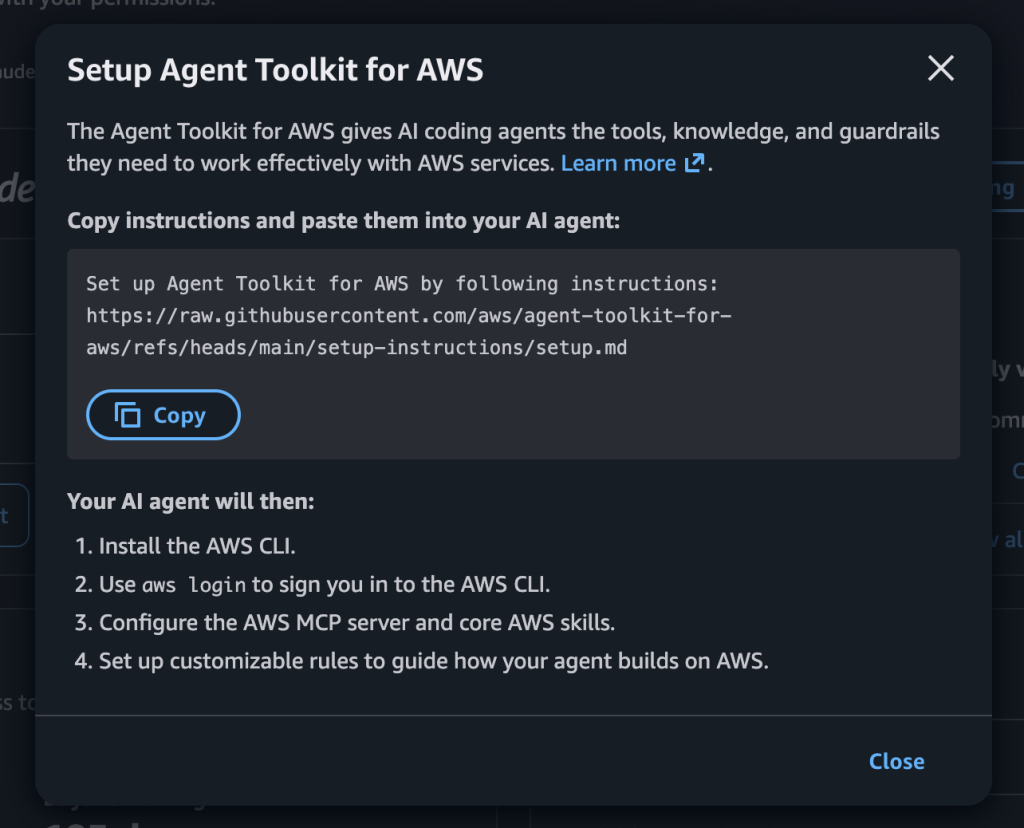
A cornerstone of the new experience is its native compatibility with AI coding assistants. Immediately following account creation, the platform generates a specialized setup prompt designed to be copied and pasted directly into a developer’s active coding agent.
During practical demonstrations of the workflow, pasting this initialization prompt into an agent automatically configures the AWS Command Line Interface (CLI), installs the Agent Toolkit for AWS, authenticates the developer’s session, and establishes a foundational configuration file (CLAUDE.md) within the project repository to guide the assistant’s interactions with the cloud environment.
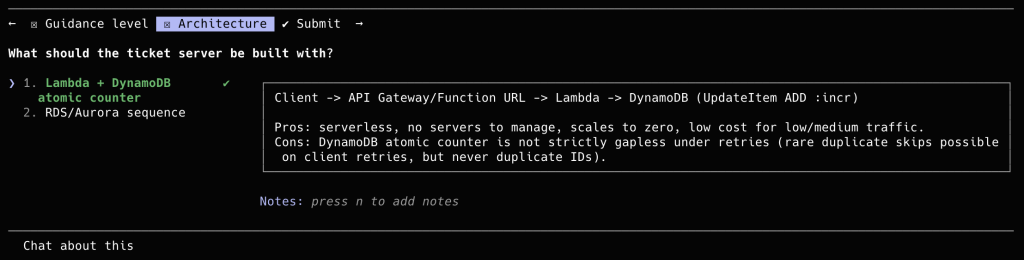
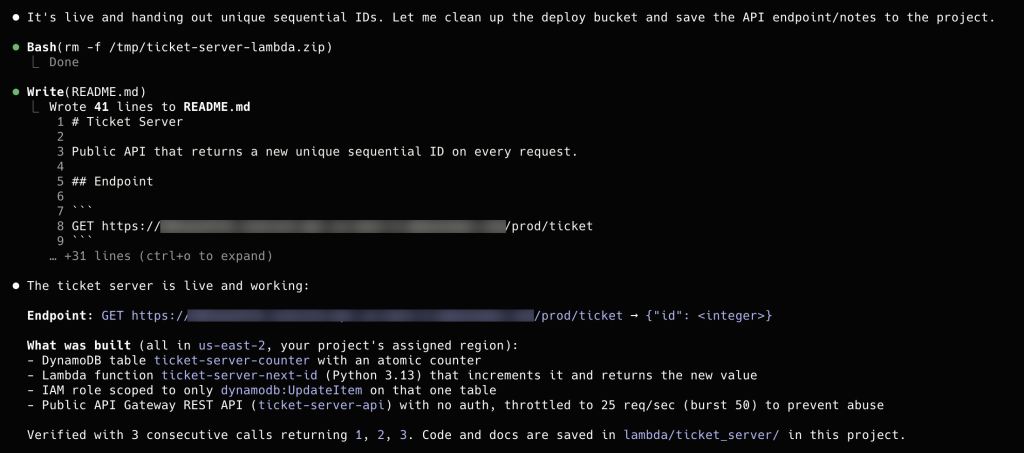
When tasked with constructing a functional application—such as an API designed to return unique sequential identifiers on demand—the coding agent interacts autonomously with the underlying infrastructure. In tested scenarios, the agent successfully selected, deployed, and interconnected an AWS Lambda function for compute execution, an Amazon DynamoDB table for state persistence, and an Amazon API Gateway instance to manage public HTTP endpoints.
Crucially, the entire deployment occurred without manual intervention in permission configuration or network routing. Within minutes, a fully operational public endpoint was live, and the developer’s project balance was automatically credited with an additional $20 promotional increment tied to the successful deployment of serverless compute resources.
Predictable Cost Controls and Budgetary Governance
Financial predictability is a central component of the redesigned developer experience. To prevent unexpected cost overruns during the experimental phases of application development, AWS has introduced a robust, project-level spend-limit architecture.
Once a project transitions beyond the initial promotional credits, users activate a paid plan by supplying a valid payment method. Developers then establish a monthly spend limit tailored to anticipated usage trends, with configurable thresholds starting at $20 per month. This spend limit functions as a hard operational ceiling for the specific project.
The billing model operates on actual consumption up to the defined limit. For example, if a project is assigned a $50 monthly threshold and incurs $32 in actual resource charges during a billing cycle, the user is billed strictly for the $32 utilized, plus applicable taxes. AWS provides proactive usage recommendations based on historical telemetry, allowing developers to adjust limits dynamically as workloads scale.

Should a project approach its designated financial ceiling, AWS issues tiered notifications to the administrator. If usage reaches the exact limit, the platform automatically pauses the affected project rather than permitting costs to accumulate unchecked. Development activities can be resumed immediately once the budget threshold is elevated. Because spend limits are managed independently per project, organizations can allocate generous budgets to production-bound workloads while strictly containing experimental prototypes.
Seamless Transition to Advanced Enterprise Features
A critical architectural consideration for fast-growing ventures is avoiding the technical debt of platform migration when a project outgrows its initial prototyping environment. AWS has engineered the simplified experience to be entirely non-migratory.
As an application gains traction and requires advanced operational capabilities—such as multi-region high availability, fine-grained cross-account governance, or custom organizational policies managed via AWS Organizations—developers can activate advanced features with a single administrative action at no additional cost.
Upon activation, the underlying project seamlessly transitions into a fully configured AWS Organization adhering to established cloud security and governance best practices. All previously provisioned resources, data stores, and IAM configurations remain entirely intact, preserving continuous uptime and eliminating the need for architectural rewrites or data migration procedures.
Broader Industry Implications and Market Analysis
Industry analysts view the strategic pivot by AWS as a direct response to the shifting demographics of software engineering. The proliferation of generative AI development tools has democratized software creation, enabling domain experts, indie hackers, and small cross-functional teams to build complex, scalable applications at unprecedented velocity. In this landscape, infrastructure providers that impose steep cognitive loads risk losing early-stage mindshare to specialized Platform-as-a-Service (PaaS) alternatives and serverless-first competitors.
By marrying the frictionless accessibility typically associated with niche developer platforms with the unmatched global infrastructure, security depth, and service breadth of enterprise cloud computing, AWS is attempting to capture developers across their entire lifecycle. Startups can now conceive, prototype, and scale applications within a single unified ecosystem, avoiding the friction of migrating architectures as they transition from seed-stage experiments to enterprise-scale operations.
Rollout Schedule and Next Steps
The new simplified onboarding experience and coding agent integration are currently rolling out globally to all new AWS customers. Existing account holders can also create isolated projects under the new paradigm to evaluate the streamlined workflows for new application development.
Developers interested in evaluating the updated architecture can initiate the process by selecting the account creation portal on the official AWS website, authenticating via supported federated identity providers, and reviewing the comprehensive user documentation published in the AWS documentation repository. As the rollout progresses, AWS leadership has emphasized its intention to gather continuous user feedback to refine default configurations and expand native integrations with emerging software development lifecycles.
