

Containerization has fundamentally reshaped the software development and IT infrastructure landscape over the past decade, shifting the paradigm from rigid physical hardware and resource-heavy virtual machines to agile, highly portable, and resource-efficient execution units. At its core, a container is a lightweight, standalone, and executable package of software that bundles everything required to run an application—including source code, runtime environments, system tools, system libraries, and specific configuration settings. By isolating software processes from one another while leveraging the host operating system’s kernel, containerization enables developers and operations (DevOps) teams to build, test, and deploy applications seamlessly across disparate environments, eliminating the persistent friction of infrastructure discrepancies.
Understanding the Mechanics and Evolution of Containers
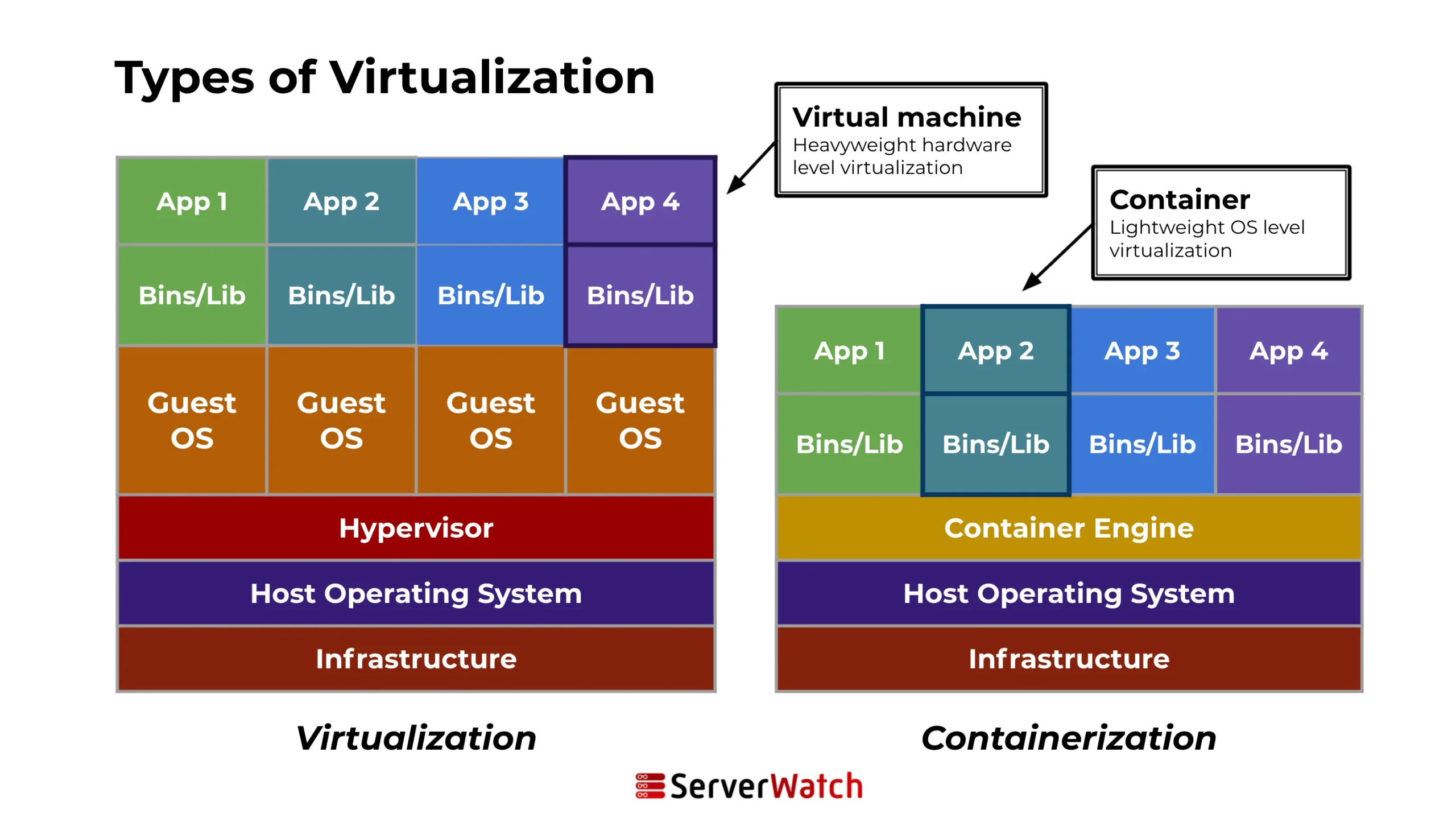
To appreciate the widespread adoption of containers, one must examine the technological evolution that preceded them. Traditional deployment relied heavily on bare-metal servers, which often led to resource underutilization and severe application conflicts when multiple programs shared the same operating system. Virtualization introduced a layer of abstraction via hypervisors, allowing multiple virtual machines (VMs), each equipped with a full guest operating system, to run on a single physical machine. While VMs offered robust isolation, their heavy resource consumption—often requiring gigabytes of RAM and substantial boot times—prompted the search for a more streamlined approach.
Containerization emerged as a direct response to these limitations. Rather than virtualizing physical hardware and running a redundant guest OS for every application instance, container engines virtualize the operating system. Containers share the host system’s kernel while maintaining completely isolated filesystems, CPU allocations, memory boundaries, and process spaces. This architectural distinction drastically reduces overhead, enabling containers to boot in milliseconds and achieve significantly higher density on the same underlying hardware infrastructure.
Key Architectural Components and Execution Flow
The mechanics of containerization rely on several foundational operating system-level virtualization features, particularly in Linux environments. These mechanisms ensure that applications operate within strictly defined boundaries:
- Namespaces: Namespaces provide isolated system workspaces. Each container receives its own set of namespaces for networking, process IDs, user accounts, and mount points, ensuring that processes running inside the container cannot see or interfere with processes running on the host or in other containers.
- Control Groups (cgroups): While namespaces govern what a process can see, cgroups govern resource consumption. They limit, account for, and isolate the CPU, memory, disk I/O, and network bandwidth usage of a collection of processes, preventing a single runaway container from starving the host system of vital resources.
- Union File Systems: Container images are built using layered filesystems. Each layer represents a set of file changes, such as installing a package or modifying a configuration file. This layered approach promotes efficiency through caching, allowing multiple containers to share common base images while maintaining their own writable container layer.
- Container Runtime: The underlying software responsible for managing the execution lifecycle of containers. Popular runtimes, such as containerd or CRI-O, interact directly with the operating system kernel to pull images, initialize namespaces and cgroups, and execute the application code.
Comparing Containers and Virtual Machines
While both containers and virtual machines provide application isolation, their operational profiles differ substantially. Virtual machines run on top of a hypervisor (Type 1 or Type 2), which abstracts physical hardware. Each VM includes a complete guest operating system, application binaries, and necessary libraries, making them ideal for running monolithic applications that require different operating system kernels on the same physical server. However, this heavy architecture introduces latency during startup and demands large amounts of storage and memory.
Containers, conversely, abstract the operating system rather than the hardware. Because they share the host kernel, they omit the guest OS layer entirely. This makes them exceptionally lightweight—often measuring only megabytes in size rather than gigabytes—and drastically faster to instantiate. Organizations frequently deploy hundreds of containers on a single host where only a handful of traditional virtual machines could comfortably run.
Primary Use Cases in Modern Software Engineering
The operational agility provided by containers has catalyzed their integration into several critical software engineering paradigms:
Microservices and Cloud-Native Architecture: Modern application design increasingly favors microservices, where large monolithic systems are broken down into small, independent services communicating over lightweight APIs. Containers provide the ideal vehicle for microservices, allowing individual services to be packaged, deployed, scaled, and updated independently without risking downtime for the broader application ecosystem. Orchestration platforms like Kubernetes further automate this process, ensuring high availability, automatic failover, and dynamic load balancing.
Continuous Integration and Continuous Delivery (CI/CD) Pipelines: Maintaining environment consistency across development, testing, staging, and production has historically been a major source of deployment failures. Containers solve the "it works on my machine" problem by bundling the application and its entire dependency tree into a single immutable artifact. In CI/CD pipelines, automated testing suites can spin up identical containerized environments for every code commit, ensuring rigorous validation prior to production release.
Application Packaging and Distribution: Software vendors increasingly distribute commercial applications as container images rather than traditional installers. This approach simplifies customer onboarding, as deployment requires pulling the image from a secure registry and executing it, bypassing complex dependency resolution steps on the target server.
Comprehensive Benefits of Containerization

The industry-wide shift toward containerization is underpinned by a robust matrix of operational and financial advantages:
- Resource Efficiency: By eliminating redundant guest operating systems, containers maximize hardware utilization, driving down data center hardware and power costs.
- Rapid Scalability: Containers spin up and tear down in fractions of a second, enabling auto-scaling architectures to respond dynamically to sudden traffic spikes.
- Portability: Containerized applications run uniformly across developer laptops, on-premises data centers, and multi-cloud environments (AWS, Google Cloud, Microsoft Azure) without code modification.
- Isolation and Security: Application failures and security vulnerabilities are compartmentalized within the container boundary, preventing lateral movement across the host system.
- Version Control and Rollbacks: Container registries store immutable, tagged images, allowing operations teams to instantly roll back a problematic deployment to a previous stable version.
- Developer Productivity: Standardized environments reduce onboarding time for new engineers and streamline local testing workflows.
- Ecosystem Maturity: A vast ecosystem of open-source tools, monitoring utilities, and security scanners supports containerized workflows.
- Automated Management: Integration with orchestration engines reduces manual intervention required for routine maintenance tasks.
- Improved Fault Tolerance: Automated container restarts and health checks enhance overall system reliability.
- Cost Optimization: Higher compute density translates directly into lower cloud compute expenditure.
- Agility in Hybrid Environments: Seamless workload migration between private infrastructure and public clouds.
- Simplified Dependency Management: All required libraries are locked within the container image, avoiding version conflicts on the host.
- Accelerated Time-to-Market: Streamlined CI/CD pipelines shorten the software release lifecycle.
Security Challenges and Operational Complexities
Despite their transformative advantages, containerized environments introduce unique security vulnerabilities and management complexities that organizations must proactively address:
Security Considerations: Because containers share the host operating system kernel, a kernel-level vulnerability can potentially compromise all containers running on that host. Misconfigured container privileges, such as running containers with root access, can allow malicious actors to breakout into the host system. Additionally, supply chain security is a growing concern; pulling third-party base images from public registries without vulnerability scanning can introduce hidden malware or outdated software libraries into production environments.
Management Complexity: As organizations scale their container deployments from tens of instances to thousands across multi-cloud architectures, cluster management becomes exceptionally difficult. Monitoring network traffic between microservices, managing persistent storage volumes, and diagnosing transient performance bottlenecks require specialized observability tools and advanced operational expertise.
Integration Hurdles: Retrofitting legacy monolithic applications into container architectures often requires significant refactoring. Furthermore, integrating container networks and storage systems with existing enterprise security frameworks, identity providers, and compliance auditing tools demands careful planning and architectural redesign.
Ecosystem Technologies: Docker, Kubernetes, and Beyond
The container ecosystem features a rich array of tools designed to standardize and automate container workflows:
Docker revolutionized the industry by introducing a user-friendly command-line interface and a standardized image format, making containerization accessible to mainstream software developers. Docker Engine, Docker Hub, and Docker Compose remain foundational tools for building and testing local container environments.
Kubernetes (K8s), developed originally by Google and now maintained by the Cloud Native Computing Foundation (CNCF), serves as the de facto standard for container orchestration. Kubernetes automates deployment, scaling, horizontal pod autoscaling, service discovery, and load balancing across clusters of hosts.
Alternative and complementary technologies continue to expand the market. Podman offers a daemonless, rootless alternative to Docker for secure container management. Nomad, developed by HashiCorp, provides lightweight orchestration capable of managing both containers and non-containerized legacy workloads. Additionally, specialized container runtimes like gVisor and Kata Containers enhance isolation by introducing lightweight hardware virtualization or system call sandboxing, bridging the gap between container speed and VM-level security.
Future Trends and the Road Ahead
As containerization technology matures, several emerging trends are poised to redefine its trajectory over the coming years. The convergence of containers with artificial intelligence and machine learning (AI/ML) workflows is accelerating, as data scientists increasingly rely on containerized environments to package complex frameworks like TensorFlow and PyTorch for scalable deployment across GPU clusters.
Concurrently, edge computing is driving demand for ultra-lightweight container runtimes capable of operating within resource-constrained IoT devices and telecommunications hardware. Furthermore, stricter regulatory frameworks surrounding data privacy and software supply chain transparency—such as software bill of materials (SBOM) mandates—are pushing container security vendors to develop automated compliance verification tools integrated directly into container registries and CI/CD pipelines.
The Bottom Line
Containers have irrevocably altered the software development lifecycle, establishing a new baseline for operational efficiency, scalability, and architectural consistency. While organizations must navigate notable security and management hurdles, the long-term strategic value of containerization remains undeniable. As cloud-native engineering practices continue to mature, containers will anchor the next generation of digital transformation, empowering enterprises to innovate rapidly and scale resiliently in an increasingly competitive digital economy.
