
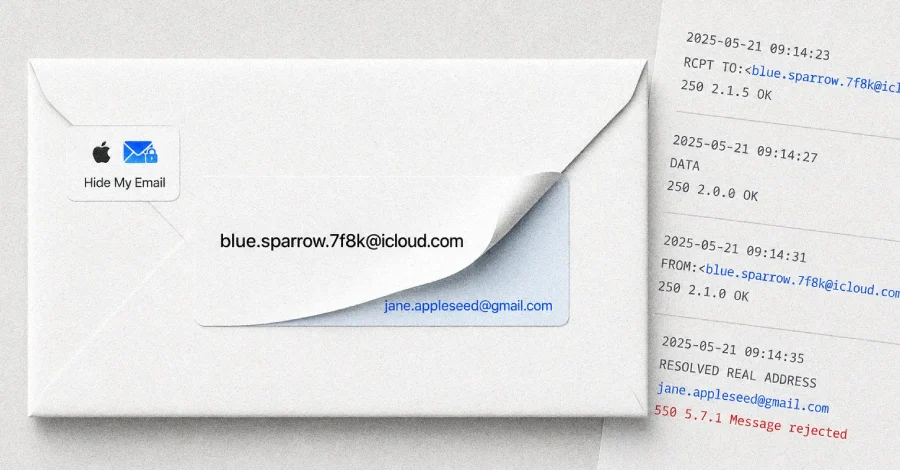

Cupertino, California – Apple has moved to rectify a significant security vulnerability within its "Hide My Email" service, a premium privacy feature offered under iCloud+. The flaw, which allowed for the unmasking of users’ real email addresses, directly undermined the service’s core privacy guarantees, raising concerns among cybersecurity experts and leading to a class-action lawsuit against the tech giant. The fix was reportedly deployed on July 3, 2026, more than a year after the initial disclosure of the vulnerability.
The "Hide My Email" service, an integral component of Apple’s iCloud+ subscription, is designed to enhance user privacy by generating unique, random email addresses. These disposable addresses automatically forward messages to a user’s primary, personal email inbox, effectively shielding the real address from third parties, reducing spam, and protecting against data breaches. Announced in June 2021 as part of Apple’s ongoing commitment to user privacy, the feature quickly became a cornerstone of its privacy-centric marketing strategy. Users rely on this service to sign up for newsletters, online accounts, or make purchases without exposing their genuine contact information, thereby creating a crucial layer of anonymity.
However, the efficacy of this privacy shield was compromised by a critical flaw that allowed a user’s actual email address to be exposed under specific circumstances. As reported by 404 Media, the vulnerability stemmed from a mechanism where sending a targeted message to a "Hide My Email" address, if subsequently rejected as spam, caused the user’s real email address to appear in the email logs of the sender. This unintended disclosure bypassed the very protection the service was designed to provide, potentially exposing millions of iCloud+ subscribers to unwanted spam, targeted phishing attempts, or data aggregation by malicious entities. The subtlety of the flaw, relying on common email rejection protocols, made it particularly insidious as users would likely be unaware of any compromise.
The Protracted Path to Patch: A Timeline of Disclosure and Resolution
The journey to resolving this critical vulnerability was notably protracted, spanning over a year from its initial discovery to the eventual patch. The timeline of events underscores the challenges of vulnerability management in complex digital ecosystems and raises questions about vendor response times:
- June 13, 2025: Tyler Murphy, co-founder of EasyOptOuts, a service focused on digital privacy, responsibly disclosed the vulnerability to Apple. Murphy’s discovery highlighted how even legitimate emails, when bounced as spam, could inadvertently expose the real email address, a scenario that is not uncommon in the vast landscape of internet communication. This initial report marked the beginning of a lengthy engagement with Apple’s security teams.
- Over a Year of Delays: Following the initial disclosure, the issue remained unresolved for an extended period. This duration is significant in cybersecurity, where rapid patching is often critical to preventing widespread exploitation. During this time, users continued to operate under the assumption that their real email addresses were securely hidden.
- March 2026: Apple made its first recorded attempt to patch the vulnerability. This attempt, however, proved unsuccessful, indicating the complexity of the underlying issue or perhaps an incomplete understanding of its root cause. The failure to deploy an effective fix at this stage meant the privacy risk persisted for all "Hide My Email" users.
- June 30, 2026: A second attempt by Apple to deploy a fix was made, which also failed. The repeated unsuccessful attempts suggest either a persistent technical challenge or a misdiagnosis of the vulnerability’s scope and nature, further prolonging the period of exposure for users.
- Early July 2026: Details of the flaw began to surface publicly, notably appearing in The Hacker News. Although specific technical details were initially withheld to prevent immediate exploitation, the public emergence of the issue put increased pressure on Apple to deliver a permanent solution. The security community’s awareness of such vulnerabilities often accelerates the patching process.
- July 3, 2026: Apple successfully deployed a fix for the "Hide My Email" vulnerability. This date, reported by 404 Media following their own investigation and communication with the researchers, marked the end of the active exposure period for new instances of the flaw.
- July 7, 2026: A critical caveat was issued: while the bug has been resolved, Apple acknowledged that real email addresses linked to "Hide My Email" addresses created before this date might have already been captured in mail transfer logs due to non-malicious emails bouncing. This implies a potential historical data leak, the full extent of which remains unknown to individual users.
The duration between disclosure and resolution, exceeding a year, stands in stark contrast to typical industry standards for critical vulnerabilities, which often see patches deployed within weeks or a few months. This prolonged exposure period is a central point of contention for both security researchers and affected users.

Unmasking the Mechanism: Technical Nuances of the Vulnerability
The vulnerability’s core lay in how certain email server configurations handled bounced messages. When an email sent to a "Hide My Email" address was automatically rejected as spam by the recipient’s mail server – a common occurrence for various reasons, including content filters, sender reputation issues, or policy violations – the subsequent bounce notification could inadvertently include the real, underlying email address in its log.
Email logs, also known as mail transfer agent (MTA) logs or SMTP (Simple Mail Transfer Protocol) logs, are essential records maintained by mail servers detailing every transaction: sender, recipient, subject, time, and status (delivered, deferred, bounced). While these logs are primarily for diagnostic and operational purposes, their contents can be highly sensitive. In this specific scenario, when a "Hide My Email" address (e.g., [email protected]) bounced an email, the system, instead of strictly preserving the privacy abstraction, sometimes included the actual forwarding address (e.g., [email protected]) in the bounce message’s headers or body, which was then recorded in the sender’s mail logs.
The implications of this mechanism are profound. Even if an email never reached a user’s inbox or spam folder, the real email address could still be exposed. This means that even a legitimate, non-malicious sender whose email was simply filtered as spam could unintentionally log the user’s hidden email address. For malicious actors, understanding this vulnerability could lead to targeted campaigns: sending carefully crafted emails designed to trigger spam filters, thereby forcing a bounce and capturing the hidden address. This could be automated, allowing for the rapid collection of otherwise private email addresses, completely undermining the protective layer Apple promised. The sheer volume of emails sent daily across the internet and the prevalence of spam filters suggest that this vulnerability could have led to a significant, albeit unquantified, number of inadvertent disclosures.
Statements and Reactions: Navigating Trust and Accountability
The revelation and subsequent fix have elicited various reactions from stakeholders, highlighting the delicate balance between privacy, security, and corporate responsibility.
- From the Researchers: Tyler Murphy and Ben Weiner, co-founders of EasyOptOuts, expressed their concern over the potential scope of the leak. "We don’t know how often hidden email addresses were leaked in email logs. For many major email hosts, the leak was triggered simply by an email being automatically rejected as spam, even if it was a legitimate message. Such emails probably didn’t make it to your inbox, so you can’t review your spam folder to learn whether you were affected," they told 404 Media. Their statement underscores the silent nature of the leak, making it impossible for users to ascertain if their data was compromised. They likely advocate for more transparent communication from tech companies regarding such vulnerabilities and faster remediation efforts.
- Apple’s Stance (Inferred): While Apple has not issued a detailed public statement specifically addressing the delay or the extent of the past leaks, their deployment of the fix signals an acknowledgment of the issue’s severity. Historically, Apple has emphasized its commitment to user privacy as a core differentiator. Any official statement would likely reiterate this commitment, acknowledge the patch, and perhaps emphasize the technical complexities involved in addressing such a nuanced flaw in a vast email forwarding system. They might also highlight continuous efforts to enhance security and privacy across their ecosystem, potentially downplaying the overall impact or suggesting that malicious exploitation was limited.
- Privacy Advocates: Organizations advocating for digital privacy are likely to voice strong concerns over the prolonged period between disclosure and resolution. They would argue that a year-long delay for a critical privacy flaw in a paid service is unacceptable, especially for a company with Apple’s resources and stated privacy ethos. Calls for greater transparency, mandatory breach notifications for such subtle leaks, and more robust internal security review processes would be expected. This incident could be cited as an example of how even privacy-focused companies can falter, underscoring the constant vigilance required in protecting user data.
- Affected Users: The most direct and vocal reaction has come from affected users, as evidenced by the class-action lawsuit. Users who subscribed to iCloud+ specifically for "Hide My Email" likely feel a sense of betrayal, having paid for a feature that failed to deliver its promised privacy. The lack of prior warning or proactive communication from Apple about the vulnerability during the year-long period of exposure would further exacerbate these feelings, eroding trust in Apple’s privacy assurances.
Legal Ramifications: The Class-Action Lawsuit

The technical fix, while crucial, has not quelled the legal fallout. Apple is currently facing a class-action lawsuit, Alvarez v. Apple Inc., accusing the company of misleading customers about the privacy of its "Hide My Email" feature while charging for it. The lawsuit, filed in federal court, represents a collective action by users who believe they were financially harmed and suffered a breach of trust due to the vulnerability.
The complaint alleges that "Apple promised Hide My Email as a privacy feature customers paid for, whether directly through iCloud+ or indirectly through Apple’s product-wide privacy representations, and failed to deliver it." Furthermore, it critically asserts, "Worse, Apple has been fully aware of this problem for over a year and has not fixed it." The lawsuit emphasizes the company’s alleged inaction during the prolonged disclosure period, stating, "At no point during this period did Apple disable or pause Hide My Email, warn its customers of the flaw, or correct its privacy representations."
This legal challenge highlights several key issues:
- Breach of Contract/Misrepresentation: The core argument is that Apple failed to deliver on a promised service for which customers paid.
- Lack of Transparency: The complaint criticizes Apple for not disclosing the vulnerability to its users or pausing the service while the flaw remained active. This lack of communication deprived users of the ability to make informed decisions about their privacy.
- Consumer Trust: The lawsuit reflects a broader erosion of consumer trust when tech companies fail to uphold their privacy commitments, particularly concerning features explicitly marketed for privacy protection.
The outcome of this lawsuit could have significant implications for how technology companies are held accountable for privacy features, the standards of disclosure for vulnerabilities, and the potential liabilities associated with services that fail to meet their advertised privacy guarantees. It serves as a reminder that privacy is not merely a technical feature but a legal and ethical obligation.
Broader Implications for Digital Privacy and Trust
The "Hide My Email" vulnerability and its delayed resolution carry broader implications for the landscape of digital privacy, user trust, and the responsibilities of technology giants.
- Erosion of Trust: Incidents like this, especially involving a company that prides itself on privacy, can erode user trust in privacy-enhancing features. When a service explicitly designed to shield personal information proves fallible, it raises questions about the efficacy and reliability of other privacy tools, potentially leading to increased user skepticism.
- The Challenge of Responsible Disclosure: The protracted timeline from Tyler Murphy’s disclosure to Apple’s eventual fix underscores the challenges inherent in responsible vulnerability disclosure. While researchers perform a vital public service, the lengthy wait for remediation can be frustrating and increases the risk of the vulnerability being independently discovered and exploited by malicious actors. It emphasizes the need for robust internal processes within companies to prioritize and rapidly address reported flaws.
- Vendor Accountability: This incident places Apple under scrutiny regarding its accountability to users, particularly those paying for premium privacy services. The class-action lawsuit is a clear manifestation of users demanding that companies not only offer privacy features but also ensure their robust and timely maintenance.
- The Persistent Battle Against Spam and Data Aggregation: The vulnerability’s mechanism highlights the ongoing struggle against unwanted communications and the pervasive nature of data aggregation. Even sophisticated privacy tools can be circumvented by subtle technical flaws, making it a continuous arms race between privacy protectors and those seeking to exploit personal data.
- User Vigilance: While companies bear the primary responsibility for securing their services, this event also serves as a stark reminder for users to remain vigilant. Understanding the limitations of privacy tools, regularly reviewing privacy settings, and being aware of potential risks are crucial steps for individuals navigating the digital world.
- Industry Standards: This incident may prompt a re-evaluation of industry standards for vulnerability response times, particularly for features central to a company’s privacy messaging. It could lead to increased calls for independent audits of privacy features and more transparent reporting mechanisms when vulnerabilities are discovered.
In conclusion, while Apple’s deployment of a fix for the "Hide My Email" vulnerability is a welcome development, the circumstances surrounding its discovery and the prolonged period of exposure underscore significant challenges in maintaining digital privacy. The ongoing class-action lawsuit further emphasizes the critical importance of delivering on privacy promises and the need for greater transparency and prompt action from technology companies when user data is at risk. The incident serves as a crucial reminder that privacy is an ongoing commitment, requiring continuous vigilance from both service providers and users alike.
