
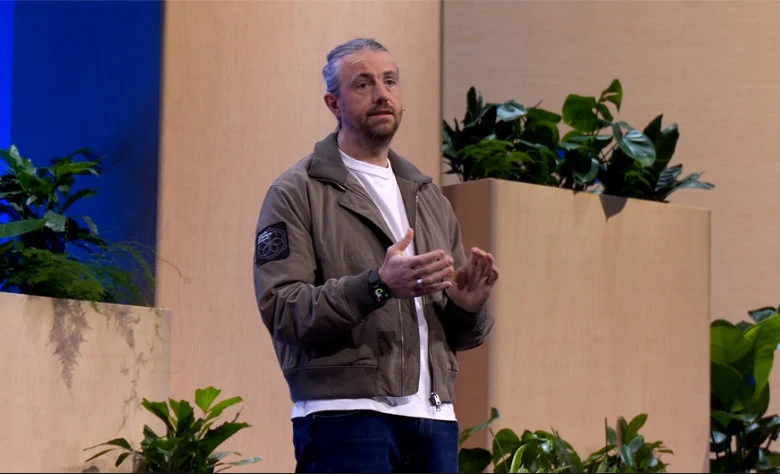

The modern workplace is undergoing a structural transformation as artificial intelligence shifts from a passive tool to an active, autonomous participant. At the Team ’26 Europe conference in Amsterdam, enterprise software giant Atlassian unveiled a comprehensive suite of tools, protocols, and governance frameworks designed to redefine how humans and artificial intelligence agents work alongside one another. At the heart of this announcement is the Agentic Multiplayer Protocol (AMP), a paradigm designed to establish clear boundaries, operational modalities, and security parameters for multi-agent and human collaboration within large organizations.
Rather than treating AI agents merely as isolated software utilities or direct replacements for human employees, Atlassian’s new strategy focuses on the delicate middle ground. The company aims to establish predictable patterns of behavior, robust compliance tracking, and shared contextual awareness. This major industry development addresses long-standing enterprise anxieties regarding data security, autonomous workflows, and accountability in complex organizational structures.
Background Context and Event Chronology
The unveilings took place during the opening keynote of the Team ’26 Europe conference, an annual gathering of software developers, IT leaders, and enterprise strategists. Proceedings in Amsterdam experienced an unexpected logistical hurdle when a brief local power outage temporarily halted the keynote just as it reached its conclusion. Despite the technical interruption, the conference resumed smoothly, allowing Atlassian executives to detail a product roadmap that has been years in development.
The historical evolution of human-computer interaction has consistently required users to adapt to entirely new behavioral patterns. Industry leaders often compare the current transition toward autonomous agents to past technological leaps, such as the shift from text-based green-screen terminals to graphical user interfaces (GUIs) like Microsoft Windows and Apple’s MacOS, or the eventual introduction of capacitive touchscreens on mobile devices.
In each of these previous eras, productivity gains were unlocked only after users and developers established standardized languages, interface conventions, and behavioral norms. Atlassian CEO Mike Cannon-Brookes emphasized that the integration of autonomous agents into enterprise environments requires a similar cultural and operational adjustment. According to Atlassian leadership, the challenge is not purely technical; it is fundamentally diplomatic, requiring agreed-upon protocols for how disparate digital entities communicate, negotiate, and execute tasks.
The Agentic Multiplayer Protocol (AMP) and Four Core Modalities
At the core of Atlassian’s new announcements is the Agentic Multiplayer Protocol, a framework designed to govern how humans, software applications, and autonomous agents interact within a shared business context. AMP builds upon existing technological standards such as Agent-to-Agent (A2A) communication and the Model Context Protocol (MCP), but layers a critical design and governance methodology on top of them.
To prevent operational confusion within corporate teams, Atlassian has integrated distinct visual and functional indicators into its user interfaces to categorize every interaction. Cannon-Brookes outlined four distinct operational modalities that any communication on the platform can take:
- Human Activity: Standard work conducted directly by a human user without direct AI intervention.
- Agent Activity (Non-Human Identity): Autonomous actions executed by an agent utilizing a dedicated Non-Human Identity (NHI) account assigned specifically to that system.
- Agent on Behalf of a Human: Tasks performed by an agent acting as a proxy for an individual user, executing commands under that user’s explicit direction.
- Human Assisted by an Agent: Collaborative workflows where a human leads the activity while leveraging real-time AI assistance, generation, or analysis.
These four modalities are integrated into standard enterprise workflows, which typically cycle through creation, review, collaboration, and the triggering of subsequent actions. By ensuring that identities—whether human, NHI, or hybrid—are clearly tracked across every phase of a workflow, organizations can maintain absolute clarity over project lifecycles.
Governing Access, Security, and Non-Human Identities
One of the most complex challenges facing enterprise adoption of generative AI is data governance. Giving autonomous agents broad access to internal communications, source code, and proprietary documents frequently introduces severe security vulnerabilities. Malicious actors, prompt injection vulnerabilities, or simple configuration errors can inadvertently expose Personally Identifiable Information (PII) or violate strict geographical data residency mandates.
To mitigate these risks, Atlassian’s AMP introduces a sophisticated identity management class specifically for non-human participants, including service accounts, third-party applications, and autonomous agents. These entities can be provisioned, tracked, and managed identically to human employees, but without human attributes. Enterprise administrators retain full authority to grant, modify, or instantly revoke permissions for these non-human identities. Furthermore, every action taken by an agent generates a comprehensive audit trail, complete with granular tracking of token expenditure and data access.
Sherif Mansour, Head of AI at Atlassian, highlighted the immense engineering effort required to build these permission structures. Because enterprises entrust Atlassian with vast repositories of sensitive data spanning multiple integrated applications through the Atlassian Teamwork Graph, maintaining airtight permission boundaries is non-negotiable.
Under the updated framework, local agent sessions are ingested directly into the Teamwork Graph. If an employee collaborates with an agent to synthesize knowledge or solve a technical problem, that output becomes instantly available to colleagues who share the exact same clearance levels. Furthermore, these active agent sessions can be embedded directly into Jira boards, offering project managers real-time visibility into ongoing automated tasks.
Expanding the Ecosystem: Artifacts, Loom Integration, and Rovo Work
Alongside the launch of AMP, Atlassian announced several supplementary products and platform upgrades designed to make agentic workflows more practical and interoperable.
The newly introduced Artifacts app addresses the historical problem of AI-generated content remaining trapped inside individual chat interfaces. When users generate outputs using external platforms like OpenAI’s ChatGPT, Anthropic’s Claude, or Atlassian’s proprietary Rovo assistant—such as HTML presentations, infographics, or custom applications—the Artifacts app assigns a permanent, shareable URL to the asset. Once indexed into the Teamwork Graph, these artifacts can be embedded directly into Confluence pages, Jira work items, or Slack channels. Crucially, they become subject to enterprise-wide permission protocols, allowing other AI models and human team members to reference them in the future.
Interactivity with agents is also expanding beyond text-based prompts. Users can now record a Loom video to provide a complex series of verbal and visual instructions directly to an agent. Conversely, agents can generate and record automated Loom video summaries to brief development teams on the results of automated test suites run against code pull requests.
For complex, long-running operational assignments, Atlassian introduced a new operational mode within its Rovo agent known as Rovo Work. Designed to handle multi-step tasks that span hours or days, Rovo Work possesses the capability—provided it has been granted appropriate administrative permissions—to write code, debug software, and dynamically create its own specialized tools and skills to achieve its assigned objectives.
Infrastructure Upgrades and Ecosystem Growth
Atlassian also announced targeted performance improvements to its foundational infrastructure. The updated Atlassian MCP server has been optimized to execute operations at higher speeds while consuming fewer processing tokens. Simultaneously, enhanced governance controls allow IT administrators to tightly monitor and restrict precisely what data is exposed through external application programming interface (API) connections.
The Atlassian Teamwork Graph has reached a significant adoption milestone, now encompassing over 250 billion connected business objects. Recent extensions enable the graph to process structured data natively, allowing it to contextualize analytical results from enterprise data platforms such as Amazon Redshift and Tableau, while also executing deeper semantic analysis on raw source code repositories. To ensure seamless connectivity across the modern enterprise software stack, Atlassian added native connectors for Zoom, Gong, Microsoft Entra ID, and Google Identity.
Industry Implications and Strategic Analysis
The enterprise software market is currently divided into two distinct philosophies regarding generative AI deployment. The prevailing approach among many foundation model providers has been to attach conversational agents directly to individual knowledge workers. While frictionless to deploy, this decentralized model introduces immense security liabilities, creating shadow IT risks as individual employees inadvertently funnel corporate intellectual property into isolated, unmonitored AI environments.
Atlassian’s strategy represents a mature, enterprise-grade departure from this consumer-centric approach. By focusing heavily on protocol design, non-human identity governance, and strict access controls anchored within a centralized knowledge graph, the company is attempting to make agentic AI viable for heavily regulated industries and large corporations.
Building software that respects complex corporate hierarchies and granular permission structures across disparate teams is undeniably difficult. However, by framing the challenge as a diplomatic protocol rather than a purely technical hurdle, Atlassian has provided a structural blueprint for how organizations can safely harness the productivity benefits of autonomous agents without sacrificing oversight, security, or accountability.
