

Amazon Web Services (AWS) has officially announced a significant enhancement to its storage infrastructure portfolio by introducing cross-account copy functionality for Amazon Elastic Block Store (Amazon EBS) Volume Clones. This capability allows cloud architects and system administrators to generate precise, point-in-time copies of EBS storage volumes and seamlessly transfer them across distinct AWS accounts. Furthermore, the updated feature empowers teams to re-encrypt these replicated assets using target-specific AWS Key Management Service (KMS) keys, addressing complex multi-account governance, security, and operational requirements that enterprise organizations frequently encounter.
The introduction of this cross-account feature marks a natural evolution in AWS’s ongoing strategy to streamline data management and enhance flexibility within complex, multi-account cloud environments. By bridging the gap between isolated operational environments, AWS aims to solve long-standing bottlenecks associated with data sharing, compliance, and staging refreshes in large-scale enterprises.
Background Context and Evolution of Amazon EBS Clones
To fully appreciate the impact of this new cross-account capability, it is essential to examine the trajectory of Amazon EBS Volume Clones. AWS originally rolled out Volume Clones to provide users with a native mechanism for creating instant, point-in-time copies of EBS volumes within the same Availability Zone. Prior to the advent of clones, engineers typically relied on traditional snapshot-and-restore workflows or volume-creation techniques that could introduce latency, consume substantial processing overhead, and complicate storage management during peak operational hours.
Volume Clones revolutionized this paradigm by utilizing a modern metadata-driven architecture. Instead of duplicating underlying data blocks immediately upon creation, a clone establishes a new volume pointer referencing the existing data blocks of the source volume. Data blocks are copied asynchronously in the background only when modifications occur, ensuring that the cloning process is virtually instantaneous regardless of the volume size.
Despite the operational efficiencies introduced by initial volume cloning, enterprises utilizing strict multi-account structures—often enforced through AWS Organizations and AWS Control Tower—faced architectural friction. Because production workloads and non-production testing, staging, and development pipelines are deliberately segregated into separate accounts for security isolation and cost allocation, moving data between these boundaries previously required cumbersome export-import procedures, manual snapshot sharing, or custom automation scripts. The newly launched cross-account capability directly targets this friction point, allowing organizations to maintain strict administrative boundaries while facilitating rapid, secure data transfer.
Step-by-Step Implementation and Workflow

Implementing cross-account EBS volume clones requires coordination between the source account owner and the target account administrator, leveraging existing AWS governance tools such as AWS Resource Access Manager (RAM).
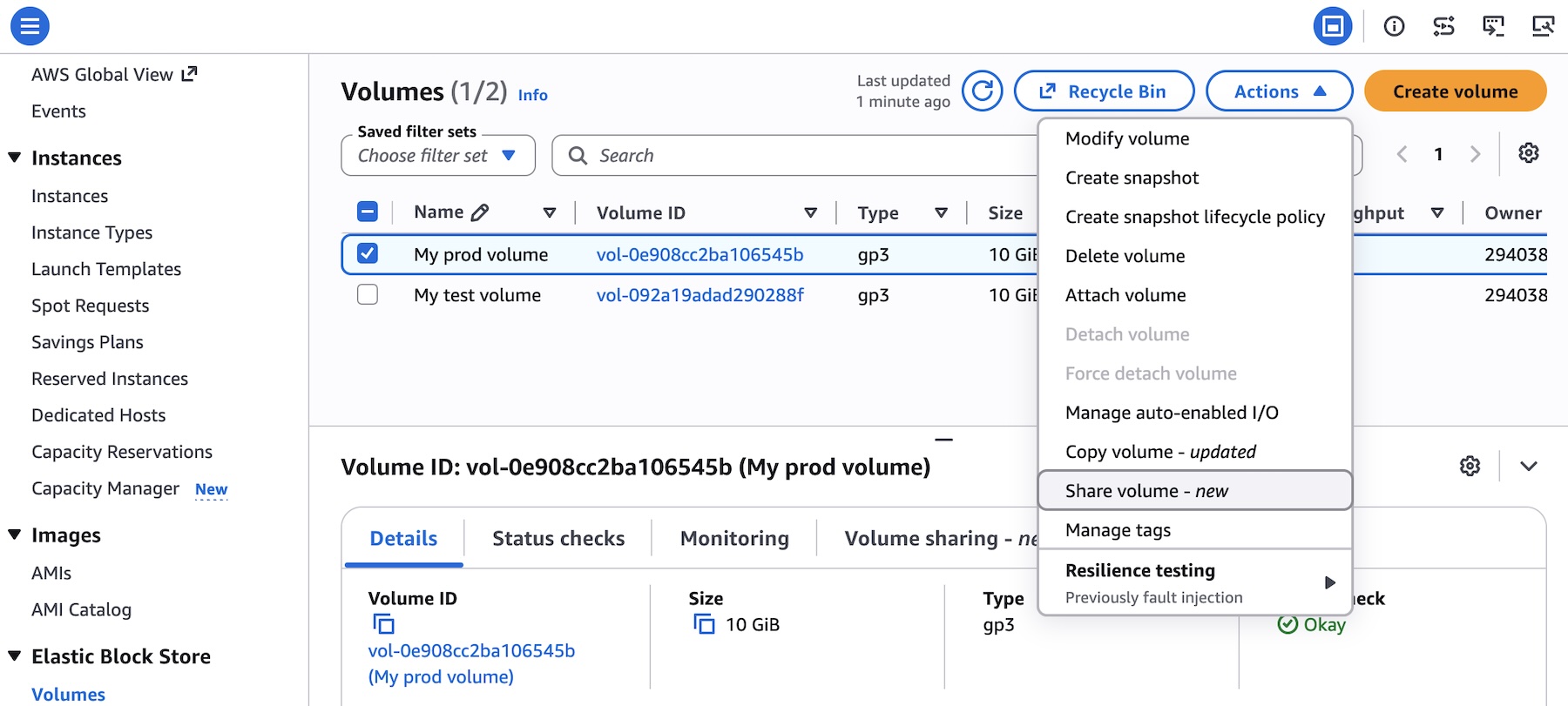
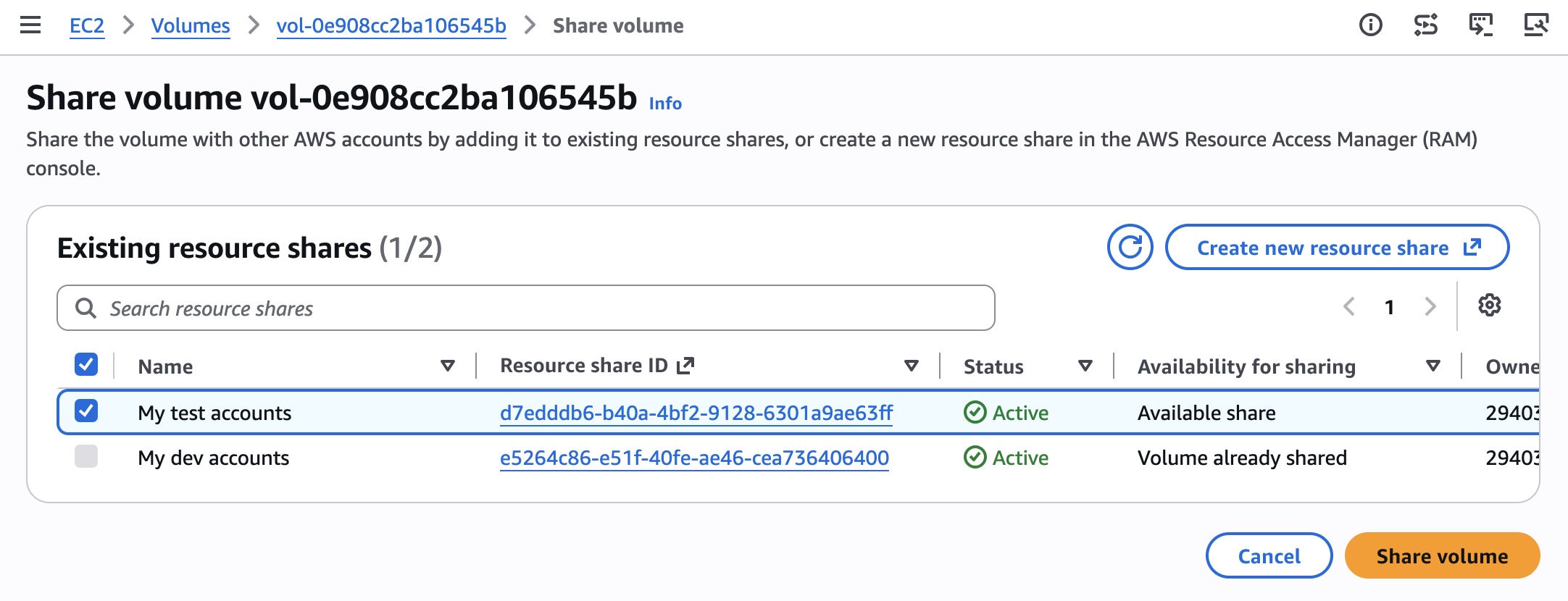
The process begins in the Amazon EBS or Amazon EC2 console, where the source account owner identifies the specific volume destined for sharing. By selecting the "Share volume" option, the administrator can integrate the resource into existing resource shares or establish a new resource share via the AWS RAM console. AWS RAM acts as the secure intermediary, enabling secure resource sharing across AWS accounts within the same organization or across independent AWS accounts, provided cross-account sharing is enabled.
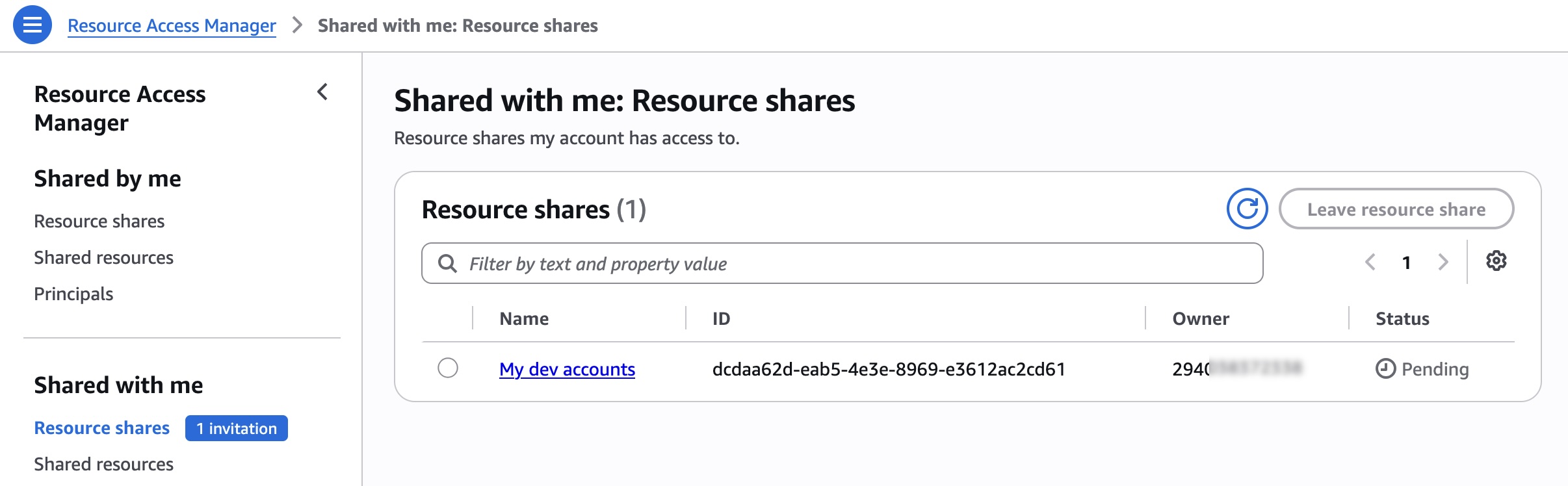
Once the resource share is configured, a confirmation status appears within the volume sharing tab of the source volume’s detail page. However, security protocols dictate that the target account must formally accept the resource share through its own AWS RAM console before any action can be taken.
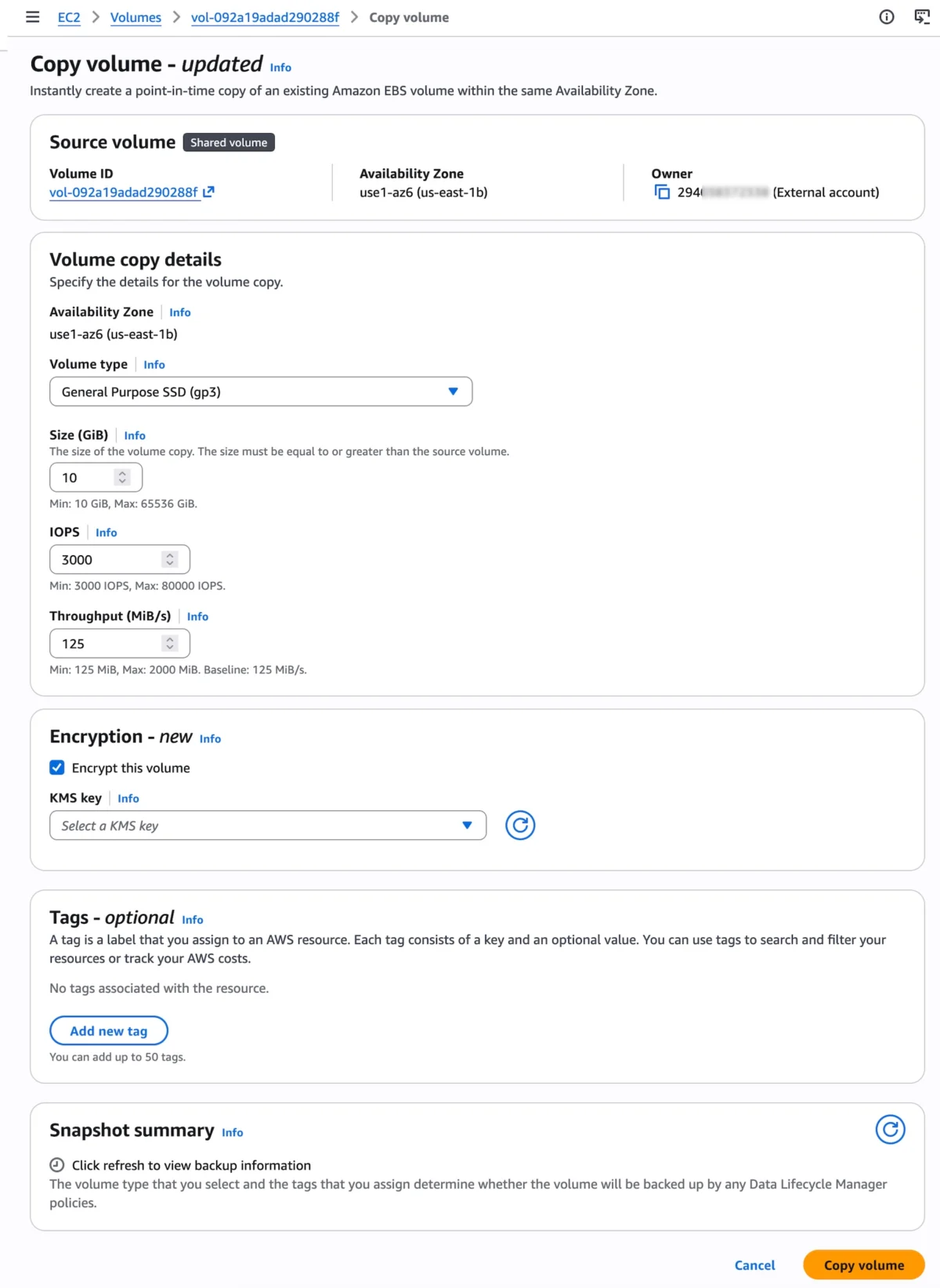
Following successful acceptance, the shared volume becomes visible within the EBS console of the target account. The recipient can then initiate a volume copy operation. During this copy phase, the target account administrator has the option to apply a unique AWS KMS encryption key managed within the target account. This capability is vital for organizations that enforce strict encryption policies where production encryption keys must never be exposed to or shared with non-production environments.
The underlying mechanics rely on robust AWS identity and access management (IAM) policies, ensuring that access can be audited, revoked, or restricted at any given moment. For teams favoring automated infrastructure management, these actions can also be executed programmatically via API calls, command-line interfaces, and specialized developer tools such as the AWS MCP Server and associated plugins designed for AI-assisted coding environments.
Strategic Implications for Enterprise Development and Testing
The launch of cross-account EBS volume clones carries profound implications for enterprise software development lifecycles (SDLC), data analytics, and quality assurance (QA) operations. In modern enterprise architecture, maintaining parity between production data and testing environments is critical for effective debugging, performance tuning, and security patching. However, achieving this parity safely has historically presented severe administrative and security challenges.
By enabling the rapid replication of production-grade storage directly into isolated testing accounts, organizations can significantly reduce environment refresh cycles. Development teams no longer need to wait hours or days for synthetic datasets to be generated or for massive snapshots to be manually restored and shared. Instead, the latest production data can be securely cloned, re-encrypted, and made available to staging environments almost instantly.
Furthermore, this capability strengthens organizational security posture. In many compliance-driven industries, such as finance, healthcare, and government contracting, exposing production data to development accounts—even inadvertently—constitutes a severe regulatory violation. The integration of target-account AWS KMS re-encryption ensures that data copied across account boundaries is instantly wrapped in the security parameters dictated by the receiving environment’s compliance framework. This minimizes the risk of data leakage, unauthorized access, and non-compliance with frameworks like HIPAA, PCI-DSS, and GDPR.
Operational Efficiency and Cost Optimization Analysis
From an economic perspective, the ability to manage storage clones across accounts introduces measurable efficiencies. Storage provisioning and management often represent a significant portion of an organization’s total cloud expenditure. Traditional methods of copying data across environments frequently resulted in redundant data storage, inflated snapshot costs, and excessive administrative overhead spent maintaining custom synchronization pipelines.
While AWS EBS Volume Clones involve underlying pricing models associated with storage consumption and data transfer, the instantaneous nature of the clone creation process reduces the labor costs and operational friction associated with manual environment maintenance. System administrators can script and automate the refreshing of test environments on a regular schedule—such as nightly or weekly—ensuring that developers are constantly working against fresh, realistic datasets without placing undue burden on IT personnel.

Additionally, because the cross-account copy leverages AWS RAM and native EBS infrastructure, organizations avoid the need to deploy and maintain third-party data replication software or custom-built EC2-based transfer proxies. This native approach simplifies the overall cloud architecture, reduces potential points of failure, and aligns with AWS Well-Architected Framework principles focusing on operational excellence, security, and reliability.
Industry Reaction and Ecosystem Integration
While independent third-party statements from external corporate entities are subject to internal corporate review cycles, industry analysts and cloud architecture professionals have widely anticipated enhancements of this nature. As multi-account architectures have become the de facto standard for enterprise cloud adoption—largely driven by the proliferation of AWS Control Tower and multi-account landing zones—native AWS services have faced increasing pressure to break down artificial barriers between accounts without compromising security.
Early feedback from preview participants and community discussions on platforms such as AWS re:Post indicates strong enthusiasm for the feature’s simplicity and its adherence to established AWS security primitives like AWS RAM and KMS. Cloud engineers have particularly praised the ability to decouple the encryption keys of the source and target accounts, noting that it solves a persistent compliance hurdle in regulated sectors.
Furthermore, the integration of programmatic access vectors—including support for modern developer workflows and AI-assisted tooling such as the AWS MCP Server—demonstrates AWS’s commitment to supporting Infrastructure as Code (IaC) and modern DevOps methodologies. Organizations managing hundreds or thousands of EBS volumes can now incorporate cross-account cloning workflows directly into their continuous integration and continuous deployment (CI/CD) pipelines, orchestrating environment provisioning with unprecedented precision.
Availability and Future Outlook
AWS has confirmed that cross-account volume clones for Amazon EBS are generally available starting immediately. The feature is deployed across all AWS Regions that currently support standard Amazon EBS Volume Clones. Organizations looking to verify regional support status can consult the official AWS Capabilities by Region documentation portal.
As cloud architectures continue to evolve toward hyper-distributed, multi-account, and highly automated paradigms, capabilities like cross-account EBS volume cloning represent foundational building blocks for enterprise scalability. By bridging operational isolation with robust security controls, AWS continues to refine the underlying mechanics of cloud storage, empowering organizations to innovate faster while maintaining uncompromising standards of data protection and regulatory compliance. System administrators and cloud engineers can begin experimenting with the new feature immediately through the Amazon EC2 and EBS management consoles, with comprehensive guidance available in the updated Amazon EBS User Guide.
