
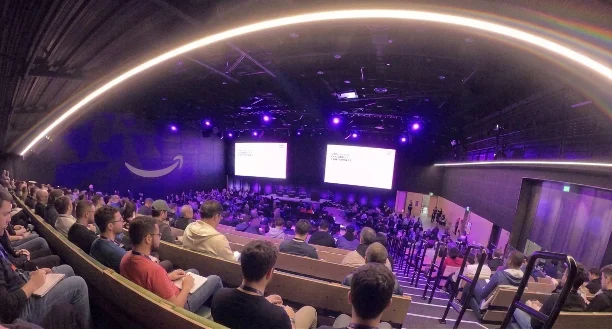

Amazon Web Services (AWS) has significantly expanded its footprint in the rapidly evolving artificial intelligence landscape through pivotal new collaborations with Anthropic, a leading AI safety and research company, and Meta, the social media giant. These strategic partnerships, highlighted in a recent AWS news roundup, underscore AWS’s commitment to empowering enterprises with cutting-edge Generative AI capabilities and validating its investment in custom silicon like AWS Trainium and Graviton processors. The announcements arrive on the heels of the Specialist Tech Conference in Seattle, an internal gathering that reinforced the critical role of community and collaborative problem-solving in accelerating AI innovation.
Deepening AI Capabilities: The Anthropic-AWS Alliance
In a move set to substantially enhance its Generative AI offerings, AWS announced a deepened product collaboration with Anthropic, integrating the company’s advanced large language models (LLMs) more closely with AWS infrastructure. This partnership is multifaceted, focusing on both the underlying hardware and the developer experience.
Central to this collaboration is Anthropic’s decision to train its most sophisticated foundation models (FMs) on AWS Trainium and Graviton infrastructure. Trainium, AWS’s custom-designed machine learning accelerator, and Graviton, its Arm-based CPU, are engineered to deliver superior performance and cost-efficiency for AI workloads. This represents a significant endorsement of AWS’s custom silicon strategy, as Anthropic will be co-engineering directly at the silicon level with Annapurna Labs, the AWS division responsible for chip design. This deep integration aims to maximize computational efficiency from the hardware up through the full software stack, potentially yielding breakthroughs in model training speed and cost-effectiveness. For enterprise customers, this translates into more powerful, efficient, and potentially more accessible AI models in the future.
Further enhancing enterprise access to Anthropic’s capabilities, Claude Cowork is now generally available within Amazon Bedrock. Amazon Bedrock is a fully managed service that offers a choice of high-performing FMs from leading AI companies via a single API, along with a broad set of capabilities to build generative AI applications with security, privacy, and responsible AI built-in. Claude Cowork transforms Claude from a mere tool into a collaborative AI partner for enterprise teams. It enables developers to integrate Anthropic’s collaborative AI capabilities directly into their existing AWS environments, ensuring data security and compliance while leveraging Claude for complex, team-based AI workflows such as content generation, code assistance, data analysis, and sophisticated reasoning tasks. This move addresses a critical need for businesses seeking to deploy AI responsibly and securely within their proprietary ecosystems.
Looking ahead, AWS also announced the impending launch of the Claude Platform on AWS. Positioned as a unified developer experience, this platform will enable developers to build, deploy, and scale Claude-powered applications entirely within the AWS ecosystem. This forthcoming offering signifies a major simplification for developers, promising to streamline the entire lifecycle of Generative AI application development, from prototyping to production deployment, without the need to manage infrastructure or move data outside of AWS. Such an integrated platform is expected to accelerate innovation and adoption of Claude’s models across a wider range of enterprise use cases.
The implications of this deepened partnership are substantial. It solidifies AWS’s position as a premier destination for Generative AI development, offering a powerful combination of advanced models, optimized infrastructure, and comprehensive managed services. For developers, it means greater choice, flexibility, and efficiency in building AI-powered applications. For enterprises, it translates into secure, scalable access to state-of-the-art AI, fostering innovation while adhering to stringent data governance requirements.
Meta’s Strategic Adoption of AWS Graviton for Agentic AI
In another landmark announcement, Meta has entered into an agreement to deploy AWS Graviton processors at an unprecedented scale, committing tens of millions of Graviton cores to power its CPU-intensive agentic AI workloads. This significant adoption by a technology titan like Meta underscores the growing industry recognition of Graviton’s capabilities for specific, demanding AI applications.
Meta, a company at the forefront of AI research and development with initiatives like the Llama family of large language models and its various AI assistants, requires robust and efficient infrastructure to support its ambitious AI roadmap. The decision to leverage AWS Graviton processors at such a massive scale targets agentic AI workloads – a class of AI systems designed to perform complex, multi-step tasks autonomously by reasoning, planning, and interacting with their environment. These workloads are characterized by their need for real-time reasoning, efficient code generation, advanced search capabilities, and intricate multi-step task orchestration. Graviton processors, known for their superior performance-per-watt and cost-efficiency compared to traditional x86-based CPUs, are particularly well-suited for these types of CPU-intensive computations.
The agreement highlights several key trends in the AI infrastructure market. Firstly, it validates AWS’s multi-year investment in developing custom silicon, demonstrating that these chips can meet the demanding requirements of hyperscale AI innovators. Secondly, it signals a strategic choice by Meta to optimize its infrastructure costs and performance for specific AI applications, moving beyond a one-size-fits-all approach. For AWS, securing such a large-scale deployment with Meta represents a significant win, showcasing Graviton’s maturity and scalability for critical AI infrastructure. It also deepens the ongoing collaboration between the two technology giants, further integrating AWS into Meta’s core operational strategy.
The broader implications are clear: as AI models become more sophisticated and complex, the underlying infrastructure must evolve to support them efficiently. Custom silicon like Graviton offers a compelling value proposition in terms of raw performance, energy efficiency, and total cost of ownership, which are crucial factors for companies operating at Meta’s scale. This partnership is expected to accelerate the development and deployment of advanced agentic AI systems, ultimately leading to more intelligent and capable AI experiences for Meta’s vast user base.
The Power of Community: Insights from the Specialist Tech Conference
These significant partnership announcements are framed by the backdrop of the Specialist Tech Conference, an internal gathering of AWS experts held in Seattle in late March. The conference served as a vital forum for AWS specialists from around the globe to converge, exchange experiences, and delve deeply into the latest advancements in Generative AI and Amazon Bedrock.
Such internal conferences are pivotal for large technology companies like AWS. They foster a strong internal community, enabling subject matter experts to engage in rigorous technical discussions, explore edge cases, and co-create solutions that often transcend individual team boundaries. The collaborative environment of the conference, focused on challenging assumptions and pushing the boundaries of current capabilities, was specifically highlighted as an "energizing" experience. As stated by Daniel Abib in the original weekly roundup, in a rapidly moving field like AI, cultivating a robust internal community is not merely beneficial but constitutes a "competitive advantage." This collective intelligence and shared expertise directly translate into better products and services for AWS customers.

The themes of the conference – Generative AI and Amazon Bedrock – directly align with the week’s major announcements. This chronological alignment suggests that the internal discussions and insights generated at such events often precede and inform strategic product developments and partnerships. By bringing together specialists who are at the forefront of implementing these technologies, AWS ensures that its strategy is grounded in real-world challenges and opportunities, fostering an environment ripe for innovation.
Broader Market Implications and AWS’s Strategic Vision
The recent developments underscore AWS’s aggressive strategy to solidify its leadership in the cloud computing and artificial intelligence domains. By forging deep alliances with AI innovators like Anthropic and hyperscale users like Meta, AWS is not only expanding its portfolio of AI services but also validating its foundational infrastructure, particularly its custom silicon.
The trend of cloud providers investing heavily in custom chips (such as AWS Trainium and Graviton, Google’s TPUs, and Microsoft’s Maia and Cobalt) reflects a broader industry shift. These chips are designed to offer optimized performance and cost-efficiency for specific workloads, giving cloud providers a significant edge in a highly competitive market. The adoption of Graviton by Meta, for instance, serves as a powerful testament to the efficacy and scalability of AWS’s hardware engineering efforts.
Furthermore, the emphasis on Amazon Bedrock as the unified platform for accessing and deploying diverse foundation models highlights AWS’s commitment to providing choice and flexibility to its enterprise customers. In a landscape where different FMs excel at different tasks, offering a curated selection within a secure, managed environment is crucial for enterprise adoption. The integration of Claude Cowork and the upcoming Claude Platform further illustrate AWS’s focus on enhancing the developer experience and facilitating the secure deployment of Generative AI at scale.
These strategic moves also position AWS strongly against rivals like Microsoft Azure (with its deep OpenAI integration) and Google Cloud (with its Gemini models). By offering a broad ecosystem of proprietary and third-party models, coupled with robust, purpose-built infrastructure, AWS aims to attract and retain developers and enterprises seeking comprehensive, future-proof AI solutions. The ongoing innovation, as evidenced by continuous updates listed on the "What’s New with AWS" page, and the active engagement through the AWS Builder Center and various events, collectively paint a picture of a dynamic and rapidly expanding AI ecosystem designed to empower builders globally.
In conclusion, AWS’s recent announcements, particularly the strengthened partnerships with Anthropic and Meta, represent a significant leap forward in its Generative AI strategy. By combining cutting-edge models with powerful, custom-designed infrastructure and a developer-centric approach, AWS is not only responding to the escalating demand for AI but actively shaping its future, promising enhanced capabilities, greater efficiency, and broader accessibility for businesses and developers worldwide. The spirit of collaboration and innovation fostered at events like the Specialist Tech Conference remains the bedrock upon which these advancements are built.
