
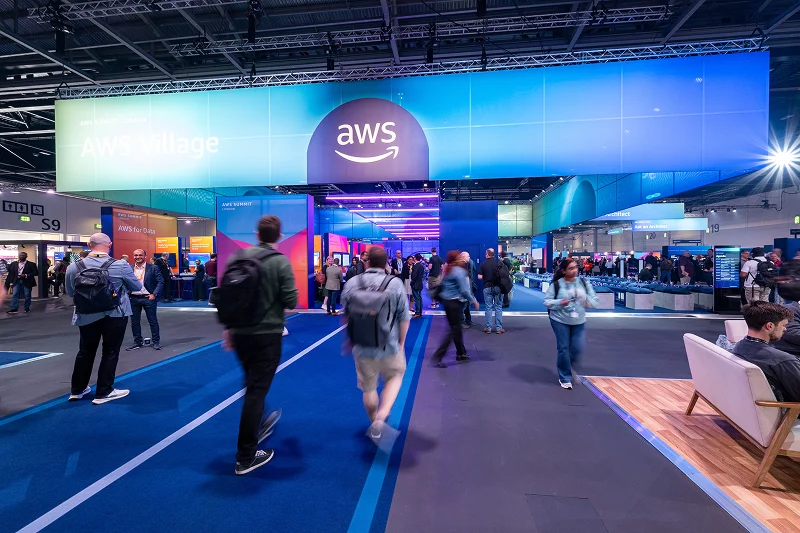

New York City recently served as the epicenter for cloud innovation, hosting the prestigious AWS Summit at the Javits Center, a gathering that united thousands of builders, customers, and AWS teams for a comprehensive agenda of announcements, live demonstrations, and in-depth technical sessions. While many immersed themselves in the vibrant atmosphere of the summit, absorbing the latest advancements in cloud technology, the event’s impact resonated far beyond its physical confines, with a significant keynote livestream made available globally on June 17, 2026. This year’s summit underscored critical shifts in the technological landscape, particularly focusing on the accelerating adoption of Artificial Intelligence (AI) in software development and the strategic imperative of robust financial operations (FinOps) in cloud environments. The keynote address, delivered by Dr. Swami Sivasubramanian, Vice President of Agentic AI, and Chet Kapoor, Vice President of Security Services and Observability, spotlighted groundbreaking capabilities across developer tools, AI infrastructure, and enhanced security paradigms, setting a clear trajectory for cloud innovation in the coming years.
The AWS Summit New York holds particular significance as a regional anchor event within AWS’s global summit series. These summits are designed to bring the cloud closer to local communities, fostering direct engagement between AWS experts and the regional developer and business ecosystems. Unlike the global scale of AWS re:Invent, the Summits provide a more focused, often localized, perspective on key trends and product launches relevant to specific geographic markets. New York, a global financial and technological hub, presents a unique backdrop for discussions on enterprise-grade cloud solutions, particularly in areas like financial services, media, and advanced analytics. The event’s structure, blending educational tracks, hands-on labs, and a vibrant expo floor, is tailored to empower attendees to deepen their cloud skills, explore new services, and connect with peers and partners. The emphasis on developer tools, AI infrastructure, and security at this year’s New York Summit reflects the most pressing challenges and opportunities facing enterprises today: how to build faster, smarter, and more securely in an increasingly complex digital world.
Reinventing Development: The Rise of AI-Native Practices
A cornerstone of the summit’s insights emerged from a detailed analysis presented by Dr. Swami Sivasubramanian, encapsulated in a pivotal blog post titled "How frontier teams are reinventing AI-native development." This publication, drawing on extensive data from experiments conducted across hundreds of Amazon engineering teams, offers an authoritative blueprint for organizations grappling with AI adoption. The findings present a compelling argument for a fundamental re-evaluation of software development methodologies, advocating for an "AI-native" approach that dramatically enhances productivity and accelerates innovation cycles.
The data presented is nothing short of transformative. A stark example cited was the complete rebuild of the Amazon Bedrock inference engine, a project initially estimated to require 30 developers over a period of 12 to 18 months. Astoundingly, a lean team of just six engineers, leveraging AI-native development practices, accomplished this feat in a mere 76 days. This represents an efficiency gain that is difficult to overstate, challenging conventional wisdom regarding project staffing and timelines. Beyond this singular achievement, the median productivity gain observed across structured pilots with Amazon Stores teams was a remarkable 4.5x in normalized deployment velocity, with some vanguard teams reporting an astounding 10x improvement. Concrete illustrations of this acceleration include the "Perfect Order Experience" initiative, which saw its feature cycle shrink from two weeks to deployment in a single afternoon, and the Worldwide Grocery team, which reduced design document creation from a five-day ordeal to a matter of hours. These metrics paint a clear picture of how AI, when strategically integrated into the development pipeline, can shatter traditional barriers to speed and efficiency.
The post distills these groundbreaking results into five actionable practices for cultivating what Dr. Sivasubramanian terms "frontier teams":
- Invest in Agent Context: Before writing any production code, teams must prioritize building comprehensive steering files, establishing clear coding standards, and structuring repositories. This foundational work provides the necessary context for AI agents to operate effectively and generate high-quality, compliant code. The implication is that "garbage in, garbage out" applies equally to AI-driven development; meticulous preparation of the environment and guidelines is paramount.
- Expect an Initial Slowdown and Push Through It: Adopting new paradigms invariably introduces friction. The initial restructuring of workflows to accommodate AI agents can lead to a temporary dip in productivity. The critical insight here is to anticipate this slowdown, prepare for it, and maintain strategic resolve to push through the learning curve. The long-term gains far outweigh the short-term adjustments.
- Maintain a Steady Backlog of Well-Scoped Tasks: To maximize the parallel processing capabilities of AI agents, a continuous stream of clearly defined, granular tasks is essential. This allows agents to operate autonomously on multiple fronts without constant human supervision, fostering a highly efficient, concurrent development environment.
- Make Intent Explicit Through Structured Specifications: Clarity of intent is crucial. Before any code generation commences, developers must articulate their requirements through structured specifications. This minimizes ambiguity, ensuring that the AI agents produce code that precisely aligns with the desired functionality and design. This practice emphasizes the enduring importance of human design and architectural clarity even in an AI-augmented workflow.
- Shift Testing Left: Integrating testing capabilities early in the development lifecycle empowers AI agents to self-correct and refine code before it progresses further into the pipeline. This proactive approach to quality assurance drastically reduces the cost and effort associated with identifying and fixing bugs in later stages, improving overall code quality and reliability.
This framework not only highlights a path to unprecedented productivity but also signals a broader industry shift. The traditional roles of developers are evolving, moving from manual coding to orchestrating AI agents and defining explicit intentions. The promised follow-up post, addressing release management, operations, security operations, and End-of-Life (EOL) upgrades, suggests a holistic vision for AI-native development that extends across the entire software lifecycle. This comprehensive approach is poised to redefine how enterprises approach software creation, maintenance, and strategic technological evolution.
Revolutionizing Cloud Financial Management with AWS FinOps Agent
Complementing the advancements in AI-native development, another significant announcement at the AWS Summit was the preview availability of the AWS FinOps Agent. This new intelligent agent is designed to empower FinOps practitioners and engineering teams with sophisticated capabilities for managing and optimizing cloud costs, a challenge that has grown in complexity with the rapid expansion of cloud adoption. The FinOps Agent represents a strategic move by AWS to address the escalating demand for automated, intelligent cloud financial governance.
The genesis of FinOps as a discipline lies in the need to bridge the gap between finance and engineering teams, fostering a culture of cost accountability and efficiency in the cloud. As organizations scale their cloud usage, managing costs becomes a complex endeavor involving numerous services, dynamic pricing models, and diverse usage patterns. Industry reports consistently highlight that a significant portion of cloud spending is often suboptimal or wasted, with estimates ranging into billions of dollars annually due to idle resources, oversized instances, and inefficient purchasing strategies. The AWS FinOps Agent directly tackles these challenges by leveraging AI and automation to provide actionable insights and streamline cost management workflows.
Key capabilities of the FinOps Agent include:
- Intelligent Cost Querying and Reporting: The agent can process complex natural language queries about AWS costs, generating detailed reports tailored for both finance and engineering teams. This democratizes access to cost data, allowing various stakeholders to gain immediate insights without needing specialized expertise in AWS billing structures.
- Proactive Optimization Opportunities: Integrating with existing AWS services like AWS Cost Optimization Hub and AWS Compute Optimizer, the FinOps Agent surfaces critical recommendations for rightsizing instances, identifying idle resources, and optimizing Savings Plans and Reserved Instance purchases. This proactive identification of inefficiencies can lead to substantial cost savings.
- Automated Action and Workflow Integration: A standout feature is the agent’s ability to take automated actions, such as opening Jira tickets based on identified optimization recommendations. This automates the process of translating insights into tangible tasks for engineering teams, accelerating the implementation of cost-saving measures.
- Anomaly Detection and Root Cause Analysis: When a cost anomaly is detected, the FinOps Agent automatically investigates the root cause, providing rapid diagnostic information. It can then post these findings to designated communication channels, such as Slack, enabling swift response and mitigation by relevant teams. This capability is crucial for preventing unexpected cost escalations and maintaining budget predictability.
The introduction of the AWS FinOps Agent signals a maturing of cloud financial management, moving beyond reactive reporting to proactive, intelligent automation. For many organizations, the manual effort involved in identifying and acting on cost optimization opportunities has been a significant bottleneck. By automating these processes, the FinOps Agent frees up valuable human resources, allowing FinOps and engineering teams to focus on strategic initiatives rather than laborious data crunching. This agent not only promises to enhance financial governance but also to foster a more cost-aware culture across engineering teams, embedding optimization into the very fabric of cloud operations. Its preview availability offers early adopters the chance to significantly refine their cloud spending strategies, setting a new benchmark for efficient cloud resource utilization.
A Glimpse into Recent AWS Innovations
Beyond the headline announcements, the past week also saw a flurry of other significant AWS launches and updates, further expanding the capabilities available to cloud users. These innovations, while perhaps not central to the summit’s keynote, collectively reinforce AWS’s commitment to continuous improvement across its vast service portfolio.
In the realm of serverless computing, enhancements to AWS Lambda were rolled out, including increased ephemeral storage for functions and expanded runtime support for specific programming languages. These updates empower developers to build more complex and resource-intensive serverless applications, pushing the boundaries of what’s possible with event-driven architectures. For instance, the larger ephemeral storage capacity facilitates more robust data processing within Lambda functions, reducing the need for external storage solutions in certain use cases.

Database services received notable upgrades, particularly for Amazon Aurora. New features focused on improved cross-region replication capabilities, offering enhanced disaster recovery options and read replica scalability for global applications. Additionally, advanced performance insights were introduced, providing database administrators with more granular visibility into query execution and resource utilization, enabling finer-tuned optimization. These improvements underscore the growing demand for highly available, performant, and globally distributed database solutions.
Security and compliance continue to be a paramount focus. Updates to AWS GuardDuty included new threat detection rules leveraging advanced machine learning models to identify emerging attack vectors, particularly those targeting containerized workloads and serverless functions. Furthermore, AWS Shield Advanced saw enhancements in its automatic application layer DDoS mitigation capabilities, providing more resilient protection for critical web applications against sophisticated denial-of-service attacks. These continuous security improvements are vital in an era of escalating cyber threats.
Developer tools also saw beneficial updates. AWS CodeWhisperer, the AI-powered coding companion, expanded its language support to include additional popular programming languages and deepened its integration with several Integrated Development Environments (IDEs). These enhancements aim to further boost developer productivity by providing more accurate and context-aware code suggestions across a broader range of development environments.
Finally, in networking and content delivery, Amazon Virtual Private Cloud (VPC) received updates enhancing traffic mirroring capabilities, allowing for more comprehensive network diagnostics and security monitoring. New VPN options were introduced, offering greater flexibility and performance for connecting on-premises networks to the AWS cloud, addressing the evolving needs of hybrid cloud architectures. These updates ensure that AWS’s foundational networking services remain robust and adaptable to complex enterprise requirements.
Broader Implications and the Road Ahead
The announcements from AWS Summit New York, particularly concerning AI-native development and the FinOps Agent, signify a critical juncture in cloud computing. The insights into AI-native development, derived from Amazon’s own rigorous internal experimentation, provide a credible and actionable framework for organizations seeking to harness the transformative power of generative AI in their software development lifecycles. The demonstrated productivity gains and accelerated delivery cycles are not merely incremental improvements but represent a paradigm shift that could fundamentally alter the economics and speed of software innovation. This shift implies a future where AI acts not just as a tool, but as an integral partner in the creative and engineering process, demanding new skill sets in prompt engineering, agent orchestration, and strategic workflow design.
The introduction of the AWS FinOps Agent is equally significant. As cloud adoption matures, cost optimization has moved from a secondary concern to a strategic imperative. The agent’s capabilities reflect a recognition that manual cost management is unsustainable at scale and that intelligent automation is the key to achieving financial efficiency in complex cloud environments. By integrating AI-driven insights with automated actions and workflow integrations, AWS is empowering organizations to gain unprecedented control over their cloud spend, turning potential liabilities into strategic assets. This move reinforces the growing importance of the FinOps discipline and AWS’s commitment to providing tools that help customers maximize their cloud investment.
Looking ahead, the convergence of AI, security, and developer productivity will continue to define the evolution of cloud services. AWS’s strategic investments in these areas reflect a deep understanding of customer needs and market trends. The continuous cycle of innovation, driven by both internal Amazon engineering and direct customer feedback, ensures that the AWS platform remains at the forefront of technological advancement. As organizations navigate the complexities of digital transformation, the tools and methodologies highlighted at the AWS Summit New York offer a clear path towards building more resilient, efficient, and innovative futures in the cloud. The global reach of AWS events and resources, from the AWS Builder Center to localized workshops, ensures that these advancements are accessible to a broad community of developers and businesses worldwide, fostering a collaborative ecosystem dedicated to pushing the boundaries of what’s possible with cloud technology.
