

In a significant stride towards democratizing advanced database capabilities and empowering developers to innovate at unprecedented speeds, Amazon Web Services (AWS) today announced the general availability of a new express configuration for Amazon Aurora PostgreSQL. This streamlined offering promises to transform the database provisioning experience, enabling users to launch a production-ready Aurora PostgreSQL serverless database in mere seconds, a direct response to the escalating demand for rapid development cycles.
A Leap Towards "Building at the Speed of Idea"
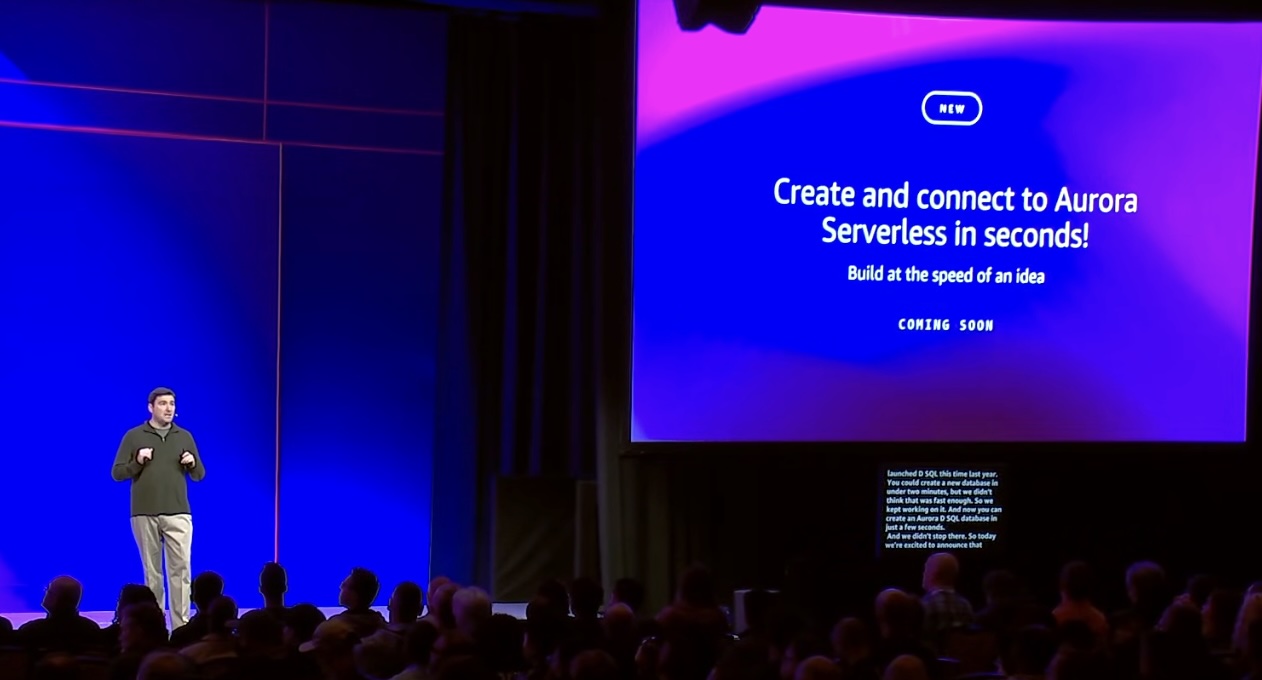
The roots of this innovation trace back to re:Invent 2025, where Colin Lazier, Vice President of Databases at AWS, articulated a compelling vision: the imperative for developers to "build at the speed of an idea." This philosophy underscores the need to minimize friction and accelerate the journey from a nascent concept to a fully operational application. At the time, AWS had already set a high bar for rapid provisioning with services like Amazon DynamoDB, allowing customers to create production-ready tables swiftly, and Amazon Aurora DSQL databases, which could be spun up in seconds. Lazier’s preview of similarly rapid provisioning for Amazon Aurora serverless databases ignited considerable interest, leading to widespread customer requests for immediate access to this game-changing capability.

The strategic emphasis on speed and agility by AWS is not merely a technical pursuit but a direct reflection of modern software development paradigms. In today’s competitive landscape, time-to-market is a critical differentiator. Businesses, from burgeoning startups to established enterprises, are constantly seeking ways to iterate faster, experiment more freely, and deploy solutions that respond dynamically to market demands. Traditional database provisioning, often fraught with complex configurations, network setups, and security considerations, has historically been a bottleneck. The express configuration directly addresses this challenge, aligning AWS’s offerings with the developer-centric ethos of rapid prototyping and continuous deployment.
Unpacking the Express Configuration: Features Designed for Velocity
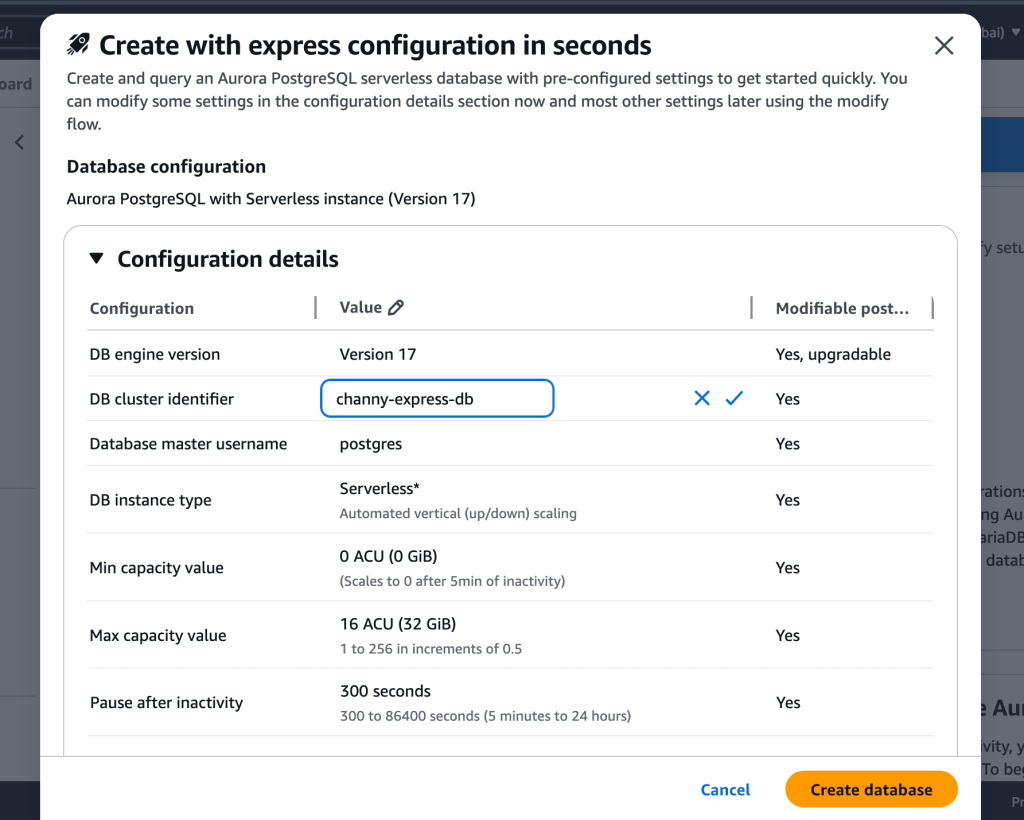
The core of the Aurora PostgreSQL express configuration lies in its simplicity and intelligent defaults. With an intuitive two-click process, developers can bypass much of the conventional setup, receiving a fully functional Aurora PostgreSQL serverless database in seconds. While designed for speed, this configuration retains essential flexibility, allowing users to modify critical settings both during and after creation. For instance, the capacity range for the serverless instance can be adjusted at the time of creation, and advanced features like read replicas or custom parameter groups can be integrated post-deployment to fine-tune performance and resilience.
Streamlined Provisioning and Flexible Customization
The express configuration comes with preconfigured defaults, carefully chosen to cater to the majority of common use cases, thereby eliminating the need for extensive knowledge of database internals or complex AWS networking. This approach drastically reduces cognitive load for developers, allowing them to focus on application logic rather than infrastructure minutiae. However, recognizing that one size does not fit all, AWS has ensured that crucial parameters remain adjustable. The ability to modify the DB cluster identifier or the serverless capacity range during creation, and later add read replicas or modify parameter groups, provides a powerful balance between ease of use and operational control. This flexibility ensures that while initial setup is instantaneous, the database can evolve to meet the growing demands and specific requirements of an application.

Bridging the Network Gap with Secure Internet Access
One of the most significant innovations within the express configuration is the removal of the initial Amazon Virtual Private Cloud (Amazon VPC) network requirement. Traditionally, deploying an AWS database necessitated configuring a VPC, subnets, security groups, and often VPNs or AWS Direct Connect for secure access from on-premises environments or developer workstations. While VPCs offer granular network control and isolation, their setup can be a barrier for new users or those prioritizing rapid prototyping.
The express configuration sidesteps this complexity by including an internet access gateway by default. This gateway facilitates secure connections from popular development tools and environments without requiring a VPN or Direct Connect. This feature is particularly impactful for individual developers, small teams, or educational settings where intricate network setups can be prohibitive. The internet access gateway is not a compromise on security; it is a carefully designed routing layer distributed across multiple Availability Zones, offering the same level of high availability as the Aurora cluster itself. It allows applications to connect securely from anywhere in the world using the standard PostgreSQL wire protocol, abstracting away underlying network complexities while maintaining robust security postures.
Enhanced Security through Passwordless Authentication
Further enhancing both security and ease of use, the express configuration sets up AWS Identity and Access Management (IAM) authentication for the administrator user by default. This enables passwordless database authentication from the outset, eliminating the need to manage and rotate traditional database passwords. IAM authentication integrates the database access control directly with AWS’s robust identity management system, providing fine-grained permissions, audit trails, and a more secure posture against credential compromise. Developers can leverage temporary credentials, reducing the risk associated with long-lived passwords and simplifying compliance efforts. This feature underscores AWS’s commitment to baking security best practices directly into the developer experience.
Accelerating the Developer Journey: Free Tier and Integrated Tooling
The introduction of Aurora PostgreSQL express configuration is part of a broader AWS strategy to accelerate the developer journey from ideation to production. This strategy is multifaceted, encompassing financial accessibility, seamless integration with popular development tools, and leveraging artificial intelligence to augment coding capabilities.
Lowering Barriers with AWS Free Tier Inclusion
At re:Invent 2025, AWS announced significant enhancements to its Free Tier program, offering up to $200 in AWS credits to new customers. This includes an initial $100 credit upon sign-up, with an additional $100 earnable by utilizing services such as Amazon Relational Database Service (Amazon RDS), AWS Lambda, and Amazon Bedrock. Crucially, Amazon Aurora is now available across a broad set of eligible Free Tier database services, making it more accessible than ever for developers to gain hands-on experience without upfront costs. This financial incentive, combined with the express configuration’s ease of deployment, significantly lowers the barrier to entry for experimenting with and adopting one of AWS’s most powerful database services.
Seamless Integration with Modern Development Workflows
Beyond financial accessibility, AWS is deeply integrating Aurora with modern development workflows and popular developer platforms. Once an Aurora database is created via express configuration, users can directly query it from AWS CloudShell, a browser-based shell that provides command-line access to AWS resources. This immediate accessibility streamlines testing and development, allowing developers to interact with their database without leaving the AWS console.
A significant focus has been placed on integrations with platforms embraced by the developer community. AWS announced integrations with the Vercel Marketplace, allowing developers to create and connect to an AWS database directly from Vercel in seconds. This partnership extends to v0 by Vercel, an AI-powered tool designed to transform natural language ideas into production-ready, full-stack web applications in minutes. This integration now includes Aurora PostgreSQL, Aurora DSQL, and DynamoDB databases, enabling developers to leverage AI assistance to build applications backed by robust AWS databases. Furthermore, existing databases created through the express configuration can be seamlessly connected with Vercel, ensuring continuity and flexibility. This move reflects a broader trend of bringing powerful database capabilities directly into developer-centric environments, abstracting away underlying infrastructure complexities.
Another notable integration is with Kiro powers for Aurora PostgreSQL. Kiro, an AI agent-assisted development platform, enables developers to build Aurora PostgreSQL-backed applications faster by leveraging intelligent code generation and contextual assistance. Through Kiro’s IDE or its powers webpage, developers can install and utilize this integration with a single click, further exemplifying AWS’s commitment to "unlocking the ability to build at the speed of an idea" through AI-enhanced tooling. These integrations with widely adopted frameworks, AI assistant coding tools, and development environments are pivotal in realizing the vision of accelerated development.
Operational Simplicity and Global Reach
The express configuration for Aurora PostgreSQL serverless inherits all the robust operational benefits of the underlying Aurora architecture, ensuring high availability, scalability, and cost-efficiency.
High Availability and Scalability Inherited
Despite its rapid deployment, an Aurora cluster created with express configuration provides all the advanced features expected of Aurora PostgreSQL serverless. This includes deploying additional read replicas for enhanced availability and read scaling, automated failover capabilities to minimize downtime, and the inherent auto-scaling nature of serverless databases. The database automatically starts up, shuts down, and scales capacity up or down based on the application’s real-time needs, removing the operational burden of capacity planning and management. This allows developers to build applications that can handle fluctuating workloads without manual intervention, ensuring consistent performance and reliability.
Cost-Efficiency with Serverless Billing
The economic model for Aurora PostgreSQL serverless, including those provisioned via express configuration, is based on consumption. Users pay only for the capacity consumed, measured in Aurora Capacity Units (ACUs), billed per second, even from zero capacity. This pay-as-you-go model is highly cost-efficient for applications with variable or unpredictable workloads, as it eliminates the need to provision for peak capacity and minimizes costs during periods of low activity. This aligns perfectly with the "speed of an idea" philosophy, as it allows developers to experiment and deploy without incurring significant fixed costs, making advanced database technology accessible to a broader audience.
Widespread Availability
The Aurora PostgreSQL serverless database with express configuration is now generally available in all AWS commercial Regions. This widespread availability ensures that developers globally can leverage this streamlined provisioning experience, deploying databases in geographical proximity to their users for optimized performance and compliance. AWS’s commitment to a global footprint ensures that this innovation benefits a diverse and expansive developer ecosystem.
Strategic Implications: Empowering Innovation and Digital Transformation
The general availability of Aurora PostgreSQL express configuration carries significant strategic implications for the cloud database market and the broader landscape of digital transformation. It represents a potent acceleration in AWS’s efforts to democratize access to advanced database technologies, making high-performance, scalable, and resilient databases accessible to a wider spectrum of developers, regardless of their prior AWS experience or infrastructure expertise.
For startups and individual developers, this innovation drastically lowers the barrier to entry, allowing them to rapidly prototype and launch sophisticated applications without the overhead of complex infrastructure setup. This could foster a new wave of innovation, as creative ideas can be brought to fruition with unprecedented speed. For larger enterprises, the express configuration offers a valuable tool for accelerating proof-of-concept development, enabling development teams to experiment with new features or microservices without lengthy provisioning processes. It supports agile methodologies by enabling faster iteration cycles and reducing the time-to-market for new products and services.
Furthermore, the integration with AI-powered development tools like v0 by Vercel and Kiro highlights a clear trend: the future of software development is increasingly augmented by artificial intelligence. By seamlessly weaving Aurora into these intelligent environments, AWS is positioning its database services at the forefront of this evolution, empowering developers to leverage natural language and AI assistance to build complex, data-driven applications with minimal manual coding. This synergy between powerful database services and AI-driven development tools has the potential to fundamentally reshape how applications are conceived, designed, and deployed.
The decision to offer an internet access gateway and default IAM authentication, while potentially seen as a deviation from traditional VPC-centric deployments, reflects a nuanced understanding of developer needs. It acknowledges that initial friction can be a significant deterrent, and by providing secure, simplified access, AWS aims to onboard developers faster, confident that robust security mechanisms are still in place. This move showcases AWS’s agility in adapting its offerings to meet evolving user expectations, balancing enterprise-grade capabilities with developer-friendly experiences.
Getting Started: A Practical Guide
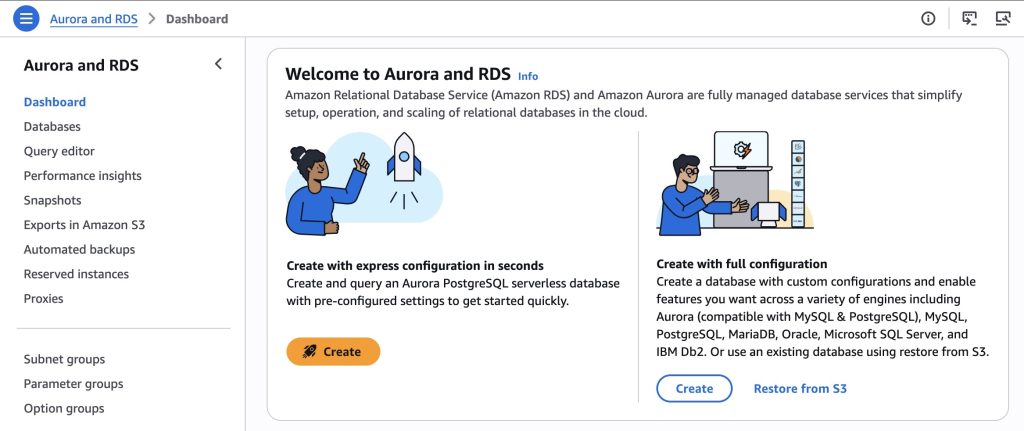
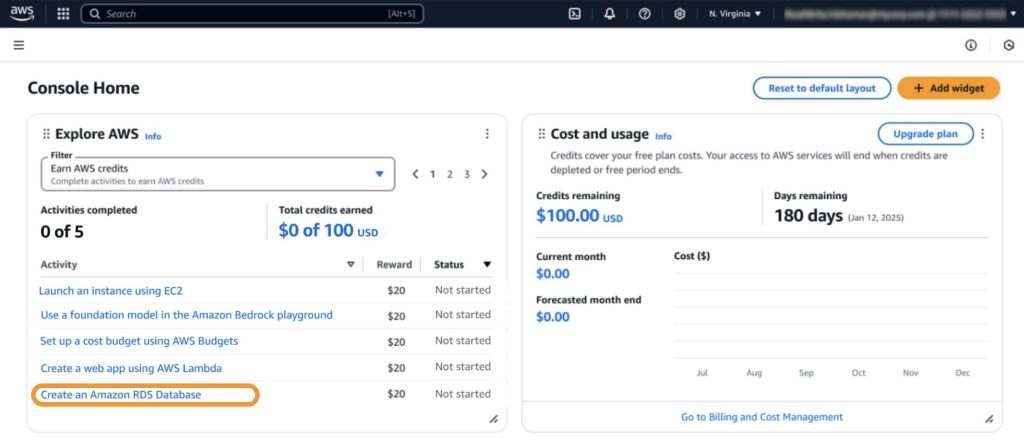
To begin leveraging the Aurora PostgreSQL serverless database with express configuration, users can navigate to the Aurora and RDS console within AWS. From the Dashboard, selecting "Create" with the rocket icon initiates the streamlined creation process. The "Create with express configuration" dialog box presents pre-configured settings, allowing for quick review and optional modifications to the DB cluster identifier or capacity range before choosing "Create database."
For those who prefer programmatic control, the AWS Command Line Interface (AWS CLI) or AWS SDKs can be used with the --with-express-configuration parameter. This single API call provisions both the cluster and an instance, making it ready for queries in seconds. An example CLI command for creating a cluster would be: aws rds create-db-cluster --db-cluster-identifier your-express-db --engine aurora-postgresql --with-express-configuration.
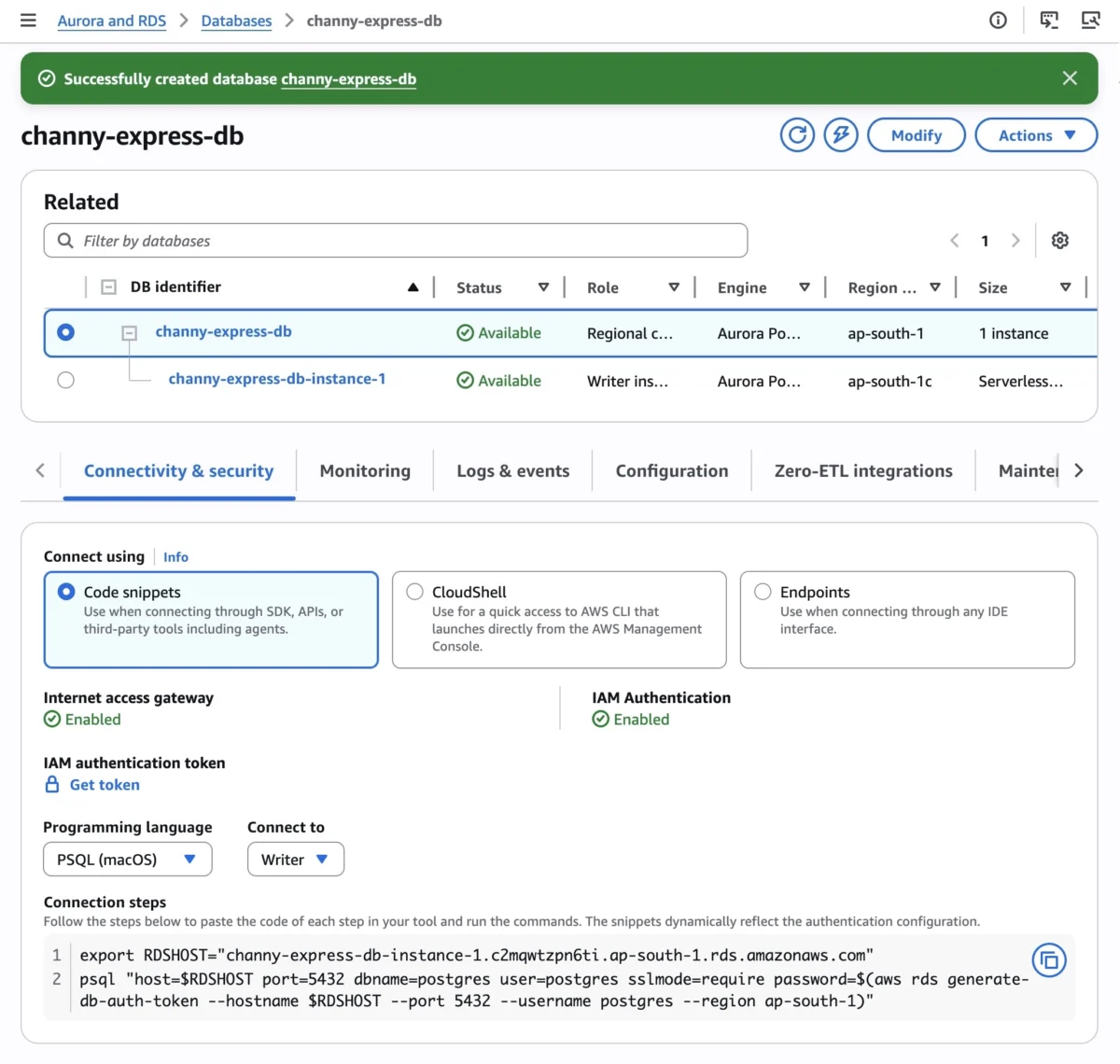
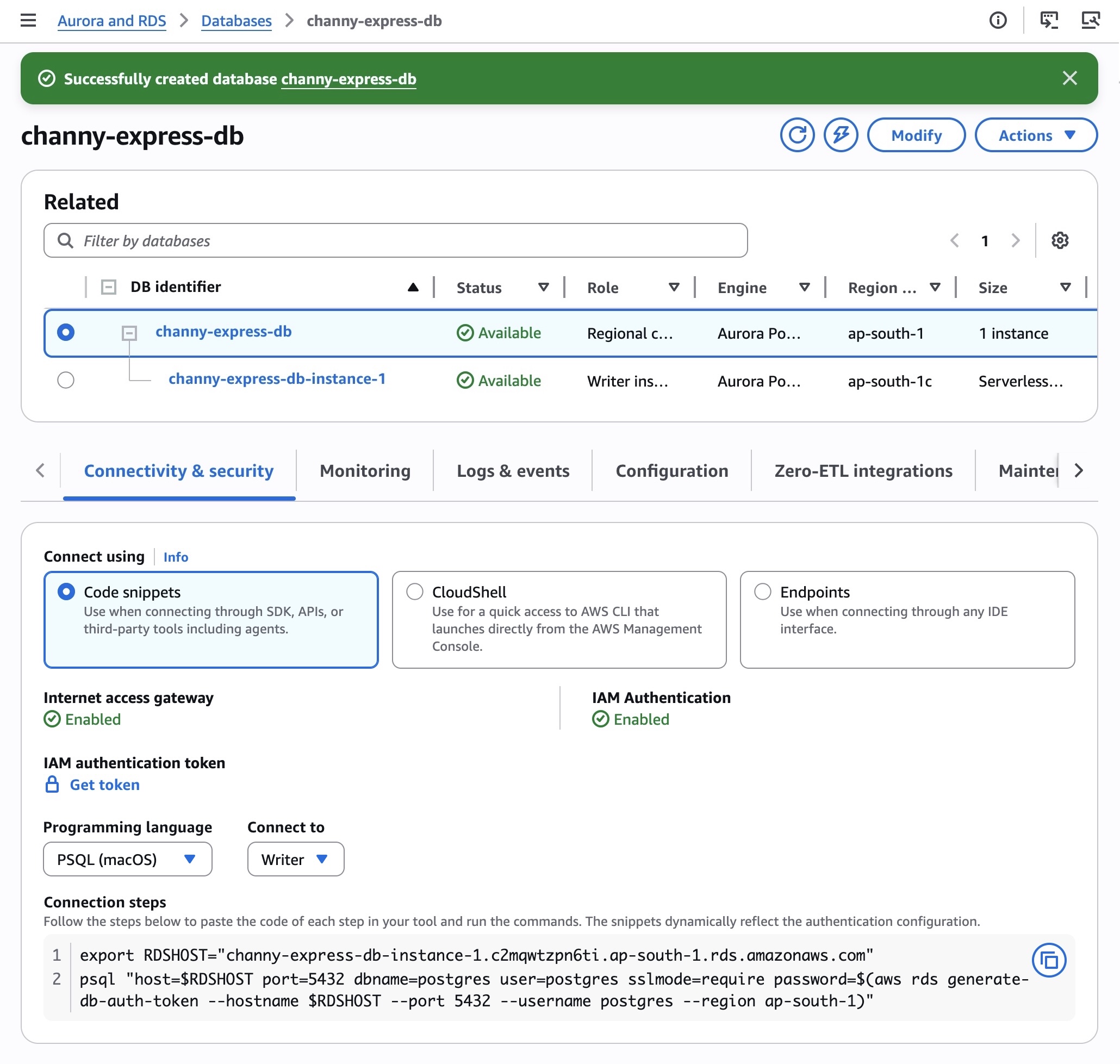
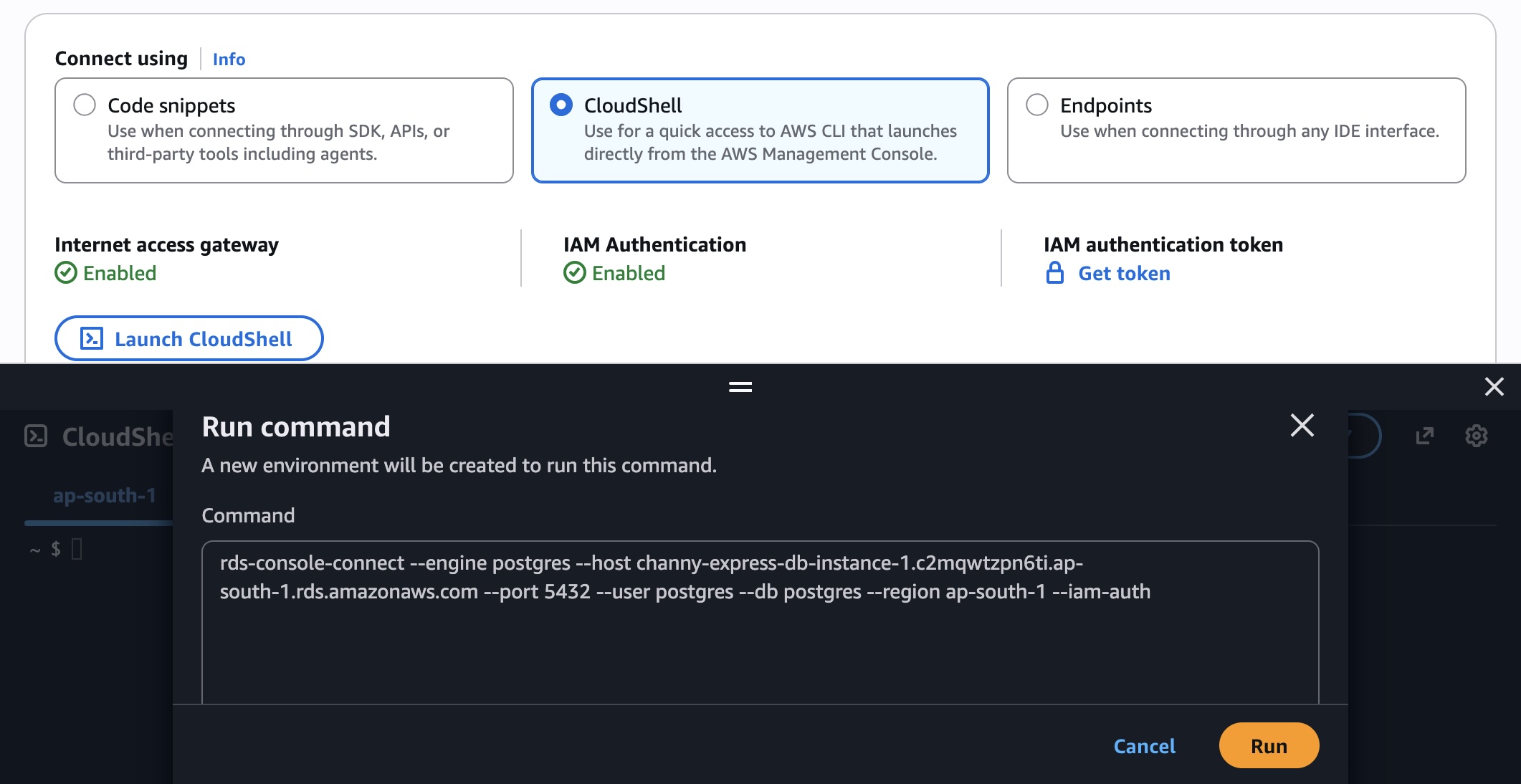
Upon successful creation, which typically takes mere seconds, the database status transitions to "Available." The "Connectivity & security" tab in the console provides various connection options, including dynamically generated code snippets for popular programming languages (e.g., Python, Node.js, JDBC), direct access via AWS CloudShell with pre-populated commands, and temporary IAM authentication tokens for tools like pgAdmin that require username/password credentials. This comprehensive suite of connection methods ensures that developers can easily integrate their new Aurora database into their chosen development environment.
Looking Ahead
The general availability of Aurora PostgreSQL express configuration marks a significant milestone in AWS’s ongoing mission to simplify cloud adoption and accelerate innovation. By reducing the complexity and time required to provision advanced database infrastructure, AWS empowers developers to focus on what they do best: building groundbreaking applications. As AWS continues to integrate its database services with cutting-edge AI tools and developer platforms, the vision of "building at the speed of an idea" moves closer to universal reality. AWS encourages users to explore this new capability in the Aurora and RDS console and provide feedback through AWS re:Post for Aurora PostgreSQL or their usual AWS Support contacts, ensuring that future enhancements continue to meet the evolving needs of the global developer community.
