

Amazon Web Services (AWS) today announced a significant enhancement to its generative artificial intelligence (AI) offerings with the launch of a new console experience for Amazon Bedrock. This refreshed interface, specifically optimized for the bedrock-mantle inference engine, is designed to empower developers and enterprises to experiment, iterate, and scale their AI applications with unprecedented efficiency, leveraging the latest foundation models (FMs) including advanced GPT, Claude, and various open-weight models. The update underscores AWS’s commitment to providing a robust, secure, and high-performance platform for the rapidly evolving field of generative AI, streamlining workflows from initial evaluation to full production deployment.
The new console experience represents a pivotal step in democratizing access to cutting-edge AI, addressing the growing demand for intuitive tools that simplify complex model interactions. At its core, this console is engineered to work seamlessly with the bedrock-mantle endpoint, AWS’s next-generation inference engine renowned for its high performance, reliability, and stringent security protocols. A key differentiator is its broad API compatibility, supporting the OpenAI Responses API, OpenAI Chat Completions API, and the Anthropic Messages API. This strategic integration ensures that developers can leverage familiar API protocols, significantly easing the migration of existing AI workloads and accelerating the development of new applications across diverse model ecosystems.
A Deeper Dive into the Enhanced Console Features
The redesigned console is not merely a cosmetic update; it introduces a suite of functionalities aimed at enhancing every stage of the generative AI lifecycle. From model discovery and comparative analysis to project management and seamless application integration, AWS has meticulously crafted a user experience that prioritizes speed, clarity, and control.
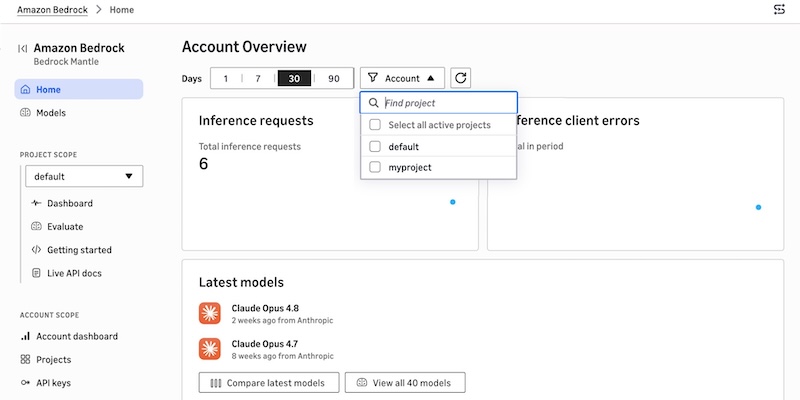
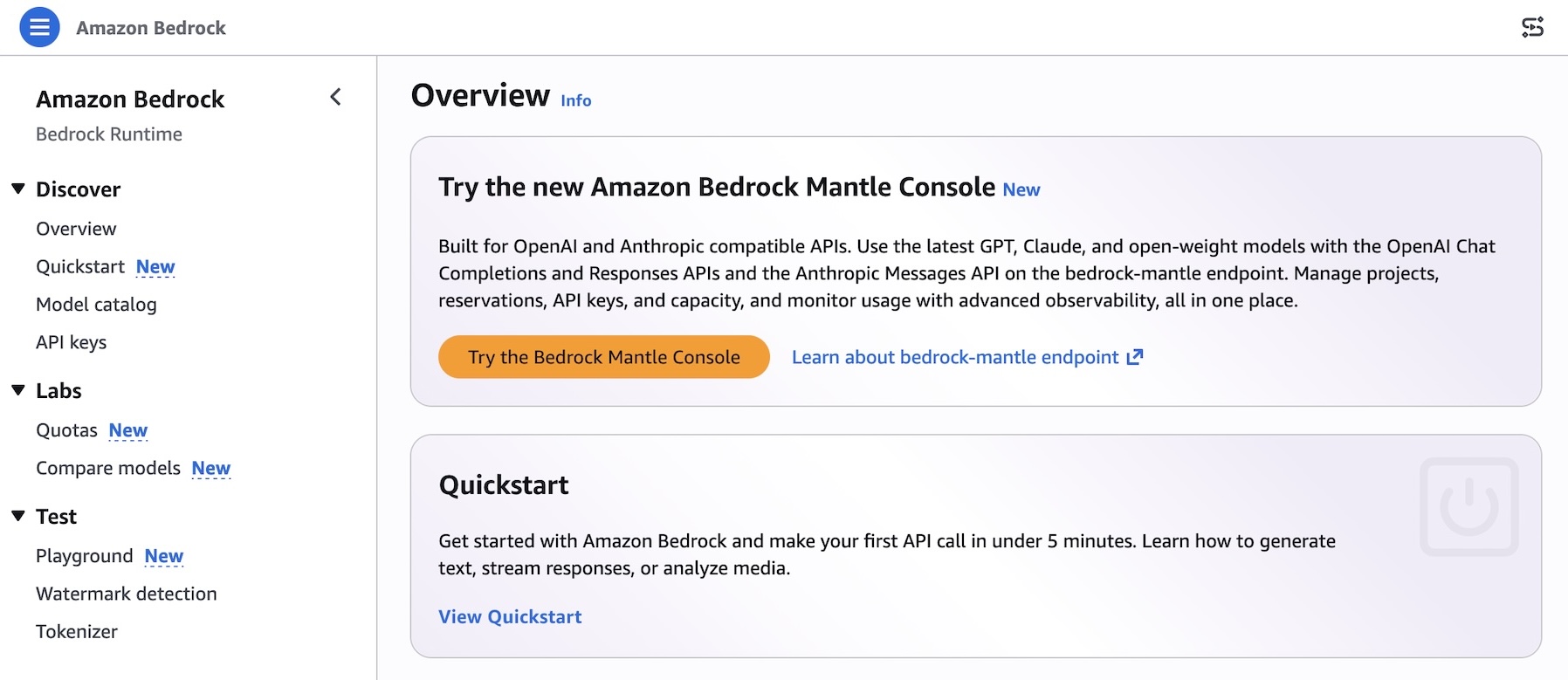
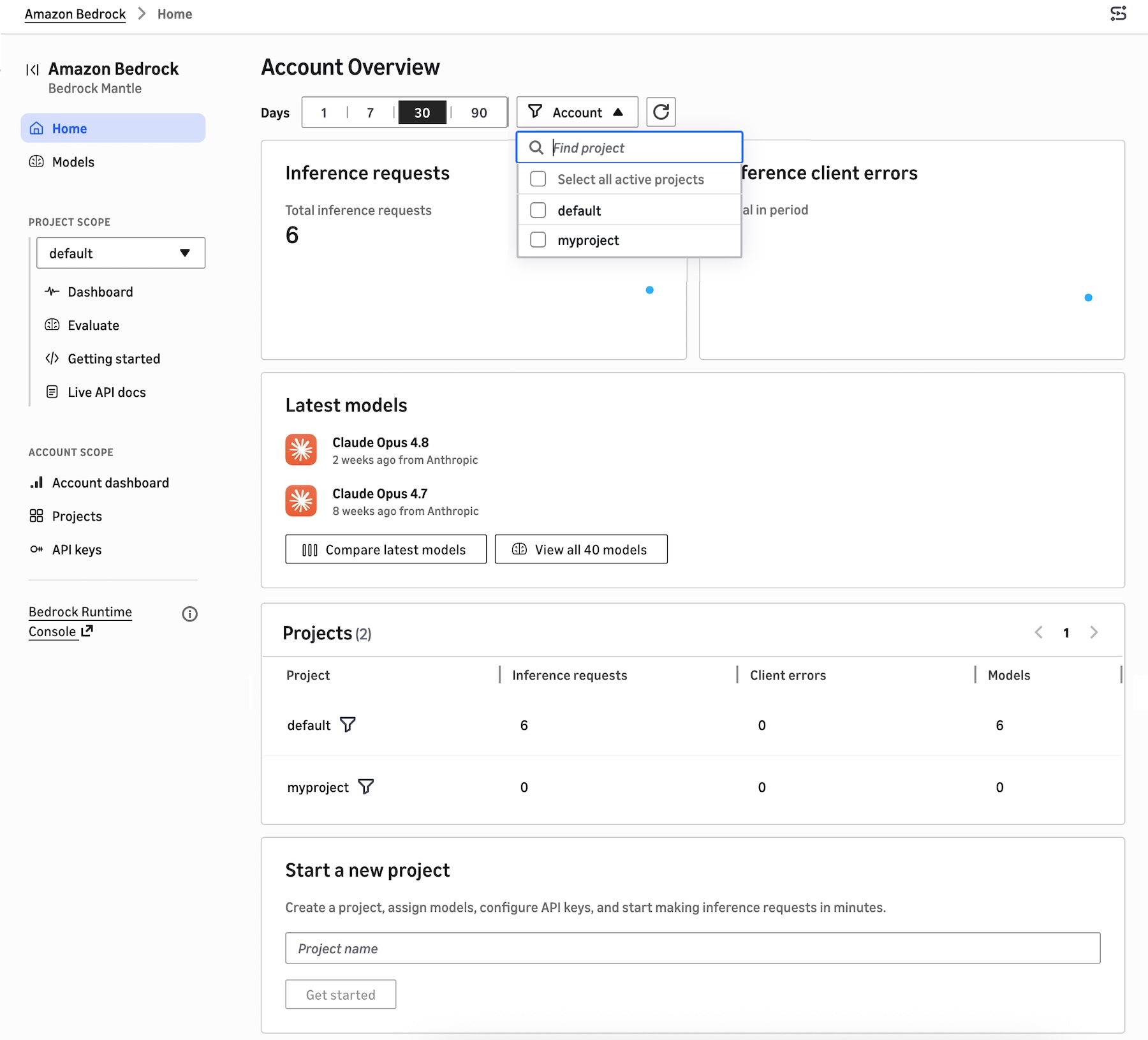
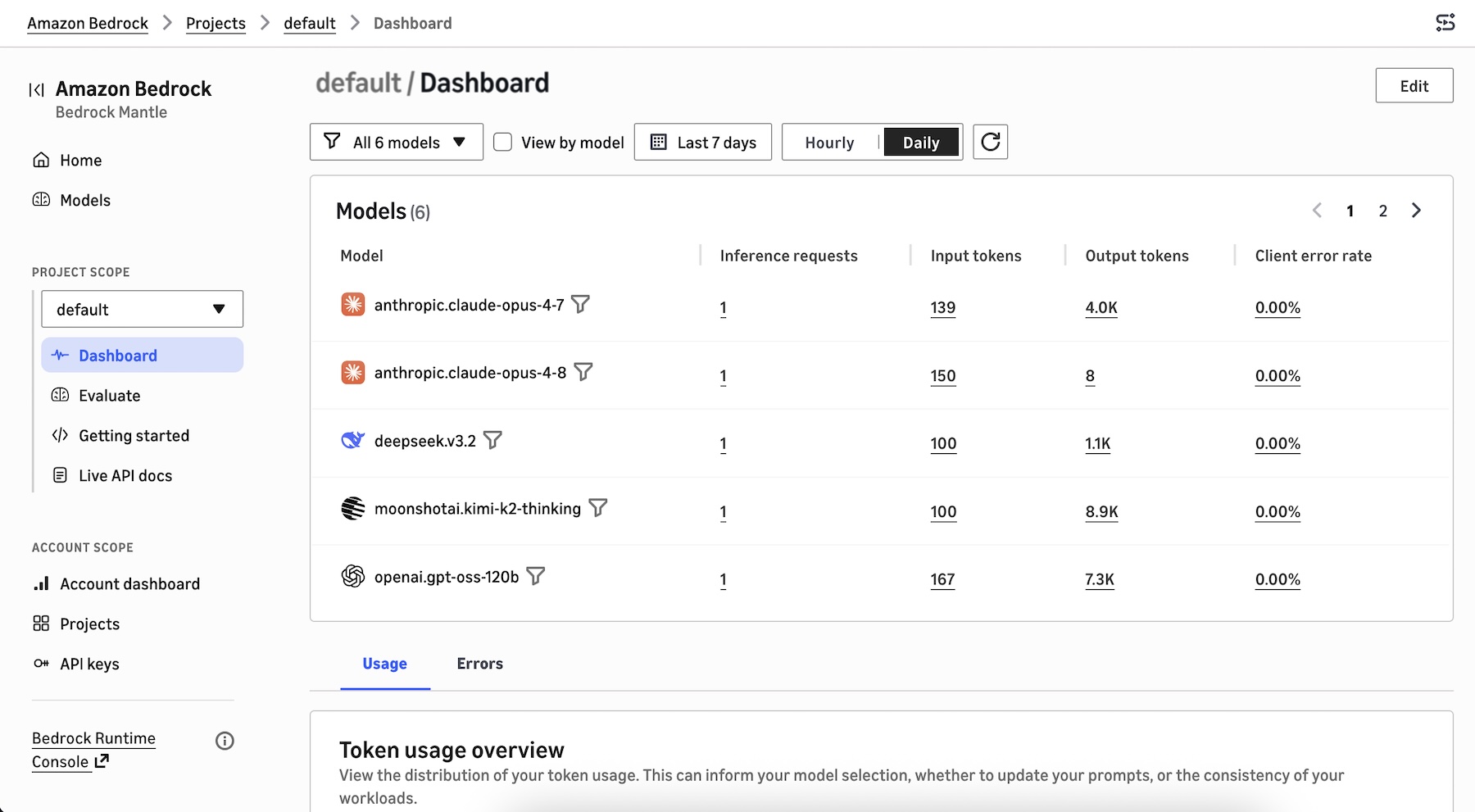
One of the immediate benefits for users is the streamlined process to get started. Accessible directly via a dedicated new console link or by selecting "Try the Bedrock Mantle Console" within the existing Amazon Bedrock interface, the pathway to leveraging these advanced capabilities is straightforward. Upon entry, users are greeted with a comprehensive, project-based dashboard. This centralized hub provides an at-a-glance overview of critical operational metrics, including inference requests and error rates categorized by date range, a list of recently utilized models, and a detailed project directory. This holistic view empowers developers and project managers to monitor their AI initiatives effectively, enabling rapid identification of trends and areas for optimization. The dashboard also facilitates the quick setup of new projects, allowing users to assign models, configure API keys, and initiate inference requests within minutes, drastically reducing setup time and accelerating the development cycle.

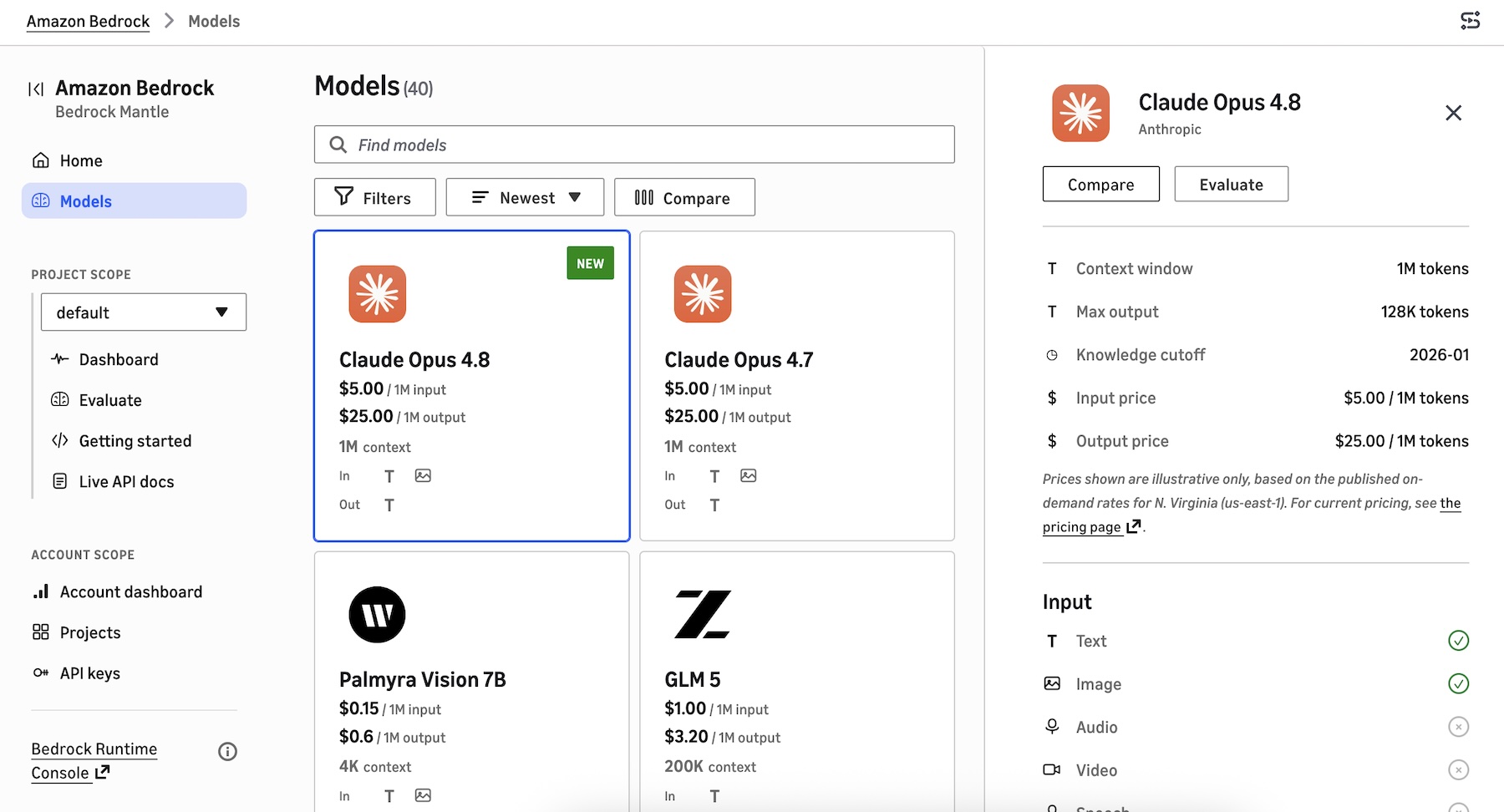
The new model catalog stands out as another crucial enhancement. It meticulously curates and presents the latest GPT, Claude, and open-weight models supported by the bedrock-mantle engine. Each model is accompanied by a detailed profile, offering insights into its unique features, token limits, pricing structures, input/output capabilities, and regional availability. This level of transparency is vital for informed decision-making, allowing users to select the most appropriate model for their specific use cases based on technical specifications and cost considerations. Furthermore, the console introduces a powerful comparison tool, enabling users to evaluate up to three models simultaneously in a single, consolidated view. This side-by-side comparison capability is instrumental for prompt engineering and model selection, allowing developers to assess response quality, latency, and cost implications efficiently before committing to a particular model.
For ongoing project management and performance optimization, the project dashboard offers granular insights into model usage. It provides a detailed breakdown of token consumption, including total token usage, tokens per minute, inference requests per minute, and tokens per inference request. Such granular data is invaluable for fine-tuning model selection, optimizing prompts for efficiency, and ensuring workload consistency, ultimately contributing to better cost management and performance scaling.
Streamlined Evaluation and Application Development
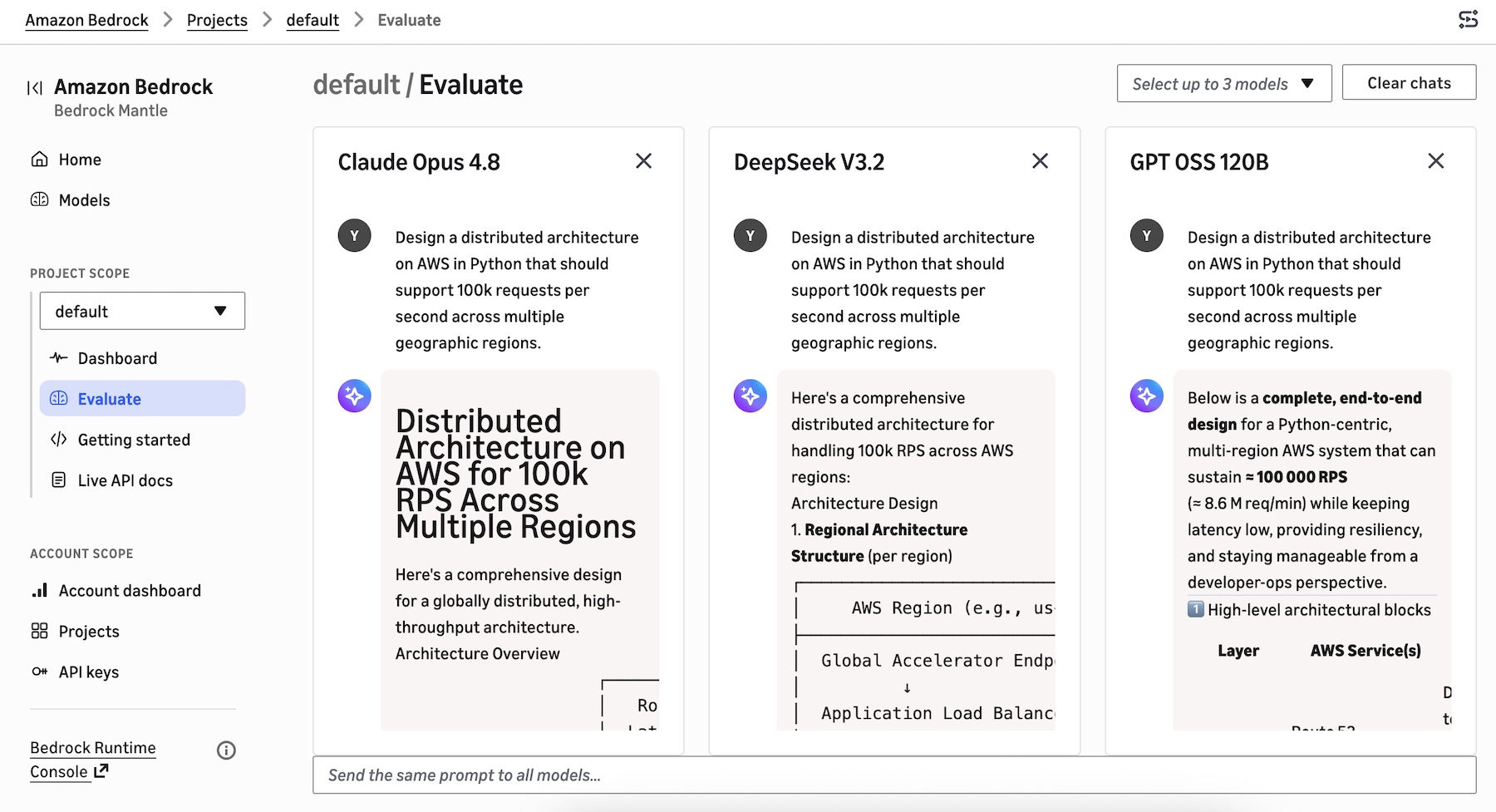
Beyond monitoring, the new console significantly enhances the model evaluation process. Developers can now select up to three different models to evaluate concurrently, comparing their responses to identical prompts side-by-side. This feature is critical for iterative prompt refinement and for identifying the most effective model for specific tasks, moving beyond theoretical benchmarks to practical, real-world performance assessment.
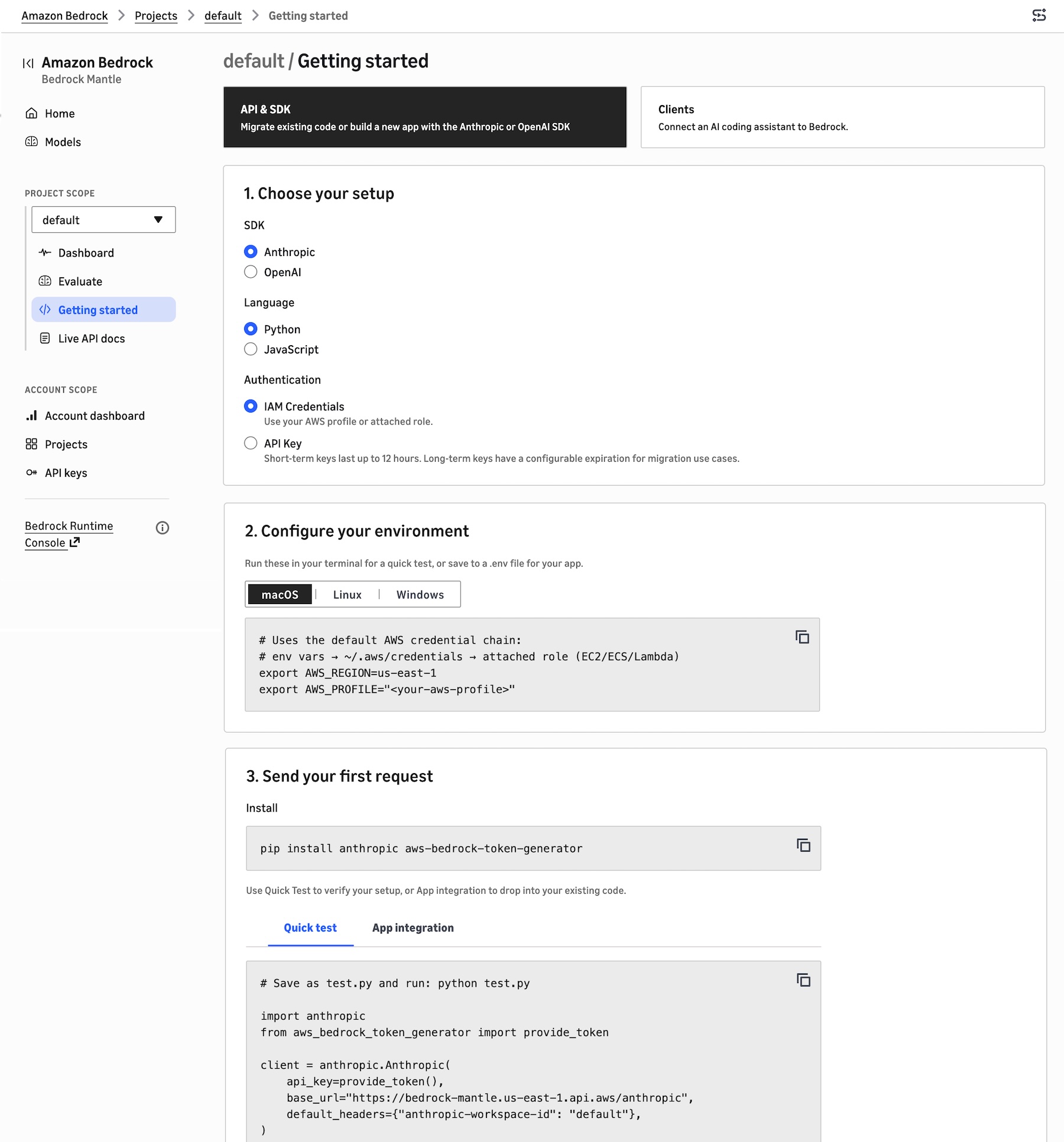
Building applications with generative AI is also made more accessible through the "Getting started" section. This segment guides users through various integration pathways, whether migrating existing code, building new applications using the Anthropic or OpenAI SDKs, or connecting popular AI coding assistants to Bedrock. The console provides readily available environment code, enabling quick terminal tests or saving configurations to .env files for seamless application integration. Sample code snippets for sending initial requests are also provided, allowing developers to verify their setup instantly.
The "API & SDK" section further simplifies the development process. Users can select their preferred SDK (Anthropic or OpenAI), programming language, and authentication method. The console then dynamically generates environment code tailored to these selections, facilitating quick testing and integration. For those leveraging AI coding agents, the "Clients" section offers detailed instructions on connecting various tools like Claude Code, Cline, Codex, Cursor, or OpenCode to the bedrock-mantle engine. It outlines the steps for installation, configuring AWS IAM credentials or Bedrock API keys, setting environment variables, and routing requests through Bedrock, ensuring broad compatibility and ease of use.
Comprehensive Documentation and Backward Compatibility
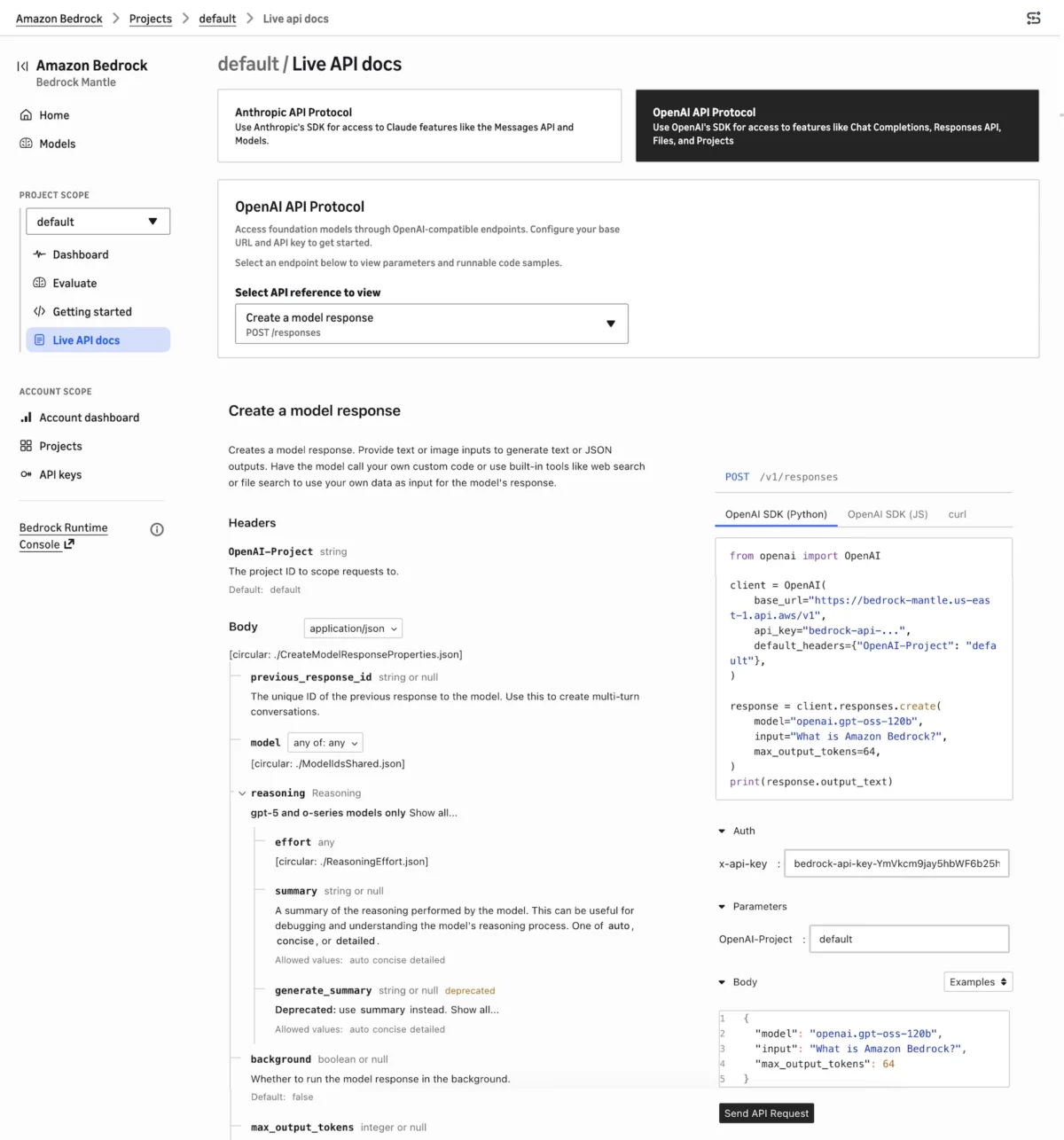
To ensure developers have all necessary resources, the console includes "Live API docs." This feature provides access to both Anthropic API Protocol (for Claude model features like the Messages API) and OpenAI API Protocol (for features like Responses API). These API references are intelligently prefilled with project-specific details, including the selected model ID, AWS Region, bedrock-mantle endpoint URL, and API key references, updating dynamically as settings change. This context-aware documentation dramatically reduces the learning curve and potential for configuration errors.
Importantly, AWS has ensured backward compatibility and parallel functionality. Users can still access the existing Bedrock console to manage fully-managed features such as Agents, Knowledge Bases, Guardrails, fine-tuning, or the InvokeModel and Converse APIs, which run on the bedrock-runtime endpoint. This dual approach provides flexibility, allowing users to choose the appropriate console experience based on their specific needs and the features they wish to utilize.
Chronology and Strategic Context of Amazon Bedrock
Amazon Bedrock was initially unveiled in April 2023, marking AWS’s significant entry into the managed service space for foundation models. Its general availability followed in September 2023. Since its inception, Bedrock has rapidly evolved into a cornerstone of AWS’s AI strategy, aiming to provide enterprises with a secure, scalable, and fully managed platform to build and deploy generative AI applications. The service was designed to abstract away the complexities of managing underlying infrastructure, allowing developers to focus on innovation. This new console experience, launched today, represents a major iterative improvement, directly responding to developer feedback and the rapid advancements in the generative AI landscape. It solidifies Bedrock’s position as a comprehensive platform, moving beyond basic model invocation to offer sophisticated tools for management, evaluation, and seamless integration.
Industry Implications and Competitive Landscape
The introduction of this enhanced console experience is poised to have significant implications for the broader generative AI industry. The market for generative AI is experiencing exponential growth, with various reports estimating it to reach hundreds of billions of dollars within the next decade. Enterprises across sectors are eager to harness the power of FMs for diverse applications, from content creation and code generation to customer service and data analysis. However, the path to adoption is often fraught with challenges, including model proliferation, complex API integrations, performance bottlenecks, and security concerns.
AWS’s move directly addresses these pain points. By standardizing API compatibility with widely used protocols like OpenAI and Anthropic, AWS is making it easier for developers to port existing applications or build new ones without being locked into a single ecosystem. This open approach fosters greater flexibility and choice, which is highly valued by the developer community. The bedrock-mantle engine, with its focus on high performance and security, is crucial for enterprise-grade AI applications where reliability and data protection are paramount.
This strategic update also sharpens AWS’s competitive edge against other major cloud providers like Google Cloud’s Vertex AI and Microsoft Azure AI Studio. All these platforms are vying for market share in the rapidly expanding generative AI space, and developer experience often emerges as a key differentiator. The intuitive design, comprehensive toolset, and strong focus on usability in the new Bedrock console could attract a broader base of developers, from startups to large enterprises, accelerating their journey from concept to production. Industry analysts suggest that by prioritizing developer productivity and providing robust tools for model evaluation and project management, AWS is strengthening its position as a preferred partner for enterprise AI adoption. The ability to monitor token usage and inference requests in detail also provides enterprises with the necessary tools for cost optimization, a critical factor for large-scale AI deployments.
Regional Availability and Future Outlook
The new console experience is immediately available across a wide array of AWS Regions where the bedrock-mantle endpoint is offered. These include US East (N. Virginia, Ohio), US West (Oregon), Asia Pacific (Jakarta, Mumbai, Sydney, Tokyo), Europe (Frankfurt, Ireland, London, Milan, Stockholm), and South America (São Paulo). AWS has indicated that users should refer to the official documentation for future updates regarding additional regional availability, signaling a continuous expansion of its generative AI capabilities globally.
This rollout reflects AWS’s ongoing commitment to evolving its Bedrock service, ensuring it remains at the forefront of generative AI innovation. The emphasis on developer-centric tools, performance, security, and broad model compatibility positions AWS Bedrock as a powerful platform for enterprises seeking to integrate advanced AI capabilities into their operations. As the generative AI landscape continues to mature, further enhancements and expanded model offerings are anticipated, solidifying Bedrock’s role as a foundational service for the next generation of intelligent applications.
AWS encourages users to explore the new Amazon Bedrock console and provide feedback through AWS re:Post for Amazon Bedrock or via their usual AWS Support channels, ensuring a continuous cycle of improvement driven by community insights. The launch of this advanced console experience marks a significant milestone, promising to unlock new possibilities for innovation and efficiency in the burgeoning field of generative AI.
