

Amazon Web Services (AWS) today announced a significant update to its Amazon Bedrock service, introducing a new console experience designed to dramatically simplify the experimentation, iteration, and scaling of applications utilizing the latest generative AI models. This revamped console, optimized for the bedrock-mantle endpoint, promises to accelerate developer workflows by offering a high-performance, reliable, and secure environment for interacting with cutting-edge large language models (LLMs) from leading providers, including those compatible with the OpenAI Responses API, OpenAI Chat Completions API, and Anthropic Messages API. The move underscores AWS’s commitment to democratizing access to advanced AI capabilities and fostering innovation within the rapidly evolving generative AI landscape.
A New Paradigm for Generative AI Development
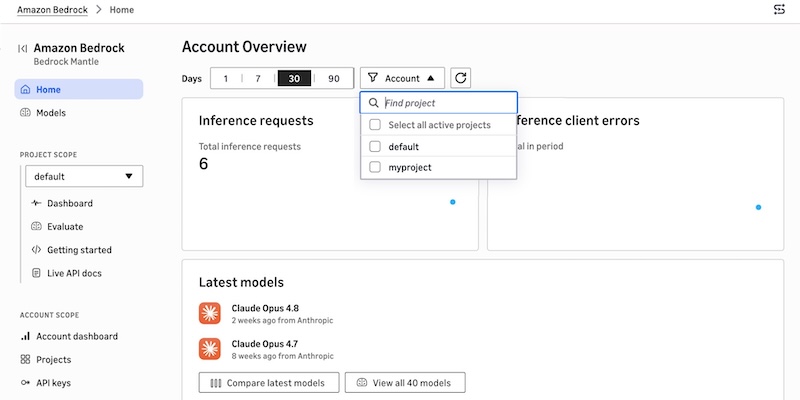
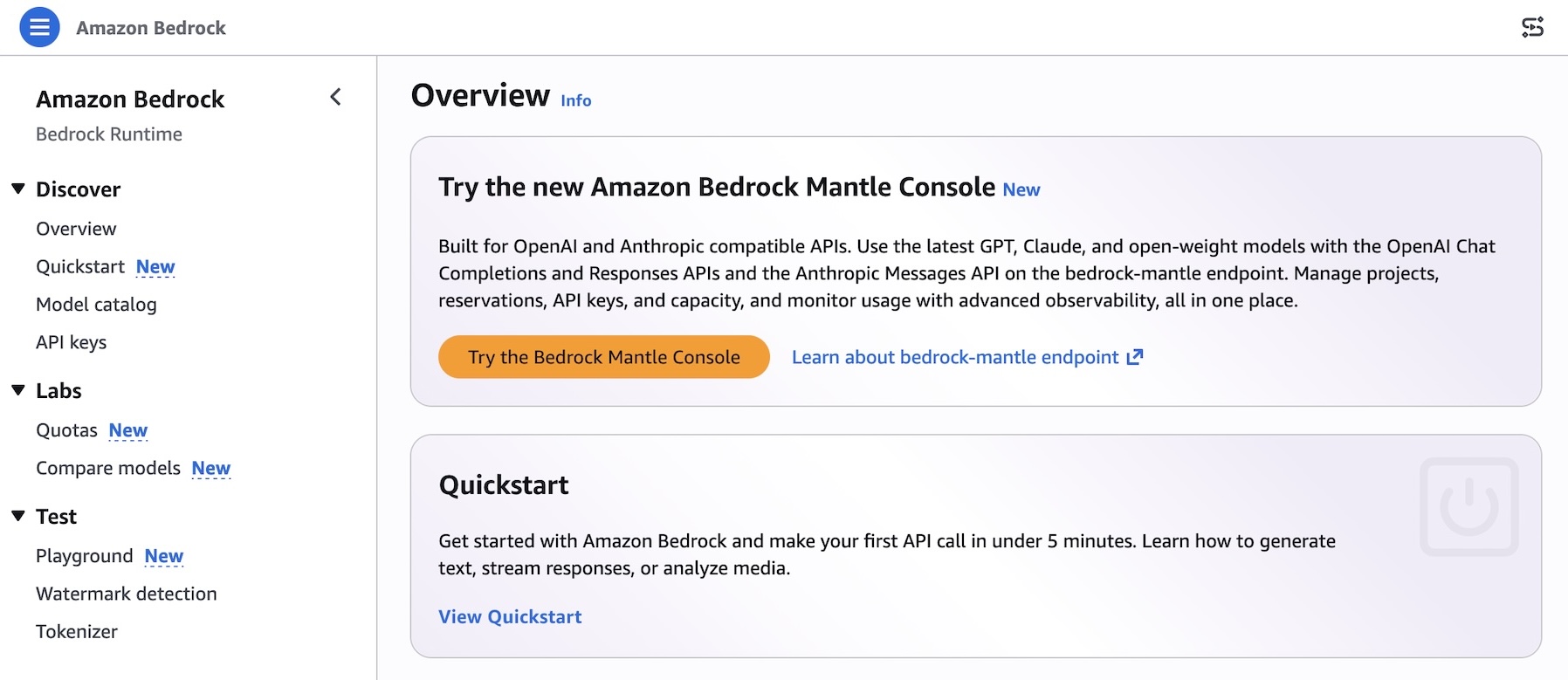
The core of this announcement is the introduction of a refreshed console workflow specifically tailored for the bedrock-mantle endpoint. This next-generation inference engine represents a strategic evolution in how developers interact with generative AI models on AWS. By supporting the latest iterations of GPT, Claude, and various open-weight models, AWS is ensuring that its users have immediate access to a diverse and powerful selection of foundational models. Crucially, the console’s compatibility with standard OpenAI and Anthropic API protocols significantly reduces the learning curve for developers already familiar with these ecosystems, facilitating smoother migration and broader adoption.
The previous Amazon Bedrock console, while functional, laid the groundwork for this advanced iteration. Launched in preview in April 2023 and becoming generally available in September 2023, Amazon Bedrock was conceived as a fully managed service that provides access to foundational models (FMs) from Amazon and leading AI startups via a single API. Its initial goal was to abstract away the undifferentiated heavy lifting of managing infrastructure, deploying models, and ensuring scalability, allowing developers to focus on building innovative generative AI applications. This new console experience builds upon that foundation, specifically addressing the growing demand for more agile development cycles, streamlined model evaluation, and direct compatibility with industry-standard API calls for the most current models.
Addressing the Demands of a Dynamic AI Market

The generative AI market is experiencing explosive growth, with analysts projecting it to reach hundreds of billions of dollars in valuation within the next decade. Enterprises across every sector are actively exploring and implementing generative AI solutions to enhance productivity, foster creativity, and transform customer experiences. However, the rapid pace of model development, coupled with the complexities of model selection, evaluation, and deployment, has presented significant challenges for many organizations.
A recent survey of AI practitioners revealed that nearly 60% struggle with the process of evaluating and selecting the right foundational model for their specific use cases. Furthermore, integrating these models into existing applications and ensuring robust performance and security often requires specialized expertise and considerable engineering effort. This new console experience directly tackles these pain points. By providing a simplified, intuitive interface, AWS aims to lower the barrier to entry for developers and data scientists, enabling them to move from initial experimentation to production deployment with unprecedented speed and efficiency.
The strategic decision to optimize for the bedrock-mantle endpoint, which is engineered for high performance, reliability, and security, directly caters to the enterprise-grade requirements of production AI workloads. This ensures that applications built using the new console will benefit from the robust infrastructure and operational excellence that AWS is known for.
Key Enhancements and Developer Benefits
The updated console experience introduces several transformative features designed to empower developers:
-
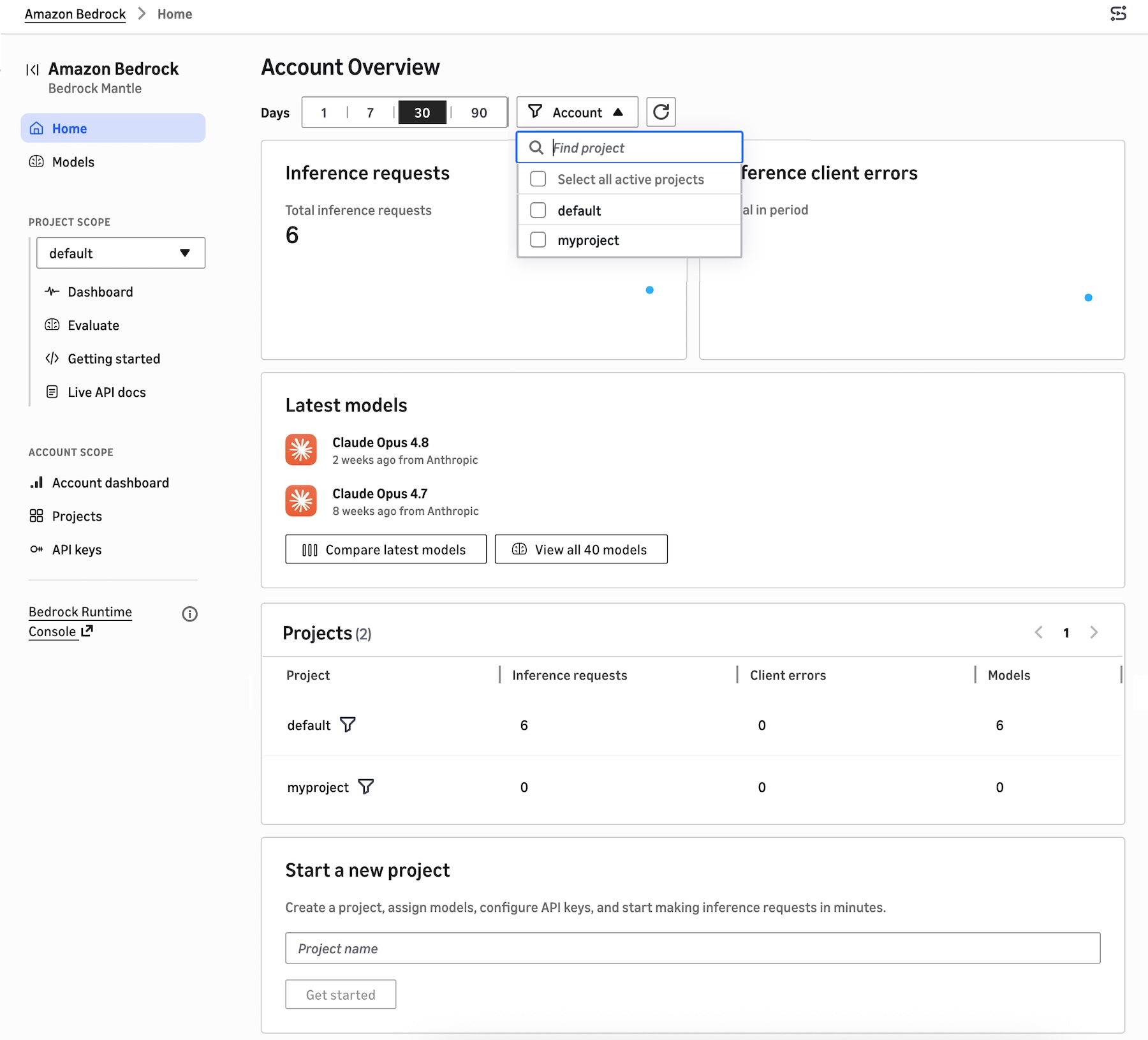
Project-Based Dashboard: At the heart of the new console is an intuitive project-based dashboard. This centralized hub provides developers with a comprehensive overview of their generative AI initiatives. Users can monitor inference requests, track error rates over specified date ranges, view recently utilized models, and manage their project list efficiently. This holistic view aids in performance monitoring, debugging, and strategic resource allocation, ensuring projects stay on track and perform optimally. The ability to quickly discern performance bottlenecks or model-specific issues through aggregated metrics is invaluable for iterative development.
-
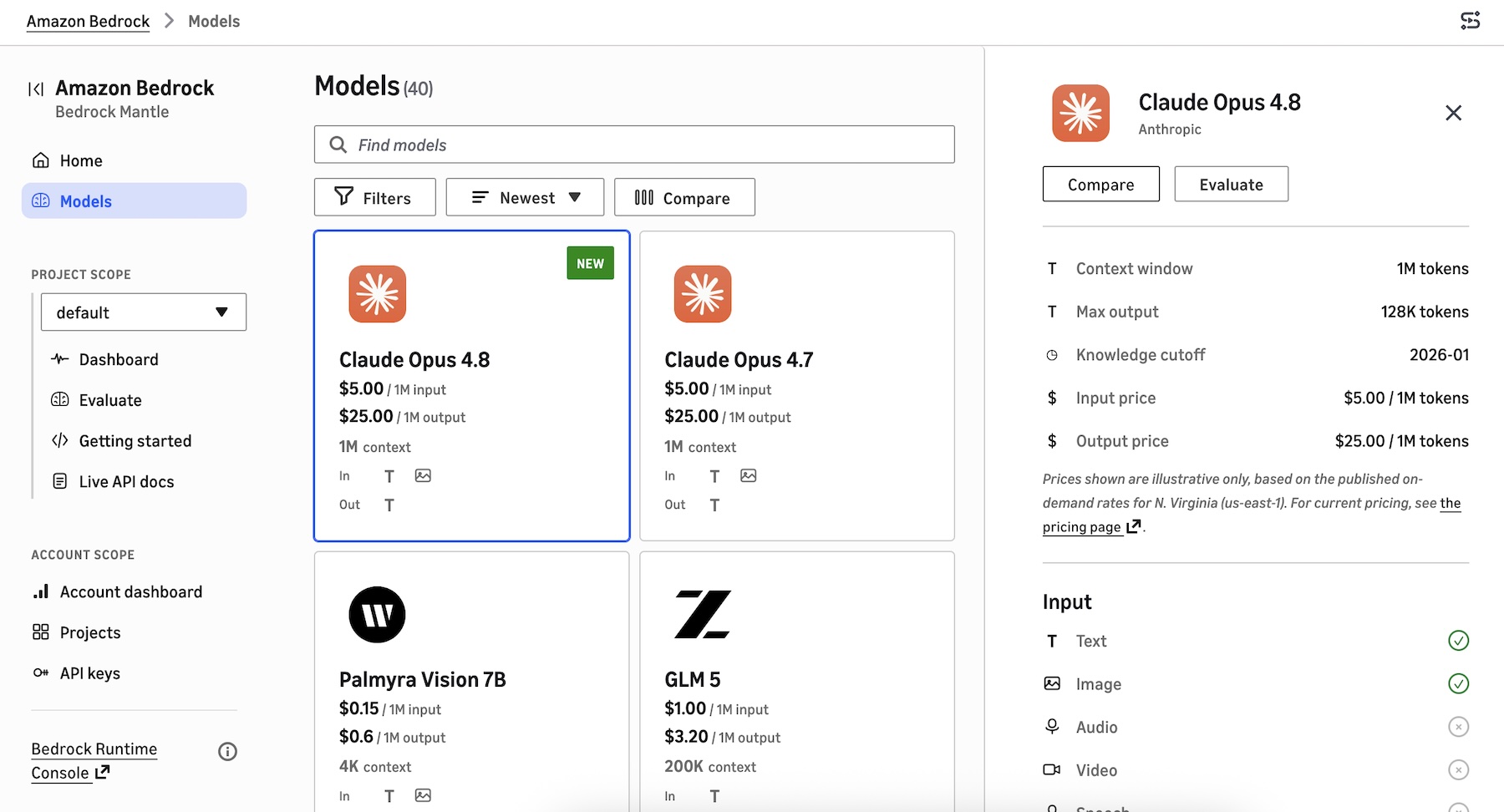
Enhanced Model Catalog and Comparison: Navigating the vast and growing ecosystem of foundational models can be daunting. The new model catalog simplifies this by showcasing the latest GPT, Claude, and open-weight models supported by the
bedrock-mantleengine. Each model card provides detailed information, including features, token limits, pricing structures, input/output capabilities, and regional availability. A standout feature is the ability to compare up to three models side-by-side in a single view. This direct comparison capability is crucial for informed decision-making, allowing developers to assess the strengths and weaknesses of different models against their specific requirements without needing to switch between multiple interfaces or conduct manual comparisons. This accelerates the critical model selection phase, which often represents a significant bottleneck in generative AI development. -
Detailed Project Metrics and Usage Analytics: Within the project dashboard, developers gain deeper insights into their model usage. Metrics such as total token usage, token usage per minute, inference requests per minute, and tokens per inference request are clearly displayed. These granular analytics are vital for optimizing prompt engineering, fine-tuning model selection based on cost and performance, and ensuring the consistency and efficiency of workloads. Understanding token distribution, for instance, can help developers refine prompts to be more concise and cost-effective, directly impacting operational expenditures.
-
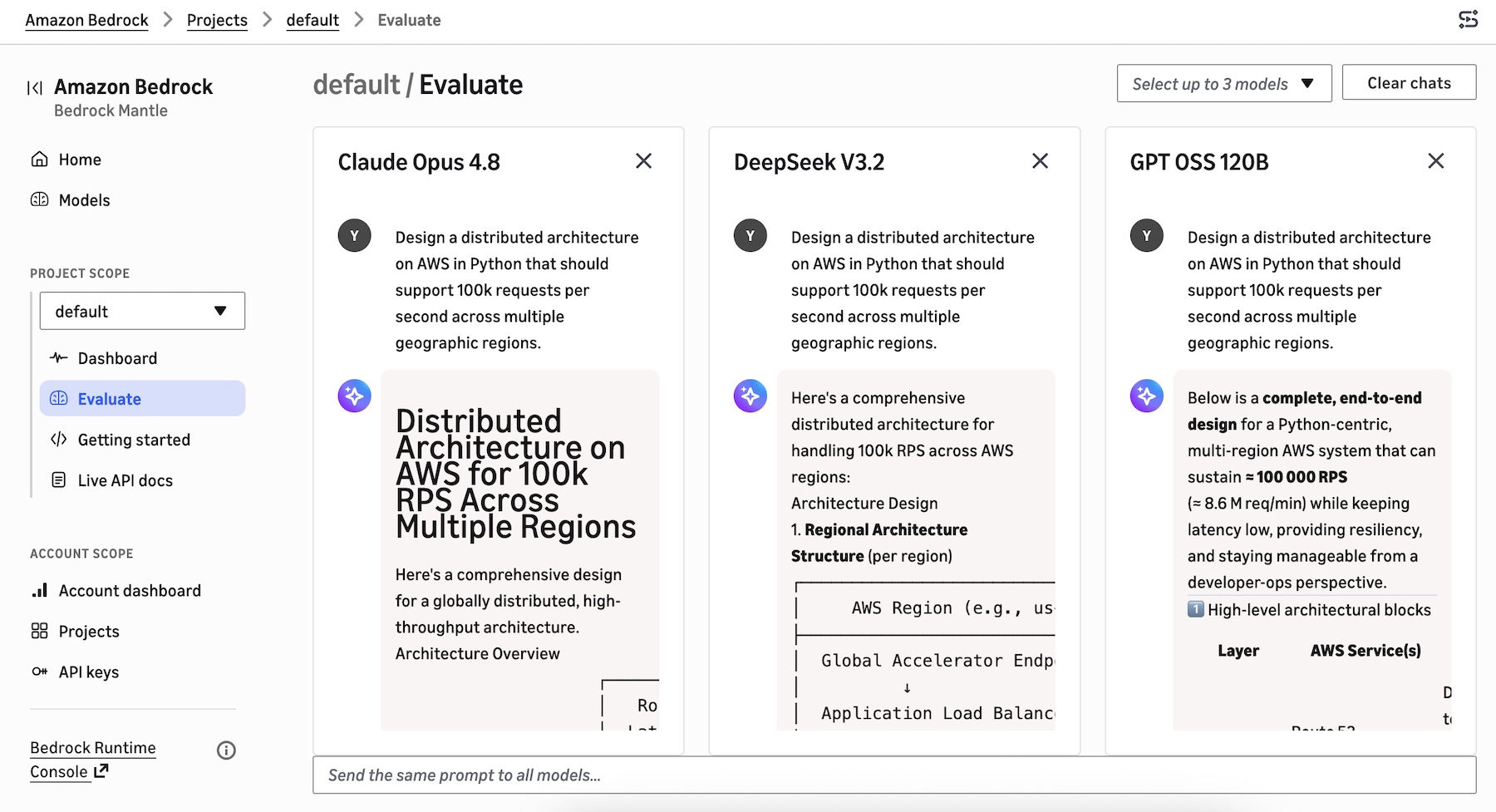
Streamlined Evaluation Environment: Experimentation is paramount in generative AI development. The new console allows developers to select up to three models and evaluate their responses side-by-side using the same prompt. This controlled evaluation environment facilitates rapid iteration and comparison, enabling developers to quickly determine which model performs best for a given task or prompt variation. This feature significantly compresses the evaluation cycle, reducing the time and effort traditionally required to assess model efficacy.
-
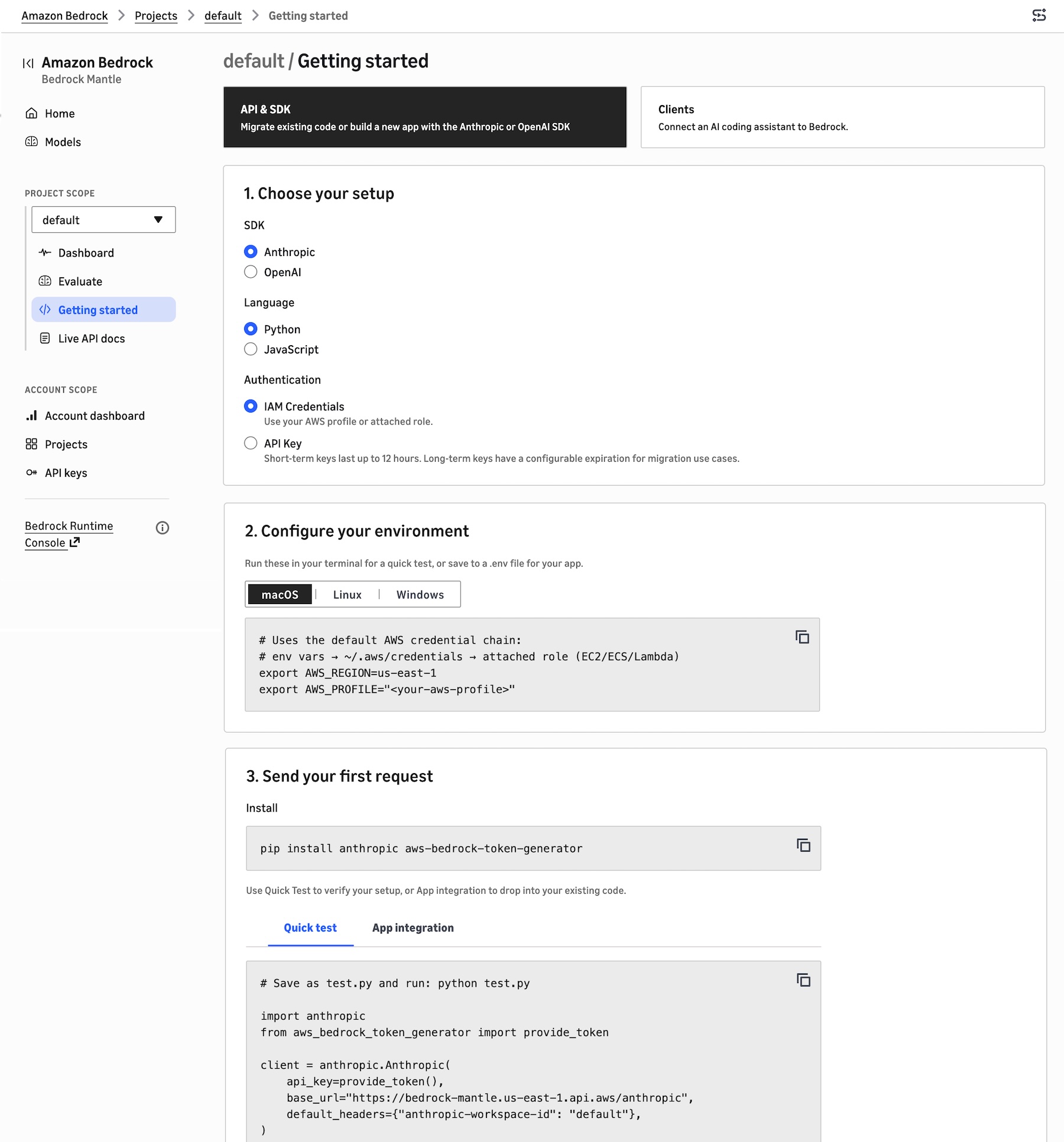
Accelerated Application Building and Integration: The "Getting Started" section is a comprehensive guide for integrating models into applications. Developers can choose to migrate existing code, build new applications using the Anthropic or OpenAI SDKs, or connect various AI coding assistants directly to Bedrock. The console provides environment code for quick terminal tests or saving to
.envfiles for application integration. Furthermore, sample code snippets are provided to send initial requests, allowing developers to verify their setup swiftly. This robust support for diverse integration pathways ensures that developers, regardless of their current toolchain or experience level, can quickly leverage Bedrock. -
Seamless AI Coding Agent Connectivity: The "Clients" section empowers users to connect popular AI coding agents such as Claude Code, Cline, Codex, Cursor, or OpenCode to the
bedrock-mantleengine. The console provides clear instructions for installation, authentication (using AWS IAM credentials or Bedrock API keys), setting environment variables, and routing requests through Bedrock. This integration capability allows developers to augment their coding workflows with generative AI directly within their preferred development environments, fostering a more productive and innovative coding experience. -
Live API Documentation: To further simplify integration, the console offers "Live API docs" for both the Anthropic API Protocol and OpenAI API Protocol. These dynamic references automatically prefill with project-specific details, including the selected model ID, AWS Region,
bedrock-mantleendpoint URL, and API key reference. This intelligent pre-filling feature ensures accuracy and significantly reduces the manual effort and potential for errors often associated with API integration, allowing developers to focus on application logic rather than configuration details.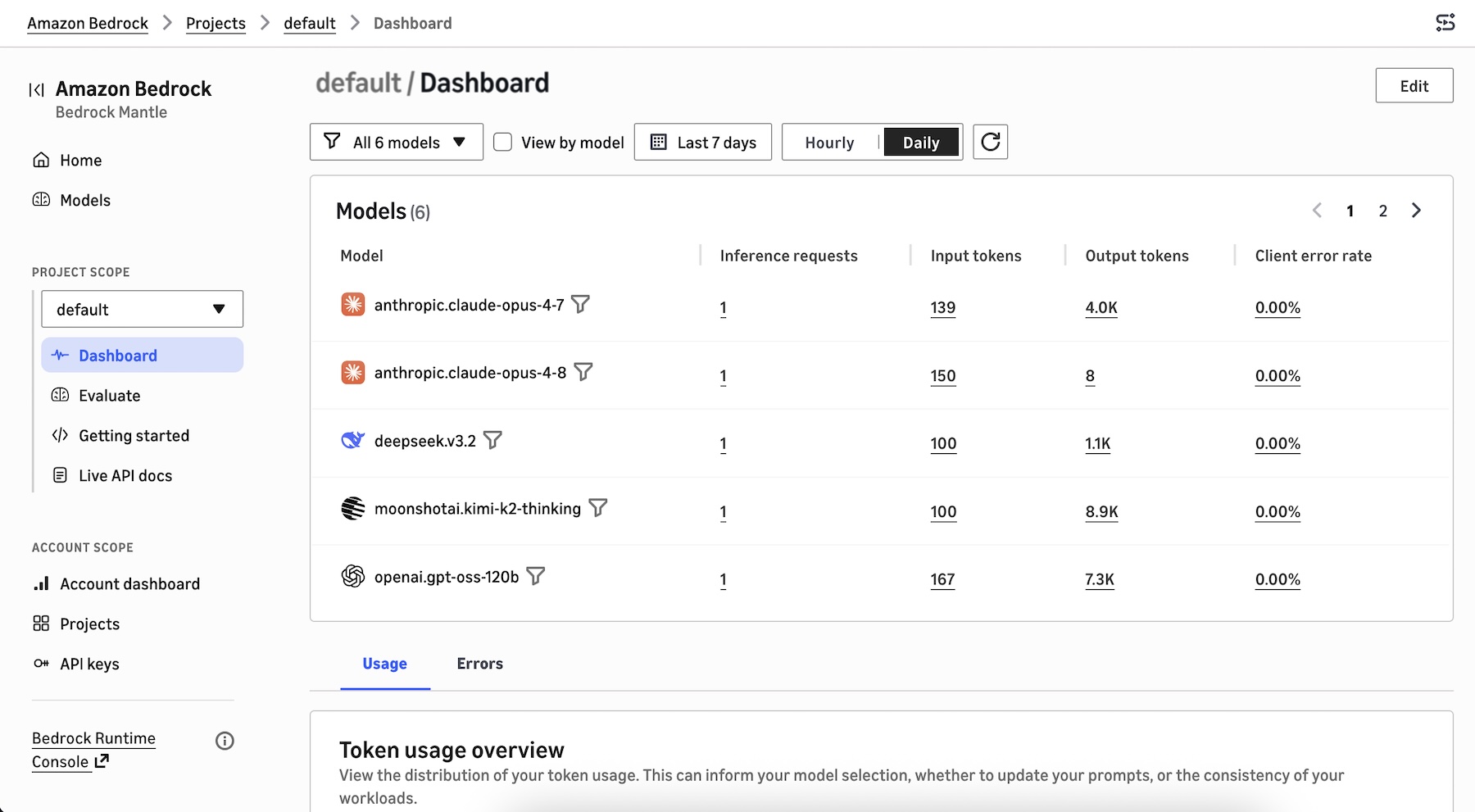
Broader Strategic Implications and Market Positioning
This enhancement to Amazon Bedrock is not merely a feature update; it represents a strategic move by AWS to solidify its position as a leading provider in the generative AI space. By improving the developer experience, AWS aims to attract a broader base of users, from startups to large enterprises, who are looking to build cutting-edge AI applications. The support for both OpenAI and Anthropic API protocols is particularly significant, as it addresses a common developer desire for interoperability and reduces concerns about vendor lock-in. This approach acknowledges the diverse preferences within the developer community and seeks to offer maximum flexibility.
Industry analysts are likely to view this update as a crucial step for AWS in the highly competitive generative AI market. With Google Cloud’s Vertex AI and Microsoft Azure’s OpenAI Service also vying for market share, offering a superior developer experience and broad model choice is paramount. This move could accelerate the adoption of Amazon Bedrock as the preferred platform for generative AI development on the cloud, further integrating AWS into the core of AI innovation.
"Simplifying the developer journey for generative AI is critical for unlocking its full potential across industries," stated an AWS spokesperson, emphasizing the company’s focus on user experience (inferred). "This new Bedrock console experience provides the intuitive tools and robust infrastructure developers need to experiment rapidly, evaluate models effectively, and confidently deploy high-performing, secure AI applications. We believe this will significantly reduce the time-to-market for innovative AI solutions, empowering our customers to transform their businesses."
The co-existence of this new console, optimized for bedrock-mantle, with the existing Bedrock console that manages fully-managed features like Agents, Knowledge Bases, Guardrails, fine-tuning, and the InvokeModel and Converse APIs running on the bedrock-runtime endpoint, highlights AWS’s layered approach to generative AI. This architecture ensures that developers have specialized tools for different stages and complexities of their AI projects, providing flexibility for both foundational inference and advanced, managed AI services.
Availability and Future Outlook
The new Amazon Bedrock console experience is now available in all AWS Regions where the bedrock-mantle endpoint is offered. These include key global regions such as US East (N. Virginia, Ohio), US West (Oregon), Asia Pacific (Jakarta, Mumbai, Sydney, Tokyo), Europe (Frankfurt, Ireland, London, Milan, Stockholm), and South America (São Paulo). AWS encourages developers to consult the official documentation for the full list of regions and future updates, indicating a continuous expansion of services.
Developers are invited to explore the new console experience immediately and provide feedback through AWS re:Post for Amazon Bedrock or their established AWS Support contacts. This emphasis on community feedback underscores AWS’s iterative development philosophy, ensuring that the platform continues to evolve in response to real-world developer needs. The launch of this enhanced console marks a pivotal moment for Amazon Bedrock, setting a new standard for ease of use, performance, and flexibility in generative AI development, and paving the way for a future where AI innovation is more accessible and efficient than ever before.
