
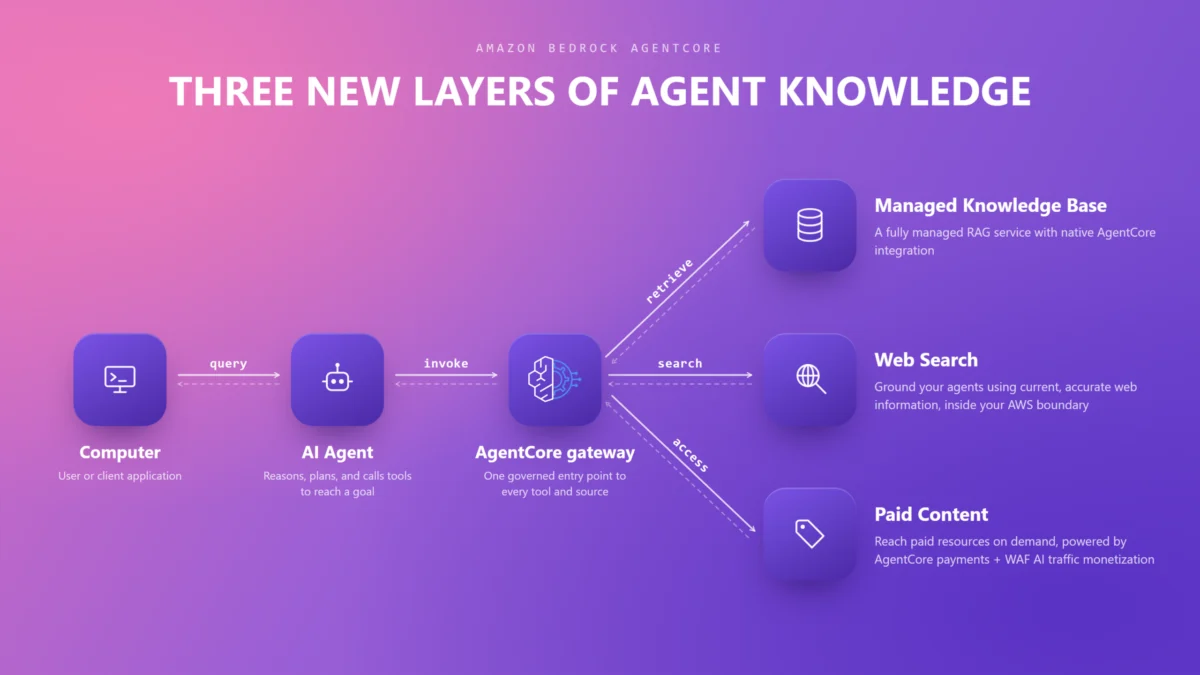

New York City, NY – Amazon Web Services (AWS) today announced significant advancements to Amazon Bedrock AgentCore at the annual AWS Summit in New York City, signaling a pivotal moment in the evolution of enterprise artificial intelligence. The keynote address, delivered by Swami Sivasubramanian, AWS Vice President of Agentic AI, underscored the company’s commitment to empowering organizations with sophisticated, governable, and continuously learning AI agents. These enhancements are poised to transform how businesses deploy, manage, and scale AI-driven automation, addressing critical challenges related to knowledge integration, operational resilience, and robust governance.
The heart of today’s announcements revolved around a suite of new capabilities within Amazon Bedrock AgentCore, designed to accelerate the development of more capable AI agents. Historically, the creation and deployment of intelligent agents capable of complex tasks have been hampered by issues of data access, operational visibility, and scalable oversight. AWS’s latest innovations directly confront these hurdles, promising a future where AI agents are not only more powerful but also more reliable and secure.
Revolutionizing AI Agent Capabilities: Deep Dive into Bedrock AgentCore
The core of the Bedrock AgentCore update focuses on three critical pillars: expanded knowledge integration, enhanced operational diagnostics, and scalable governance controls. These interconnected features aim to provide a holistic platform for enterprise AI agent lifecycle management.
Expanded Knowledge Integration: Bridging the Information Gap
One of the most significant advancements is the ability for AI agents to connect seamlessly to a broader spectrum of knowledge sources. Sivasubramanian highlighted the introduction of capabilities that allow agents to tap into organizational, web, and paid knowledge bases. This development is crucial for several reasons. Enterprise data often resides in disparate systems – internal wikis, proprietary databases, CRM systems, ERP platforms, and document management systems. Traditional AI models often struggle to access and synthesize this fragmented information effectively, leading to "hallucinations" or incomplete responses.
By enabling direct, secure connections to organizational knowledge, Bedrock AgentCore ensures that AI agents can access the most accurate, up-to-date, and contextually relevant internal data. This includes sensitive corporate policies, product specifications, customer service histories, and operational procedures, all critical for agents performing tasks like customer support, internal compliance checks, or data analysis. This direct access significantly reduces the risk of agents generating inaccurate or irrelevant information, a common pain point in early generative AI deployments.
Furthermore, the integration of web and paid knowledge expands the agents’ external awareness. For instance, an agent assisting a sales team could pull real-time market data from a subscription-based financial news service, combine it with internal sales figures, and generate a comprehensive competitive analysis. An agent supporting product development could continuously monitor industry trends, patent filings, and scientific research papers from the web, synthesizing this information to provide strategic insights. This multi-modal knowledge integration empowers agents to act as highly informed digital assistants, capable of drawing from a vast and diverse information landscape.
The implications for this expanded knowledge access are profound. It means AI agents can become significantly more effective in tasks requiring deep understanding and synthesis of information from various sources. For example, a legal agent could review contracts by cross-referencing internal legal precedents, external case law databases, and relevant regulatory updates from the web. A healthcare agent could assist medical professionals by combining patient records with the latest research from medical journals and clinical guidelines. This moves AI agents beyond mere conversational interfaces to sophisticated knowledge workers.
Enhanced Operational Diagnostics: Finding and Fixing Production Issues
Another critical enhancement targets the operational resilience of AI agents: the ability to help teams "find and fix what’s going wrong in production." As AI agents become more deeply embedded in business processes, their reliability and performance directly impact operational efficiency and customer satisfaction. The new AgentCore capabilities introduce advanced monitoring and diagnostic tools that provide unprecedented visibility into agent behavior and performance.
This includes real-time telemetry, error logging, and performance metrics specifically tailored for AI agent workflows. Developers and operations teams can now proactively identify instances where an agent might be struggling to interpret a request, accessing incorrect data, or failing to complete a task. For example, if a customer service agent consistently fails to resolve a particular type of query, the system can flag this, allowing human teams to investigate the underlying cause – perhaps a gap in the agent’s knowledge base, a flaw in its reasoning logic, or an integration issue with a backend system.
The "fix" component implies not just identification but also tools for rapid iteration and improvement. This could involve automated suggestions for knowledge base updates, refinements to agent prompts, or modifications to its decision-making parameters. This continuous feedback loop is essential for building agents that adapt and improve over time, mirroring the iterative development cycles of human teams. It shifts the paradigm from static AI deployments to dynamic, self-optimizing intelligent systems, significantly reducing downtime and improving the overall effectiveness of AI-driven processes. This capability aligns with the growing industry demand for AI observability and MLOps (Machine Learning Operations) practices, ensuring that AI systems are not only deployed but also maintained and improved throughout their lifecycle.
Scalable Governance Controls: Ensuring Safety and Compliance
As AI agents grow more capable and autonomous, the need for robust governance and control mechanisms becomes paramount. AWS is addressing this with new features designed to enforce controls that scale alongside agent capabilities. This includes sophisticated policy enforcement, access management, and ethical AI safeguards.
Scalable governance means that as organizations deploy hundreds or thousands of agents across various departments and functions, they can maintain centralized control over their behavior, data access, and output. This involves defining granular permissions, establishing guardrails for sensitive information, and implementing content moderation policies to prevent agents from generating harmful, biased, or non-compliant responses. For example, a financial services agent might be restricted from discussing specific investment advice without human oversight, or a healthcare agent might be programmed to adhere strictly to HIPAA regulations regarding patient data.
These controls are not static; they are designed to evolve with the agents themselves. As agents learn and gain new capabilities, the governance framework can dynamically adapt to ensure continued compliance and safety. This proactive approach to governance is critical for mitigating risks associated with autonomous AI, including data breaches, regulatory violations, and reputational damage. It also plays a vital role in building trust in AI systems, both internally among employees and externally among customers. AWS’s emphasis on scalable controls reflects a broader industry trend towards responsible AI development, where innovation is balanced with ethical considerations and robust risk management.

The Broader Context: AWS Summit New York and the Agentic AI Vision
The AWS Summit in New York City serves as a critical platform for AWS to showcase its latest innovations and engage with its vast customer base, from startups to large enterprises. This year’s focus on Agentic AI, led by Swami Sivasubramanian, underscores AWS’s strategic direction in the rapidly evolving landscape of generative AI. Agentic AI refers to the development of AI systems capable of autonomous decision-making, planning, and execution, often involving complex sequences of actions to achieve a goal.
Sivasubramanian’s keynote typically sets the tone for the event, highlighting key trends, customer successes, and the technological advancements that AWS is bringing to market. His role as VP of Agentic AI positions him at the forefront of AWS’s efforts to build sophisticated, goal-oriented AI systems that can operate with minimal human intervention. The announcements at the New York Summit are a direct reflection of this vision, moving beyond basic large language model (LLM) interfaces to more sophisticated, integrated AI agents.
The timing of these announcements is also significant. The generative AI market is experiencing explosive growth, with enterprises actively exploring how to leverage LLMs for productivity gains, innovation, and competitive advantage. However, moving from experimental prototypes to production-ready, enterprise-grade AI agents requires robust infrastructure, security, and management tools. Amazon Bedrock, launched in 2023, has been AWS’s answer to democratizing access to foundational models and tools for building generative AI applications. AgentCore, as an extension of Bedrock, specifically addresses the complexities of building and managing multi-step, intelligent agents.
Supporting Data and Market Implications
The market for generative AI is projected to reach hundreds of billions of dollars in the coming years. According to various industry reports, enterprise spending on AI solutions is set to skyrocket, driven by the promise of increased efficiency, enhanced customer experiences, and accelerated innovation. However, adoption has been tempered by concerns over data security, governance, and the complexity of integrating AI into existing workflows.
AWS’s Bedrock AgentCore enhancements directly address these concerns. By providing tools for secure knowledge integration, robust operational diagnostics, and scalable governance, AWS is lowering the barriers to entry for enterprises looking to deploy sophisticated AI agents. This could significantly accelerate the pace of AI adoption across various sectors, including finance, healthcare, manufacturing, and retail. For instance, a recent survey indicated that over 70% of IT leaders are concerned about the security implications of generative AI, while nearly 60% cited governance as a major challenge. The new AgentCore features are a direct response to these market demands.
The ability to connect AI agents to proprietary organizational data is particularly impactful. Many enterprises possess vast troves of unstructured data that remain underutilized. Bedrock AgentCore provides a mechanism to unlock the value of this data, transforming it into actionable intelligence through AI agents. This could lead to substantial cost savings, improved decision-making, and the creation of entirely new business models.
Inferred Announcements: Securing and Building Agents
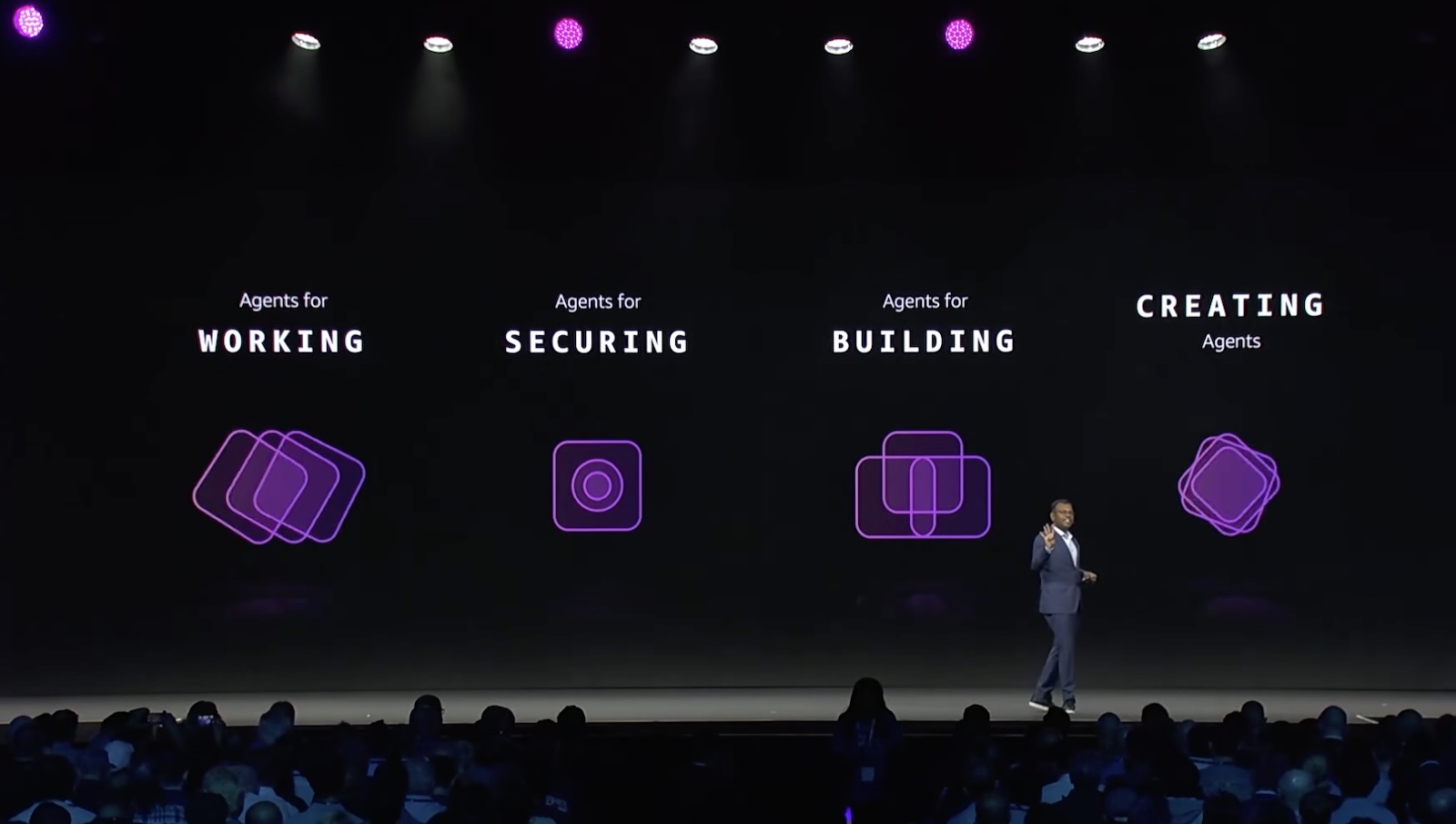
While the provided text offered limited detail beyond AgentCore’s core enhancements, the mention of "New in agents for securing" and "New in agents for building" strongly suggests further parallel developments critical to the enterprise AI ecosystem.
"New in agents for securing" likely refers to a suite of features focused on fortifying the security posture of AI agents themselves and the data they interact with. Given AWS’s strong emphasis on security, this would plausibly include:
- Enhanced Identity and Access Management (IAM) for Agents: Granular control over what agents can access, ensuring they only have permissions necessary for their tasks.
- Data Encryption and Privacy Controls: Strengthening encryption for data accessed, processed, and stored by agents, along with advanced privacy-preserving techniques.
- Threat Detection and Remediation: Capabilities to identify and mitigate adversarial attacks on agents (e.g., prompt injection), ensuring agents remain robust against malicious inputs.
- Compliance Frameworks for AI: Tools to help organizations ensure their AI agent deployments adhere to industry-specific regulations (e.g., GDPR, HIPAA, PCI DSS) and internal governance policies. This would be a crucial aspect for enterprises operating in highly regulated environments.
Similarly, "New in agents for building" would likely encompass tools and services aimed at streamlining the development and deployment process for AI agents, catering to a wide range of developers. This could include:
- Low-Code/No-Code Agent Builders: Simplification of agent creation through intuitive interfaces, allowing business users and citizen developers to configure agents without extensive coding knowledge.
- Pre-built Agent Templates and Blueprints: Accelerating development by offering ready-to-use templates for common enterprise use cases (e.g., customer service bots, IT support agents, data analysis assistants).
- Integration with Development Tools: Deeper integration with AWS development services like AWS CodeCommit, CodePipeline, and CloudFormation to enable robust MLOps practices for agent lifecycle management.
- Customizable Agent Components: Providing modular components that developers can easily assemble and customize, offering flexibility while maintaining efficiency.
These anticipated announcements would complete a comprehensive ecosystem around agent development, moving from foundational model access (Bedrock) to sophisticated agent creation (AgentCore), robust security, and streamlined building processes.
Broader Impact and Future Outlook
The advancements in Amazon Bedrock AgentCore represent a significant leap forward in making sophisticated AI agents accessible and manageable for enterprises. By addressing key challenges related to knowledge integration, operational diagnostics, and scalable governance, AWS is positioning itself as a leader in the agentic AI space.
The implications for businesses are substantial. Organizations can now envision deploying AI agents that are not only intelligent but also reliable, secure, and continuously improving. This could lead to:
- Increased Productivity: Automating complex, multi-step tasks across various departments, freeing human employees for more strategic work.
- Enhanced Customer Experience: Providing more accurate, context-aware, and personalized interactions through AI-powered customer service agents.
- Faster Innovation: Accelerating research and development by enabling agents to synthesize vast amounts of information and assist in ideation.
- Improved Decision-Making: Empowering employees with highly informed insights derived from comprehensive data analysis by agents.
- Reduced Operational Costs: Streamlining workflows and minimizing human error in repetitive or data-intensive processes.
The competitive landscape in generative AI is intense, with major cloud providers and specialized AI companies vying for market share. AWS’s strategy, centered on Bedrock and its extensions like AgentCore, emphasizes a platform approach that offers flexibility and choice of foundational models, combined with enterprise-grade security and management tools. This positions AWS as a strong contender for organizations that prioritize control, customization, and integration with their existing cloud infrastructure.
As AI agents become more sophisticated, the focus will increasingly shift from simply building them to effectively governing, monitoring, and iterating on them. Today’s announcements from the AWS Summit in New York mark a critical step in this direction, laying the groundwork for a future where intelligent agents are seamlessly integrated into the fabric of enterprise operations, driving unprecedented levels of efficiency and innovation. The era of truly capable and governable AI agents is rapidly approaching, and AWS is clearly striving to lead the charge.
