
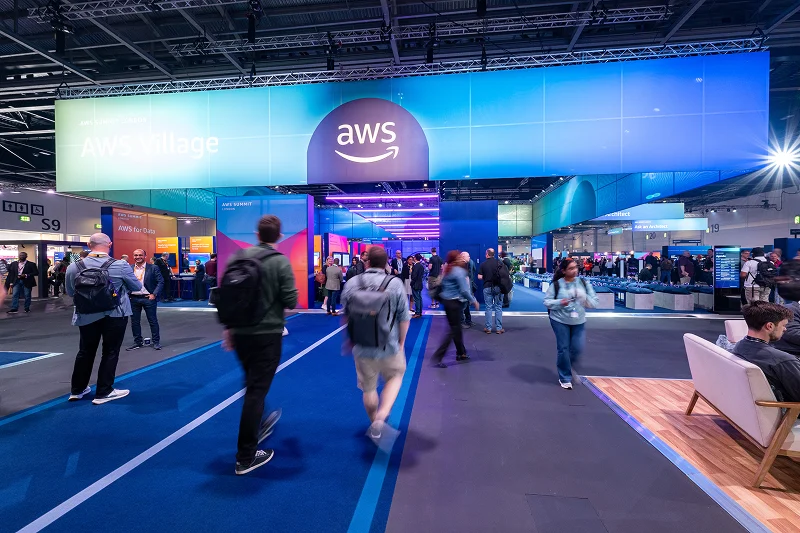

New York City recently served as the epicenter of cloud innovation as the annual AWS Summit convened at the iconic Javits Center, drawing a diverse assembly of builders, customers, and AWS teams. The event, a cornerstone in Amazon Web Services’ global outreach, provided a full day of pivotal announcements, live demonstrations, and in-depth technical sessions, reinforcing AWS’s commitment to fostering technological advancement across its vast ecosystem. While the physical gathering in Manhattan buzzed with energy and collaborative spirit, the keynote address, a highlight of the summit, was also made accessible via a global livestream on June 17, ensuring that insights from AWS leadership reached a worldwide audience. This year’s keynote featured Dr. Swami Sivasubramanian, Vice President of Agentic AI at AWS, and Chet Kapoor, Vice President of Security Services and Observability, who collectively illuminated new capabilities spanning developer tools, AI infrastructure, and critical security paradigms. The dual focus underscored AWS’s strategic priorities: democratizing advanced AI development and fortifying cloud operational excellence and cost governance.
The Dawn of AI-Native Development: Reshaping Engineering Paradigms
A central theme emerging from the New York Summit was the transformative potential of AI-native development, a concept elaborated upon by Dr. Swami Sivasubramanian in a comprehensive blog post that quickly garnered industry attention. His findings, rooted in extensive experimentation across hundreds of Amazon engineering teams, offer a prescriptive framework for organizations aiming to integrate AI at the core of their development lifecycles. This detailed analysis provides invaluable insights into how "frontier teams" are dramatically accelerating innovation and redefining productivity metrics.
The most striking revelation from Sivasubramanian’s research involves a six-engineer team that rebuilt the Amazon Bedrock inference engine in a mere 76 days. This achievement is particularly noteworthy given that the project was initially scoped for a team of 30 developers over a period of 12 to 18 months. Such an exponential increase in velocity—a reduction of over 80% in both team size and project duration—highlights the profound impact of AI-driven methodologies. Beyond this flagship example, structured pilots with Amazon Stores teams showcased a median productivity gain of 4.5x in normalized deployment velocity, with some teams achieving gains exceeding 10x. Real-world applications within Amazon further illustrated this efficiency surge: the "Perfect Order Experience" initiative saw its feature cycle compressed from two weeks to shipping in a single afternoon, while the Worldwide Grocery team slashed design document creation time from five days to just a few hours. These metrics paint a vivid picture of a paradigm shift, where AI agents act as force multipliers for human ingenuity.
Sivasubramanian’s post distills these groundbreaking results into five actionable practices essential for cultivating a "frontier team" capable of harnessing AI’s full potential:
- Invest in Agent Context: The foundational step involves meticulous preparation before any production code is written. This includes building comprehensive steering files, establishing clear coding standards, and structuring repositories in a manner that provides AI agents with rich, unambiguous context. This proactive investment ensures that agents operate within well-defined boundaries, minimizing errors and maximizing the relevance of generated outputs.
- Expect and Push Through Initial Slowdown: Adopting AI-native workflows necessitates a fundamental restructuring of existing processes. This often leads to an initial period of perceived slowdown as teams adapt to new tools, learn new methodologies, and refine their interaction with AI agents. Sivasubramanian emphasizes the critical importance of organizational commitment and resilience during this transitional phase, urging teams to persist through the learning curve to unlock long-term gains.
- Maintain a Steady Backlog of Well-Scoped Tasks: To maximize the efficiency of AI agents, a continuous stream of clearly defined, granular tasks is paramount. A well-managed backlog enables agents to run in parallel on discrete components without constant human supervision, ensuring a high utilization rate and sustained progress. This contrasts sharply with traditional workflows where developers might spend significant time on task decomposition.
- Make Intent Explicit Through Structured Specifications: Before code generation commences, the intent behind a feature or module must be articulated with extreme clarity. This involves crafting structured specifications that leave no room for ambiguity, serving as precise instructions for AI agents. This practice is akin to advanced prompt engineering, where the quality of the input directly determines the quality and accuracy of the AI-generated output.
- Shift Testing Left: Integrating testing early and continuously into the development pipeline allows AI agents to self-correct errors even before code reaches formal integration or deployment stages. This "shift left" approach to testing, powered by AI’s ability to rapidly analyze and iterate, significantly reduces debugging time and improves code quality upstream, preventing costly rectifications later in the cycle.
These practices collectively form a blueprint for organizations seeking to leverage AI not merely as a tool for automation but as an intrinsic component of their development methodology. Sivasubramanian concluded his initial analysis by noting that commit velocity, while impressive, represents only one facet of the story. A forthcoming follow-up will delve into broader implications for release management, operational efficiency, security operations, and end-of-life (EOL) upgrades, promising a more holistic view of AI’s impact across the software development lifecycle. The message is clear: AI is not just enhancing development; it is fundamentally reinventing it, paving the way for unprecedented levels of innovation and agility.
Enhancing Cloud Fiscal Responsibility: The AWS FinOps Agent
Complementing the advancements in AI-native development, the AWS Summit in New York also marked a significant stride in cloud cost management with the preview release of the AWS FinOps Agent. This innovative agent is designed to empower FinOps practitioners and engineering teams by providing intelligent, automated assistance in navigating the complexities of cloud expenditures. As cloud adoption continues its exponential growth, managing and optimizing costs has become a critical discipline, often requiring specialized expertise and considerable manual effort. The FinOps Agent directly addresses this challenge by introducing an intelligent layer to cost governance.
The AWS FinOps Agent is engineered to perform a suite of essential functions, transforming reactive cost management into a proactive, AI-driven process. Its core capabilities include:
- Answering Cost Questions: It can swiftly query AWS costs, providing instant access to detailed financial data, which is crucial for quick decision-making and stakeholder reporting.
- Surfacing Optimization Opportunities: Leveraging data from AWS Cost Optimization Hub and AWS Compute Optimizer, the agent automatically identifies areas for potential savings, such as rightsizing underutilized resources, identifying idle assets, and recommending suitable Savings Plans.
- Investigating Cost Anomalies: A major pain point for many organizations is detecting and understanding unexpected spikes in cloud spending. The FinOps Agent is designed to automatically investigate the root cause of detected cost anomalies, providing rapid insights into unusual expenditure patterns.
- Running Recurring FinOps Workflows: It can execute predefined FinOps workflows on a scheduled basis, ensuring consistent cost monitoring and optimization efforts without manual intervention.
- Automated Action Integration: Beyond merely identifying issues, the agent can take proactive steps. For instance, based on its optimization recommendations, it can automatically open Jira tickets for engineering teams, streamlining the process of implementing cost-saving measures. When a cost anomaly is detected and investigated, it can post its findings directly to a designated Slack channel, ensuring timely communication and collaboration among relevant teams.
The introduction of the AWS FinOps Agent is a strategic move by AWS to address the escalating need for efficient cloud financial operations. It offers a tangible solution to the perennial challenge of balancing innovation with fiscal responsibility in the cloud. By automating routine tasks, providing intelligent insights, and facilitating rapid response to cost deviations, the FinOps Agent empowers organizations to gain greater control over their cloud spending, reduce waste, and reallocate resources more effectively towards strategic initiatives. Chet Kapoor’s involvement in the keynote, particularly regarding security services and observability, implicitly highlights the interconnectedness of operational efficiency, security, and cost management in a well-architected cloud environment. The FinOps Agent, by providing visibility and control over resources, inherently contributes to a more secure and robust infrastructure.
The Broader Impact and Implications of AWS Summit NYC
The announcements from the AWS Summit in New York reverberate across the technology landscape, signaling significant shifts in how enterprises approach cloud adoption, software development, and operational efficiency. The emphasis on AI-native development, championed by Dr. Sivasubramanian, underscores a fundamental change in the developer’s role. No longer solely focused on manual coding, developers are increasingly becoming orchestrators of AI agents, crafting precise specifications and context to guide automated code generation and iterative refinement. This shift promises not only accelerated development cycles but also potentially higher code quality and consistency as best practices are embedded into agent context. For businesses, this translates to faster time-to-market for new features and products, enhanced agility, and the ability to innovate at a pace previously unimaginable. However, it also necessitates an investment in upskilling teams and rethinking organizational structures to fully leverage these new capabilities.

The AWS FinOps Agent, meanwhile, addresses a critical and often underappreciated aspect of cloud adoption: financial governance. As organizations mature in their cloud journey, managing costs becomes paramount. The agent’s ability to automate cost anomaly detection, optimization recommendations, and even ticket creation represents a significant leap forward in making FinOps more accessible and efficient. This will likely reduce the burden on dedicated FinOps teams, allowing them to focus on strategic financial planning rather than reactive problem-solving. For Chief Financial Officers and IT leaders, this tool offers greater transparency and control over cloud budgets, enabling more predictable spending and demonstrating clearer return on investment from cloud initiatives. The implications extend to better resource utilization, reduced environmental impact from idle compute, and ultimately, a more sustainable cloud footprint.
The AWS Summit itself serves as more than just a platform for product announcements; it is a vital nexus for community building, knowledge exchange, and strategic alignment. These events bring together thousands of practitioners, from individual developers to enterprise architects and C-suite executives, fostering a collaborative environment where best practices are shared, challenges are discussed, and partnerships are forged. The availability of the keynote via livestream further amplifies this reach, democratizing access to cutting-edge information for those unable to attend in person.
Looking ahead, the direction outlined at the New York Summit points to a future where artificial intelligence is not merely an optional add-on but an integral, foundational layer across all aspects of cloud computing. From intelligent development environments that accelerate software creation to autonomous agents that manage cloud finances, AWS is positioning itself at the forefront of this evolution. The continued evolution of the AWS Builder Center, serving as a hub for community collaboration and resource discovery, further emphasizes AWS’s commitment to empowering its vast developer community to leverage these new technologies effectively. As the industry continues to navigate the complexities and opportunities presented by cloud and AI, the innovations showcased at events like AWS Summit New York will undoubtedly shape the trajectory of technological progress for years to come.
