
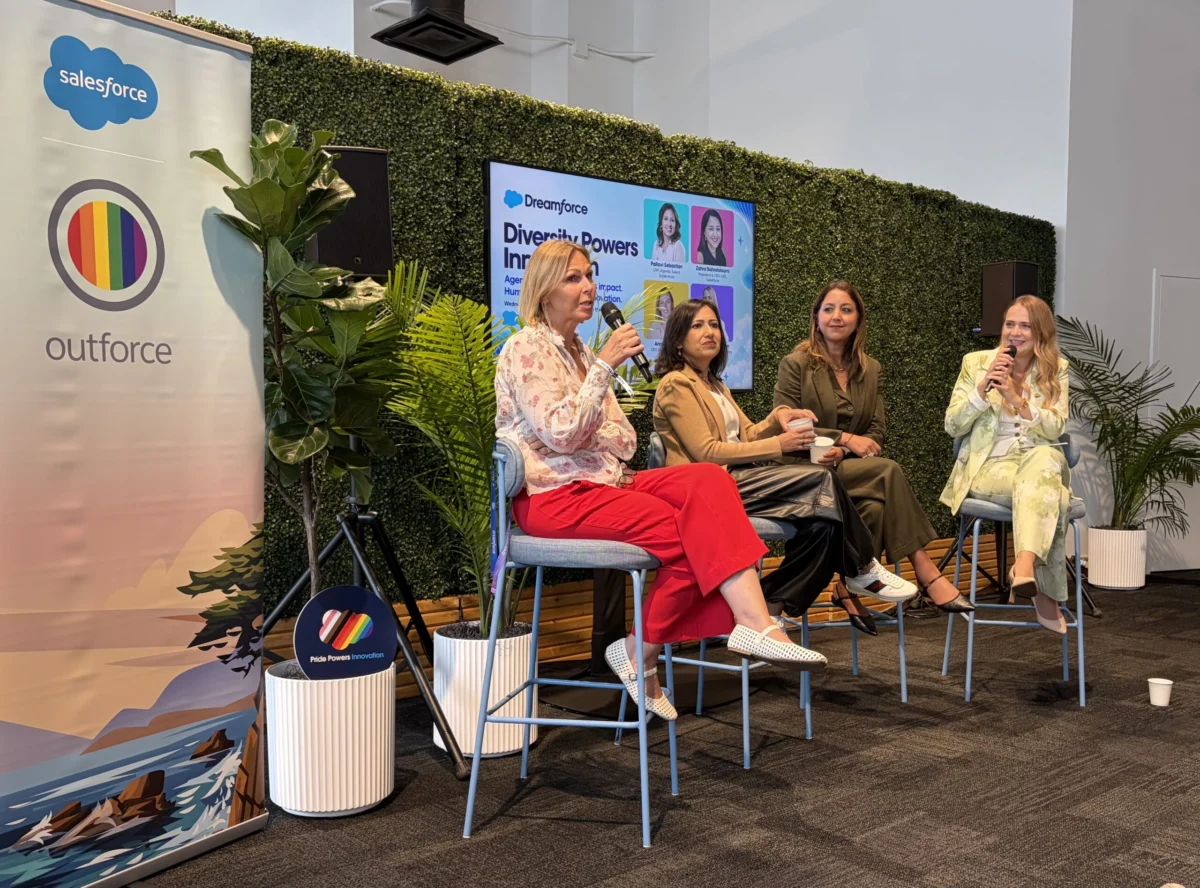

The rapid acceleration of generative and agentic artificial intelligence across global enterprises has ignited a fundamental reevaluation of workforce dynamics, operational efficiency, and technological adoption. While technology evangelists frequently champion AI as an ultimate equalizer capable of democratizing digital tools across organizations, industry leaders increasingly argue that human capital remains the definitive competitive differentiator. Far from being a peripheral human resources initiative, Diversity, Equity, and Inclusion (DEI) has emerged as an indispensable strategic asset. This perspective persists even as shifting political landscapes in major economies—most notably the United States—introduce regulatory headwinds and ideological friction surrounding corporate diversity frameworks.
Business leaders from multinational organizations, including Salesforce and Dentsu, contend that sidelining diversity metrics undermines not only corporate social responsibility but also core financial and operational performance. As algorithms increasingly automate critical institutional decisions, the inclusion of multifaceted human perspectives is proving vital to risk management, innovation, and customer alignment.
The Evolution of DEI in the Age of Automated Decision-Making
The integration of artificial intelligence into core business processes has shifted from a peripheral IT project to a central driver of operational strategy. Over the past five years, enterprises have rapidly deployed machine learning models to streamline recruitment, optimize supply chains, manage financial underwriting, and allocate insurance resources. However, this technological leap has coincided with a growing awareness of algorithmic bias. Historical data sets frequently reflect systemic societal inequalities, leading to automated systems that inadvertently perpetuate discrimination.
A prominent example highlighted by industry executives involves algorithmic screening tools that have been documented phasing out female job applicants over the age of 50. Such systemic oversights highlight a critical vulnerability in modern enterprise technology: when development and deployment teams lack demographic diversity, the resulting technologies frequently fail to serve broad consumer and employee bases equitably.
Historically, corporate DEI programs focused primarily on compliance, legal risk mitigation, and basic workforce representation. By the early 2020s, progressive enterprises began aligning diversity initiatives with broader innovation goals. Today, in the dawning era of agentic enterprise systems—AI agents capable of executing complex, multi-step workflows autonomously—the mandate for inclusive design has evolved from a moral imperative into a strict operational necessity.
The Business Case for Representation: Insights from Salesforce Leadership
Speaking on the intersection of human resource management and technological advancement, Georgia Pemberton, UK President of Salesforce’s Outforce LGBTQ+ employee resource group, emphasizes that representation directly impacts commercial success.
"Representation matters. Diverse teams help us better serve and understand our diverse customers," Pemberton states, noting that Outforce operates as a global network comprising over 10,000 members across corporate staff and the broader Trailblazer Ohana community.
Pemberton challenges the premise of critics who question the ongoing relevance of corporate equality initiatives. Rather than debating the existence of DEI programs, she asserts that organizations must evaluate how diversity actively generates business value. As technological accessibility increases, the central organizational challenge shifts from determining what artificial intelligence can achieve independently to examining how humans and machines can collaborate effectively to drive sustainable impact.
This viewpoint is reinforced by Zahra Bahrololoumi, UKI CEO of Salesforce, who stresses that technological capability alone cannot sustain a modern enterprise.
"Technology is technology. We’re not here to debate the capabilities of the technology, and technology will continue to evolve. But you can’t run a company with just a model," Bahrololoumi explains. "There’s a business responsibility to ensure that people are empowered and can unlock the true advantage of the tech."
Bahrololoumi points to the real-world consequences of deploying unmonitored algorithms in high-stakes environments such as mortgage underwriting and employment screening. Mitigating these risks, she argues, requires direct human intervention throughout every phase of the technological lifecycle.
"You have to have representation in the development, deployment, and design of AI," Bahrololoumi notes. "We talk about guardrails, but let’s talk about the humans that drive this and the scenarios that we cater for, because we have to have people that are representing society designing and implementing and deploying AI."
Fostering Psychological Safety and Embracing Calculated Failure
As organizational structures adapt to AI-driven workflows, leadership paradigms are undergoing a parallel transformation. Pallavi Sebastian, Salesforce SVP of Agentic Enterprise Experiences, underscores the psychological barriers many professionals face when integrating advanced technologies into their daily routines. Drawing from her background as a woman of color and an immigrant navigating the technology sector, Sebastian acknowledges that fear of failure remains a significant impediment to innovation.
"Most of the rooms I’m in, you’re sort of the minority. Born and raised in India. English is not my first language. So when I think about leadership, or when I think about this technology, there’s a lot of fear I have about failing," Sebastian shares.
To counter this apprehension, Sebastian advocates for the intentional creation of psychologically safe environments where employees feel empowered to engage in bold experimentation, ask foundational questions, and admit knowledge gaps without professional repercussion. Furthermore, research indicates a direct correlation between visible leadership vulnerability and team productivity. Studies show that when managers actively model the use of emerging technologies and openly acknowledge their own learning curves—including public admissions of failure—their direct reports are up to 25% more likely to embrace AI tools, resulting in heightened levels of innovation and efficiency.
Bridging the Generative Divide Through Intergenerational Teams
Beyond demographic markers such as race, gender, and sexual orientation, corporate leaders are increasingly addressing the impact of ageism within the modern workforce. Annette Make, Northern Europe CEO for global creative agency network Dentsu—which operates across more than 145 countries—highlights the strategic value of intergenerational collaboration.
Addressing widespread industry assumptions that technological adaptability is exclusive to younger generations, Make points to the success of Dentsu’s digital academy recruitment model.
"We have a digital academy where we take entrants new to the industry into the business, and sometimes when you hear that, you would think that would be the youngsters coming out of college or school… but in fact some of our most successful entrants are actually people in their 50s joining," Make explains. "They’ve had complete career changes and had to re-learn everything, but having that experience and those voices within the teams has just made a complete difference to how we build and think about our businesses."
Make emphasizes that demographic realities necessitate a paradigm shift regarding career lifespans. With average life expectancies extending well into the nineties in developed economies, the traditional model of retirement at age 65 is becoming obsolete. Organizations that actively combat age-related stereotypes are better positioned to capture institutional wisdom and diverse cognitive perspectives.
Actionable Frameworks for the Agentic Enterprise
As enterprises accelerate their deployment of agentic AI solutions, industry experts recommend concrete operational safeguards to ensure technological implementations remain human-centric and equitable.
First, corporate governance frameworks should mandate comprehensive human impact assessments prior to the deployment of automated decision-making systems. These assessments evaluate potential downstream effects on diverse consumer segments, workforce displacement risks, and algorithmic bias.
Second, leaders must foster a culture of active resourcefulness and personal accountability. Bahrololoumi characterizes professional development in the AI era not as a passive corporate offering, but as an active pursuit: "You’re not at a buffet. Nothing’s going to be served to you. You have to go out and find it, and be resourceful, and seek and learn yourselves."
Finally, executive teams are urged to continually audit their internal composition. Pemberton reiterates that maintaining diverse representation across teams is the ultimate operational safeguard against blind spots in product development and customer engagement.
"Look at the teams around you and really challenge and question, ‘Have I got fantastic, diverse perspectives and brilliant ways to think about that human layer? How do we find connection with our customers and our partners and our colleagues?’" Pemberton advises. "Because those connections and the way we build them is our superpower."
Implications for the Global Technology Landscape
The divergence in corporate attitudes toward diversity, equity, and inclusion between North America and Europe has introduced a complex dynamic into the global technology sector. While political pressures and polarized legislative debates in the United States have prompted some enterprises to scale back or rebrand their formal DEI initiatives, European organizations operate within a regulatory and cultural framework that largely insulates diversity strategies from partisan ideology.
Industry analysts suggest that European firms maintaining a robust commitment to inclusive technological design may secure a distinct competitive advantage in developing ethical, resilient, and globally acceptable AI models. As international standards for artificial intelligence governance continue to crystallize, the ability to demonstrate broad societal representation in technology development will likely become a key compliance and market differentiation metric.
Ultimately, enterprise leaders agree that while algorithms will continue to redefine the mechanics of business, the long-term success of the digital economy rests on the human capacity for empathy, critical oversight, and inclusive collaboration.
