

The Shift Toward Decentralized AI Infrastructure
For several years, the standard architecture for RAG systems has favored a "managed-everything" approach. Organizations typically deploy massive, cloud-native vector databases such as Pinecone, Milvus, or Weaviate to handle the storage and retrieval of high-dimensional embeddings. While these tools are indispensable for massive datasets—such as those containing millions of documents—they often introduce unnecessary latency, configuration overhead, and financial burdens for smaller projects.
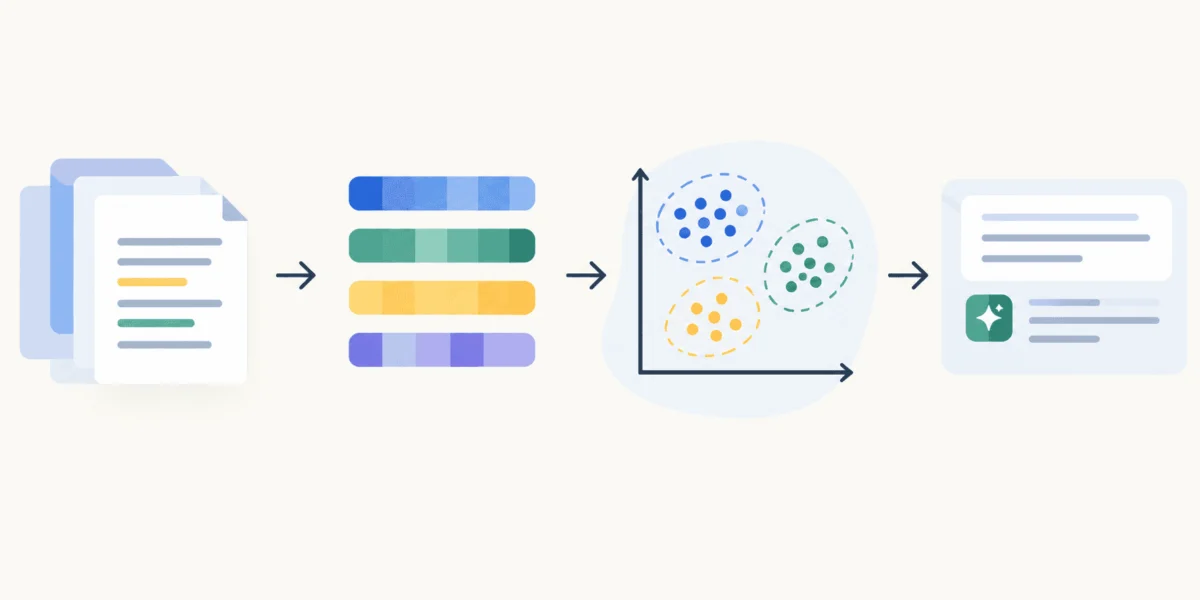
The current industry trend is moving toward "right-sized" architecture. Developers are increasingly questioning the need for a dedicated database when a smaller corpus can be managed via local memory and optimized nearest-neighbor algorithms. This modular approach allows for rapid prototyping, enabling data scientists to test the efficacy of different embedding models without the friction of migrating data across cloud environments. By using scikit-learn, the process is reduced to its core mathematical components: calculating the cosine distance between vectors, a method that remains the gold standard for measuring semantic similarity in vector space.
Chronology and Technical Evolution
The evolution of this approach began with the maturation of the Transformers library, which allowed researchers to generate high-quality text embeddings locally. The timeline of this transition can be categorized into three distinct phases:
- The Era of Complexity (2020–2022): RAG was primarily experimental, requiring significant custom engineering to link disparate storage databases with early language models.
- The API Hegemony (2023): With the release of advanced LLMs, the industry shifted toward paid, closed-source APIs for both embeddings and generation, locking many developers into specific ecosystems.
- The Lightweight Renaissance (2024–Present): The release of highly efficient, smaller models—such as the MiniLM series for embeddings and the Qwen 2.5 series for generation—has empowered developers to run the entire stack locally.
This latest phase is supported by improved hardware accessibility, such as Google Colab’s free tier, which provides sufficient GPU power to process small-to-medium document sets without requiring a local workstation with high-end hardware.
Implementing the Lightweight Pipeline
Building a local RAG pipeline begins with the ingestion of raw data. In a professional setting, this involves cleaning and chunking unstructured text. Unlike monolithic frameworks that automate this process behind black-box configurations, a manual implementation using scikit-learn offers total transparency.
The technical implementation utilizes sentence-transformers for the conversion of text into numerical vectors. These vectors are then indexed using sklearn.neighbors.NearestNeighbors. This specific choice of algorithm is notable for its efficiency; the ‘brute’ force search method is highly effective for datasets under a few thousand documents, providing nearly instantaneous results while avoiding the overhead of tree-based indexing structures which are often overkill for small corpora.
Following retrieval, the context—the most relevant document chunks—is passed to a local Large Language Model. The Qwen 2.5-0.5B-Instruct model serves as an ideal candidate for this role. Despite its small parameter count, the model is specifically tuned for instruction-following, making it highly adept at synthesizing information from provided context without "hallucinating" facts outside the provided document base. This constraint is critical for enterprise applications where accuracy and grounding are non-negotiable.
Empirical Analysis and Performance Data
Performance benchmarks for such systems are promising for low-latency applications. In a typical implementation, the embedding generation phase for 30–50 chunks takes less than five seconds on a standard T4 GPU. The retrieval phase, which utilizes Scikit-learn’s optimized linear algebra routines, typically executes in less than 50 milliseconds.
The following table summarizes the performance trade-offs compared to traditional managed systems:
| Metric | Managed RAG Frameworks | Local Scikit-learn RAG |
|---|---|---|
| Initial Setup Cost | High (Infrastructure/API) | Zero |
| Latency | Network-dependent | Low (Local/In-Memory) |
| Transparency | Low (Black-box) | High (Full Source Control) |
| Scalability | High (Massive Data) | Limited (RAM-constrained) |
Industry Implications and Future Outlook
The implications of this movement toward lightweight AI are far-reaching. For developers, it lowers the barrier to entry for building intelligent search engines, internal knowledge bases, and document analysis tools. For businesses, it addresses growing concerns regarding data privacy. By keeping the entire RAG pipeline local, data never leaves the user’s environment, mitigating the risks associated with sending sensitive proprietary information to third-party API providers.
Industry experts observe that this architectural shift does not necessarily replace the need for enterprise-grade vector databases, but rather complements them. It establishes a clear hierarchy of deployment: use heavyweight, managed solutions for production environments with millions of records, and utilize lightweight, scikit-learn-based architectures for rapid development, internal tools, and high-security, low-volume applications.
Strategic Recommendations for Developers
For organizations looking to adopt this model, success depends on three primary factors:
- Semantic Chunking Strategy: The quality of the retrieval is directly proportional to how well the text is chunked. Over-chunking leads to a loss of context, while under-chunking dilutes the semantic signal. Developers should iterate on chunk size and overlap ratios to find the "sweet spot" for their specific data domain.
- Embedding Model Selection: While
all-MiniLM-L6-v2is excellent for general-purpose tasks, developers should explore domain-specific embedding models if their dataset contains specialized terminology (e.g., medical or legal texts). - Prompt Engineering: Because lightweight LLMs have a smaller "reasoning" capacity than their larger counterparts (such as GPT-4 or Claude 3.5), the system prompts must be precise, rigid, and explicitly instruct the model to rely only on the retrieved context.
As the ecosystem for open-source AI continues to mature, the gap between what can be achieved by a single developer with a free notebook and what can be achieved by a large enterprise team with a massive budget is rapidly narrowing. This democratization of technology ensures that the future of RAG is not just in the hands of the largest cloud providers, but is accessible to anyone with a terminal and a curiosity for efficient, transparent system design. By mastering the integration of scikit-learn with modern embedding architectures, engineers are positioning themselves at the forefront of a more efficient and sustainable approach to the next generation of generative AI applications.
