
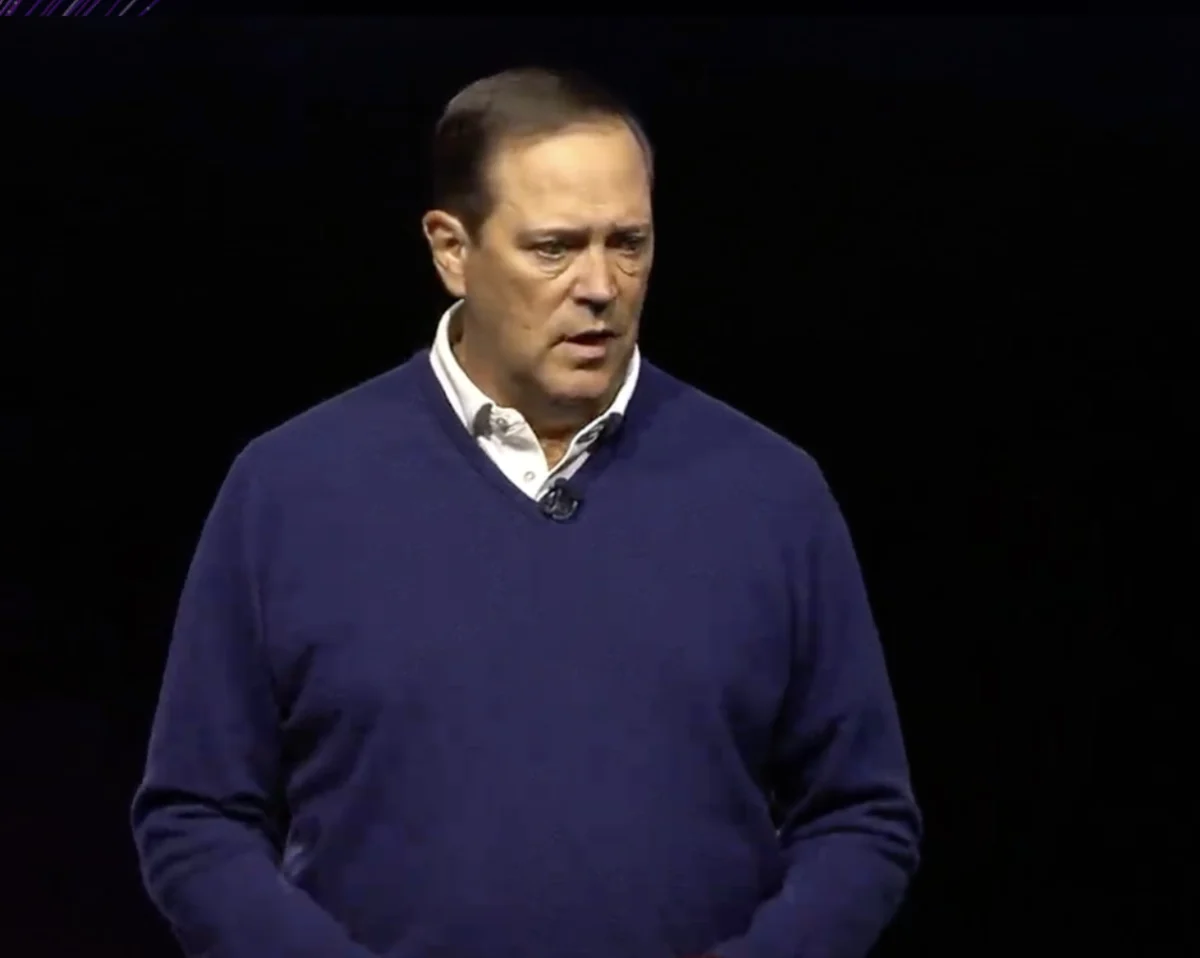

Cisco Systems has unveiled a complex fiscal picture for its third quarter of 2026, reporting record-breaking financial growth alongside a significant restructuring plan that will see the company reduce its global workforce by approximately five percent. This decision, which translates to the elimination of roughly 4,000 positions, comes as the networking giant aggressively pivots its resources toward artificial intelligence (AI) infrastructure and cybersecurity. Despite the human cost, the company’s financial metrics suggest a robust demand for its hardware, particularly among hyperscale cloud providers and enterprise clients seeking to modernize their data centers for the AI era.
The workforce reduction is expected to result in a pre-tax charge of approximately $1 billion, according to a recent regulatory filing. This financial hit covers severance, one-time termination benefits, and other associated costs. However, Cisco leadership has characterized the move not as a cost-cutting measure necessitated by financial distress, but as a proactive strategic realignment. CEO Chuck Robbins emphasized that the move is essential for Cisco to remain competitive in a rapidly evolving technological landscape. In a memo distributed to employees, Robbins noted that the "winners" of the AI era will be characterized by their focus, urgency, and the discipline to shift investments toward high-growth areas.
Financial Performance and the AI Infrastructure Surge
Cisco’s Q3 2026 earnings report highlighted a period of exceptional growth, largely driven by the burgeoning demand for AI-ready networking equipment. The company reported total revenue of $15.8 billion, a 12% increase compared to the same period in the previous fiscal year. Net income saw an even more dramatic rise, climbing 35% to $3.4 billion, up from $2.5 billion in the prior year. These figures exceeded analyst expectations and underscored the company’s success in capitalizing on the massive capital expenditures currently being made by the world’s largest technology firms.
The most significant driver of this growth has been orders for AI infrastructure from "hyperscalers"—large-scale cloud service providers such as Amazon Web Services (AWS), Microsoft Azure, and Google Cloud. So far this fiscal year, Cisco has secured $5.3 billion in AI infrastructure orders from these entities. This momentum has led the company to revise its full-year AI order estimate significantly. Previously, Cisco had projected $5 billion in AI-related orders for the year; that figure has now been adjusted upward to $9 billion, reflecting a near-doubling of expectations in a matter of months.
This surge in demand is not limited to the cloud provider segment. Cisco’s enterprise data center switching business, which provides the backbone for private corporate networks, saw order growth of over 40% during the quarter. This indicates that traditional corporations are now moving beyond the experimental phase of AI and are beginning to build out the physical infrastructure necessary to support large-scale AI workloads.
Strategic Re-alignment: From Legacy Networking to Silicon and Optics
The job cuts announced by Cisco are part of a broader shift in the company’s internal resource allocation. CFO Mark Patterson clarified during discussions surrounding the earnings that the restructuring was "not a savings-driven" event. Instead, the company is moving personnel and capital away from legacy business units and toward high-priority sectors including silicon development, optics, cybersecurity, and AI-native networking.
The transition reflects a fundamental change in how data centers are constructed. As AI models become larger and more complex, the requirements for data transfer speeds and latency (the delay before a transfer of data begins) have become much more stringent. This has increased the importance of specialized silicon and optical networking—technologies that use light instead of electricity to transmit data. By re-aligning its workforce, Cisco aims to ensure it has the engineering talent required to innovate in these specific hardware categories.
Patterson noted that the speed of technological change currently exceeds the company’s ability to retrain its existing workforce in real-time, necessitating the recruitment of new talent in specialized areas while reducing headcount in plateauing segments. This "re-aligning from an already strong base" is intended to allow Cisco to move faster than its competitors, such as Arista Networks and the newly merged HPE-Juniper entity.
The Security Frontier: Project Glasswing and the Impact of Claude Mythos
A critical component of Cisco’s future strategy involves its participation in "Project Glasswing," a collaborative AI cybersecurity initiative launched in partnership with Anthropic. At the heart of this project is the Claude Mythos Preview, a sophisticated AI model designed to identify vulnerabilities in software and network configurations. The emergence of such powerful AI tools has created a double-edged sword for the tech industry: while they can be used to harden defenses, they also provide potential attackers with the means to find "zero-day" exploits more efficiently.
CEO Chuck Robbins addressed the implications of Claude Mythos, noting that Cisco is already using the technology internally to test its own code and accelerate the release of security patches. However, the broader business implication lies in the "unpatched technology" risk. As AI tools like Mythos make it easier to find vulnerabilities in aging hardware, many enterprise customers are finding that their legacy infrastructure is no longer defensible.
Robbins pointed out that there is a growing concern among customers regarding "last day of support" equipment—hardware that is so old the manufacturer no longer provides security updates. The threat posed by AI-driven vulnerability discovery is expected to trigger a massive refresh cycle, as companies are forced to modernize their infrastructure to avoid being low-hanging fruit for automated cyberattacks. While Cisco reported that "Mythos-driven orders" were not yet a significant contributor to Q3 revenue, the company anticipates that the fear of AI-enhanced threats will become a major catalyst for hardware sales in the coming quarters.
Modernization of the Enterprise Data Center
The shift toward AI "inferencing" and "agentic applications" is also reshaping Cisco’s enterprise strategy. Inferencing is the process of a trained AI model making predictions or decisions based on new data, while agentic applications involve AI "agents" that can perform tasks autonomously across a network. Both require incredibly high-performance networks to function effectively.
Cisco’s 40% growth in data center switching orders is a direct result of enterprises preparing for these applications. In these environments, moving "bits" with low latency is no longer a luxury but a requirement. If a network cannot keep up with the speed at which an AI processor (such as an NVIDIA GPU) can work, the expensive hardware sits idle, leading to significant inefficiencies. Cisco is positioning its latest Ethernet-based fabrics as the solution to this "bottleneck" problem, competing directly with InfiniBand technology in the AI back-end network space.
Broader Industry Implications and the AI Labor Shift
Cisco’s decision to lay off five percent of its workforce while reporting record profits is a trend that has become increasingly common across the technology sector. In what many analysts have dubbed the "Year of Efficiency," companies like Meta, Microsoft, and Google have all engaged in similar patterns of reducing headcount in generalist or legacy roles while simultaneously pouring billions into AI-focused departments.
This shift highlights a growing divide in the tech labor market. While total employment in the sector remains high, the specific skills in demand are shifting toward machine learning engineering, hardware acceleration, and AI-centric cybersecurity. For the 4,000 Cisco employees affected, the news is a stark reminder of how quickly "AI-enabled unemployment" can manifest, even within companies that are financially thriving.
Market analysts have generally responded positively to Cisco’s strategy, as evidenced by the lack of critical questioning regarding the layoffs during the post-earnings call. Wall Street’s focus remains squarely on Cisco’s ability to capture the $9 billion in projected AI orders. The $1 billion restructuring charge is viewed by investors as a necessary investment in the company’s long-term pivot toward a higher-margin, software-and-silicon-heavy future.
Looking Ahead: Cisco Live and the Road to Fiscal Year End
As Cisco prepares for its annual "Cisco Live" event in Las Vegas, the company appears to be in a position of strength, albeit one marked by transition. The record Q3 results provide a stable foundation for the company to showcase its new AI-integrated product lines and further detail its roadmap for Project Glasswing.
The company’s ability to meet its raised $9 billion order target will be the primary metric by which its success is judged over the next year. With the enterprise market showing signs of a major infrastructure refresh and hyperscalers continuing to expand their footprint, Cisco’s gamble on a leaner, AI-focused workforce will be put to the test.
In his closing remarks to investors, Robbins expressed confidence in the company’s innovation pipeline, stating that the latest offerings are seeing the fastest adoption rates in Cisco’s history. For the remaining workforce and the company’s shareholders, the focus now turns to execution—ensuring that the "bits" continue to move with the speed and security required by an increasingly AI-dependent world.
