
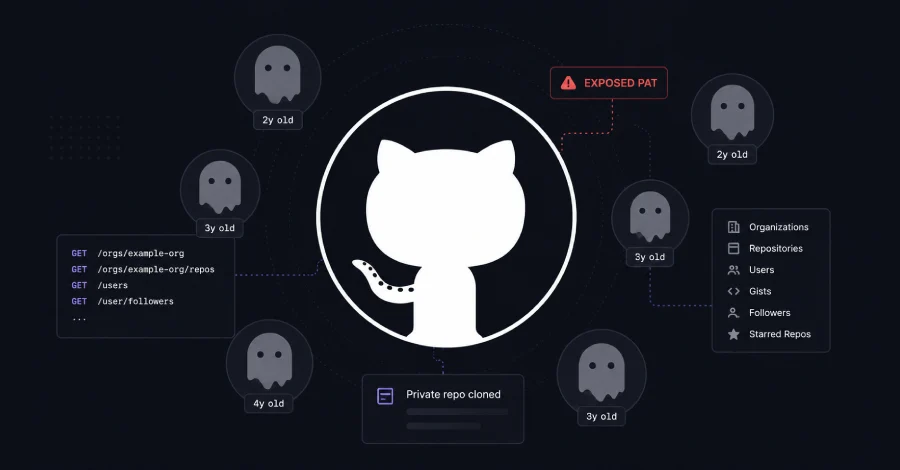

Datadog Security Labs has issued a significant warning regarding a series of "overlapping campaigns" systematically engaged in the enumeration of corporate GitHub organizations, repositories, and user accounts through the GitHub API. This sophisticated reconnaissance operation, observed by security researchers, represents a persistent threat to software supply chain integrity, leveraging a complex array of tactics to map out organizational structures and, in some critical instances, gain unauthorized access to private codebases. The campaigns, which have been active for an extended period, highlight the evolving sophistication of threat actors targeting critical developer infrastructure.
The comprehensive analysis by Datadog reveals that operators are deploying automated scraping tools, often disguised with custom or legitimate-sounding user agents, to probe GitHub’s vast ecosystem. A particularly concerning aspect of these campaigns is the strategic utilization of "ghost" accounts—dormant GitHub accounts, some aged two to five years, deliberately left inactive for prolonged periods before being weaponized. These aged accounts provide a veneer of legitimacy, allowing malicious API traffic to blend in with normal usage patterns, thereby evading traditional detection mechanisms that often flag newly created accounts engaging in suspicious activity. Beyond these dormant assets, the campaigns also exploit compromised OAuth tokens and personal access tokens (PATs) belonging to legitimate users, indicating a multi-pronged approach to credential acquisition and abuse.
Julie Agnes Sparks, a senior security engineer at Datadog, underscored the gravity of the findings, stating, "Operators rely on automated scraping tooling with custom or legitimate-sounding user agents, leveraging GitHub ‘ghost’ accounts that are often years old, or compromised OAuth tokens and personal access tokens (PATs) from legitimate users." While much of the observed activity initially focuses on enumerating publicly available data, Datadog Security Labs has confirmed instances where these operations escalated beyond mere reconnaissance, successfully cloning private repositories, thereby exposing sensitive intellectual property and potentially critical vulnerabilities to unauthorized parties.
The Modus Operandi: Blending In and Exploiting Trust
The observed campaigns are characterized by a calculated blend of automation and stealth. Over 50 dormant "ghost" accounts, coupled with dozens of legitimate accounts whose PATs have been compromised—either through unintentional exposure or more sophisticated attack vectors like phishing or malware—form the backbone of these enumeration efforts. This combination allows threat actors to scale their operations while maintaining a low profile. The long dormancy period of the "ghost" accounts is a crucial strategic element, designed to circumvent anomaly detection systems that might flag accounts created and immediately used for high-volume scraping. By appearing as established, albeit inactive, entities, these accounts can initiate API queries with reduced scrutiny.
GitHub’s extensive API surface, much of which is accessible without explicit authentication, plays a critical role in facilitating these enumeration campaigns. This open access allows threat actors to gather significant intelligence by making seemingly innocuous requests that return valuable organizational data. Examples of the types of information being queried include:
- Public Repository Details: Names, descriptions, creation dates, commit histories, and associated users.
- Organization Members: Lists of individuals affiliated with a corporate GitHub organization, their roles, and public activity.
- Follower/Following Relationships: Mapping social connections between developers, which can inform targeted phishing or social engineering attacks.
- Project Modification Histories: Understanding which developers are most active on specific projects, potentially identifying key targets for further compromise.
This wealth of data enables threat actors to construct a detailed programmatic map of an organization’s GitHub activity. This reconnaissance phase is crucial for planning more advanced attacks, allowing attackers to identify valuable targets, understand development workflows, and pinpoint potential weak points in the software supply chain. The information gathered can be leveraged for highly targeted attacks, such as impersonating key developers, injecting malicious code into projects, or exploiting identified vulnerabilities.
Escalation to Private Repository Cloning: A Critical Threshold

The most alarming aspect of Datadog’s findings is the confirmed escalation from public data enumeration to the cloning of private repositories. This transition signifies a critical breach of security, moving from information gathering to direct data exfiltration. The successful cloning of private repositories belonging to at least one organization indicates that the threat actors achieved sufficient access, likely through the compromised PATs or OAuth tokens, to bypass access controls. Private repositories often contain proprietary source code, internal documentation, configuration files, credentials, and sensitive business logic. Their compromise can lead to:
- Intellectual Property Theft: Loss of trade secrets and competitive advantage.
- Supply Chain Attacks: Introduction of malicious code into legitimate software, affecting downstream users.
- Data Breaches: Exposure of sensitive customer data or internal company information embedded in code.
- Further Network Intrusion: Discovery of credentials or vulnerabilities within the code that can be used to pivot into other internal systems.
As Datadog articulates, "Individually, most of these requests are unremarkable. They hit public endpoints, authenticate cleanly or not at all, and return successful responses. The concern lies in the aggregate: a group of accounts moving in sync across companies’ GitHub organizations with versioned custom tooling iterating over weeks, and in the worst case, actors that stopped enumerating and started cloning." This aggregate behavior, sustained over weeks, demonstrates a methodical and patient approach by the attackers, designed to remain under the radar for as long as possible.
Background Context: GitHub’s Central Role and Supply Chain Security
GitHub stands as the de facto standard for collaborative software development, hosting an immense ecosystem of public and private repositories. With tens of millions of developers and organizations relying on it daily, GitHub is an indispensable component of the global software supply chain. Its ubiquity makes it an attractive target for adversaries seeking to compromise the very foundations of modern software.
The concept of "supply chain security" has gained significant prominence in recent years, particularly following high-profile incidents such as the SolarWinds attack in late 2020. This attack demonstrated how compromising a single, trusted software vendor could have cascading effects across thousands of organizations. While the GitHub API enumeration campaigns differ in their initial vector, they share the ultimate goal of leveraging trusted development environments to achieve broader compromise. Attacks targeting developer credentials, repositories, and build pipelines are increasingly common, with incidents like the Lapsus$ group’s exploitation of compromised developer accounts and internal source code repositories underscoring the severe risks.
Personal Access Tokens (PATs) and OAuth tokens are powerful credentials, granting programmatic access to GitHub resources. PATs are user-generated tokens that can be scoped to specific permissions (e.g., read-only access to repositories) and have varying lifespans. OAuth tokens, conversely, are typically issued when a user authorizes a third-party application to access their GitHub account on their behalf. Both, if compromised, can be leveraged to impersonate the legitimate user, granting attackers access to repositories, organizations, and other sensitive data, depending on the scope of the token. The unintentional exposure of these tokens, often hardcoded in public repositories or configuration files, or their compromise through phishing and malware, remains a persistent vulnerability.
Inferred Chronology of the Campaigns
While Datadog’s report is published in July 2026, the activity it describes has a longer temporal footprint:
- 2021-2024: Creation of "ghost" accounts. These accounts were intentionally created and left dormant for "two to five years" prior to their activation in the enumeration campaigns. This long dormancy period is a strategic element to bypass immediate suspicion.
- Late 2025 – Early 2026: Initial activation and systematic enumeration campaigns commence. Threat actors begin leveraging both the aged "ghost" accounts and compromised legitimate PATs/OAuth tokens to systematically query the GitHub API across multiple corporate organizations. This phase primarily focuses on public data reconnaissance.
- Early-Mid 2026: Escalation observed. Datadog Security Labs identifies instances where the enumeration transitions from public information gathering to successful cloning of private repositories, indicating a higher level of compromise and more targeted operations.
- July 2026: Datadog Security Labs publishes its warning, detailing the "overlapping campaigns" and the methods employed by the threat actors. The publication aims to alert the broader security community and corporate GitHub users to the ongoing threat.
Implications for Developer Security and Organizations

The findings from Datadog Security Labs carry significant implications for developer security practices and organizational risk management. The stealthy nature of these campaigns—leveraging aged accounts and legitimate-looking API traffic—makes them particularly challenging to detect using conventional security tools focused solely on anomalous activity from new accounts. The aggregation of seemingly benign requests across multiple entities over extended periods requires sophisticated behavioral analytics to uncover.
Organizations must recognize that even public-facing GitHub activity can be weaponized. The detailed mapping of an organization’s public repositories, contributors, and their interactions provides a blueprint for targeted attacks. When this is combined with successful private repository cloning, the risks multiply exponentially, touching upon intellectual property theft, compliance violations, and potential reputational damage.
Mitigation and Recommendations
In light of these persistent threats, organizations and individual developers must adopt a proactive and multi-layered security posture:
- Strong Credential Management:
- Minimize PAT Scope: Personal Access Tokens should always be created with the least privilege necessary for their function. Avoid broad
repooradminscopes unless absolutely essential. - Shorten PAT Lifespans: PATs should have defined expiration dates, preferably short ones, requiring regular renewal.
- Secure Storage: PATs and OAuth tokens must never be hardcoded in source code, configuration files, or public repositories. Utilize secure secret management solutions (e.g., GitHub Secrets, environment variables, dedicated secret managers).
- Regular Audits: Regularly audit PATs and OAuth applications connected to organizational accounts. Revoke any unused or suspicious tokens immediately.
- Minimize PAT Scope: Personal Access Tokens should always be created with the least privilege necessary for their function. Avoid broad
- Enhanced Monitoring and Alerting:
- API Activity Logging: Implement robust logging and monitoring of GitHub API activity for both organizational and individual accounts.
- Behavioral Analytics: Deploy security tools capable of detecting anomalous patterns in API usage, even from seemingly legitimate accounts. This includes monitoring for high volumes of requests, unusual endpoints, or coordinated activity across multiple accounts.
- User Agent Scrutiny: Pay attention to user agents in API requests. While attackers may use legitimate-sounding ones, unusual or custom user agents can be indicators of automated scraping.
- Geographic Anomaly Detection: Monitor for API access from unusual geographic locations.
- Supply Chain Security Best Practices:
- Code Scanning: Utilize static application security testing (SAST) tools to scan repositories for hardcoded credentials, sensitive information, and vulnerabilities.
- Dependency Scanning: Implement tools to identify vulnerable open-source components within projects.
- Require Code Reviews: Enforce strict code review policies to catch potential malicious injections or exposed secrets before they are merged.
- Multi-Factor Authentication (MFA): Mandate MFA for all GitHub accounts, especially for organizational administrators and critical contributors.
- Employee Training and Awareness:
- Phishing Resistance: Educate developers and employees about phishing tactics designed to steal GitHub credentials or trick them into authorizing malicious OAuth applications.
- Secure Development Practices: Promote secure coding principles and awareness of common vulnerabilities.
- Incident Response: Develop and regularly test incident response plans specifically for GitHub and software supply chain compromises.
GitHub’s Role and Broader Industry Response
While Datadog’s report focuses on the observed attack campaigns, platforms like GitHub are continuously enhancing their security features. This includes improving API rate limiting, enhancing anomaly detection algorithms, and providing tools for organizations to manage and monitor their GitHub environments more effectively. GitHub’s own security teams likely leverage similar intelligence to identify and mitigate such coordinated enumeration efforts. However, the shared responsibility model dictates that users, particularly corporate entities, must also play a critical role in securing their specific configurations and credentials.
The rise of these sophisticated, stealthy enumeration campaigns underscores the ongoing arms race in cybersecurity. As organizations increasingly rely on cloud-native development and interconnected platforms, the attack surface expands, demanding more vigilant and adaptive security strategies. The Datadog warning serves as a timely reminder that even seemingly innocuous public data can be aggregated and weaponized, making comprehensive visibility and proactive defense paramount in safeguarding the integrity of the software supply chain. The developer security landscape continues to evolve rapidly, necessitating continuous adaptation to new threats that target the very heart of software innovation.
