
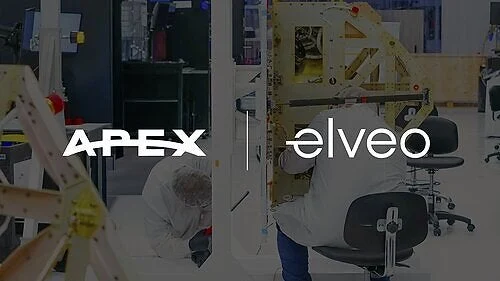

The global telecommunications and satellite manufacturing sectors witnessed a major structural development on Monday, September 14, 2026, as Elveo Mobile announced a strategic partnership with spacecraft manufacturer Apex. Under the agreement, the newly formed entity will establish a dedicated spacecraft manufacturing facility within the United States. This industrial base will be tasked with producing the satellite hardware required for Elveo’s upcoming Low-Earth Orbit (LEO) direct-to-device (D2D) constellation.
The alliance leverages Apex’s vertically integrated manufacturing framework, known as Factory X, to accelerate production timelines and secure the supply chain. By anchoring its initial manufacturing footprint in the U.S., Elveo aims to establish a reliable, high-volume production line capable of supporting a globally targeted satellite network. Furthermore, leadership from both organizations confirmed that this domestic facility serves as a blueprint for international expansion, with parallel manufacturing ecosystems planned for Europe and Asia in collaboration with regional industrial partners.
Background Context and Industry Evolution
The formation of this manufacturing partnership follows a transformative period for the companies involved. Elveo Mobile officially came into existence in August 2026 following the high-profile merger of direct-to-device competitors Lynk Global and Omnispace. Prior to the consolidation, both Lynk and Omnispace had spent years pioneering different facets of space-based cellular connectivity. Lynk specialized in connecting standard, unmodified mobile phones directly to satellites via cellular tower-in-space payloads, while Omnispace held valuable spectrum assets and focused on integrating mobile and satellite broadband architectures.
The merger of Lynk and Omnispace into Elveo Mobile was designed to eliminate market fragmentation, pool valuable regulatory spectrum rights, and combine intellectual property portfolios. However, transitioning from a combined corporate entity to an operational global service provider requires a massive capital expenditure in space infrastructure. Building a bespoke satellite constellation traditionally involves lengthy procurement cycles, disparate component suppliers, and high financial risk. By partnering with Apex, Elveo seeks to bypass traditional aerospace bottlenecks through standardized spacecraft bus platforms and streamlined assembly lines.
Chronology of Strategic Milestones
The trajectory leading up to the September 2026 manufacturing announcement highlights the rapid acceleration of the direct-to-device market:
- August 2026: Lynk and Omnispace complete their corporate merger, formally establishing Elveo Mobile and setting the stage for a unified D2D network strategy.
- Late August 2026: Technical integration teams evaluate potential manufacturing partners capable of meeting strict payload specifications and rapid deployment schedules.
- September 11, 2026: Executive leadership from Elveo and Apex finalize the agreement to utilize Apex’s Factory X model for domestic production.
- September 14, 2026: Elveo publicly announces the strategic partnership, detailing plans for U.S. manufacturing alongside future expansion into European and Asian markets.
Supporting Data and Technological Architecture
The technical blueprint for the Elveo constellation relies heavily on compliance with established telecommunications standards. The network is engineered to utilize patented satellite technology that strictly adheres to the 3rd Generation Partnership Project (3GPP) non-terrestrial networks (NTN) standards. This compliance is critical, as it ensures that the constellation can interface seamlessly with standard cellular protocols without requiring specialized user terminal hardware.
Payload design is another cornerstone of the Elveo network architecture. The satellites will feature advanced on-board processing (OBP) and sophisticated networking capabilities, allowing them to route traffic efficiently between space and terrestrial core networks.
Market data underscores the immense scale of the addressable market for these technologies. Industry analysts estimate that there are currently approximately 8 billion mobile phones and connected devices in active circulation worldwide. Elveo’s core business proposition is that its service will function directly on this vast, existing installed base of consumer handsets. By removing the need for consumers to purchase new hardware, satellite-enabled direct-to-device services bypass the primary adoption barrier that has historically limited satellite phone penetration.
Official Responses and Executive Insights
Leadership from both Elveo and Apex emphasized the strategic advantages of the collaboration, framing the partnership as a necessary shift in how commercial satellite constellations are financed and built.
Ramu Potarazu, Chief Executive Officer of Elveo, pointed to the economic and operational control gained through the arrangement. "As a leading manufacturer of next-generation spacecraft, Apex is helping us establish vertically integrated production and scale our supply chain, giving us an innovative and capital-efficient path to build our fleet," Potarazu stated in the official announcement. He added that the partnership puts the company in control of its development destiny and cost structure while fostering international high-tech economic opportunities through regional alliances.
While specific financial figures of the contract were not disclosed, industry observers note that Apex’s business model centers on mass-producing standardized spacecraft buses to reduce per-unit costs for commercial constellation operators. By avoiding the custom engineering overhead that historically plagued the satellite industry, Elveo can dedicate more capital toward payload optimization and spectrum acquisition.
Broader Impact and Market Implications
The decision by Elveo to establish localized manufacturing hubs in the United States, Europe, and Asia carries significant implications for the broader aerospace and telecommunications sectors.
First, it reflects a growing trend toward sovereign manufacturing capabilities. Governments worldwide are increasingly emphasizing domestic industrial capacity for critical infrastructure, including space assets. By establishing a U.S.-based factory, Elveo aligns with national security and economic priorities in North America, which could streamline regulatory approvals and government contracting opportunities.
Second, the partnership highlights the ongoing maturation of the direct-to-device market. Once viewed as a speculative niche, D2D communications have attracted major investments from mobile network operators (MNOs) seeking to eliminate rural and remote coverage gaps. With major players like AST SpaceMobile, SpaceX’s Starlink D2D initiative, and various mobile carriers launching competing services, the race is on to secure reliable manufacturing capacity. Elveo’s reliance on Apex’s Factory X model suggests that speed-to-orbit and manufacturing scalability will ultimately determine which market participants achieve commercial viability.
As Elveo moves forward with its manufacturing roadmap, industry stakeholders will closely monitor the timeline for the first production-line satellite rollouts. If successful, the decentralized manufacturing approach pioneered by Elveo and Apex could redefine how massive telecommunications constellations are built, deployed, and scaled in the decades ahead.
