
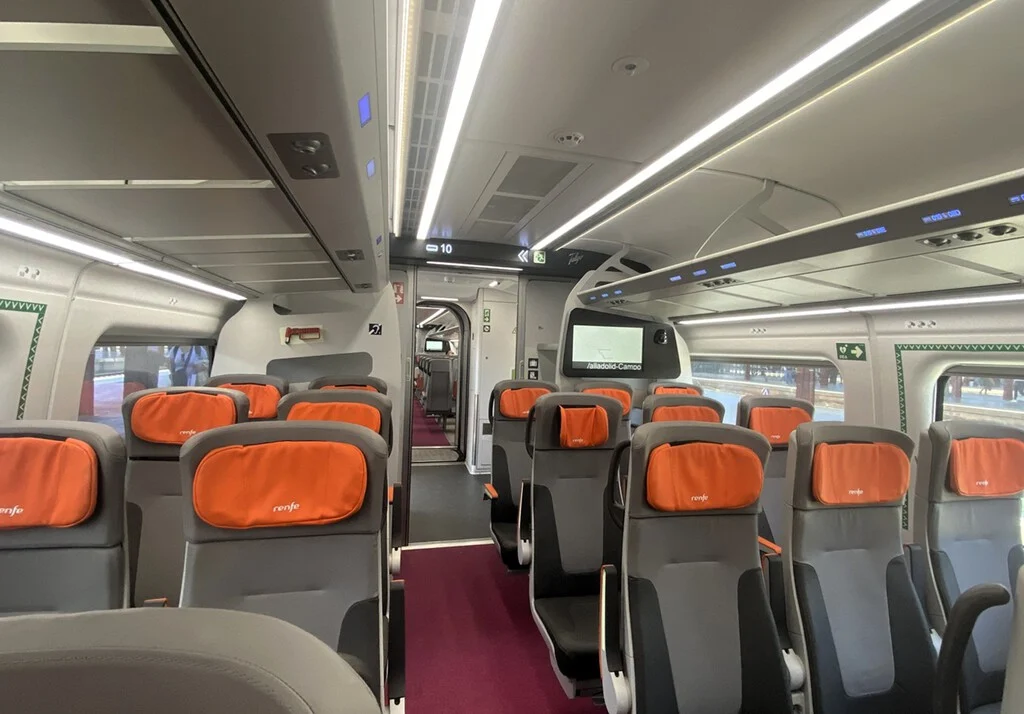

The relentless summer sun beating down on Extremadura, pushing temperatures to an unbearable 40°C in the shade, has exposed a critical vulnerability in Spain’s national railway infrastructure: trains operating without air conditioning. This isn’t a dramatic movie script but a harsh reality for thousands of passengers traversing the region’s vast plains, highlighting a systemic challenge in adapting public services to escalating climate extremes. The national rail operator, Renfe, has acknowledged the severity of the situation, confirming that some train systems are self-protecting by shutting down air conditioning units amidst the intense heat. This operational measure, while intended to prevent more severe mechanical failures, has inadvertently opened the floodgates for a wave of passenger complaints and potential indemnification claims, posing both a financial and reputational challenge for the company.
The Unfolding Crisis in Extremadura’s Rail Network
Extremadura, known for its arid climate and traditionally high summer temperatures, has been particularly hard-hit by this summer’s exceptional heatwaves. The region’s long-distance rail lines, connecting cities like Badajoz to Madrid, have become a focal point of discontent. According to detailed complaints from CCOO trade unions, the refrigeration systems on several Alvia trains operating on the Madrid-Extremadura route are proving incapable of coping with the blistering external temperatures. In response, and reportedly to conserve resources and prevent critical system overloads, trains are automatically deactivating air conditioning in certain carriages, often precisely when the mercury reaches its peak. This leads to passengers enduring journeys in stifling, unventilated conditions, transforming what should be a comfortable travel experience into a grueling ordeal.
The timing of these incidents coincides with a period described by meteorologists as an especially severe "canicula" – the traditional dog days of summer – characterized by prolonged periods of intense heat across the Iberian Peninsula. While Spain, like much of Southern Europe, is accustomed to hot summers, recent years have seen an alarming increase in the frequency, intensity, and duration of heatwaves, pushing existing infrastructure to its limits. This climatic shift underscores a broader challenge faced by European nations, many of which have discovered their public services and urban infrastructure are ill-equipped for the "new normal" of extreme weather events.
Renfe’s Operational Challenges and Response Protocols
Faced with a barrage of complaints, Renfe has publicly acknowledged the operational issues. The company’s internal protocols dictate specific responses when air conditioning systems fail or are intentionally deactivated. Primarily, train crews are instructed to re-seat affected passengers from non-air-conditioned carriages into those where the climate control remains functional. This "musical chairs" approach, while a stopgap measure, aims to mitigate passenger discomfort.
However, this solution presents its own set of logistical challenges. In situations where trains are at full capacity, a "sold out" scenario, re-seating all affected passengers becomes impossible. To pre-empt such predicaments, Renfe asserts that it attempts to anticipate extreme conditions and, in severe cases, may cease selling tickets for affected routes or specific train services. This proactive measure is designed to ensure sufficient empty seats are available to accommodate necessary passenger relocations. While commendable in intent, it highlights the operational strain placed on the network and the compromises required to maintain a semblance of service quality under duress. The company’s confirmation that the intense heat causes some trains to enter an "autoprotection" mode, shutting down air conditioning, points to a fundamental design or maintenance limitation in parts of its rolling stock, particularly older models, that were not engineered for sustained exposure to the current extreme temperatures.
A Summer of Extreme Heat: A Broader European Context
This summer has been particularly brutal across Europe, serving as a stark reminder of the continent’s vulnerability to climate change. From wildfires raging in the Mediterranean to unprecedented heat domes, infrastructure across various sectors has buckled under the strain. Spain, positioned on the front lines of climate change in Europe, is experiencing these impacts acutely. The "heat dome" phenomenon, where a persistent high-pressure system traps hot air, has led to record-breaking temperatures, contributing to a "Spanishisation" of European weather patterns.
The railway sector, in particular, is highly susceptible to extreme heat. High temperatures can cause rails to expand and buckle, necessitating speed restrictions or even line closures to prevent derailments. Overheating electrical components, including those critical for air conditioning units and traction systems, are also a significant concern. The cumulative effect is a cascade of delays, service disruptions, and reduced passenger comfort, eroding public trust in the reliability of rail transport, which is often promoted as a greener alternative. The issues in Extremadura are not isolated; similar incidents have been reported across other Spanish regions and indeed, other European countries, signaling a need for widespread infrastructure upgrades and climate resilience planning.
Navigating Passenger Rights: The OCU’s Stance
In the wake of these incidents, passenger rights and the potential for compensation have come to the forefront. The Organización de Consumidores y Usuarios (OCU), Spain’s leading consumer rights organization, has issued clear guidance for affected travelers. According to the OCU, passengers who endure journeys without functioning air conditioning in extreme heat conditions are entitled to a refund of their ticket price. This right stems from the principle that a transport contract encompasses not just the act of conveyance but also the implicit conditions under which the service is to be rendered.
While the OCU acknowledges that "no specific legal norm expressly recognizes an integral refund right for traveling in a train without air conditioning," it firmly states that "there are legal grounds that can justify such a refund when the breakdown constitutes a serious breach of the transport contract." The core argument revolves around the concept of a "grave breach" or "essential non-performance" of the contract. In the context of a high-speed train journey during a 40°C summer, the absence of air conditioning transcends a mere inconvenience; it fundamentally alters the expected and contracted quality of service, potentially compromising passenger health and safety. The OCU’s position empowers consumers to pursue claims, transforming what might seem like a minor service disruption into a legally actionable breach of contract.
EU Regulations: A Framework for Passenger Protection
Beyond national consumer protection guidelines, the rights of rail passengers are also enshrined in European Union law. The EU’s Regulation on rail passenger rights and obligations (Regulation (EU) 2021/782, previously Regulation (EC) No 1371/2007) provides a comprehensive framework for consumer protection across member states. This regulation explicitly addresses various aspects of service quality, including comfort and environmental conditions within train carriages.
Crucially, the EU regulation specifies that if a railway undertaking fails to ensure "the cleanliness of rolling stock and station facilities (air quality and temperature control in carriages, hygiene of sanitary facilities, etc.)," passengers may be entitled to request a refund of their ticket. This broad phrasing effectively provides a legal basis for compensation claims related to inadequate climate control. The regulation underscores the EU’s commitment to setting minimum standards for passenger experience, recognizing that comfort and hygiene are integral components of a quality public transport service. The existence of such a robust regulatory framework at the European level provides significant leverage for consumers seeking redress and places a clear obligation on railway operators like Renfe to ensure their services meet these stipulated standards, especially concerning fundamental amenities like air conditioning during peak travel seasons and extreme weather.
The Practicalities of Reclamation: Hurdles and Precedents
Despite the clear pronouncements from the OCU and the backing of EU regulations, the practical process of obtaining a refund for air conditioning failure is not always straightforward. Unlike delays, which can be precisely quantified in minutes or hours, the qualitative assessment of "unacceptable conditions" due to lack of air conditioning often falls to the discretion of the claims handler. This subjectivity can introduce variability in outcomes, making the process frustrating for consumers.
The OCU emphasizes that the success of a claim hinges on demonstrating that the lack of climate control constituted an "essential breach" of the contract, rather than a minor inconvenience. This requires passengers to provide compelling evidence and articulate their case thoroughly. Simply stating "it was hot" may not suffice. Instead, claimants should document the specific circumstances: the exact date and time of travel, train number, affected carriage, estimated temperature inside the carriage, and the duration of the discomfort. Photographic or video evidence, witness testimonies, and even medical notes (if the heat caused health issues) can significantly strengthen a claim.
While formal judicial precedents for such claims are scarce – primarily because many disputes are resolved through out-of-court agreements between consumers and companies – there are numerous documented cases where travelers have successfully secured refunds. Some of these cases have been protracted, with resolutions taking up to three years, but ultimately, the consumers prevailed. These agreements, though not binding legal precedents in the traditional sense, establish a pattern of Renfe acknowledging the validity of such claims under certain conditions. They serve as an encouraging indicator for future claimants, suggesting that with persistence and proper documentation, a refund is achievable. However, the lengthy resolution times underscore the bureaucratic challenges and the need for more streamlined processes for addressing such quality-of-service issues.
Economic and Reputational Implications for Renfe
The spate of air conditioning failures and the ensuing wave of compensation claims carry significant economic and reputational implications for Renfe. Financially, each refunded ticket represents lost revenue, and the cumulative cost of numerous such claims could be substantial, particularly during peak summer travel. Beyond direct refunds, there are administrative costs associated with processing complaints, investigating incidents, and managing customer service inquiries. If these issues escalate to a class action or widespread legal challenges, the financial burden could increase exponentially.
Reputationally, the impact is perhaps even more damaging. In an increasingly competitive transport market, passenger comfort and reliability are paramount. Images and stories of passengers enduring sweltering conditions on Renfe trains quickly spread through social media, eroding public trust and confidence in the national operator. This negative publicity can deter future travelers, pushing them towards alternative modes of transport or even budget airlines, which might appear more appealing despite their own challenges. Maintaining a reputation as a reliable and comfortable service provider is crucial for Renfe, especially as Spain continues to invest heavily in its high-speed rail network and promotes rail travel as a sustainable option. The current situation undermines these efforts and highlights the critical need for investment not just in expanding the network but also in maintaining and upgrading existing rolling stock to meet contemporary climate realities.
Looking Ahead: Adapting Infrastructure to Climate Change
The recurring issues with air conditioning on trains in Extremadura and elsewhere in Spain are symptomatic of a larger, more pressing challenge: adapting existing infrastructure to the accelerating impacts of climate change. European transport networks, largely built for historical climate patterns, are struggling to cope with the "new normal" of extreme heat, intense rainfall, and other severe weather events.
For Renfe and the Spanish government, this necessitates a multi-faceted approach. Immediate measures include rigorous maintenance schedules for air conditioning units, proactive diagnostics, and potentially investing in more robust cooling systems capable of operating efficiently at higher ambient temperatures. Longer-term strategies must involve significant investment in climate-resilient rolling stock and infrastructure upgrades. This could include purchasing new trains designed with enhanced thermal insulation and more powerful, efficient climate control systems, as well as developing predictive maintenance models that incorporate climate data to anticipate and prevent heat-related failures.
Furthermore, there is a need for clearer communication with passengers about potential disruptions and their rights. Transparency builds trust, even when services face challenges. Developing more efficient and less bureaucratic complaint resolution mechanisms would also benefit both passengers and the company. The current situation serves as a stark warning and a powerful call to action: public transport systems must evolve rapidly to ensure they can reliably serve citizens in a world increasingly shaped by climate extremes, safeguarding both comfort and safety for future generations of travelers.
