
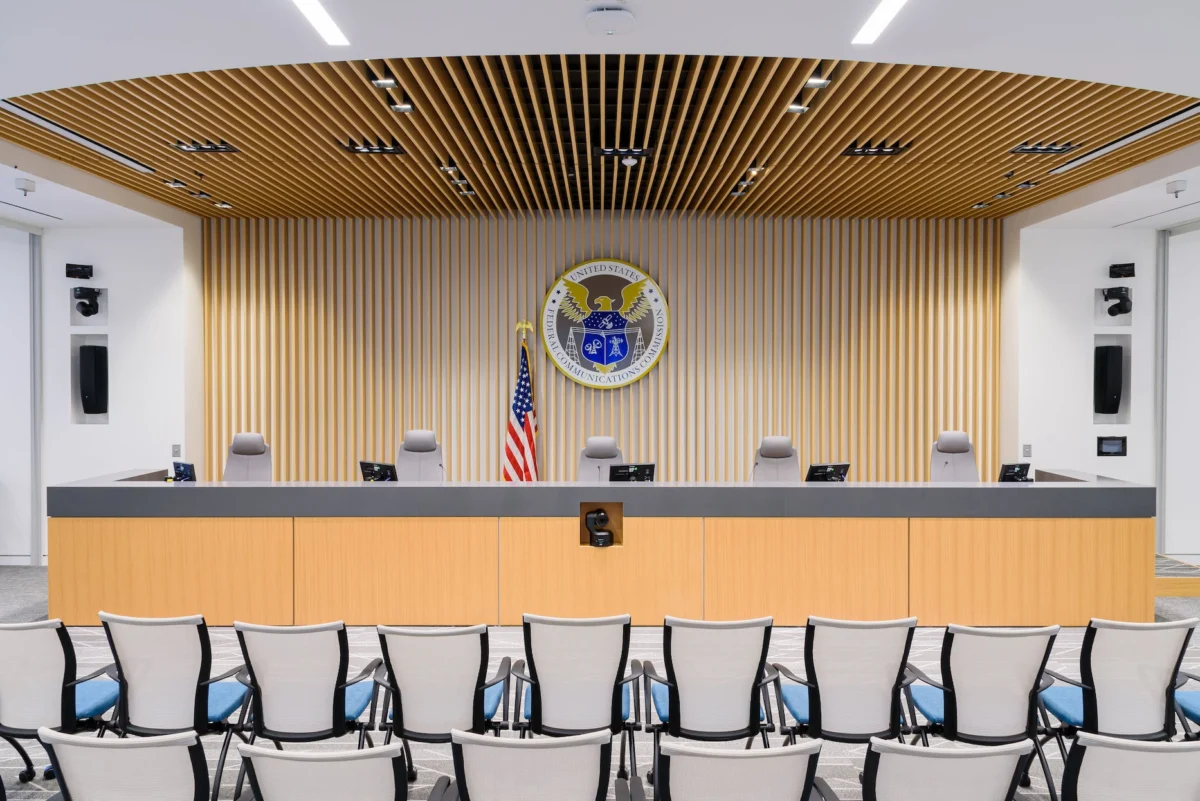

The Federal Communications Commission (FCC) has officially voted to move forward with a second major C-band auction, a landmark decision that will see satellite operators vacate 160 megahertz of the upper C-band to make room for next-generation wireless services. This move, approved on Wednesday, represents a significant step in the United States’ strategy to dominate the mid-band spectrum landscape, effectively creating a harmonized "super band" of 440 megahertz dedicated to 5G, 6G, and other advanced telecommunications technologies. The auction, which focuses on the spectrum range from 3.98 to 4.14 GHz, is scheduled to take place by July 2027, setting in motion a multi-year infrastructure overhaul that will require billions of dollars in investment and complex logistical coordination across the satellite and broadcast industries.
Defining the Super Band: A Strategic Shift in Spectrum Management
The approval of this auction is not an isolated event but rather the culmination of a decade-long effort to repurpose mid-band spectrum. Mid-band spectrum, often referred to as the "Goldilocks" frequency, is highly coveted by wireless carriers because it offers the ideal balance between the wide coverage areas of low-band spectrum and the high data capacity of high-band millimeter-wave spectrum. By clearing an additional 160 megahertz in the upper C-band, the FCC is building upon the momentum of the 2020 C-band clearing, which successfully transitioned 280 megahertz of spectrum (3.7–3.98 GHz) to mobile use.
The goal is to create a contiguous block of 440 megahertz of mid-band spectrum. This "super band" is intended to provide the bandwidth necessary for the high-speed, low-latency requirements of 5G Advanced and the nascent 6G standards. For consumers and businesses, this translates to faster mobile broadband, more reliable "fixed wireless" home internet, and the capacity to support millions of new Internet of Things (IoT) devices.
Infrastructure Requirements and Financial Estimates for Satellite Operators
The transition is a massive undertaking for the incumbent satellite operators who currently use these frequencies to distribute video and audio programming to thousands of cable and broadcast affiliates across North America. To vacate the 3.98 to 4.14 GHz range, operators such as SES, Eutelsat, and Telesat must launch new satellites and perform extensive ground-level modifications.
SES, one of the primary stakeholders in the C-band, has provided the FCC with detailed estimates regarding the scale of the transition. The company anticipates that clearing the upper C-band will cost upwards of $3.6 billion. This expenditure includes the procurement and launch of five new hybrid Ku-band satellites, along with two additional in-orbit backups to ensure service continuity. These new satellites are designed to compress existing services into a smaller portion of the remaining C-band spectrum (4.14 to 4.2 GHz) while utilizing other frequency bands to maintain throughput.
Eutelsat has also voiced its expectations, informing the FCC that its portion of the clearing process will cost approximately $750 million. While Telesat is also impacted, the company notably did not participate in the recent proceedings or raise objections to the FCC’s proposed reconfiguration options, suggesting a tacit acceptance of the regulatory path forward.
Beyond the space segment, the clearing requires a massive "retrofit" of the ground infrastructure. Thousands of broadcast and cable headends—the facilities that receive satellite signals and distribute them to local viewers—must be equipped with new filters and upgraded antennas to prevent interference from the incoming 5G signals. This logistical challenge involves dispatching technical teams to remote sites across the country to ensure that the transition does not result in a loss of television service for millions of households.
The Regulatory Timeline: July 2027 to December 2030
The FCC has established a rigorous timeline to ensure the spectrum is available for wireless deployment as quickly as possible while giving satellite operators enough lead time to manufacture and launch hardware. The auction of the 160 megahertz of spectrum is mandated to occur no later than July 2027. Following the auction, the winning bidders—likely major telecommunications firms such as Verizon, AT&T, and T-Mobile—will begin preparing their network deployments.
However, the incumbent satellite operators have been given a final deadline of December 30, 2030, to fully relocate their operations. This window allows for the multi-year cycle required for satellite construction and launch, which has been plagued by supply chain delays in recent years. The 2030 deadline is viewed by the commission as a firm "cutoff" to ensure that the U.S. does not fall behind international rivals in the race for mid-band capacity.
Historical Context: Building on the Success of the 2020 C-Band Transition
The current plan follows the blueprint of the 2020 C-band clearing, which was the largest and most complex spectrum transition in FCC history. In that instance, the FCC cleared 280 megahertz of spectrum, generating $81 billion in auction proceeds for the U.S. Treasury. To incentivize satellite operators to move quickly, the FCC utilized a system of "accelerated relocation payments."
In the 2020 clearing, satellite operators received a total of $9.7 billion in incentive payments for meeting early clearing deadlines. The bulk of these payments went to SES and Intelsat (the latter of which was recently acquired by SES in a $3.1 billion deal). For the upcoming auction, the FCC has confirmed that a similar incentive structure will be in place. While the specific dollar amounts will be released in a final order in the coming days, FCC officials have indicated the payments will be of a "similar scope and scale" relative to the amount of spectrum being cleared. Because 160 megahertz is less than the 280 megahertz cleared in 2020, the total pool of incentive money is expected to be lower, though still significant enough to cover transition costs and provide a profit for the operators.
Technical Challenges: The Aviation Interference Rubik’s Cube
One of the most sensitive aspects of the C-band transition involves the potential for interference with aircraft safety equipment. Radar altimeters, which pilots use to measure their distance from the ground during low-visibility landings, operate in the 4.2–4.4 GHz band—directly adjacent to the C-band spectrum being auctioned.
During the initial 5G rollout in 2022, concerns from the Federal Aviation Administration (FAA) and major airlines led to a tense standoff and delayed deployments near airports. To avoid a repeat of this conflict, FCC Chairman Brendan Carr emphasized that the commission has worked closely with the FAA to ensure that the new 160 megahertz block can coexist safely with aviation technology.
Carr described the upper C-band as a "Rubik’s cube" of competing interests, involving wireless carriers, aviation stakeholders, satellite operators, and media companies. The current order includes technical safeguards and guard bands designed to mitigate the risk of "signal bleed" into the aviation frequencies. The commission reviewed over 100 formal comments and replies from stakeholders before finalizing the auction rules, reflecting the high stakes of the technical coordination involved.
Internal Commission Dynamics: Tribal Windows and Split Decisions
Despite the general consensus on the need for more spectrum, the vote was not unanimous in all aspects. Democratic Commissioner Anna Gomez voted to approve the order in part but dissented in part, specifically regarding the lack of a "tribal licensing window."
Gomez pointed to requests from organizations representing hundreds of tribal governments, who argued that a portion of the C-band should be set aside or offered via a priority window to help bridge the digital divide on tribal lands. These advocates argued that without such a window, tribal entities would be outbid by multi-billion-dollar telecom giants. The FCC majority, however, opted not to include a tribal window in this specific auction, focusing instead on a traditional competitive bidding process to maximize efficiency and revenue.
Commissioners Brendan Carr and Olivia Trusty, both of whom approved the order, argued that the aggressive timeline and the predictable process were necessary for national competitiveness. Trusty noted that expanding mid-band access is essential for the deployment of artificial intelligence (AI) applications, which require massive amounts of data to be transmitted at high speeds across wireless networks.
Economic and Technological Implications: 5G, 6G, and Artificial Intelligence
The economic implications of the FCC’s decision are profound. The wireless industry contributes hundreds of billions of dollars to the U.S. GDP annually, and the availability of spectrum is the primary raw material for this growth. By clearing the upper C-band, the FCC is providing the "fuel" for the next decade of wireless innovation.
- 6G Development: While 5G is still being optimized, the global telecommunications industry is already defining the standards for 6G. The 4 GHz range is considered a foundational band for 6G, and by securing this spectrum now, the U.S. positions itself as a leader in the next generation of connectivity.
- AI Integration: Modern AI models, particularly those used in autonomous vehicles and real-time industrial automation, rely on "edge computing." This requires a robust wireless link that can handle high-capacity data loads without lag. The 160 megahertz of new spectrum will provide the necessary overhead for these AI-driven services.
- Market Consolidation: The transition occurs against the backdrop of significant industry consolidation, most notably the SES-Intelsat merger. This merger creates a dominant satellite player that will handle the lion’s share of the C-band relocation, potentially streamlining the coordination process but also raising questions about market competition in the satellite sector.
The Impact on Media Distribution and Broadcast Infrastructure
For the media industry, the auction represents a forced evolution. The C-band has been the "workhorse" of the television industry since the 1970s because its signals are resistant to "rain fade," making it incredibly reliable for distributing live sports, news, and entertainment.
As the available C-band spectrum shrinks from 500 megahertz to just 60 megahertz (the remaining "guard band" and upper sliver), broadcasters are being forced to adopt more efficient compression technologies, such as HEVC (High-Efficiency Video Coding). This transition, while expensive and technically demanding, is ultimately driving the media industry toward more modern, IP-based distribution methods.
As the final order is released in the coming days, the industry will be watching closely for the specific incentive payment figures. For SES and Eutelsat, these payments are not just reimbursements; they are critical capital infusions that will fund the next generation of satellite constellations. For the FCC, the successful execution of this auction will be a cornerstone of its legacy in managing the invisible resource that powers the modern digital economy.
