
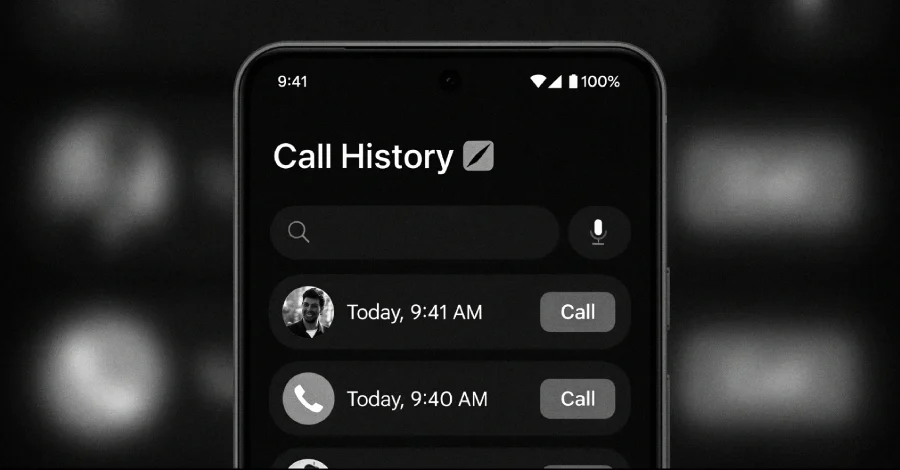

Cybersecurity researchers have unveiled a sophisticated scheme involving fraudulent applications on the official Google Play Store for Android, which deceptively promised users access to call histories for any phone number. This elaborate ruse ultimately entrapped victims into costly subscriptions that delivered nothing more than fabricated data, resulting in significant financial detriment. The uncovering of these malicious apps, collectively downloaded over 7.3 million times before their removal, highlights the persistent challenges in maintaining the integrity of major digital app marketplaces and the need for continuous user vigilance.
The discovery was brought to light by Slovakian cybersecurity firm ESET, which has codenamed the illicit activity "CallPhantom." The campaign primarily targeted Android users within India and the broader Asia-Pacific region, exploiting a common desire for information often associated with surveillance or curiosity. A staggering number of 28 distinct applications were identified as part of this operation, with one particularly successful variant alone accumulating more than 3 million downloads, underscoring the effectiveness of the deception and the sheer scale of potential victims.
Lukáš Štefanko, a security researcher at ESET, detailed the operation in a report shared with The Hacker News, explaining the core mechanism of the scam. "The offending apps, which we named CallPhantom based on their false claims, purport to provide access to call histories, SMS records, and even WhatsApp call logs for any phone number," Štefanko stated. The lure was simple yet powerful: users were led to believe they could uncover private communication details by merely installing an app. However, the true motive quickly became apparent once users attempted to access these supposed features. "To unlock this supposed feature, users are asked to pay — but all they get in return is randomly generated data." This deceptive exchange meant users were paying for completely worthless, algorithmically generated information, designed to mimic real call logs but bearing no actual resemblance to any legitimate data.
The Anatomy of the CallPhantom Deception
The fraudulent apps employed several tactics to ensnare users. One particularly insidious method involved impersonating official entities to cultivate a false sense of legitimacy and trust. At least one of the flagged applications was published under the developer name "Indian gov.in," a clear attempt to mislead users into believing the app was an official government service. This tactic is often used by cybercriminals to bypass initial skepticism and capitalize on public trust in governmental institutions. Such impersonation not only enhances the app’s credibility in the eyes of unsuspecting users but also makes it more likely to be downloaded without rigorous scrutiny.
Upon installation, users were typically prompted to make a payment to view the purported details of a phone number’s call and SMS history. Once the payment was processed, the apps would display entirely fabricated phone numbers and names, which were often directly embedded into the application’s source code rather than being dynamically generated or retrieved from a database. This pre-programmed nature of the fake data further confirmed the scam’s fraudulent intent. Evidence suggests that this specific activity, or similar variants, may have been active for an extended period, with reports and discussions on platforms like Reddit indicating user encounters as early as November 2023. This extended operational window allowed the scam to accumulate millions of downloads before being fully identified and addressed.

Another cluster of these malicious applications was designed to prompt users for their email addresses, promising that the "details" of any phone number would be delivered directly to their inbox. In a pattern consistent with the other variants, no actual data was ever generated or sent until a payment was successfully made. This two-step approach added another layer of perceived legitimacy, as users might believe the data was being processed and would be sent after payment.
Payment Mechanisms and Policy Violations
The payment methods employed by the CallPhantom apps were diverse, reflecting an attempt by the perpetrators to maximize their revenue streams and circumvent platform policies. Some apps utilized Google Play Store’s official billing system for subscriptions, which, while offering a degree of protection through Google’s refund policies, still funneled money to the fraudsters. However, a significant portion of the payments relied on third-party apps that support the Unified Payments Interface (UPI), an instant payment system widely prevalent in India. Ironically, this list included popular and trusted platforms such as Google Pay, Walmart-backed PhonePe, and Paytm. A third, more direct, method involved payment card checkout forms embedded directly within the fraudulent applications, bypassing both Google’s billing system and external UPI apps.
The latter two approaches – payments via third-party UPI apps and direct payment card entry – are explicitly in violation of Google’s strict policies regarding in-app purchases. Google mandates that all digital content and services sold within apps distributed through the Play Store must use Google Play’s billing system. This policy is in place to ensure security, provide consistent user experience, and allow Google to enforce its refund and dispute resolution mechanisms. The deliberate circumvention of these policies by the CallPhantom operators underscores their intent to operate outside the platform’s protective frameworks, making it harder for affected users to recover their funds.
Adding another layer of deceit, at least one of the apps implemented an additional trick to coerce users into making a payment. If a user attempted to exit the app without subscribing or making a payment, it would display a deceptive notification. This notification falsely claimed that a call history for a specified phone number had been successfully sent to their email address. Clicking on this misleading notification would then immediately redirect the user back to the subscription or payment screen, creating a persistent pressure to pay.
The subscription plans themselves varied significantly across the different apps, ranging from approximately $6 to $80. This wide range suggests that the scammers were experimenting with different price points to see what generated the most revenue or to cater to different perceived user thresholds for payment. For users who had subscribed via the official Google Play billing system, there was a silver lining: their subscriptions would have been automatically canceled after the apps were removed from the Google Play Store, potentially making them eligible for refunds under Google’s policies. However, for those who paid via third-party apps or direct card entry, the path to recovery is significantly more arduous.
Minimal Permissions, Maximum Deception

What made the CallPhantom activity particularly notable, and perhaps successful in its initial stages, was the apparent simplicity of the applications. They featured relatively straightforward user interfaces and, crucially, did not request any overtly sensitive permissions typically associated with intrusive or malicious apps. This lack of suspicious permission requests might have helped them evade initial detection by users and automated security systems. Furthermore, and most damningly, the apps possessed no actual functionality to retrieve legitimate call, SMS, or WhatsApp data. Their entire purpose was to present a façade of utility to extract payment for non-existent services.
ESET clarified the refund situation for affected users: "Users who subscribed via official Google Play billing may be eligible for refunds under Google’s refund policies," the company stated. "Purchases made via third-party payment apps or through direct payment card entry cannot be refunded by Google, leaving users dependent on external payment providers or developers." This distinction is critical for victims seeking recourse, highlighting the added risks associated with bypassing official app store payment channels.
Broader Context: The GoldFactory Campaign and Regional Cybercrime
The disclosure of the CallPhantom scheme comes amidst a broader landscape of sophisticated cyber fraud campaigns targeting users in the Asia-Pacific region. Coincidentally, cybersecurity firm Group-IB recently reported on another large-scale fraud campaign, dubbed "GoldFactory," which has stolen an estimated $2 million from Indonesian users alone. This campaign, which commenced in July 2023, involved threat actors posing as Indonesia’s tax platform, CoreTax, and other trusted brands to defraud victims. The geographic overlap and similar modus operandi of exploiting trust and financial incentives suggest a thriving ecosystem of cybercrime targeting this region.
Group-IB’s research into GoldFactory revealed a highly integrated and multi-faceted attack chain. "The attack chain integrates phishing websites, social engineering (WhatsApp), malicious APK sideloading, and voice phishing (vishing) to achieve full device compromise and unauthorized transfer execution," Group-IB detailed in its report. This level of sophistication goes beyond the relatively simpler CallPhantom scheme, indicating a gradient of threat actors from those deploying basic deceptive apps to highly organized groups employing advanced techniques.
The GoldFactory attacks, for instance, leveraged social engineering tactics to distribute fake applications, often via popular messaging platforms like WhatsApp. When installed, these seemingly benign apps would deploy potent Android malware, including notorious strains such as Gigabud RAT, MMRat, and Taotie. These Remote Access Trojans (RATs) are highly capable, designed to harvest sensitive user data, intercept communications, and download additional malicious components onto the compromised device. The stolen information is then meticulously used to conduct account takeover attacks, bypass multi-factor authentication, and ultimately execute unauthorized financial transfers, leading to direct monetary theft.
The scale of the GoldFactory campaign is particularly alarming. Group-IB noted that the malware infrastructure supporting this fraud was not confined to a single impersonated service. Instead, the same underlying infrastructure was observed actively abusing more than 16 trusted brands, collectively targeting Indonesia’s vast population of approximately 287 million. This wide-ranging approach maximizes the potential victim pool and demonstrates the adaptability and resourcefulness of the threat actors behind GoldFactory.

Implications and Future Outlook
The CallPhantom and GoldFactory campaigns serve as stark reminders of the persistent and evolving threats within the digital ecosystem. For users, these incidents underscore the critical importance of exercising extreme caution when downloading apps, even from official app stores like Google Play. While platforms strive to maintain security, sophisticated fraudsters continuously seek new ways to circumvent protections. Users should always:
- Verify Developer Credibility: Check developer names, their history, and other apps they have published. Be wary of generic or suspicious-sounding developer names, or those impersonating official entities.
- Read Reviews and Ratings: While reviews can sometimes be faked, a large number of negative reviews or suspicious patterns in positive reviews (e.g., all five-star reviews within a short period) should raise red flags.
- Scrutinize Permissions: Understand what permissions an app requests. An app claiming to provide call logs should not necessarily need extensive access to contacts, messages, or location if its claims are fake. Though in CallPhantom’s case, the lack of sensitive permissions was part of the trick.
- Be Skeptical of Unrealistic Promises: Any app promising to provide access to private data like call histories for "any phone number" is highly likely to be fraudulent, as legitimate access to such data is legally restricted and technically complex.
- Use Official Payment Channels: Whenever possible, stick to official payment methods provided by the app store to avail of platform-level protections and refund policies.
- Stay Informed: Follow cybersecurity news and advice from reputable sources to understand current threats.
For platforms like Google, these incidents highlight the continuous arms race against cybercriminals. Despite significant investments in AI-driven threat detection and manual review processes, malicious actors adapt quickly. The challenge lies in distinguishing between legitimate applications and those with subtle, deceptive functionalities, especially when they initially appear harmless and request minimal permissions. Ongoing improvements in app vetting, proactive threat intelligence sharing, and rapid response to reported threats are crucial to protecting the vast user base.
Ultimately, the CallPhantom saga is a testament to the fact that even seemingly simple scams can achieve widespread success when they tap into human curiosity and exploit trust in digital platforms. As the digital landscape becomes increasingly integrated into daily life, fostering digital literacy and critical thinking among users remains as important as the technological defenses deployed by cybersecurity experts and platform providers.
