
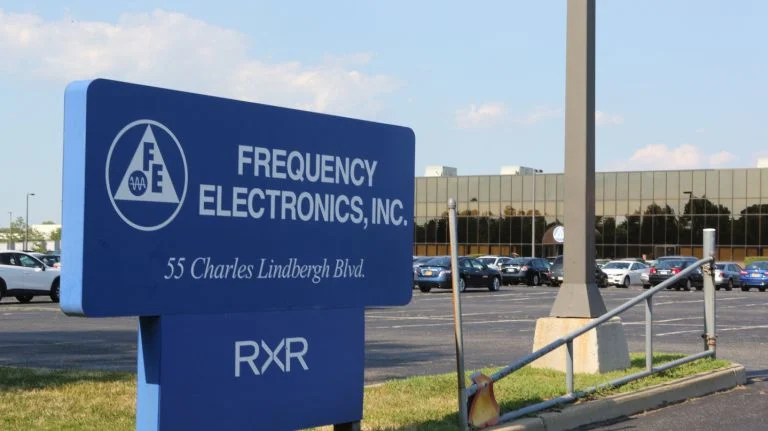

Frequency Electronics, Inc. (FEI), a global leader in the design and manufacture of high-precision timing and frequency control products, has announced the receipt of several new contracts totaling approximately $18 million. The most significant portion of this funding, an $11 million award, comes from an undisclosed major aerospace prime contractor. This specific contract is designated to support a proliferated satellite program, marking a critical milestone in the company’s strategic expansion into the rapidly growing Low Earth Orbit (LEO) satellite market. In addition to this primary award, the company secured $7 million in follow-on production contracts for space-qualified oscillators and various non-space programs for the United States government.
The announcement reflects a period of aggressive growth for the New York-based firm, which has successfully positioned itself as a vital tier-two supplier within the defense and aerospace industrial base. The $11 million contract represents the first time Frequency Electronics has served as a direct supplier for this particular aerospace prime contractor, suggesting an expansion of the company’s customer base and an increasing reliance on its specialized technology by top-tier defense integrators.
Strategic Entry into Proliferated Satellite Programs
The concept of "proliferated" satellite programs refers to a shift in aerospace architecture from a small number of large, expensive, and vulnerable satellites in Geostationary Orbit (GEO) to large constellations of smaller, interconnected satellites in Low Earth Orbit. This shift, spearheaded largely by the U.S. Space Development Agency (SDA) and its Proliferated Warfighter Space Architecture (PWSA), requires a high volume of precision components that can withstand the rigors of space while maintaining synchronized timing for communications, navigation, and surveillance.
Under the terms of the new $11 million contract, Frequency Electronics will provide advanced on-board precision frequency-generation systems. These systems act as the "heartbeat" of a satellite, ensuring that all data transmission and internal processing occur with microsecond accuracy. For proliferated constellations, where hundreds of satellites must communicate with one another (inter-satellite links) and with ground stations simultaneously, the stability of these frequency systems is paramount to preventing signal degradation and data loss.
President and CEO Tom McClelland emphasized the importance of this win, noting that it is the company’s second major contract related to proliferated satellite programs this year. The repeat success in this niche suggests that FEI’s investment in research and development for smaller, more efficient space-qualified oscillators is beginning to yield significant market share.
High-Margin Follow-on Awards and Operational Efficiency
Complementing the $11 million new business award is $7 million in follow-on production contracts. These awards cover both space-based oscillators and specialized timing solutions for terrestrial and maritime U.S. government programs. Follow-on contracts are particularly valuable for specialized manufacturers like Frequency Electronics because they involve mature technologies where the initial engineering and development (NRE) costs have already been amortized.
"The follow-on awards we won are also very attractive for FEI, as they tend to come at higher than average corporate gross margins, as we leverage previous engineering and development costs," McClelland stated during a recent briefing. By transitioning from the design phase to the production phase, the company can maximize profitability while providing the government with proven, reliable hardware.
The non-space government programs mentioned likely involve secure communications, electronic warfare (EW), and radar systems. In these applications, precise frequency control is essential for frequency-hopping spread spectrum (FHSS) technologies, which protect military communications from jamming and interception. As geopolitical tensions rise, the demand for resilient, interference-resistant timing systems has increased across all branches of the U.S. military.
Record Backlog and Financial Trajectory
The recent contract wins contribute to a record-breaking funded backlog for Frequency Electronics. The company reported that its backlog now stands at $111 million, representing a nearly 60% increase compared to the same period in the previous fiscal year. This surge in orders provides the company with a multi-year "runway" of guaranteed revenue, allowing for more stable long-term financial planning and investment.
This growth in backlog follows a deliberate period of internal investment. During the last fiscal year, leadership made the strategic decision to prioritize the hiring of high-level engineering talent and the modernization of manufacturing facilities. This "front-loading" of expenses was intended to prepare the company for a projected "ramp-up" in production volume.
The transition from a low-volume, high-complexity engineering firm to a high-volume production house is a significant hurdle for many aerospace suppliers. However, FEI’s management has signaled to investors that the company is now entering the execution phase of this transition. With the engineering team in place and the manufacturing floor optimized, the company expects to see a direct correlation between the growing backlog and future quarterly revenue growth.
Timeline of Recent Developments and Industry Context
The trajectory of Frequency Electronics over the past 24 months illustrates a broader trend in the defense industry toward "Space 2.0."
- Two Years Ago: FEI began a pivot toward the "New Space" economy, focusing on reducing the size, weight, and power (SWaP) of its traditional rubidium and quartz-based clocks to meet the requirements of smaller satellite buses.
- Twelve Months Ago: The company initiated a recruitment drive, targeting specialized RF (radio frequency) and systems engineers to handle an anticipated influx of government-funded space projects.
- Six Months Ago: FEI announced its first major win in the proliferated satellite sector, signaling to the market that its technology was viable for large-constellation deployments.
- Current Quarter: The company achieves a record $111 million backlog and secures its first contract with a major undisclosed prime contractor, validating its market position.
The broader context of these wins is the U.S. Department of Defense’s (DoD) increasing budget allocation for space resiliency. The 2024 and 2025 defense budget proposals have shown a clear preference for diversifying space assets. By moving away from "exquisite" multibillion-dollar satellites that can be targeted by anti-satellite (ASAT) weapons, the DoD is creating a massive market for companies like FEI that can mass-produce the critical components needed for hundreds of smaller satellites.
Analysis of Technical and Market Implications
The requirement for precision timing in space has never been higher. As satellite constellations grow in density, the risk of signal interference increases. Frequency Electronics’ systems utilize both quartz crystal and rubidium atomic clock technologies to provide stability over long periods. In the vacuum of space, where temperature fluctuations are extreme, maintaining a stable frequency is a significant engineering challenge.
The $11 million contract for "on-board precision frequency-generation systems" likely involves FEI’s latest generation of Master Reference Oscillators (MRO). These units serve as the primary timekeeper for the entire spacecraft, synchronizing everything from the payload’s data collection to the thrusters’ firing sequences.
From a market perspective, the "undisclosed major aerospace prime contractor" is a key detail. In the aerospace industry, breaking into the supply chain of a prime contractor (such as Lockheed Martin, Northrop Grumman, or Boeing) is a rigorous process involving extensive audits and quality certifications. Once a supplier is "designed in" to a prime’s architecture, they are often locked in for the duration of the program, which can span decades. This $11 million win is likely the "foot in the door" that could lead to hundreds of millions of dollars in future orders as the prime contractor’s satellite constellation scales.
Future Outlook: Scaling for the "Large Ramp-Up"
Looking ahead, the leadership at Frequency Electronics is optimistic about continued expansion in the satellite sector. Tom McClelland’s statement that the company expects "significantly more wins in this area" suggests that several other bids are currently in the pipeline.
The primary challenge facing the company now is operational execution. Moving from a $69 million backlog to a $111 million backlog requires a commensurate increase in throughput. The company’s decision to hire engineering talent in advance of this ramp-up is a proactive move to avoid the supply chain bottlenecks that have plagued other defense contractors in the post-pandemic era.
As FEI continues to fulfill these contracts, investors and industry analysts will be watching the company’s gross margins closely. If FEI can successfully leverage its previous R&D costs as planned, the shift toward follow-on production should lead to increased profitability and cash flow. This, in turn, would allow the company to further innovate in the fields of quantum sensing and next-generation atomic clocks, ensuring its relevance in the defense and space sectors for years to come.
The $18 million in new contracts serves as a microcosm of the current state of the aerospace industry: a move toward proliferation, an emphasis on domestic manufacturing, and a critical need for precision technology to secure the high ground of space. For Frequency Electronics, these wins are not just a financial boost but a validation of a long-term strategic pivot toward the future of orbital infrastructure.
