
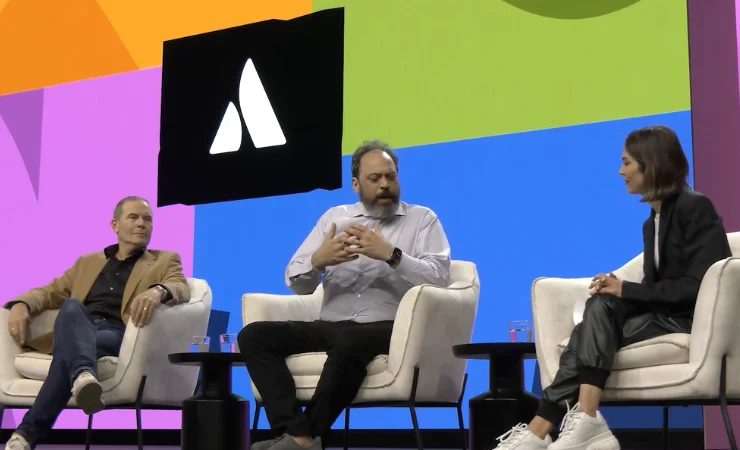

The transition from organizational AI experimentation to deep-rooted AI integration served as the central narrative at the Atlassian Team ’24 conference in Anaheim, California. The event’s opening keynote provided an analytical look into the current state of the artificial intelligence landscape, featuring insights from Ethan Mollick, an innovation expert and professor at the Wharton School of the University of Pennsylvania, and Magnus Östberg, Chief Software Officer at Mercedes-Benz AG. Together, they explored the trajectory of the human-AI workforce, emphasizing that the journey from being an "AI novice" to an "AI native" is less about generational demographics and more about the fundamental reimagining of organizational workflows, safety protocols, and the critical role of institutional context.
The Myth of the Generational AI Native
A primary point of discussion during the keynote was the definition of an "AI native" in the professional sphere. While the term is often used to describe younger employees who have grown up with digital technology, Mollick presented a counter-intuitive perspective based on recent empirical research. He argued that the label "AI native" is currently a misnomer when applied to the workforce.
Mollick cited a significant study conducted in collaboration with Boston Consulting Group (BCG) and Harvard researchers, which examined the impact of AI on high-end professional services. The study found that while AI leveled the playing field—allowing lower-performing consultants to improve their output by up to 43%—senior professionals still maintained an edge in quality and strategic application. "I don’t think AI native means very much yet," Mollick stated. "In our study, we found that junior people were actually worse at using AI than senior people. At the individual level, the concept of being an AI native hasn’t crystallized into a specific skill set tied to age."
Magnus Östberg reinforced this sentiment from the perspective of a global automotive leader. He noted that while Mercedes-Benz employees are already active users of AI, the organization is still in a phase of deep learning. "We are already users of AI, but I would not say that we completely understand everything about it," Östberg remarked. He emphasized that the current priority for large-scale enterprises is not just adoption, but the discernment of utility—understanding precisely where AI adds value and where its application poses unacceptable risks.
Strategic Exploration and the Jagged Frontier
The rapid pace of AI development has created a "jagged frontier" where the technology excels at some complex tasks but fails at seemingly simpler ones. For leadership, this creates a challenge in establishing a standardized "instruction manual" for implementation. Mollick observed that even the heads of leading AI labs and Fortune 500 CEOs are operating without a definitive roadmap. Exploration, therefore, has become the primary strategy for survival.
For Mercedes-Benz, this exploration is governed by a rigorous balancing act between innovation and risk. The automotive industry operates under some of the world’s strictest safety standards, where the "fail fast" mentality of Silicon Valley is often incompatible with physical engineering. Östberg explained that Mercedes-Benz categorizes AI applications into two distinct buckets: high-impact/low-risk experimentation and mission-critical safety systems.
In the realm of user experience, AI is being used as a "revolutionary tool" to enhance voice interaction and cabin environments. These are areas where the company feels comfortable experimenting to provide "delight" to the customer. However, Östberg was clear about the boundaries: "There are boundaries that we don’t go across. For example, brake systems or systems that keep physical objects intact. We have a debate in the industry right now regarding end-to-end models and advanced world models. Currently, they cannot be classified under the highest level of safety standards. No one has proven they can meet those theoretical requirements yet."
The Criticality of Organizational Context
As AI models become more sophisticated, the focus is shifting from simple prompting to "context engineering." Mollick argued that the next frontier for AI-native organizations is the integration of deep institutional memory into AI systems. It is no longer enough to provide a model with a single document; the model must understand the history of a project, the unique strengths of the team members involved, and the specific cultural nuances of the organization.
"What matters now is how we give the AI the context of an organization," Mollick explained. "How do we integrate the fact that this project has a history? How do we integrate the strengths and weaknesses of different people? We need to move beyond product context to include the context of where we get stuck, where we can execute, and what makes people happy."
For a legacy brand like Mercedes-Benz, which carries 140 years of heritage, context is synonymous with brand identity. Östberg detailed how AI must be tuned to understand the specific "Mercedes experience." This includes everything from the visual language models interpreting video feeds inside and outside the cabin to understanding the emotional state of the driver.
"Are you stressed? Are you having a karaoke party? Or are you in a stressful work environment where you just want to complete a task?" Östberg asked. He posited that AI must understand these variables to fulfill requests in a way that is "in harmony with the brand identity." For an aspirational brand, the digital experience must match the tactile luxury of the leather and the acoustic sound of the door closing. In this view, context is the bridge between raw computational power and the premium user experience.
Reimagining Workflows and the Future of Engineering
The shift toward becoming an AI-native organization necessitates a fundamental change in how software engineering and project management are conducted. Mercedes-Benz is currently utilizing Atlassian tools like Jira and Confluence, augmented by AI agents, to synchronize activities across its global software teams. However, the goal is not just to do the same work faster, but to reimagine the workflow entirely.
Östberg noted that while AI has shown "great benefits" in early-stage code prototyping, the larger opportunity lies in value stream mapping. "We are trying to figure out what the new workflows look like," he said. "How can we use AI to propose new processes and reimagine the value streams?"
This reimagining may lead to a paradoxical increase in the demand for skilled software engineers. Mollick suggested that rather than replacing engineers, AI will allow them to move away from "touching code" and toward high-level systems thinking. "There is a shortage of software in the world and a shortage of people who can think about it," Mollick noted. He predicted a "fairly disruptive period of transformation" over the next few years, where the best players in the industry will leverage AI to handle the bulk of execution while they focus on architecture and workflow innovation.
Chronology of the AI Transformation
The transition discussed at Atlassian Team ’24 can be viewed through a chronological lens of organizational evolution:
- The Novice Phase (2022-2023): Characterized by individual employees using "shadow AI" (unauthorized tools) to assist with basic writing and coding tasks. Organizations began establishing basic usage policies.
- The Experimental Phase (2023-2024): Large enterprises like Mercedes-Benz begin formal pilots in low-risk areas such as customer service chatbots and internal knowledge bases (Confluence).
- The Contextual Phase (2024-2025): The current focus. Organizations are working to connect their private data and institutional history to LLMs using Retrieval-Augmented Generation (RAG) and specialized AI agents.
- The Native Phase (2026 and beyond): Workflows are no longer "human-led with AI assistance" but are designed from the ground up to be executed by AI agents overseen by human strategic leads.
Broader Implications for the Global Workforce
The insights from Mollick and Östberg suggest that the "AI Native" organization will be defined by its ability to manage the "human-AI hybrid" effectively. According to data from Goldman Sachs, generative AI could automate up to 300 million full-time jobs, but it also has the potential to boost global GDP by 7% over a ten-year period.
The keynote speakers concluded that the path forward requires a culture of continuous experimentation. For organizations, this means identifying "safe harbors" for AI testing where failure does not compromise core safety or brand integrity. For individuals, it means moving beyond the technical mechanics of coding or writing and developing the "soft" skills of context-setting, empathy, and strategic oversight.
As the industry moves through this disruptive period, the divide will not be between those who use AI and those who do not, but between those who use AI as a peripheral tool and those who have reimagined their entire operational DNA around the capabilities of the machine. The "crystal ball" offered at Anaheim suggests that while the destination is a state of AI-native harmony, the journey remains an unscripted exploration of the "jagged frontier."
