
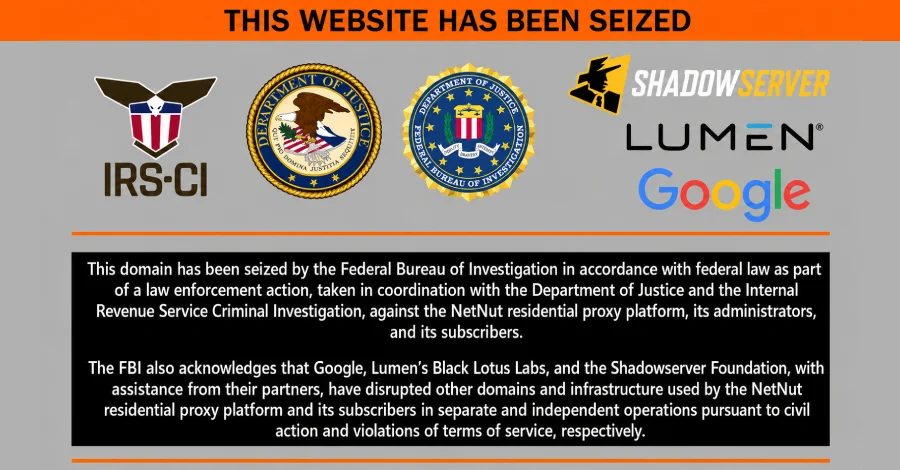

In a significant victory against the shadowy infrastructure underpinning global cybercrime, Google, in collaboration with the FBI, Lumen, and other key partners, has announced a substantial degradation of NetNut, one of the world’s largest residential proxy networks. This coordinated action, spearheaded by Google’s Threat Intelligence Group (GTIG), has reportedly reduced NetNut’s pool of usable compromised devices by millions, dealing a severe blow to a network that has long facilitated illicit activities by allowing malicious actors to route their traffic through unsuspecting home internet connections. The operation, made public on July 2, 2026, marks a critical escalation in the ongoing battle against sophisticated cybercriminal enterprises that exploit consumer devices for anonymity and evasion.
The Anatomy of a Residential Proxy Network
At its core, a residential proxy network operates by covertly transforming ordinary home devices—ranging from personal computers and smartphones to smart TVs and streaming boxes—into "exit nodes" for other people’s internet traffic. Unlike legitimate Virtual Private Networks (VPNs) or commercial proxy services that utilize data centers, residential proxies offer access to real, unique home IP addresses. This distinction is crucial for cybercriminals, as traffic originating from a residential IP address appears to security systems as legitimate, everyday browsing activity, rather than suspicious data center traffic that is frequently flagged and blocked. This allows attackers to bypass sophisticated fraud detection mechanisms, conduct large-scale credential stuffing attacks, perform web scraping, or even launch distributed denial-of-service (DDoS) attacks while masquerading as millions of different users.
The appeal of residential proxies to malicious actors stems from their ability to confer a high degree of anonymity and legitimacy. By routing their traffic through a compromised home device, cybercriminals effectively obscure their true geographical location and identity, making attribution and prosecution exceedingly difficult for law enforcement agencies. This "blend-in" capability is invaluable for operations requiring stealth, such as account takeovers, financial fraud, and state-sponsored espionage, where the goal is to mimic legitimate user behavior as closely as possible.
NetNut: A Giant in the Shadow Economy

Google identifies NetNut, also known by the alias Popa, as a vast network spanning millions of home devices across the globe. GTIG estimates that the network, prior to this disruption, comprised at least 2 million actively compromised devices, making it a formidable player in the illicit proxy market. The operation of such a network relies on a continuous supply of new "exit nodes," which are typically acquired through deceptive means.
The methods for building this extensive pool of compromised devices are varied and often insidious. Some devices, particularly cheap, off-brand hardware, may ship with the malicious software pre-installed, unbeknownst to the consumer. More commonly, users inadvertently enroll their devices by installing seemingly innocuous "free apps" that conceal the proxy software within their code. These applications often promise enhanced functionality or entertainment, masking their true purpose of turning the user’s device into a traffic relay. Once installed, the device silently becomes an "exit node," allowing strangers to funnel their internet traffic through the homeowner’s connection. This not only consumes bandwidth but also places the legal and reputational burden of any illicit activities conducted through that connection squarely on the unsuspecting homeowner.
The Tangible Dangers to Homeowners
The consequences for individuals whose devices become part of such a network extend beyond mere bandwidth consumption. Google’s intelligence highlights that an exit node effectively brings external, often malicious, traffic inside the home network. This provides attackers with a crucial foothold, potentially allowing them to pivot and access other devices connected to the local network. This creates a significant security vulnerability, transforming a home network into a potential launchpad for further cyberattacks or data exfiltration.
Furthermore, compromised home gadgets have frequently been observed being conscripted into larger, more destructive botnets. For instance, components of NetNut/Popa have shown overlaps with notorious botnets such as Mirai, known for its devastating DDoS capabilities targeting IoT devices, and Badbox 2.0, which has infected millions of Android TV devices. The integration into such botnets magnifies the threat, turning individual household devices into cogs in a massive, coordinated attack machine.
In a single week in June 2026, GTIG recorded 316 distinct threat clusters that leveraged suspected NetNut exit nodes. These clusters included a diverse range of malicious actors, from financially motivated cybercriminal syndicates to sophisticated state-sponsored espionage groups. Their objectives ranged from obscuring their true geographical location during reconnaissance phases to launching large-scale, automated password-guessing attacks against various online services, as evidenced by recent campaigns targeting platforms like Azure CLI. The sheer volume and variety of malicious activity underscore the critical role NetNut played in enabling illicit operations globally.

Unmasking the Company Behind the Curtain
A distinctive and highly unusual aspect of NetNut is its traceable link to a publicly traded entity, setting it apart from many other clandestine proxy botnets. In June 2026, a collaborative investigative effort by prominent cybersecurity researchers from Qurium, Synthient, Nokia Deepfield, and Spur brought this connection to light. Their findings explicitly tied the Popa network to NetNut, a proxy provider owned by Alarum Technologies, an Israeli company listed on NASDAQ under the ticker ALAR.
The researchers employed rigorous methodology to establish this link. Synthient, for example, conducted a controlled experiment where traffic deliberately routed into NetNut’s commercial gateway was observed exiting through a device previously enrolled in the Popa network. Synthient carefully framed this as compelling evidence of the traffic path, rather than definitive proof of Alarum Technologies’ direct knowledge or malicious intent regarding the Popa botnet’s construction. However, Google’s own internal threat intelligence corroborates these findings, treating NetNut and Popa as a singular, interconnected network and affirming that the public research aligns with its understanding of how NetNut built its formidable botnet infrastructure. The Hacker News had previously covered these significant research findings upon their initial publication, highlighting the unprecedented nature of a publicly traded company being linked to such a widespread proxy network.
Alarum Technologies’ Stance and the Question of Consent
In response to these serious allegations and the mounting evidence, Alarum Technologies has vehemently rejected the "botnet" label. The company has publicly characterized the researchers’ findings as "demonstrably inaccurate assertions and flawed deductions rather than verified facts." Alarum maintains that its software is designed for consented bandwidth-sharing, asserting that its operations do not compromise the security or integrity of the devices on which its software runs. Their official position implies that users explicitly agree to share their bandwidth, making the operation legitimate.
However, the researchers’ extensive testing directly challenges Alarum’s defense regarding user consent. Synthient’s investigation, which involved examining over 20 different applications implicated in the network, reported a critical finding: none of the tested apps presented users with a clear, explicit, and actionable consent prompt regarding the sharing of their internet bandwidth or the device becoming an exit node for third-party traffic. This absence of informed consent fundamentally undermines Alarum’s claim of a legitimate, opt-in bandwidth-sharing service, raising serious ethical and legal questions about the company’s practices and the true nature of its network.

The Enduring Challenge: Why One Takedown Isn’t Enough
The disruption of NetNut, while significant, is inherently complex and represents a "degradation" rather than an outright "kill" for several strategic reasons. NetNut, like many large-scale illicit proxy networks, operates a sophisticated reseller program. This business model allows numerous other companies to purchase and then re-sell access to NetNut’s vast pool of compromised residential IPs under their own distinct brand names. Google’s intelligence indicates a high confidence that many popular, seemingly independent proxy brands are, in reality, simply white-label resellers of the underlying NetNut infrastructure.
This reseller ecosystem means that a single, targeted takedown effort, no matter how impactful, creates ripples across a multitude of seemingly autonomous brands. While the immediate effect is a reduction in available IPs, the demand for residential proxies remains. As Google’s earlier experience with the disruption of the China-based IPIDEA network demonstrated, these networks exhibit remarkable resilience. When one source of capacity is diminished, operators often pivot to buying capacity from rivals, effectively transforming into resellers themselves.
Therefore, Google emphasizes that achieving real, lasting damage to the residential proxy ecosystem necessitates a multi-pronged, continuous effort targeting several interconnected providers simultaneously. This strategy acknowledges the adaptive nature of these criminal enterprises and the interconnectedness of their infrastructure.
A Broader Chronology of Disruption Efforts
The degradation of NetNut is part of a broader, sustained campaign by Google and its partners to dismantle the infrastructure supporting cybercrime.

- January 2026: Google, alongside its partners, successfully disrupted IPIDEA, a China-based network that, at its peak, was considered one of the largest residential proxy networks of its kind. This operation demonstrated the persistent challenge posed by these resilient networks.
- July 2025: Google took a more aggressive legal stance by suing 25 Chinese entities believed to be the operators behind Badbox 2.0. This botnet, largely composed of hijacked Android TV devices, showed significant component overlap with the Popa network, underscoring the interconnectedness of these illicit operations.
- May 2024: The US Department of Justice, in a landmark operation, dismantled 911 S5, which was then touted as the world’s largest residential proxy botnet. This international law enforcement effort showcased the global scale of the problem and the necessity of cross-border cooperation.
- March 2026: Authorities announced the disruption of the Socksescort proxy botnet, another significant network contributing to the illicit proxy market.
Each of these actions, while successful in their immediate objectives, has highlighted the stubborn resilience and adaptive capacity of these networks, reinforcing Google’s current strategy of "degradation" rather than a singular "kill."
Implications for Cybersecurity and Future Outlook
The disruption of NetNut represents a tactical victory in the ongoing cyberwarfare, temporarily hindering numerous cybercriminal and espionage operations. It reinforces the critical role that large technology companies like Google, with their unparalleled visibility into internet traffic and threat intelligence capabilities, play in safeguarding the digital ecosystem. The collaboration with law enforcement and other security firms like Lumen is also a testament to the power of collective action against globally distributed threats.
However, the nature of this threat suggests that the fight is far from over. The economic incentives for operating residential proxy networks remain strong, and as long as there is demand from cybercriminals, new networks will emerge, or existing ones will adapt. The "cat and mouse" game will continue, requiring constant vigilance, innovative threat intelligence, and proactive disruption strategies. The immediate signal for defenders and platforms to watch for will be the potential resurfacing of NetNut-linked traffic under various reseller brands, indicating the network’s attempts to rebuild or re-route its operations.
Guidance for Consumers: Protecting Your Home Network
For everyday internet users, understanding these threats is paramount to protecting personal devices and home networks. The single clearest warning sign of potential compromise is any application that offers to pay you for your "unused bandwidth" or for "sharing your internet connection." Such offers should be treated with extreme suspicion, as they are primary methods these networks use to expand their pool of exit nodes.

Beyond avoiding such deceptive apps, consumers should adopt several fundamental cybersecurity practices:
- Be Skeptical of Free Apps: Exercise caution when downloading and installing free applications, especially those from unofficial app stores or unknown developers. Always check reviews, developer reputation, and requested permissions.
- Keep Software Updated: Regularly update the operating systems and applications on all devices, including smart TVs, streaming boxes, and IoT gadgets. Updates often include critical security patches that close vulnerabilities exploited by malware.
- Use Strong, Unique Passwords: Employ robust, unique passwords for all online accounts and devices. Enable two-factor authentication (2FA) wherever possible to add an extra layer of security.
- Install Antivirus/Anti-Malware Software: Utilize reputable security software on computers and mobile devices, and ensure it is kept up-to-date with the latest threat definitions.
- Monitor Network Activity: While challenging for the average user, unusual spikes in internet usage, slower-than-normal speeds, or unexpected device behavior could be indicators of compromise.
- Secure Your Wi-Fi Network: Use strong encryption (WPA3 or WPA2) for your home Wi-Fi, change default router credentials, and consider isolating smart devices on a separate guest network if possible.
The ongoing battle against residential proxy networks like NetNut underscores the persistent and evolving nature of cyber threats. While law enforcement and tech giants continue their efforts to dismantle these illicit infrastructures, proactive consumer awareness and adherence to cybersecurity best practices remain critical lines of defense in protecting the digital integrity of homes worldwide.
