

The landscape of entrepreneurship is often defined by the powerful alliances formed between individuals, commonly known as co-founders. These dynamic working partnerships are frequently the crucible from which successful startups and small businesses are forged, with decisions and actions often flowing from a shared, almost intuitive understanding. Recognizing this fundamental truth, payroll and HR platform company Gusto has launched its latest innovation, Gusto Cofounder, a sophisticated AI-driven tool designed to function as a virtual business partner, offering proactive support and operational efficiency.
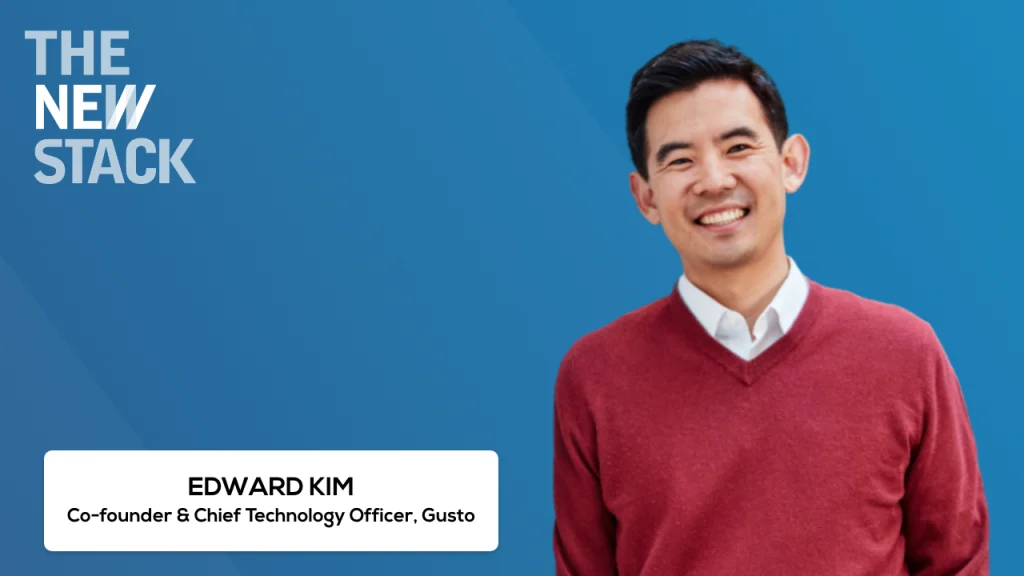
Eddie Kim, co-founder and CTO of Gusto, drew inspiration for this ambitious project from a deeply personal place: his parents’ own journey as co-founders of a mom-and-pop shop in Southern California. His childhood memories of observing his mother meticulously manage the back-office operations—from payroll and insurance billing to bookkeeping and scheduling—while his father handled front-office duties, provided the foundational concept. "Gusto is a platform for small businesses," Kim stated in an interview with The New Stack. "We focus on the back office aspects of what’s needed to keep things operational every day. So that’s functions such as payroll, benefits, human resources, time scheduling and central accounting tasks."
Gusto Cofounder represents a significant evolution beyond conventional AI assistants or search engines. Unlike tools that merely react to user queries, Gusto Cofounder is envisioned as a proactive collaborator. "Gusto Cofounder isn’t an AI assistant or copilot, nor is it a glorified search engine that works in a basic reactive way, i.e., you ask it something, and it returns an answer," Kim elaborated. "This is ‘someone’ that business owners can reach out to at any time and actually proactively help with things that will grow the business." This distinction highlights a strategic shift towards an AI that anticipates needs and drives growth, rather than simply providing information.
The Genesis of Gusto Cofounder: A Personal Narrative
The inspiration for Gusto Cofounder is deeply rooted in Kim’s childhood experiences. He recounts spending his school days in the back office of his family’s business, observing his mother’s tireless efforts. She was the de facto office manager, receptionist, bookkeeper, and payroll specialist—a true co-founder in every sense of the word. This personal connection underscores Gusto’s commitment to understanding and serving the multifaceted needs of small business owners. The platform aims to replicate the indispensable support that a human co-founder or a dedicated operational partner provides, but through the scalable and efficient power of AI.
Functional Capabilities and User Interaction
Gusto Cofounder is designed for intuitive interaction, mirroring how a human co-founder would be consulted. Users can engage with the platform primarily through text messaging or Slack, facilitating seamless integration into existing workflows. Crucially, the AI has access to all the data that an organization has already entrusted to Gusto, allowing it to leverage comprehensive business information for its operations.
"Gusto does a lot of things," Kim explained. "Not just in payroll, but in areas including health insurance, business insurance, workers’ compensation, time scheduling and HR. So, because that means access to sensitive data (people’s salaries and payroll) we have a robust consent framework to enable our platform to securely move billions of dollars every single day, accurately and safely." This extensive data access is fundamental to the tool’s ability to provide meaningful assistance across a wide spectrum of business functions.
Security and Data Governance: A Core Pillar
In an era where data privacy is paramount, Gusto has implemented stringent security measures for Gusto Cofounder. The platform’s consent tooling mandates "explicit permission" from human users before any action can be performed, a safeguard that cannot be bypassed. These permissions are deterministically controlled within the Gusto codebase, ensuring that organizations can establish granular controls over each "data scope"—a defined boundary for datasets. This allows businesses to meticulously govern who or what has access to their sensitive information.
As businesses integrate Gusto Cofounder more deeply into their operations, they can gradually grant the software increased autonomy. After initial actions have been reviewed and validated by users, thresholds can be set, enabling the AI to perform certain tasks without requiring repeated permissions. This tiered approach to autonomy balances the efficiency gains of AI with the essential need for human oversight and control, particularly when dealing with critical financial and HR data.
A Transformative Development Process
The development of Gusto Cofounder itself is a testament to the transformative potential of AI in the software engineering process. Kim revealed that the sophisticated platform was built using Claude Code by a team of just five individuals in an remarkably short span of eight weeks. This accelerated development cycle suggests a significant boost in productivity attributed to the AI coding assistant.
"It’s the best code I’ve written in my whole entire life. It is a really solid product, and we’ve built it much faster than I ever thought would have been possible," Kim stated with evident pride. He further articulated his vision for the future of software development: "I think the future of development is not just engineers writing code; it’s everybody, whether you’re an engineer, a product manager, a designer, or a data professional." This perspective hints at a democratization of development, where AI tools empower a broader range of professionals to contribute to product creation.
Beyond Gusto’s Ecosystem: Third-Party Integrations
A key differentiator for Gusto Cofounder is its capacity to extend its functionality beyond the immediate Gusto platform. The AI is designed to connect with third-party systems, such as Google Workspace. This allows it to extract data from sources like Google Sheets, perform complex calculations for payroll or other financial tasks, and then seamlessly integrate the results back into Gusto for processing. For example, Gusto Cofounder can analyze data from a business’s Google Sheet, calculate payroll, and then alert the owner via text message with a summary of the week’s payroll figures, all meticulously prepared.
This ability to bridge disparate systems significantly enhances the operational efficiency for small businesses, reducing the manual effort required to consolidate information from various platforms. It effectively acts as an intelligent data orchestrator, ensuring that crucial business information flows smoothly and accurately between different applications.
Future Trajectory: Expansion and Modularity
Looking ahead, Kim envisions a robust expansion of Gusto Cofounder’s integration capabilities. The company plans to add more connectors to a wider array of third-party applications, further solidifying the platform’s role as a central operational hub. Moreover, Gusto aims to empower its customers to codify their unique business processes within the platform. This would allow for the creation of industry-specific solutions and automations.
"Automations created in – let’s say – a dental practice on the East Coast might share some similarities with what a dental practice needs in the Midwest – for example because of compliance reasons," Kim explained. "So we want developers to be able to build on top of our platform in the most modular way possible and be able to choose the parts that work best for them in any given customer use case scenario." This modular approach fosters a rich ecosystem where custom solutions can be built and shared, catering to the diverse needs of various industries.
The potential for a "Gusto Cofounder store," akin to app marketplaces, is a prospect that Kim views with optimism, suggesting a future where specialized AI-driven business solutions become readily accessible. This vision aligns with the broader trend of platform economies, where third-party developers can leverage core technologies to create value-added services.
Broader Implications for Small Business Operations
The introduction of Gusto Cofounder signifies a pivotal moment in the evolution of small business technology. By offering an AI that acts as a proactive partner, Gusto is addressing a critical need for accessible, intelligent support that can help small businesses compete more effectively. Historically, advanced operational support has been the purview of larger enterprises with dedicated teams and significant budgets. Gusto Cofounder democratizes this access, providing small business owners with a powerful tool that can significantly reduce administrative burdens, improve decision-making, and ultimately drive growth.
The emphasis on explicit consent and granular data control is particularly noteworthy. It reflects a maturing understanding of the ethical and practical considerations surrounding AI in business, ensuring that user trust is maintained while unlocking the benefits of automation. The rapid development cycle, facilitated by AI coding assistants like Claude Code, also suggests a future where innovation in software can be dramatically accelerated, benefiting businesses that rely on these tools.
As Gusto Cofounder evolves, its impact could extend beyond individual businesses to influence industry standards and best practices for AI integration. The company’s focus on modularity and the potential for a developer ecosystem could foster a new wave of specialized AI solutions tailored to the unique challenges faced by small and medium-sized enterprises across various sectors. This could lead to increased efficiency, better compliance, and more innovative business models, ultimately strengthening the backbone of the economy. The journey from a parent’s mom-and-pop shop to an AI co-founder powered by cutting-edge technology highlights a remarkable convergence of personal inspiration and technological advancement, poised to redefine how small businesses operate.
