
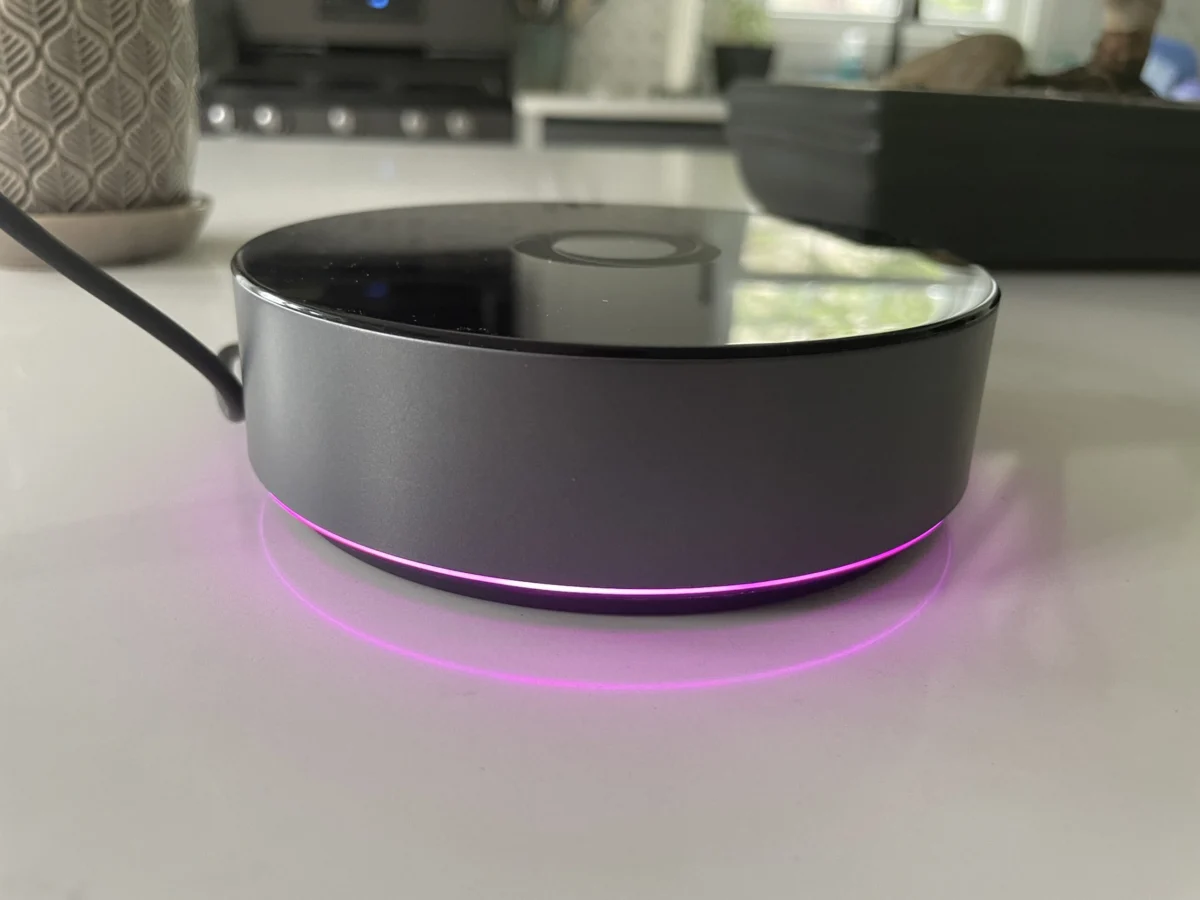

Following the earlier commercial introduction of the $69 Homey Bridge, Athom has officially launched its flagship $399 Homey Pro smart home hub in the United States market. While the lower-cost Bridge model relies heavily on cloud infrastructure and introduces subscription tiers for expanded device counts, the Homey Pro aims to capture power users and privacy advocates by offering robust local processing, a comprehensive suite of hardware radios, and minimal subscription requirements. Industry analysts and smart home enthusiasts have closely anticipated the North American rollout of the Pro model, viewing it as a notable alternative to existing ecosystems dominated by tech giants like Amazon, Google, and Apple. However, early comprehensive testing reveals that while the hardware exhibits immense capabilities, prospective buyers must carefully audit their existing device inventories before making a financial commitment.
Evolution of the Homey Ecosystem and Hardware Upgrades
The journey of the Homey Pro spans several years of iterative hardware and software development by its parent company, Athom. The original Homey Pro debuted in Europe in 2019, establishing a dedicated following due to its protocol-agnostic approach. The subsequent release of the cloud-centric Homey Bridge lowered the barrier to entry, allowing mainstream consumers to experiment with multi-brand automations at a fraction of the cost.
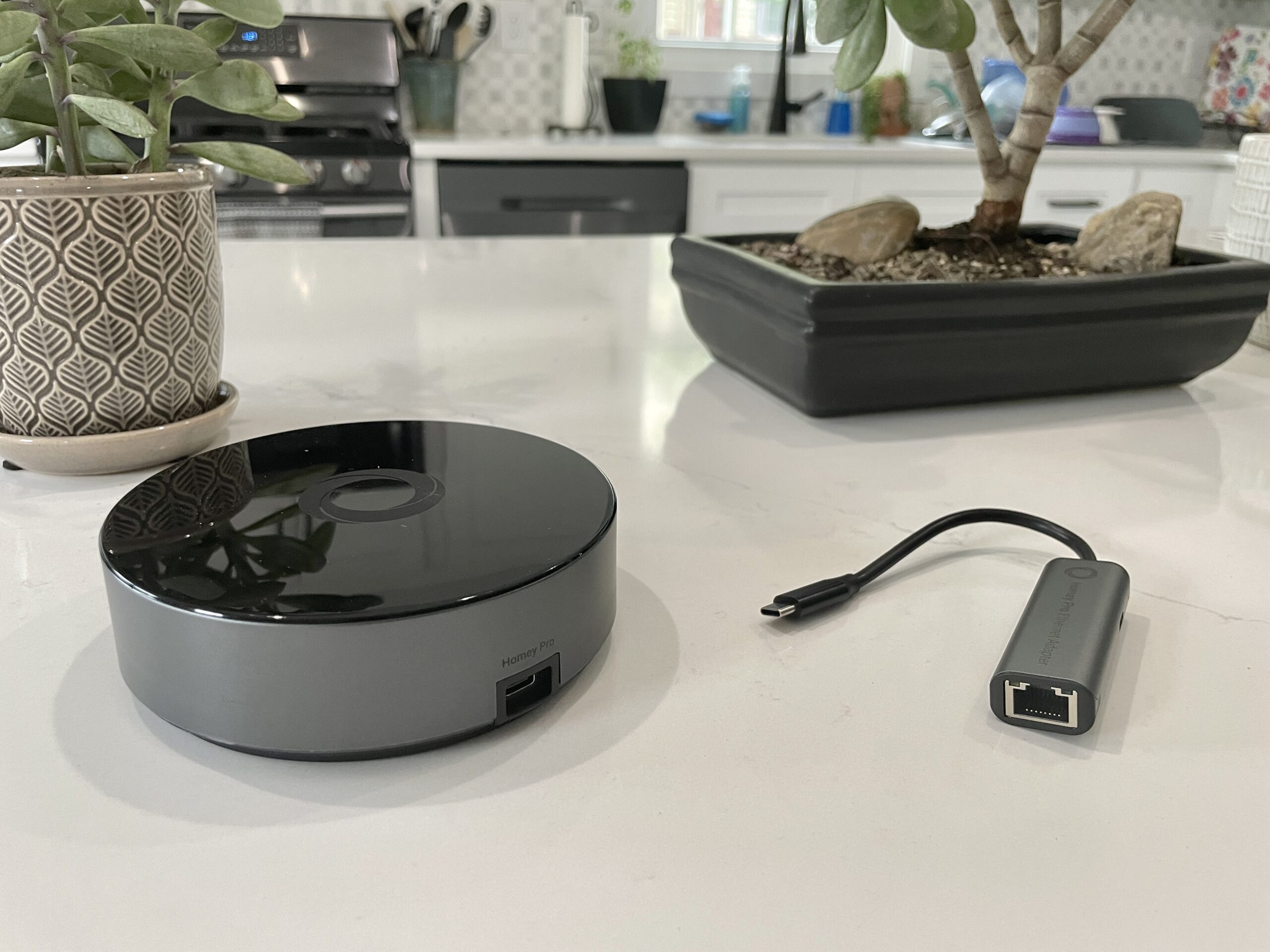
Building upon that foundation, the newly released U.S. version of the Homey Pro introduces substantial architectural improvements over its predecessor and the budget-friendly Bridge. Under the hood, the Pro boasts a high-performance central processing unit that the manufacturer claims delivers 3.5 times the computing power of the 2019 iteration. Furthermore, the device is equipped with 8 GB of internal storage and 2 GB of RAM—representing double the memory and storage capacity found in the Homey Bridge.
These hardware enhancements are not merely superficial; they serve a functional purpose. Unlike the Bridge, which offloads much of its heavy lifting to the cloud, the Homey Pro is engineered to execute smart home management, device polling, and automation routines locally. This architectural pivot yields significant advantages regarding data privacy and system resilience. Because critical operations do not require an active internet connection to execute, local automations continue to function seamlessly during broadband outages, ensuring that core smart home infrastructure remains operational under adverse conditions.
Comprehensive Radio Support and Connectivity
A defining characteristic of the Homey Pro is its extensive array of built-in wireless transceivers. The U.S. variant is packed with radios designed to bridge the historical fragmentation of the smart home landscape. Out of the box, the hub supports Wi-Fi (operating on both 2.4 GHz and 5 GHz frequencies), Bluetooth, infrared (IR), Zigbee, and Z-Wave.

Additionally, the Pro model incorporates a dedicated Thread radio and an 833 MHz frequency band to accommodate legacy proprietary devices. For users requiring absolute network stability and minimum latency, Athom offers an optional ethernet adapter for an additional $29, enabling a hardwired connection directly to a home router.
By comparison, the Homey Bridge shares a similar radio configuration but imposes artificial constraints, capping unenhanced users at a maximum of five connected devices. Exceeding this threshold on the Bridge requires a monthly subscription fee of $2.99. The Homey Pro, conversely, discards device limitations entirely, aligning its business model with traditional independent hubs. The only recurring fee associated with the Pro is an optional $0.99 monthly charge dedicated to encrypted cloud-based system backups, giving users full autonomy over their local storage and data management.
Setup Experience and Room Configuration
The onboarding process for the Homey Pro has been designed for user-friendliness, mirroring the praise garnered by its sibling device earlier in the year. Initial deployment begins by powering the unit via the provided USB-C cable and power adapter, downloading the companion application to a smartphone, and completing a brief questionnaire.

Reviewers have highlighted a particularly efficient step during the initial software configuration: the application prompts the user to define the architectural layout of their residence, specifically querying the number of floors and designating which rooms correspond to each level. This preemptive spatial organization eliminates the tedious, piecemeal room-assignment processes common to competing smart home ecosystems, saving considerable time during the subsequent device integration phase.
Device Compatibility Challenges and Real-World Testing
Despite the theoretical promise of supporting over 50,000 distinct products through its expansive application ecosystem, real-world evaluations highlight notable friction points regarding device compatibility. During extensive practical testing of a mature smart home environment containing diverse hardware brands, the Homey Pro successfully integrated approximately half of the deployed devices.
Seamless integrations were observed with established ecosystems such as Lutron Caseta lighting switches, Philips Hue smart illumination, and Sonos multi-room audio hardware. However, the hub encountered significant hurdles when attempting to communicate with various other standard market appliances. Products failing to initialize or establish connection during testing included specific Schlage smart locks, Ecobee climate control thermostats, Nanoleaf smart bulbs and light strips, Govee kitchen appliances, Wyze security cameras, Eve Home accessories, and Logitech video doorbells, alongside a broad assortment of third-party smart plugs.

Subsequent manufacturer clarifications shed light on some of these incompatibilities. While the Homey Pro features integrated Zigbee, Z-Wave, Bluetooth, and Wi-Fi, its implementation of the emerging universal smart home standard, Matter, was still rolling out during initial evaluation phases. Consequently, smart plugs and lighting accessories that rely exclusively on Thread-based Matter protocols encountered connectivity blocks. Furthermore, certain brand-name ecosystems appeared within the Homey application directory, yet specific generational iterations or premium models—such as the Ecobee Thermostat Premium and newer remote sensors—lacked direct software hooks.
Official Manufacturer Clarifications and Updates
Following initial publication and review cycles, representatives from Athom reached out to clarify operational parameters and correct misunderstandings regarding ecosystem capabilities:
- Matter and Thread Connectivity: Company spokespersons confirmed that Wi-Fi-based Matter devices are fully operational if properly configured, while acknowledging that Thread-specific implementations depend on ongoing firmware milestones.
- Product Catalog Accessibility: Athom noted that the exhaustive, searchable directory of compatible integrations is publicly cataloged under the Apps section of the official Homey website, advising consumers to consult this resource prior to purchase.
- Energy Monitoring Metrics: While basic energy tracking requires manual wattage input for estimated calculations, the company verified that devices capable of natively reporting real-time electricity consumption automatically transmit and display exact metrics within the Homey interface.
Advanced Automation via Flows and Energy Management
For users whose hardware inventories are fully supported, the Homey Pro offers powerful tools for routine creation and resource management. Automations are handled via a proprietary system known as "Flows." Moving beyond the linear "If This, Then That" (IFTTT) paradigms popularized by mainstream consumer assistants, Flows utilize a flexible "When… And… Then…" conditional structure. This architecture allows for advanced logic processing, including "else" statements and the ability for one Flow to dynamically trigger another. Power users seeking maximum customization can access an advanced web-based interface to script highly intricate operational rules.

Energy management represents another major selling point for the hub. The software aggregates estimated or measured power consumption data, presenting near-real-time analytics alongside historical trends. When controlling dimmable fixtures, for instance, the power tracking dynamically scales down to reflect reduced wattage draw, providing granular visibility into household utility usage. When accessed via the web dashboard, this metrics screen also overlays local environmental conditions such as ambient temperature, barometric pressure, and relative humidity.
Market Implications and Conclusions
Priced at $399, the Homey Pro occupies a premium tier within the home automation market. Its local control architecture, expansive radio array, and sophisticated automation logic make it an exceptionally attractive proposition for privacy-conscious enthusiasts and developers—the latter of whom can utilize API keys and Node.js to code custom integrations.
Nevertheless, the platform’s utility is inextricably linked to the specific hardware makeup of an individual’s household. Because ecosystem fragmentation remains a challenge, prospective buyers are strongly advised to download the free Homey mobile application and verify active software support for their specific device models before investing in the hardware. For consumers whose hardware aligns with Athom’s current integration library, the Homey Pro offers a capable, responsive, and privacy-focused command center; for others, alternative platforms with broader immediate compatibility may remain the more pragmatic choice.
