
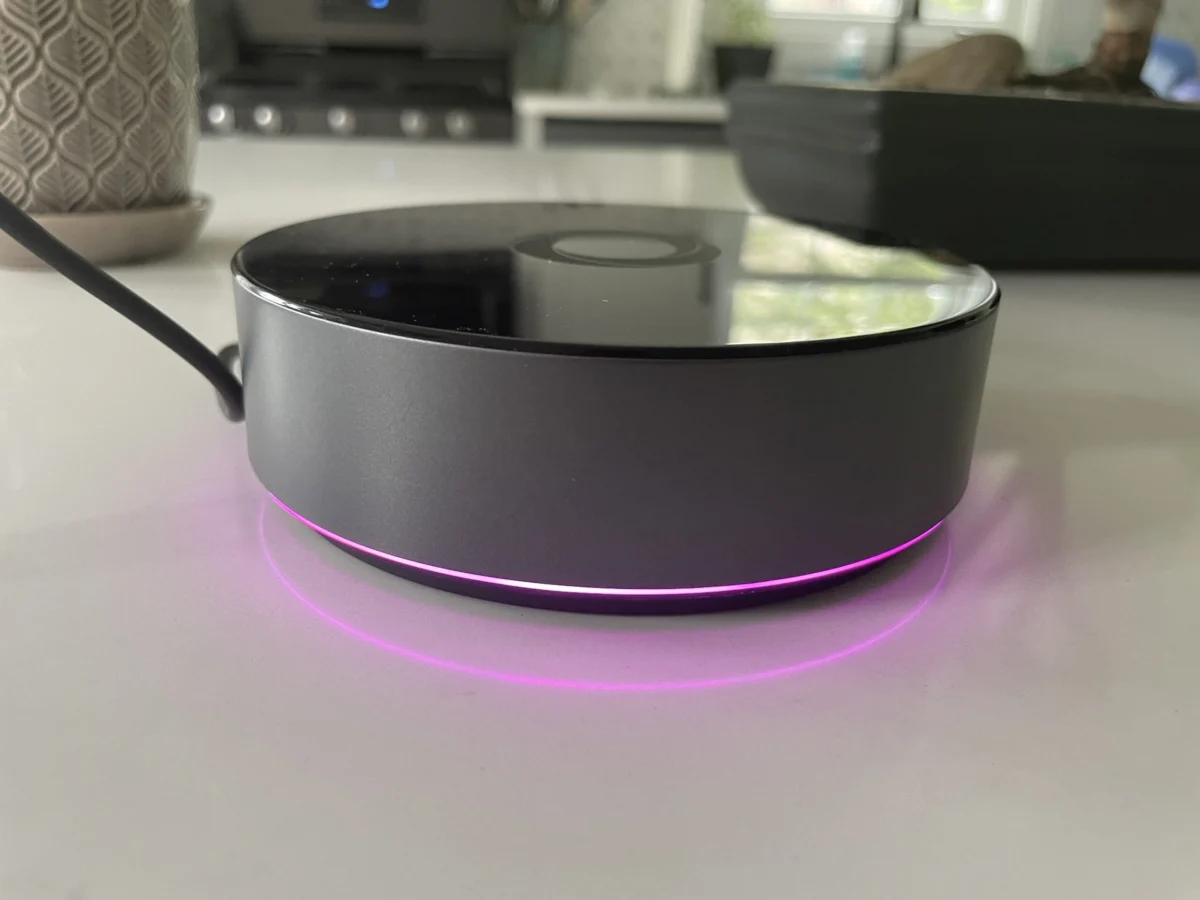

Following the North American market debut of the budget-friendly $69 Homey Bridge, smart home manufacturer Athom has officially launched the $399 Homey Pro in the United States. While the lower-priced Bridge relies heavily on cloud infrastructure and implements a five-device limit before requiring monthly subscriptions, the flagship Homey Pro eliminates most recurring fees, significantly boosts hardware specifications, and emphasizes local processing for enhanced privacy and reliability. Priced at a premium, the device arrives equipped with an expansive array of wireless communication radios and a promise to bridge the fragmented smart home ecosystem. However, a comprehensive evaluation reveals that while the hardware exhibits immense promise, prospective buyers must carefully audit their existing device inventories to ensure compatibility.
Hardware Evolution and Local Processing Architecture
The current generation Homey Pro represents a substantial leap forward compared to its 2019 predecessor, boasting a CPU performance increase of approximately 3.5 times. In addition, it features double the random-access memory (RAM) and internal storage of the Homey Bridge, housing 2 GB of RAM and 8 GB of storage capacity. These hardware upgrades are not merely incremental; they are fundamental to the device’s operational philosophy. Unlike the cloud-dependent Bridge model, the Homey Pro executes automations and manages connected appliances locally.
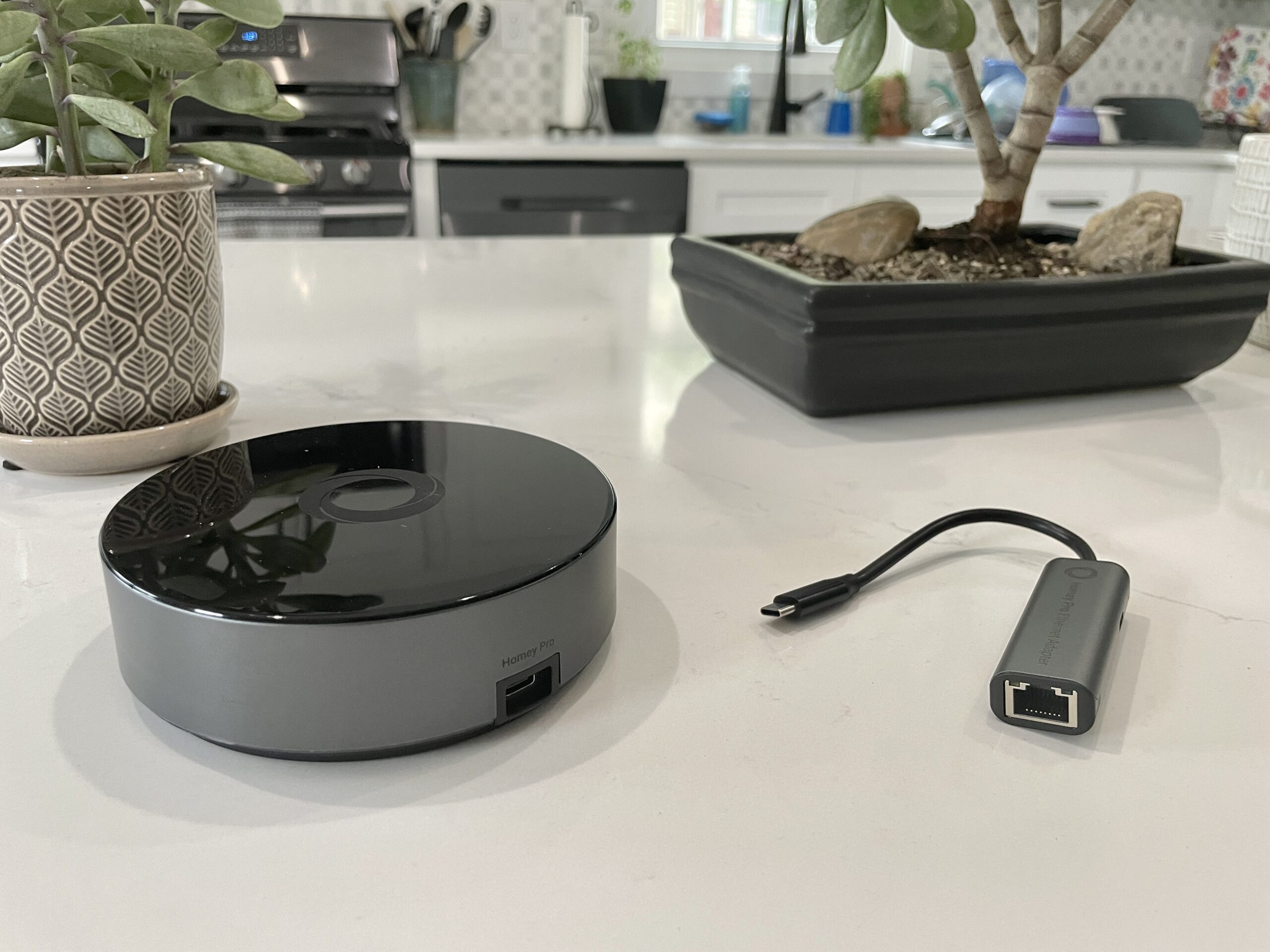
This localized processing model yields two primary advantages for consumers: heightened data privacy and operational resilience. Because routine commands and automation logic are processed on the local hardware rather than remote servers, users’ personal automation habits remain private. Furthermore, the local architecture ensures that smart home networks remain fully functional during internet service disruptions, allowing local automations to trigger seamlessly even when wide-area network connectivity is lost. For power users seeking hardwired reliability, Athom also offers an optional Ethernet adapter module for an additional $29, supplementing the standard dual-band 2.4 GHz and 5 GHz Wi-Fi capabilities.
Comprehensive Radio Integration and Connectivity Standards
One of the most compelling selling points of the U.S. variant of the Homey Pro is its comprehensive suite of built-in wireless transceivers. The hub incorporates Wi-Fi, Bluetooth, infrared (IR), Zigbee, Z-Wave, and a dedicated Thread radio, alongside an 833 MHz transceiver designed to accommodate legacy devices. This multi-protocol approach positions the Homey Pro as a potential universal translator for households burdened by disparate smart home ecosystems.
Despite the inclusion of modern radios, the smart home industry’s transition toward the universal Matter standard introduces temporary complexities. While Athom has committed to rolling out full Matter support—including Matter over Thread—later in the year, the current lack of native Matter-over-Thread integration presents immediate hurdles. For instance, smart plugs and lighting accessories that rely exclusively on Thread communication protocols cannot currently be incorporated into the Homey Pro ecosystem, highlighting the transitional challenges facing unified smart home hubs.

Setup Experience and User Interface Ergonomics
The out-of-the-box experience for the Homey Pro is notably streamlined. Initial configuration requires powering the unit via the provided USB-C cable and power adapter, downloading the companion mobile application, and following an intuitive onboarding sequence. Reviewers have highlighted the application’s unique architectural setup phase, which prompts users to define their home’s physical layout, including the number of stories and room allocations per floor. This structural approach saves considerable time compared to traditional platforms that require manual device-by-room sorting post-installation.
The companion application sports a modern, clean visual aesthetic that exposes both granular controls and advanced configurations. In addition to basic device management, the platform features a robust energy-monitoring utility. By manually inputting the wattage ratings of connected appliances—or utilizing native reporting data transmitted by compatible devices—users can track real-time and historical energy consumption. The system dynamically scales energy estimates based on device states; for example, dimming a compatible light bulb to 50% brightness automatically halves its registered power draw. Furthermore, accessing the web-based management interface unlocks localized environmental metrics, displaying ambient temperature, barometric pressure, and humidity levels.
Automation Logic via Advanced Flows
For automation design, the Homey Pro moves away from the simplistic "If This, Then That" (IFTTT) paradigms popularized by mainstream consumer ecosystems like Amazon Alexa, Apple HomeKit, and Google Home. Instead, it utilizes a proprietary automation framework known as "Flows."

Flows operate on a flexible "When… And… Then…" conditional structure, allowing for sophisticated multi-layered logic that includes negative "else" statements and the ability for one Flow to trigger another. While basic Flows can be easily constructed within the mobile application, advanced power users can leverage the web interface to design intricate automation matrices. For developers and technical hobbyists, the Homey Pro even exposes API keys and Node.js JavaScript support, enabling custom integrations. However, industry analysts note that this developer-centric capability remains well beyond the scope of mainstream consumers.
Ecosystem Compatibility and Device Support Realities
Despite Athom’s marketing claims that the Homey Pro supports more than 50,000 devices via various community and official apps, real-world testing exposes notable friction regarding specific brand compatibility. While popular product lines such as Lutron Caseta switches, Philips Hue smart lighting, and Sonos audio systems integrate smoothly and respond with near-instantaneous latency, numerous other mainstream brands encounter integration roadblocks.
During testing, several high-profile devices failed to connect or integrate fully:

- Smart Locks: The Schlage Encode Wi-Fi lock is listed within the application directory, but authentication credentials frequently resulted in "No devices found" error messages.
- Thermostats: While older models like the Ecobee 3 Lite are supported, newer hardware iterations—such as the Ecobee Thermostat Premium and updated room sensors—currently lack compatibility.
- Kitchen and Home Appliances: Govee smart kitchen products returned initialization errors during setup, and Cync by GE smart plugs lacked native application integrations entirely.
- Lighting and Accessories: Standard Nanoleaf bulbs and older Essentials lines failed to pair, largely constrained by ongoing software updates related to Thread and Matter integration timelines.
These fragmentation issues underscore a vital consumer advisory: hardware specifications and brand availability lists can be misleading if specific generational models are omitted from software packages.
Market Implications and Competitive Landscape
Priced at $399 without mandatory recurring software fees—aside from an optional $0.99 monthly cloud backup subscription—the Homey Pro occupies a specialized niche in the home automation market. It directly challenges advanced power-user platforms like Home Assistant and Hubitat by offering local control, robust multi-protocol radio support, and a polished user interface out of the box.
However, the high cost of entry creates a steep value proposition for consumers whose existing device inventories do not fully align with Homey’s current app library. While software updates and community-driven applications will undoubtedly expand device compatibility over time, buyers accustomed to the plug-and-play inclusivity of major tech ecosystems may find the hardware limitations frustrating.

Industry experts recommend that prospective purchasers thoroughly audit their smart home inventories by downloading the free Homey application and searching for exact device models prior to purchasing the hardware. For consumers willing to verify compatibility or those building a smart home from scratch, the Homey Pro offers a privacy-focused, highly capable local hub with immense long-term potential.
