
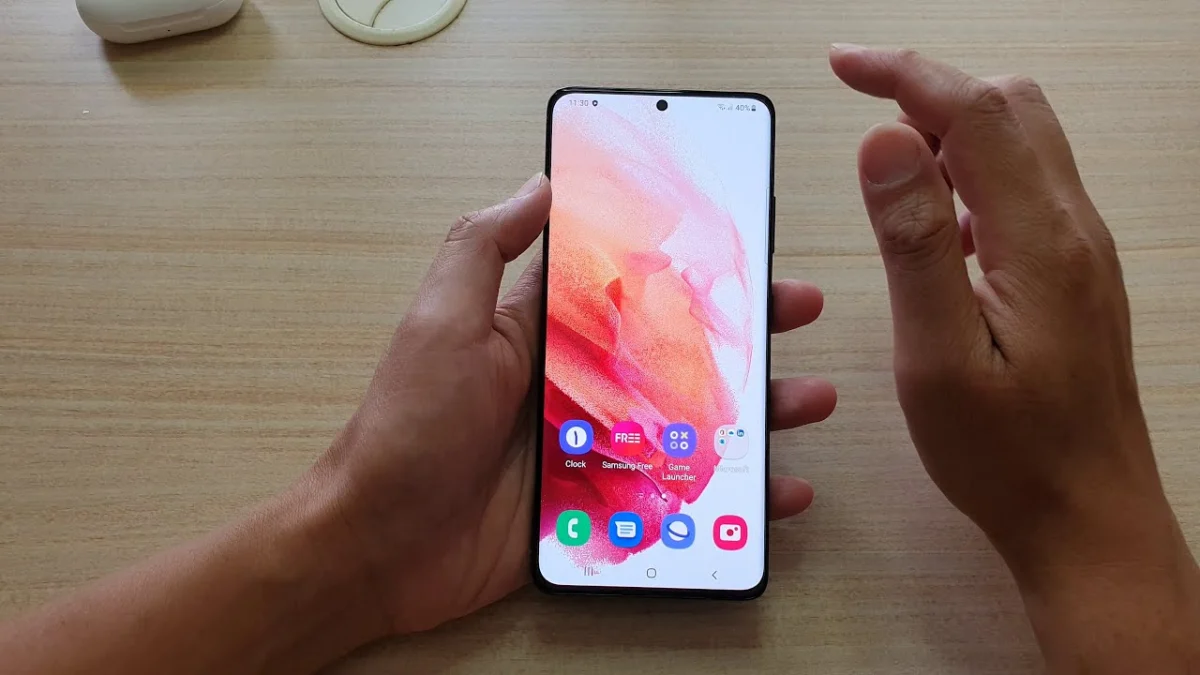

The telecommunications industry is currently undergoing one of its most significant structural shifts since the transition from analog to digital cellular networks. At the heart of this transformation is the eSIM, or embedded Subscriber Identity Module, a technology that is fundamentally altering how consumers interact with mobile carriers and hardware. For Samsung Electronics, a global leader in mobile innovation, the integration of eSIM technology across its Galaxy smartphone and wearable portfolios represents a strategic move toward a more flexible, software-defined future. By eliminating the need for a physical piece of plastic to authenticate a user’s identity on a network, Samsung is not only streamlining device design but also providing users with unprecedented control over their cellular connectivity.
The Technical Foundation: What is an eSIM?
An eSIM is a programmable SIM card that is soldered directly into a device’s motherboard during the manufacturing process. Technically known as an eUICC (Embedded Universal Integrated Circuit Card), it performs the exact same function as a traditional SIM card—identifying the subscriber and ensuring they are authorized to use the network—but it does so through a rewritable digital interface. Unlike the physical SIM cards that have shrunk from the size of a credit card in the early 1990s to the current nano-SIM format, the eSIM requires no physical access.
On Samsung devices, the eSIM works by storing "profiles" that are downloaded over the air (OTA). These profiles contain the necessary credentials to connect to a specific carrier’s network. When a user signs up for a plan, the carrier provides a digital key, usually in the form of a QR code or an activation code within a dedicated app. The Samsung device then communicates with the carrier’s server to securely download and install the profile onto the embedded chip. This process effectively replaces the manual task of inserting a physical card with a seamless software interaction.
A Chronological Evolution of SIM Technology
To understand the impact of eSIMs on Samsung devices, it is essential to view the technology through a historical lens. The evolution of the SIM card has been a journey toward miniaturization and eventual virtualization:
- 1991 – The Standard SIM: The first SIM cards were the size of credit cards, primarily used in early "brick" phones.
- 1996 – The Mini-SIM: As phones became portable, the SIM shrunk significantly, becoming the standard for the first decade of the 2000s.
- 2003 – The Micro-SIM: Introduced to save space in more complex mobile hardware.
- 2012 – The Nano-SIM: The smallest physical iteration, which remains common today.
- 2016 – The Dawn of eSIM: Samsung played a pioneering role by releasing the Gear S2 Classic 3G, the first consumer device to feature a GSMA-compliant eSIM.
- 2020 – Flagship Integration: With the launch of the Galaxy S20 series, Samsung began integrating eSIM capabilities into its primary flagship smartphone line globally.
- 2022–Present – Mass Adoption: The industry reached a tipping point as carriers worldwide upgraded their infrastructure to support "eSIM-first" or "eSIM-only" activations, prompted by the increasing complexity of 5G hardware which demands more internal space.
Comparative Advantages: eSIM vs. Physical SIM
The transition from physical to embedded SIMs offers several tangible benefits for both the consumer and the manufacturer. From a hardware perspective, removing the SIM tray allows Samsung engineers to reclaim internal space. In the high-stakes world of smartphone design, even a few square millimeters are precious; this space can be repurposed for larger batteries, improved thermal cooling systems, or additional sensors. Furthermore, the removal of the SIM slot enhances the structural integrity of the device and improves its resistance to water and dust ingress, as it eliminates one of the primary entry points for environmental contaminants.
For the consumer, the primary advantage is versatility. A traditional SIM card ties a user to a single carrier until the card is physically replaced. An eSIM, however, can store multiple profiles simultaneously. While only one or two profiles can typically be active at once (depending on the device’s modem capabilities), users can switch between different carriers and plans through the device settings in seconds. This is particularly transformative for international travelers, who can download a local data plan before even landing in a foreign country, avoiding the exorbitant roaming fees associated with their home carrier.
Samsung Device Compatibility and Regional Availability
Samsung has been aggressive in rolling out eSIM support across its high-end and mid-range devices. While regional availability can vary based on carrier partnerships and local regulations, the following Samsung series generally support eSIM technology:
- Galaxy S Series: Every flagship from the Galaxy S20 series onward, including the S21, S22, S23, and the latest S24 series.
- Galaxy Z Series: All generations of the Galaxy Z Fold and Galaxy Z Flip.
- Galaxy Note Series: The Galaxy Note 20 and Note 20 Ultra.
- Galaxy Watch Series: Samsung’s LTE-enabled wearables have utilized eSIMs as their primary connection method for several generations, allowing users to leave their phones at home while maintaining cellular connectivity.
It is important to note that while the hardware may support eSIM, the feature is often dependent on software enablement by the carrier. In some markets, such as the United States, carrier-locked versions of Samsung phones initially saw delayed eSIM activation compared to their unlocked counterparts. However, as of 2024, the vast majority of global carriers now provide robust support for the Samsung eSIM ecosystem.
Activation Protocols and User Experience
Activating an eSIM on a Samsung device is designed to be an intuitive process. Typically, a user navigates to the "Settings" menu, selects "Connections," and then enters the "SIM manager" sub-menu. From here, the option to "Add eSIM" initiates a setup wizard.
The most common activation method involves scanning a QR code provided by the carrier. This code contains the URL for the carrier’s SM-DP+ (Subscription Manager Data Preparation) server and the unique activation code. Once scanned, the device establishes a secure connection to download the encrypted profile. In more advanced deployments, carriers can use "Push" technology, where the profile is automatically sent to the device based on its EID (Embedded Identity Document) number, requiring the user to simply tap a notification to activate their new service.
Security Implications and Data Protection
Security is a paramount concern in the digital age, and eSIMs offer several improvements over their physical predecessors. Because the eSIM is embedded within the device, it cannot be easily removed by a thief. In the event of a phone being stolen, a physical SIM can be discarded, allowing the thief to use a new SIM or prevent the owner from tracking the device via cellular data. An eSIM remains with the hardware, making it easier for owners and law enforcement to maintain a data connection for tracking purposes.
Furthermore, Samsung integrates eSIM management into its Knox security platform. Knox provides a hardware-backed secure environment that protects the encryption keys used for carrier authentication. This ensures that the digital profile cannot be intercepted or cloned during the download process. The GSMA (Global System for Mobile Communications Association) has established rigorous standards for eSIM security, ensuring that the remote provisioning process is as secure as the physical distribution of SIM cards.
Market Analysis and Industry Reactions
The shift toward eSIM has met with varying reactions from industry stakeholders. Initially, many mobile network operators (MNOs) were hesitant to embrace eSIM technology. The logic was simple: physical SIM cards acted as a "lock" that made it more difficult for customers to switch to a competitor. The ease of switching carriers with an eSIM increases "churn" risk for operators.
However, the rise of Mobile Virtual Network Operators (MVNOs) and the pressure from hardware giants like Samsung and Apple have forced a change in strategy. Market data from organizations like Juniper Research suggests that the number of eSIMs installed in devices will increase from roughly 1.2 billion in 2021 to over 3.4 billion by 2025. This growth is driven by the demand for "always-connected" devices and the expansion of the Internet of Things (IoT).
Industry analysts point out that Samsung’s commitment to eSIM is also a response to the growing "Dual SIM" demand in European and Asian markets. In these regions, users often maintain two separate numbers—one for business and one for personal use. By offering a combination of one physical SIM slot and one eSIM, Samsung provides Dual SIM Dual Standby (DSDS) functionality without the need for a bulky dual-SIM tray.
Potential Drawbacks and Technical Limitations
Despite the clear advantages, the transition to eSIM is not without its challenges. One of the primary drawbacks is the difficulty of transferring a "digital SIM" between devices. With a physical SIM, a user can simply move the card from a broken phone to a new one. With an eSIM, the process often requires a "transfer" protocol that must be supported by both the carrier and the device software. If a Samsung phone’s screen breaks and the user cannot access the settings menu, transferring the eSIM to a backup device can become a hurdle requiring a call to carrier customer support.
Additionally, there is the issue of "carrier lock." While an eSIM is technically capable of holding multiple profiles, carriers can still software-lock the device so that it only accepts eSIM profiles from their own network until the device is paid off. This means that the technological freedom of the eSIM is still occasionally restricted by the financial contracts of the telecommunications industry.
The Future Landscape: Beyond Smartphones
The implications of Samsung’s eSIM integration extend far beyond the smartphone. We are entering an era of "ubiquitous connectivity" where laptops, tablets, and even household appliances will require independent network access. Samsung’s Galaxy Book series of laptops has already begun incorporating eSIM support, allowing professionals to maintain a secure LTE or 5G connection without relying on potentially compromised public Wi-Fi networks.
Furthermore, the development of iSIM (Integrated SIM) technology—where the SIM functionality is integrated directly into the device’s main processor rather than a separate chip—represents the next step in this evolution. Samsung, in partnership with companies like Qualcomm, is already exploring iSIM solutions that would further reduce power consumption and save even more space.
Conclusion
The adoption of eSIM technology in Samsung devices marks the end of the physical SIM era and the beginning of a more flexible, secure, and integrated mobile experience. By championing this technology, Samsung is addressing the needs of a globalized workforce that demands seamless travel and the ability to manage multiple digital identities. While the industry still faces minor hurdles regarding carrier interoperability and device transfer protocols, the trajectory is clear. The eSIM is not merely a replacement for a plastic card; it is a fundamental component of the next generation of mobile computing, enabling a world where connectivity is as fluid and adaptable as the software we use every day. As 5G networks continue to mature and the IoT ecosystem expands, the role of the eSIM in Samsung’s hardware will only become more central to the user experience.
