

The landscape of artificial intelligence continues its rapid evolution, moving beyond simple conversational interfaces to sophisticated, autonomous agents capable of performing complex tasks. In a significant development for individuals and small to medium-sized businesses seeking greater control and privacy over their AI deployments, Amazon Web Services (AWS) today announced the general availability of OpenClaw on Amazon Lightsail. This strategic integration simplifies the deployment of OpenClaw instances, enabling users to seamlessly pair their browsers, activate advanced AI capabilities, and optionally connect to popular messaging channels, all within a pre-configured and secure cloud environment. The move marks a pivotal step in making powerful, private AI agents more accessible, addressing long-standing challenges associated with self-hosting such advanced software.
OpenClaw stands out as an open-source, self-hosted, autonomous private AI agent designed to function as a personal digital assistant. Unlike many mainstream AI tools that operate on remote, centralized servers, OpenClaw is engineered to run directly on a user’s chosen infrastructure, granting unparalleled control over data privacy and operational parameters. Its capabilities extend far beyond merely answering questions; OpenClaw can actively manage emails, browse the web, and organize files, effectively serving as a proactive digital assistant that executes tasks rather than just responding to queries. This autonomous functionality is a cornerstone of its appeal, offering users a more dynamic and integrated AI experience.
The demand for such a solution within the AWS ecosystem has been evident, with numerous AWS customers expressing interest in deploying OpenClaw on the cloud. Historically, some users resorted to running OpenClaw on Amazon EC2 instances, a testament to the need for a cloud-based solution. However, deploying and managing open-source software, especially one as intricate as an autonomous AI agent, on a robust but more complex platform like EC2, or even a local home device, presents considerable hurdles. These challenges often include intricate setup procedures, significant security considerations, and the technical expertise required to maintain such an environment. The friction involved in these traditional deployment methods underscored the necessity for a more streamlined, secure, and user-friendly approach.

Amazon Lightsail emerges as the ideal platform to bridge this gap. Designed with simplicity and ease of use in mind, Lightsail offers virtual private servers (VPS) with predictable pricing and pre-configured application blueprints. Its mission is to make cloud computing accessible to developers, small businesses, and students without requiring deep AWS expertise. By offering OpenClaw as a dedicated blueprint within Lightsail, AWS has effectively democratized access to private AI agents, abstracting away the underlying infrastructure complexities and security configurations that previously deterred many potential users.
The Genesis of OpenClaw on Lightsail: Responding to User Demand
The journey to OpenClaw’s general availability on Amazon Lightsail is rooted in direct customer feedback and the evolving needs of the AI community. As autonomous AI agents gained traction, users sought ways to harness their power without compromising privacy or incurring the operational overhead of complex deployments. The open-source nature of OpenClaw resonated with many who valued transparency and customization, but the practicalities of deployment often proved daunting.
Initial attempts by AWS customers to run OpenClaw on Amazon EC2 instances, while successful for some, highlighted the gap for a simpler solution. EC2, with its vast array of instance types, networking options, and security groups, offers immense flexibility but demands a higher level of technical proficiency. For users simply wanting to get an OpenClaw instance up and running quickly and securely, EC2 could feel like overkill. Furthermore, the experience of installing OpenClaw directly on personal hardware revealed significant installation complexities and a myriad of security considerations that could expose users to risks if not handled correctly. These observations underscored a clear market need for a simplified, secure, and pre-configured deployment pathway.

AWS’s response to this demonstrated demand is the integration of OpenClaw into Lightsail. This decision aligns with Lightsail’s core philosophy: to provide easy-to-use cloud resources that simplify complex tasks. By offering OpenClaw as a ready-to-launch blueprint, AWS is not just providing a service; it’s empowering a broader demographic of users to leverage advanced AI capabilities without the traditional barriers to entry. This strategic move reinforces AWS’s commitment to supporting diverse workloads and lowering the technical threshold for cutting-edge technologies.
Simplified Deployment: A Step-by-Step Overview
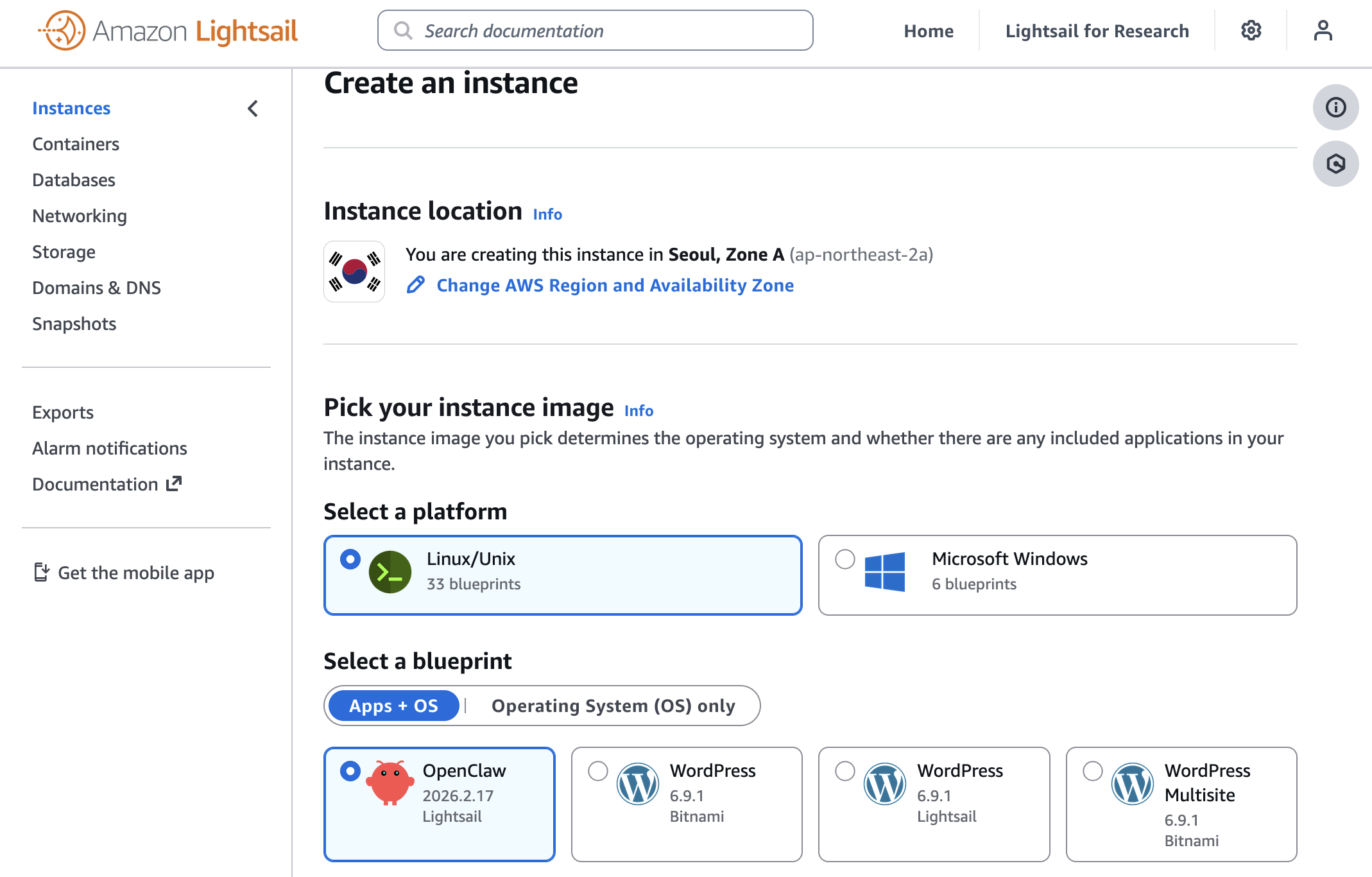
Launching an OpenClaw instance on Amazon Lightsail has been meticulously designed for simplicity, allowing users to go from console access to a functional AI assistant in a matter of minutes. The process begins in the intuitive Amazon Lightsail console, where users initiate the creation of a new instance. After selecting their preferred AWS Region and Availability Zone – choices that dictate geographic location and ensure high availability – users opt for a Linux/Unix platform, the operating system on which OpenClaw runs. The critical step involves selecting "OpenClaw" under the "Select a blueprint" section, instantly pre-configuring the instance with the necessary software stack.
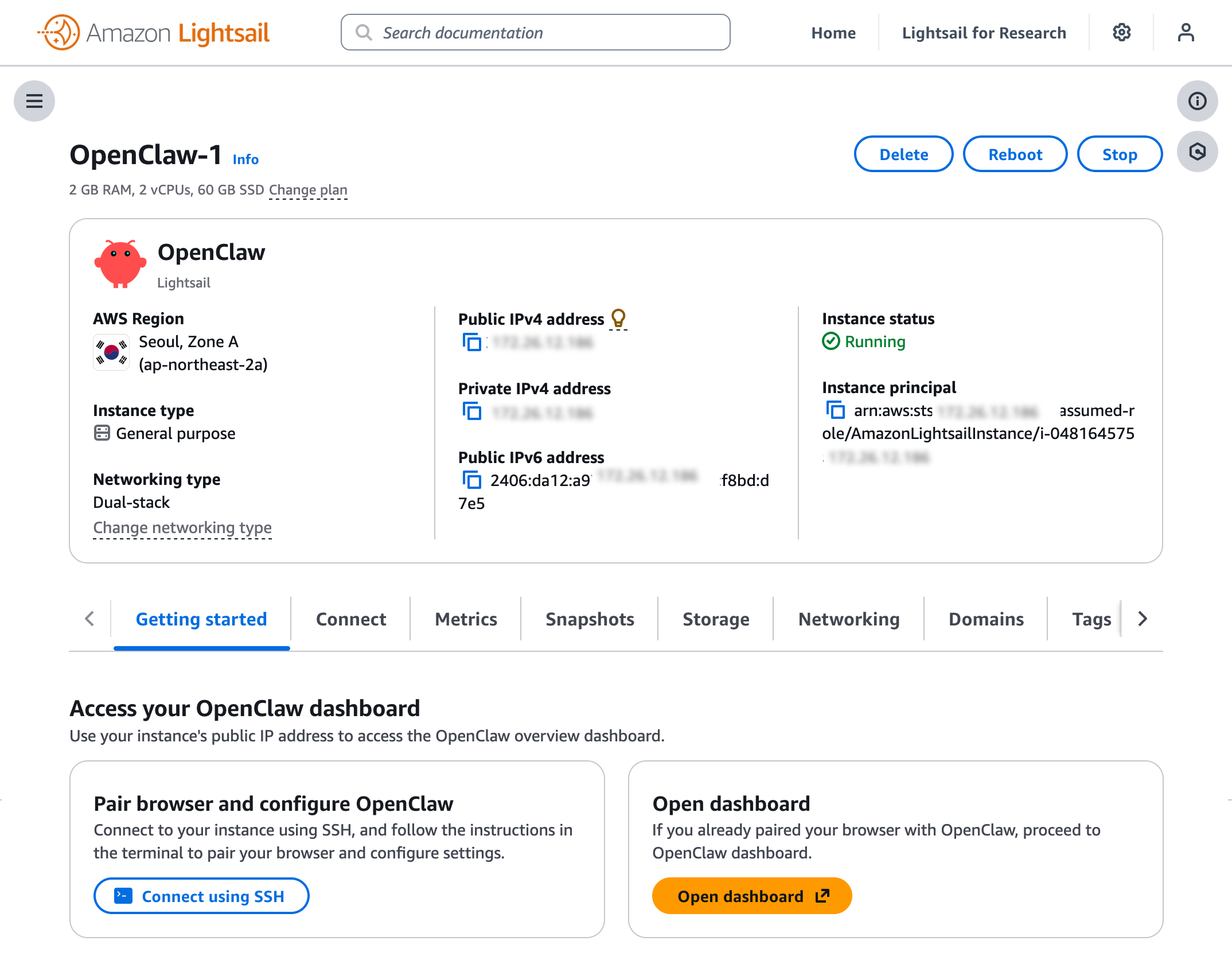
Following the blueprint selection, users choose an instance plan, with a 4 GB memory plan recommended for optimal performance, balancing cost-efficiency with robust functionality. A simple naming convention for the instance completes the initial setup, leading to the final click on "Create instance." Within a few minutes, the instance transitions to a "Running" state, signifying that the OpenClaw agent is ready for activation.
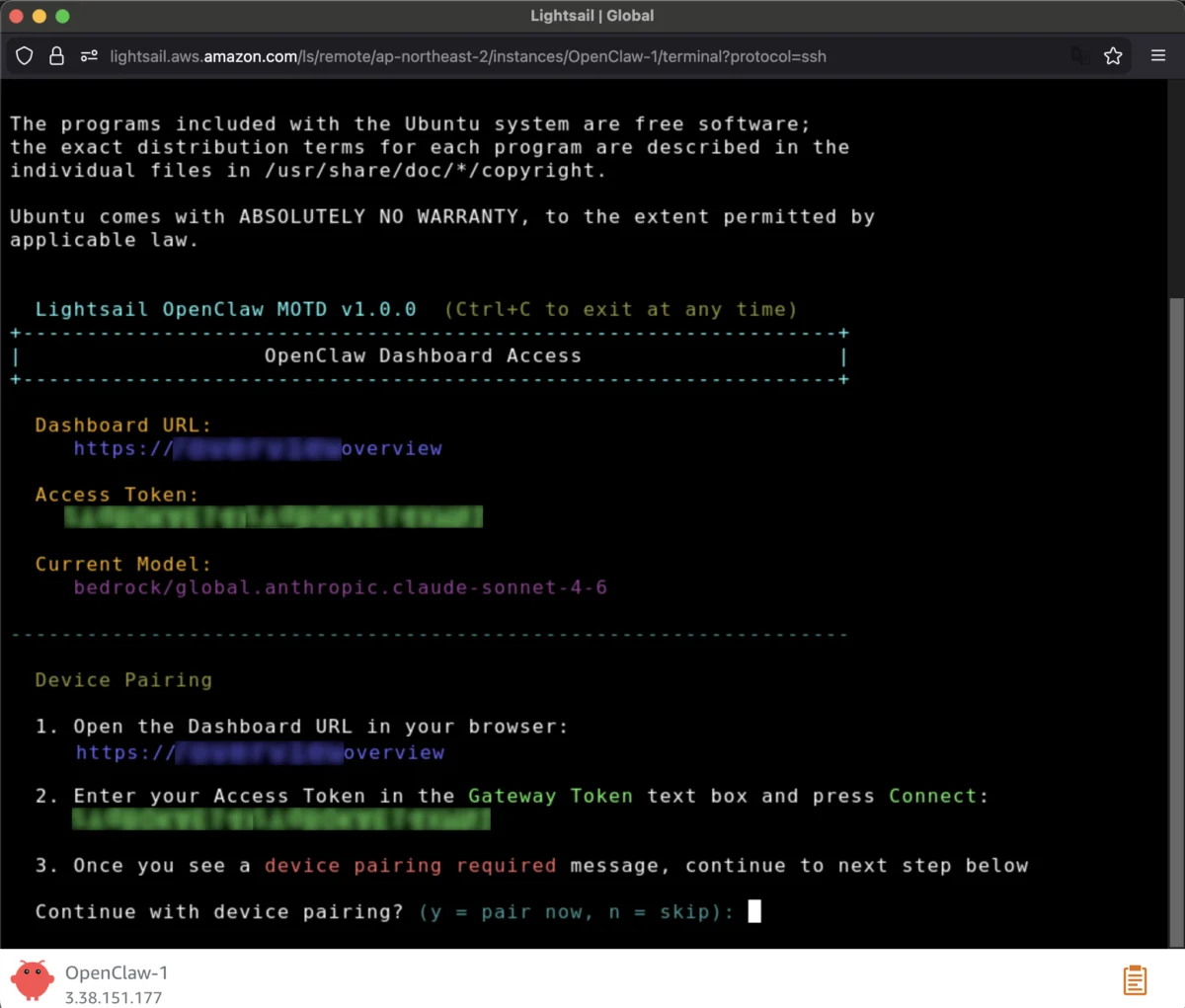
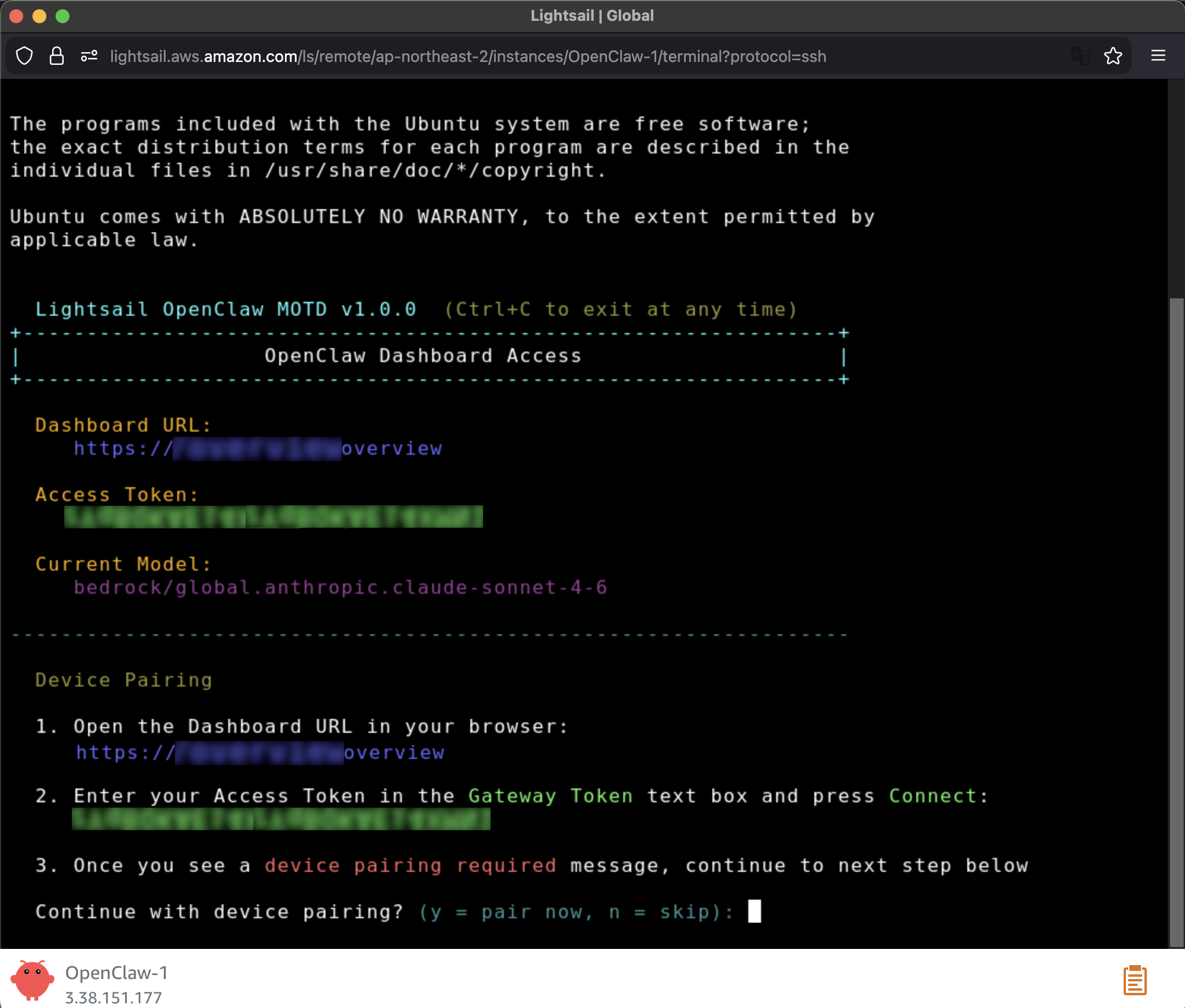
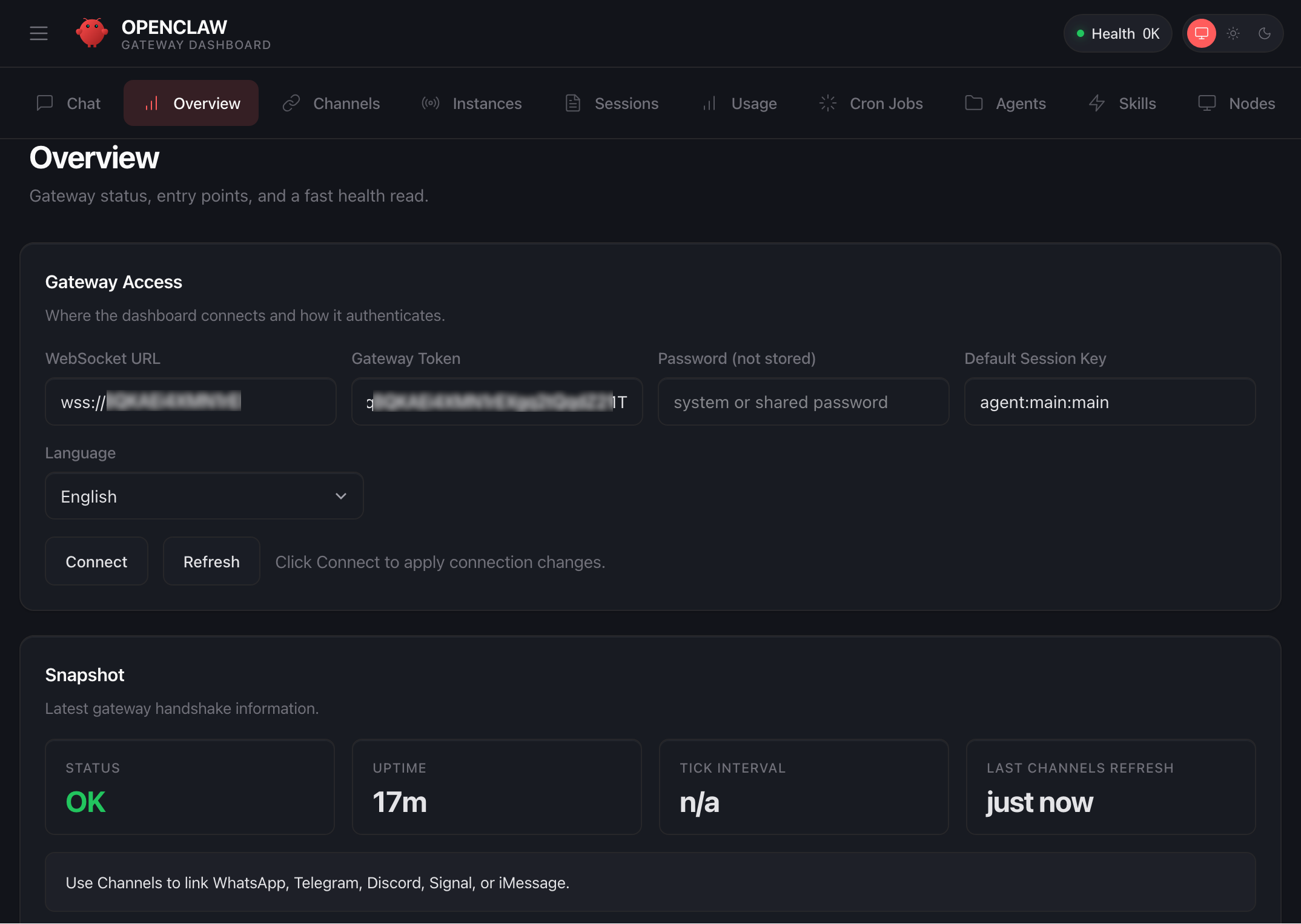
The next crucial phase involves securely pairing the user’s browser with the newly launched OpenClaw instance. This pairing establishes a secure communication channel, essential for interacting with the AI dashboard. Users connect to their instance using the browser-based SSH terminal provided in the Lightsail console’s "Getting started" tab. Upon connection, the terminal displays the dashboard URL and critical security credentials, including a Gateway Token. These credentials are then copied and pasted into the corresponding field within the OpenClaw dashboard, accessed in a new browser tab. A prompt in the SSH terminal requires user confirmation (pressing ‘y’ to continue and ‘a’ to approve device pairing), after which the OpenClaw dashboard confirms "OK" status, indicating a successful and secure connection.
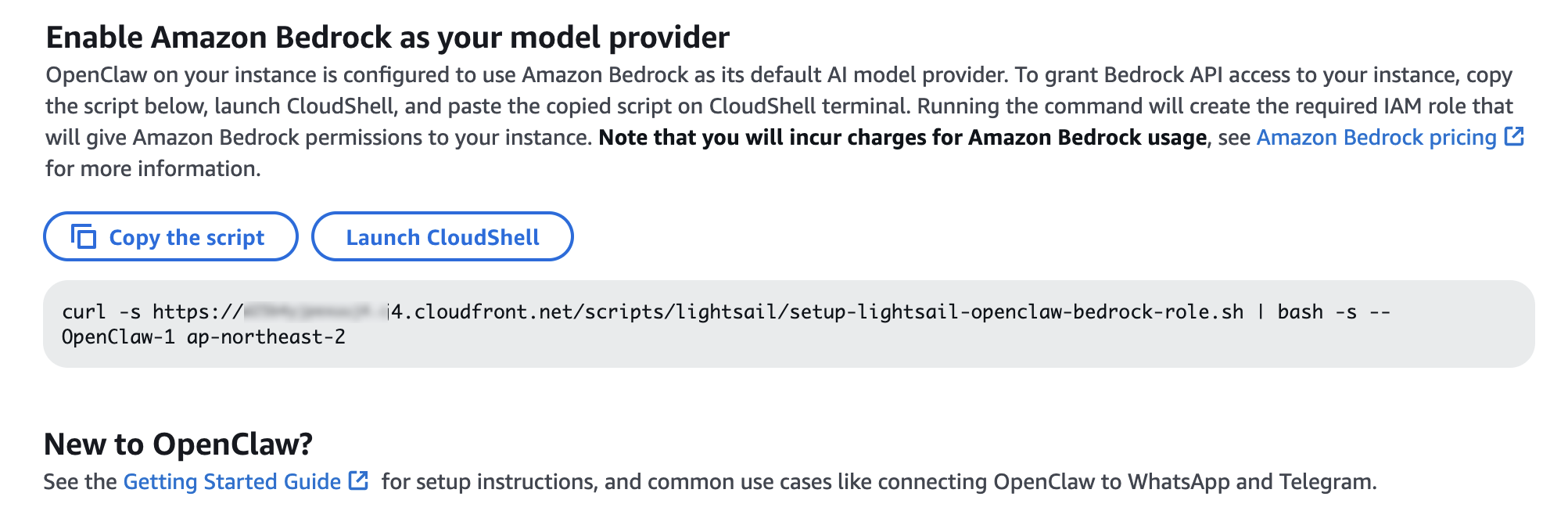
To fully unleash OpenClaw’s AI capabilities, it must be connected to a robust language model. The Lightsail OpenClaw instance comes pre-configured to use Amazon Bedrock as its default AI model provider. Amazon Bedrock is a fully managed service that offers a choice of high-performing foundation models (FMs) from Amazon and leading AI startups via a single API, along with a broad set of capabilities you need to build generative AI applications with security, privacy, and responsible AI. To enable Bedrock API access, users simply copy a provided script from the Lightsail console’s "Getting started" tab and execute it within the AWS CloudShell terminal. This script configures the necessary permissions and API endpoints, integrating OpenClaw with the powerful generative AI models available through Bedrock. Once the script execution is complete, users can navigate to the "Chat" section of the OpenClaw dashboard and begin interacting with their newly empowered AI assistant immediately, without any further complex configurations.
Furthermore, OpenClaw’s utility extends to mobile and multi-platform interaction. Users can configure their OpenClaw instance to work seamlessly with popular messaging applications such as Telegram and WhatsApp. This integration allows for direct interaction with the AI assistant from a smartphone or any messaging client, providing unparalleled convenience and accessibility. Detailed instructions for connecting these messaging channels are available in the Amazon Lightsail User Guide, ensuring users can tailor their OpenClaw experience to their preferred communication methods.
The Strategic Significance and Broader Implications
The introduction of OpenClaw on Amazon Lightsail carries significant implications for the broader AI landscape, personal computing, and the cloud industry.
Democratizing Advanced AI: By offering a simple, pre-configured pathway to deploy an autonomous AI agent, AWS is democratizing access to sophisticated AI technology. This move lowers the barrier to entry for individuals, startups, and small businesses that may lack the deep technical expertise or resources to set up and manage such systems on more complex cloud platforms or local hardware. It enables a wider audience to experiment with and benefit from personalized AI automation.
Emphasis on Privacy and Control: In an era where data privacy is a paramount concern, OpenClaw’s "private AI agent" philosophy resonates strongly. Running on a user’s dedicated Lightsail instance, OpenClaw offers a higher degree of control over data compared to AI services where data might reside on shared, remote servers. Users maintain ownership and control over their data, aligning with growing demands for privacy-centric digital tools. This also positions AWS as a facilitator for privacy-conscious AI solutions, an increasingly important differentiator.
The Evolution of Personal Digital Assistants: The capabilities of OpenClaw—managing emails, browsing the web, organizing files—represent a significant leap beyond the reactive, question-answering nature of many existing AI assistants. This proactive, task-oriented approach signals a shift towards truly autonomous personal agents that can offload routine digital chores, freeing up user time and enhancing productivity. Lightsail’s role is to make this advanced form of automation readily available.
Synergy with Amazon Bedrock: The default integration with Amazon Bedrock is a powerful combination. Bedrock provides access to state-of-the-art foundation models, ensuring OpenClaw users benefit from highly capable and continuously improving AI intelligence. This managed service approach allows OpenClaw users to leverage cutting-edge AI without the burden of model selection, fine-tuning, or infrastructure management for the underlying AI models. It positions OpenClaw as an intelligent agent front-end powered by enterprise-grade AI back-ends.
Expanding the Lightsail Ecosystem: For Lightsail itself, the addition of OpenClaw as a blueprint enhances its appeal and utility. It demonstrates Lightsail’s versatility beyond simple web hosting and development environments, showcasing its capability to host advanced, specialized applications. This could attract a new segment of users interested in AI and automation, further solidifying Lightsail’s position as a go-to platform for simplified cloud solutions.
Security by Design: Deploying OpenClaw within the AWS cloud environment, specifically Lightsail, inherently benefits from AWS’s robust security infrastructure. Unlike local installations that might be vulnerable to home network security lapses or device compromises, a Lightsail instance operates within a highly secure, managed environment. AWS handles physical security, network infrastructure, and foundational security services, providing a more secure operational context for the private AI agent.
Competitive Edge in the AI Agent Market: The market for AI agents and automation tools is intensely competitive. By facilitating the easy deployment of an open-source, private AI agent, AWS is strategically positioning itself to support innovation from the ground up. This move could encourage a broader developer community to build on or integrate with OpenClaw, fostering a vibrant ecosystem around private, autonomous AI solutions. It also allows AWS to cater to users who prefer open-source flexibility while still benefiting from cloud reliability and scalability.
Future Outlook: The general availability of OpenClaw on Lightsail is likely just the beginning. As users adopt and provide feedback, there’s potential for further enhancements, deeper integrations with other AWS services, and perhaps even more specialized OpenClaw blueprints tailored for specific use cases (e.g., business automation, developer tools). The accessibility of this offering could spur creativity and innovation in how individuals and small organizations leverage AI to streamline their digital lives and operations.
Availability and Next Steps for Users
OpenClaw on Amazon Lightsail is now generally available across all AWS commercial Regions where Amazon Lightsail is supported. This broad availability ensures that users worldwide can access and deploy their private AI agents with minimal latency and in compliance with regional data residency requirements where applicable. For a comprehensive list of specific Regional availability and to explore the broader AWS capabilities by Region, interested parties are encouraged to visit the AWS Capabilities by Region documentation.
AWS encourages users to explore this new offering directly through the Lightsail console. The platform is designed for intuitive navigation, making the setup process straightforward even for those new to cloud computing. Furthermore, AWS values community feedback as a critical driver for continuous improvement. Users are invited to share their experiences, suggestions, and report any issues via AWS re:Post for Amazon Lightsail, a community-driven technical Q&A service, or through their usual AWS support contacts. This direct channel ensures that the service evolves in response to real-world user needs and use cases.
The general availability of OpenClaw on Amazon Lightsail represents a significant milestone in making sophisticated, private AI agents accessible to a broader audience. By combining the power of an open-source autonomous AI agent with the simplicity and security of AWS’s Lightsail platform, AWS is not only addressing an existing customer need but also paving the way for a more private, productive, and personalized future for AI-powered automation.
