
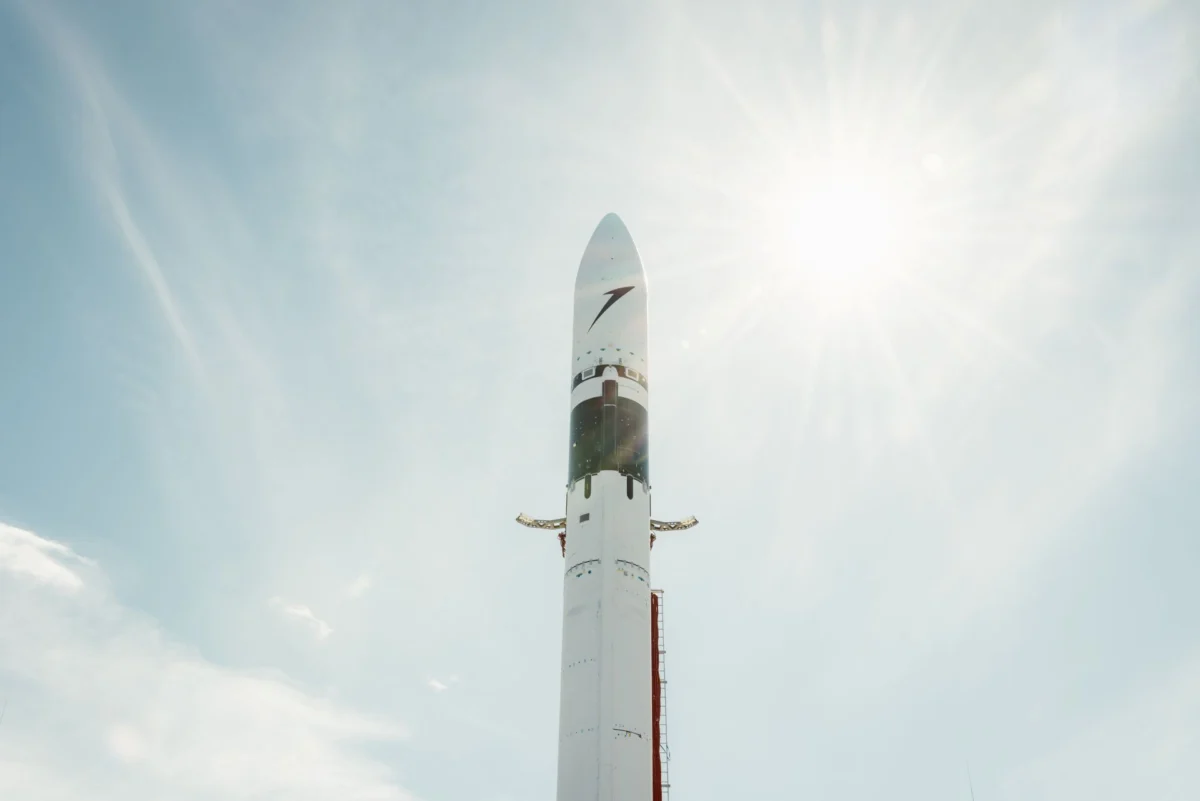

In a significant move for the European aerospace sector, German launch service provider Isar Aerospace has officially entered into a launch services agreement with Planet Labs PBC, a leading provider of daily data and insights about Earth. The contract, announced on July 2, 2024, stipulates that Isar Aerospace will deploy one of Planet’s next-generation Pelican satellites as early as late 2026, with provisions for additional satellite deployments in the following years. This partnership represents a pivotal moment for the burgeoning German space industry, aligning a domestic launch capability with a domestic manufacturing hub to create an end-to-end sovereign value chain for space-based Earth observation.
The Pelican satellite constellation is designed to succeed and enhance Planet’s current high-resolution SkySat fleet. These satellites are the largest and most sophisticated in Planet’s diverse orbital portfolio, weighing approximately 200 kilograms each. Unlike the company’s "Dove" cubesats, which provide continuous global monitoring, the Pelican series is built for rapid-response "tasking," allowing customers to request high-resolution imagery of specific locations with higher frequency and lower latency. By securing a dedicated launch partner like Isar Aerospace, Planet aims to ensure a more flexible and resilient deployment schedule as it refreshes its aging orbital infrastructure.
A Milestone for Sovereign Space Capabilities
The collaboration between Isar Aerospace and Planet is being hailed by industry analysts and government officials as a landmark achievement for German technological independence. The strategic significance of the deal is underscored by Planet’s recent expansion in Germany; in late 2023, the company announced the opening of a new state-of-the-art satellite manufacturing facility in Berlin. This facility was specifically established to double the production capacity of the Pelican and Tanager satellite lines.
The realization of this contract means that, for the first time, a satellite designed and manufactured in Berlin will be launched into orbit by a rocket designed and manufactured in Munich. This "Made in Germany" workflow is a central pillar of the European Union’s broader objective to reduce its reliance on foreign launch providers, such as SpaceX in the United States or various agencies in Asia. Stella Guillen, Chief Commercial Officer of Isar Aerospace, emphasized that this collaboration underscores the growing strategic importance of the European space ecosystem, noting that the ability to build, manufacture, and launch within the continent is essential for regional security and economic growth.
Technical Profile: The Spectrum Launcher and the Pelican Satellite
Isar Aerospace is currently developing the "Spectrum" rocket, a two-stage liquid-fueled launch vehicle designed specifically for the small and medium-sized satellite market. The Spectrum vehicle is powered by Isar’s proprietary "Aquene" engines, which utilize a combination of liquid oxygen and propane. This propellant choice is noted for being more environmentally friendly than traditional solid boosters or hydrazine-based fuels, while also offering high performance for the demanding requirements of Low Earth Orbit (LEO) missions.
The Spectrum launcher is capable of carrying up to 1,000 kilograms to LEO and 700 kilograms to Sun-Synchronous Orbit (SSO). This capacity makes it an ideal fit for Planet’s Pelican satellites. While a single Pelican weighs roughly 200 kilograms, the Spectrum’s payload fairing and lift capacity allow for "multi-manifest" missions where several satellites can be deployed simultaneously, or where a Pelican can serve as the primary payload alongside smaller secondary missions.
On the satellite side, the Pelican platform represents a massive leap in Earth observation technology. Built on a common bus architecture shared with the Tanager hyperspectral satellites, the Pelican is designed for high-revisit capabilities. In the current geopolitical climate, the demand for high-resolution imagery that can be updated multiple times per day has surged, driven by both commercial logistics needs and defense intelligence requirements. The Pelican fleet is expected to provide imagery at a resolution of roughly 30 centimeters, putting it in direct competition with the world’s most advanced commercial imaging systems.
Chronology of Development and Testing
The path to the 2026 launch window has not been without challenges for Isar Aerospace. As a "New Space" startup, the company has adopted an iterative "test-fly-fail-fix" philosophy similar to that of early SpaceX or Rocket Lab.
In March 2025, Isar Aerospace conducted its inaugural flight test of the Spectrum vehicle. The mission was intended to validate the structural integrity of the rocket and the performance of the Aquene engines in a flight environment. However, the mission was deemed unsuccessful after a pressurization valve issue led to a premature termination of the flight. Despite the failure to reach orbit, Isar engineers collected vast amounts of telemetry data that have been used to refine the vehicle’s design.
Following the March anomaly, the company spent several months conducting rigorous ground tests and hardware qualifications. A second launch attempt was scheduled for June 15, 2024, but the company made the tactical decision to stand down during the countdown to address technical discrepancies. This cautious approach reflects the high stakes of the European launch market, where reliability is the primary currency for securing long-term government and commercial contracts.
Isar Aerospace is currently preparing for its next validation flight. The success of this upcoming mission is critical, as it will serve as the final proof of concept required to begin fulfilling the commercial backlog that now includes Planet, alongside various European institutional customers.
Strategic Context: The European Launch Crisis
The agreement between Isar and Planet arrives at a time of significant transition and "launch anxiety" within Europe. For decades, Europe relied on the heavy-lift Ariane 5 and the medium-lift Soyuz (operated via Arianespace). However, the retirement of the Ariane 5, coupled with the geopolitical fallout that ended cooperation with Russia’s Roscosmos, left Europe with a temporary "launch gap." While the Ariane 6 is beginning its operational life, its primary focus remains on large institutional and heavy commercial payloads.
This has created a vacuum in the small-satellite market, which is currently dominated by the SpaceX Falcon 9 Transporter missions. While rideshare missions are cost-effective, they offer satellites very little control over their final orbital destination or the timing of the launch. For a company like Planet, which needs to place Pelicans into very specific orbital planes to optimize revisit rates, a dedicated or "semi-dedicated" launch on a vehicle like Spectrum offers a level of precision that rideshare programs cannot match.
Furthermore, the European Space Agency (ESA) has been actively promoting the "Boost!" program, which provides financial and technical support to private companies like Isar Aerospace, Rocket Factory Augsburg (RFA), and HyImpulse. The goal is to foster a competitive commercial launch sector within Europe that can lower costs and increase the frequency of access to space.
Infrastructure and Logistics: The Andøya Spaceport
The launches for the Planet contract will take place from the Andøya Space complex in Norway. Located far above the Arctic Circle, Andøya is one of the world’s premier locations for launching satellites into polar and Sun-Synchronous Orbits—the specific orbits required for Earth observation satellites to maintain consistent lighting conditions over the ground they photograph.
Isar Aerospace has secured exclusive access to one of the launch pads at Andøya, providing the company with a dedicated "gate to space." This infrastructure is vital for maintaining the 2026 schedule, as it removes the scheduling conflicts often found at more crowded ranges like Cape Canaveral or Kourou in French Guiana. The proximity of the Norwegian launch site to Isar’s headquarters in Munich and Planet’s facility in Berlin simplifies the logistics of transporting the rocket stages and the satellites, further reducing the carbon footprint and complexity of the mission.
Economic and Industrial Implications
The economic ripple effects of this contract are expected to be substantial. By anchoring its Pelican production in Berlin, Planet is contributing to the creation of high-tech jobs and the development of a specialized supply chain within Germany. Similarly, Isar Aerospace’s growth has spurred investment in advanced manufacturing, including 3D printing of engine components and carbon-fiber composite structures.
For the German government, this partnership serves as a validation of its National Space Strategy, which emphasizes the role of space as a critical infrastructure for the modern economy. From monitoring climate change and agricultural yields to providing disaster relief and national security intelligence, the data provided by Planet’s Pelican satellites is viewed as a strategic asset. Ensuring that this asset can be launched via a domestic provider mitigates the risk of being de-prioritized by foreign launch providers during times of international tension.
Looking Toward 2026 and Beyond
As Isar Aerospace moves toward its next test flight, the industry will be watching closely. The success of the Spectrum vehicle is no longer just a milestone for a private startup; it is now a key component of Planet’s long-term orbital strategy. If the late 2026 launch is successful, it will likely pave the way for a rapid cadence of launches as Planet seeks to complete the Pelican constellation by the end of the decade.
The contract also sets a precedent for other satellite operators in Europe. By proving that a European microlauncher can meet the rigorous technical and schedule demands of a global leader like Planet, Isar Aerospace is positioning itself as a primary challenger to the established global launch order. The partnership signals that the European space industry is moving past its period of transition and is entering a new era of commercial maturity, defined by domestic innovation, sovereign capability, and strategic autonomy.
